
Do Deer and Rabbits Eat Holly Hedging?
Holly's tough, spiny leaves can give the impression that deer and rabbits will leave it alone. In practice, young English Holly can still be browsed, particularly on rural sites and field boundaries where animal pressure is high.
Quick Answer
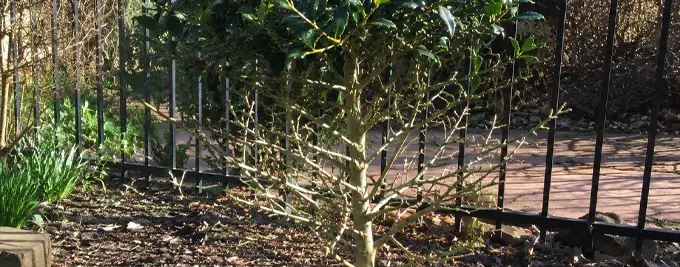
Yes. Deer can browse Holly (Ilex aquifolium), and rabbits can damage young Holly hedging too. Deer may eat buds, shoots and foliage, while rabbits generally cause damage closer to ground level. Holly's spiny leaves do not make it animal-proof. Newly planted hedges are most vulnerable, so suitable rabbit guards, netting or more substantial deer protection should be considered where browsing is already a known problem.
Quick Facts
| Do deer eat Holly? | Yes, deer can browse Holly shoots and foliage |
|---|---|
| Do rabbits eat Holly? | Yes, particularly young plants and accessible lower growth |
| Typical rabbit damage height | Usually below about 50cm |
| Typical deer browsing height | From around 1m for muntjac to as high as 1.8m for larger deer |
| Highest risk | Young and newly planted hedges |
| Rabbit protection | Guards, spirals or suitable rabbit netting |
| Deer protection | More substantial guards or fencing may be required |
| Is Holly animal-proof? | No |
Can deer eat Holly hedging?
Yes. Deer do eat Holly, despite the plant’s reputation for tough, prickly foliage.
Wild deer browse buds, fresh shoots and leaves from a wide range of woody plants. Holly is no exception. In natural woodland, deer browsing can even help control Holly where it becomes dominant, so the presence of spines should not be treated as reliable protection.
The risk varies considerably from one garden to another. Deer are more likely to browse a hedge where numbers are high, alternative food is limited or young growth is conveniently within reach.
Newly planted Holly can be particularly vulnerable because the plants are short and much of their foliage is at browsing height.
The height of the damage can sometimes provide a clue to which deer are responsible. Muntjac browsing is generally found up to about 1m, roe deer to around 1.1m, while red, fallow and sika deer can browse vegetation up to approximately 1.8m.
An established Holly hedge may therefore coexist perfectly well with occasional deer, while a new planting on a regularly used deer route could need protection from the outset.
Do rabbits eat Holly hedging?
Rabbits can also damage Holly, particularly while the hedge is young.
They are attracted to many newly planted trees and shrubs and can browse fresh foliage and shoots close to ground level. Their damage is usually much lower than deer damage, with rabbit browsing typically occurring below about 50cm.
This makes small Holly plants especially vulnerable during establishment. A rabbit does not need to eat the whole plant to cause a problem. Repeatedly removing new lower growth can slow establishment and make it harder for the hedge to thicken from the base.
Hedging Plants Direct therefore recommends considering rabbit protection for young Holly on rural properties, field boundaries and other sites where rabbit activity is already known.
How can you tell whether deer or rabbits are damaging a Holly hedge?
The height and position of the browsing are often the most useful first clues.
Damage close to the ground
If fresh shoots and leaves are disappearing primarily within the bottom 50cm of the hedge, rabbits are a likely possibility.
Look around the planting area for other signs of rabbit activity as well. Damage may be more noticeable where the hedge borders rough grass, fields or other nearby cover.
Damage higher up the hedge
Browsing considerably above rabbit height is more suggestive of deer.
Deer can create a noticeable browse line where the lower foliage remains repeatedly eaten back to the height the animals can comfortably reach. The exact height varies according to the species of deer present.
The pattern is not always conclusive, so it is worth looking at surrounding shrubs and trees as well as the Holly itself.
How should you protect a new Holly hedge?
The right protection depends on which animals are present and the level of browsing pressure.
For rabbits, suitable spiral guards or individual plant guards can work well with appropriate young plants. Guards need to be supported correctly and checked as the Holly grows so that they do not rub against or restrict developing stems.
Where the plants are too bushy for individual spirals, or rabbits are numerous, protecting the complete hedge line with suitable netting can be more practical.
Deer require a different approach. A short rabbit spiral should not be expected to protect a plant from an animal capable of browsing a metre or more above ground. Sites with regular deer activity may require taller, stronger guards or appropriate fencing.
Hedging Plants Direct’s plant protection range covers protection for establishing hedging plants.
If both rabbits and deer are present, plan for the larger browsing risk rather than relying on rabbit protection alone.
How long does Holly need protection from browsing?
There is no fixed number of years that suits every hedge.
Protection is most important while the plants are small, establishing and easily reached. How quickly they become less vulnerable depends on their starting size, growing conditions and the amount of browsing pressure on the site.
Check guards and fencing regularly rather than simply fitting them and forgetting them. Supports can move, guards can become tight and developing branches can become trapped.
Protection should remain effective while the plants are still at genuine risk, but it should not be allowed to interfere with the hedge as it develops.
For general establishment, watering, feeding and pruning advice, see the Holly Hedging Care Guide.
Will Holly recover after deer or rabbit damage?
Light browsing does not necessarily mean a Holly plant is lost.
If the main structure remains healthy and only shoots or leaves have been removed, the plant can usually produce further growth. The main concern is repeated browsing, where every flush of new growth is eaten before the hedge has a chance to establish properly.
Holly is naturally relatively slow growing. The English Holly supplied by Hedging Plants Direct typically grows by around 10 to 20cm a year, so repeated damage can noticeably delay the time it takes a young hedge to become dense.
Protect the plants from further browsing first, maintain normal watering and establishment care, and then allow them time to respond rather than trying to force growth with excessive fertiliser.
Severely damaged individual plants should be assessed separately, particularly where the main stem has been badly affected.
Is Holly a good hedge where deer or rabbits are common?
It can be, but Holly should not be sold or planted on the assumption that deer and rabbits will never touch it.
Its dense evergreen growth and spiny foliage make English Holly hedging a useful long-term boundary hedge, including for rural gardens. The vulnerable stage is generally when the plants are young and establishing.
If deer or rabbits regularly visit the site, factor suitable plant protection into the project from the beginning. Once a hedge has gained size and density it is considerably easier to live with occasional browsing than it is to establish an unprotected young hedge under constant pressure.
Gwynne's Grower's Tip
If you already see rabbit droppings, runs or regular deer tracks near the proposed hedge, put the protection in place as part of the planting job rather than waiting for damage to appear. It is much easier to protect a fresh Holly planting properly than to repair a hedge after its first new growth has repeatedly been browsed. Rabbit spirals are useful for suitable young plants, but do not assume a short spiral will stop deer. On field edges or sites with regular deer traffic, use more substantial protection and check it as the hedge develops.
More Holly Advice
For more detailed growing advice or to view the plants available from our nursery, use the links below.
Related Products
Products from our nursery that are relevant to this advice.

Useful Planting Essentials
Selected products that may help with planting, establishment and ongoing hedge care.
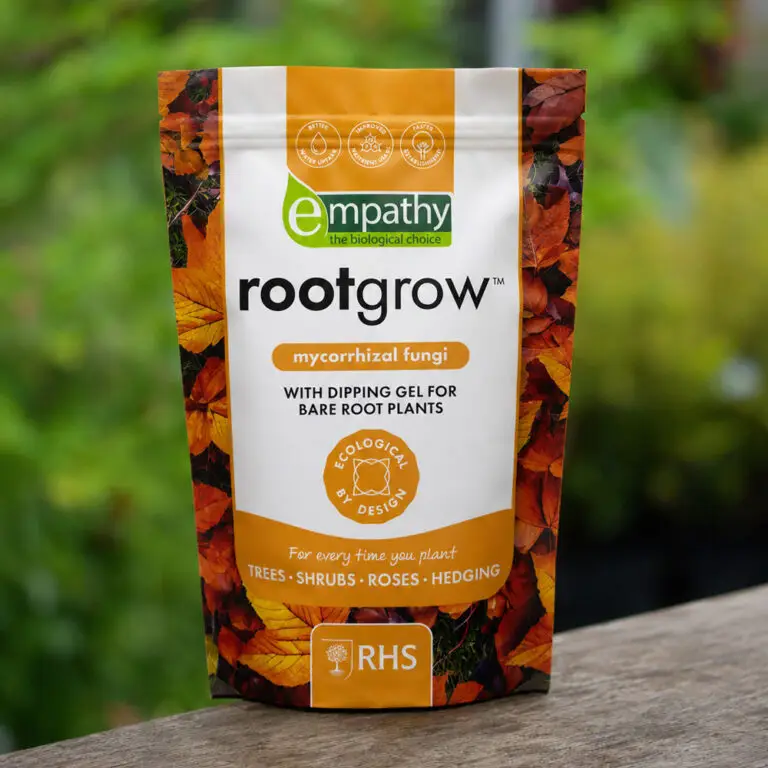
Rootgrow Mycorrhizal Fungi
Rootgrow can be applied at planting so the product is in direct contact with the roots, where appropriate for the plant and planting method.
View product
Hedge Feed
Hedge Feed provides balanced nutrition where established hedging would benefit from feeding as part of normal care.
View product
Hedge Irrigation
A hedge irrigation system can make it easier to water a new hedge consistently, particularly on longer runs and during dry weather.
View product
Hedge Compost & Mulch
Compost and mulch can support soil preparation, moisture retention and weed suppression when used appropriately around new hedging.
View product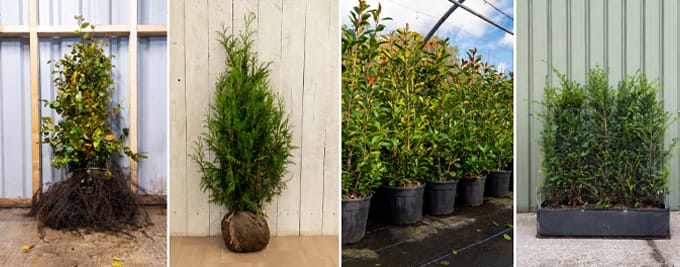
What Are the Different Hedging Root Types?
Bare root, root ball, pot-grown and instant hedging suit different budgets, planting times and levels of initial coverage. Understanding how each is…
Read answer
What Is Holly Transplant Shock and How Long Does It Last?
A newly planted or moved Holly can temporarily lose its glossy appearance, drop leaves or make little new growth while its roots…
Read answer
Can Holly Be Grown as a Hedge in Pots or Containers?
A row of English Holly can create evergreen structure and screening on patios, courtyards and other places where planting directly into the…
Read answer
How Can I Identify English Holly (Ilex aquifolium)?
English Holly is familiar in British hedgerows, gardens and woodland, but mature plants do not always have the sharply spined leaves people…
Read answer
Is Hornbeam Good for Wildlife?
Hornbeam is a native deciduous hedge with a dense structure that can support birds, insects and small mammals. Its wildlife value depends…
Read answer
Do Birds Eat Holly Berries?
Holly berries are one of the most recognisable features of an English Holly hedge in winter. As well as providing seasonal colour,…
Read answer
How Can You Tell Male and Female Holly Plants Apart?
Male and female English Holly plants can look almost identical for most of the year. The easiest time to tell them apart…
Read answer
When Should Hedges Be Cut to Avoid Nesting Birds?
Hedges provide valuable nesting cover for many British garden birds. Planning routine trimming around the breeding season reduces the risk of damaging…
Read answer