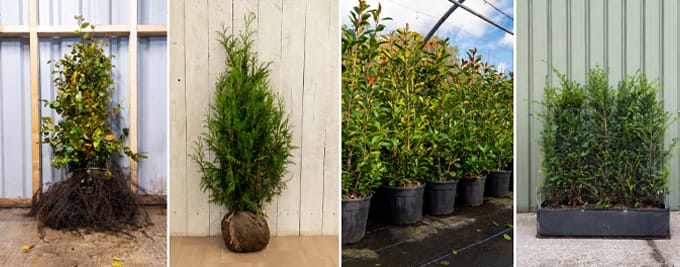
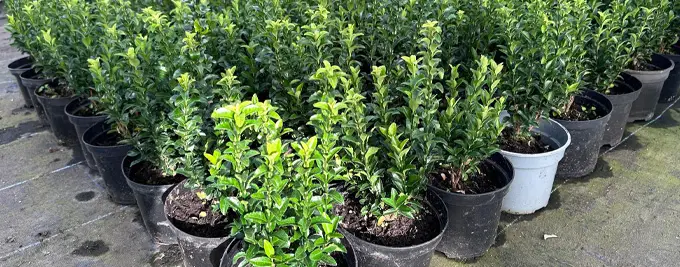
New Euonymus should be watered thoroughly at planting and whenever the root zone begins to dry during the first two growing seasons. Watering should respond to soil, plant size and weather rather than following a rigid daily timetable. The aim is to wet the whole root system, then allow excess water to drain so roots receive both moisture and air.
Immediately after planting
Water slowly around each plant until the original root ball and adjacent soil are fully moistened. This settles soil around the roots and removes damaging air gaps. Return after the first watering and correct any plants that have sunk or leaned. A light shower that only darkens the mulch is not sufficient.
The first and second growing seasons
During the first season, check the soil beneath the mulch at least weekly in dry weather and more often during heat, strong wind or on free-draining soil. In the second season, roots should be spreading into the surrounding soil, but the hedge can still be vulnerable in prolonged drought. Established Euonymus is more tolerant of dry periods, although compact formal hedges beside paving may continue to need occasional deep watering.
Check the original root ball
Push a finger, trowel or soil probe into the root ball itself, not only the loose backfill. Pot compost and field soil can dry at different rates. A common establishment failure occurs when the surrounding soil is damp but the original pot-grown or root-balled core remains dry. The opposite can also happen on clay, where a planting hole stays saturated after repeated watering.
Sandy soil, clay soil and raised beds
Sandy soil drains quickly and may need smaller, more frequent applications during hot weather, supported by organic matter and mulch. Clay holds water longer, so check before adding more and concentrate on deep but less frequent watering. Raised beds and narrow strips beside walls dry rapidly. Deep shade reduces evaporation but does not remove the need to check newly planted roots.
Hot, windy and dry weather
Wind can remove moisture from evergreen leaves even when temperatures are moderate. Water early in the morning or in the evening, apply it at soil level and avoid relying on foliage spraying. If a severe hot spell follows planting, temporary shade or a permeable windbreak may reduce stress, but it must not block air circulation.
Winter watering for evergreen Euonymus
Green Spire, Jean Hugues and the variegated evergreen cultivars continue to lose some moisture through their leaves in winter. Newly planted specimens may need watering during a prolonged dry, mild or windy winter, especially in containers, beneath roof overhangs or against walls. Do not water frozen or saturated soil.
Using hedge irrigation
A correctly positioned
hedge irrigation system can improve consistency on long domestic, trade and commercial plantings. Lay the pipe close enough to wet each root zone, secure it on the soil beneath the mulch and test the delivery before leaving it unattended. Irrigation is not automatic proof that the roots are wet: inspect the far end of the run and several original root balls.
Signs of drought stress
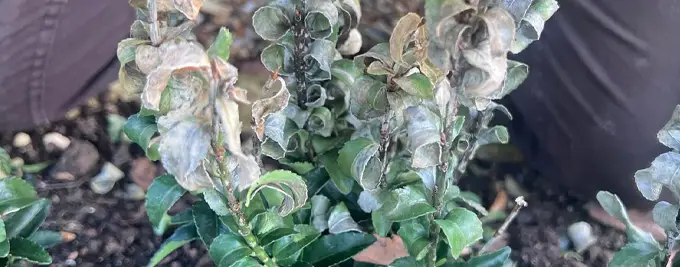
- Leaves lose gloss, curl, droop or become crisp at the edges.
- New shoots wilt or stop extending.
- Variegated foliage may scorch on exposed edges.
- Leaves yellow and fall after a severe dry spell.
- The root ball feels dry several centimetres below the surface.
Signs of waterlogging or overwatering
- Soil remains saturated or smells stagnant for long periods.
- Leaves yellow despite the ground being wet.
- Growth becomes weak and roots may appear dark or soft.
- Plants decline unevenly in low points along the hedge.
- Water stands in the planting trench after rainfall.