
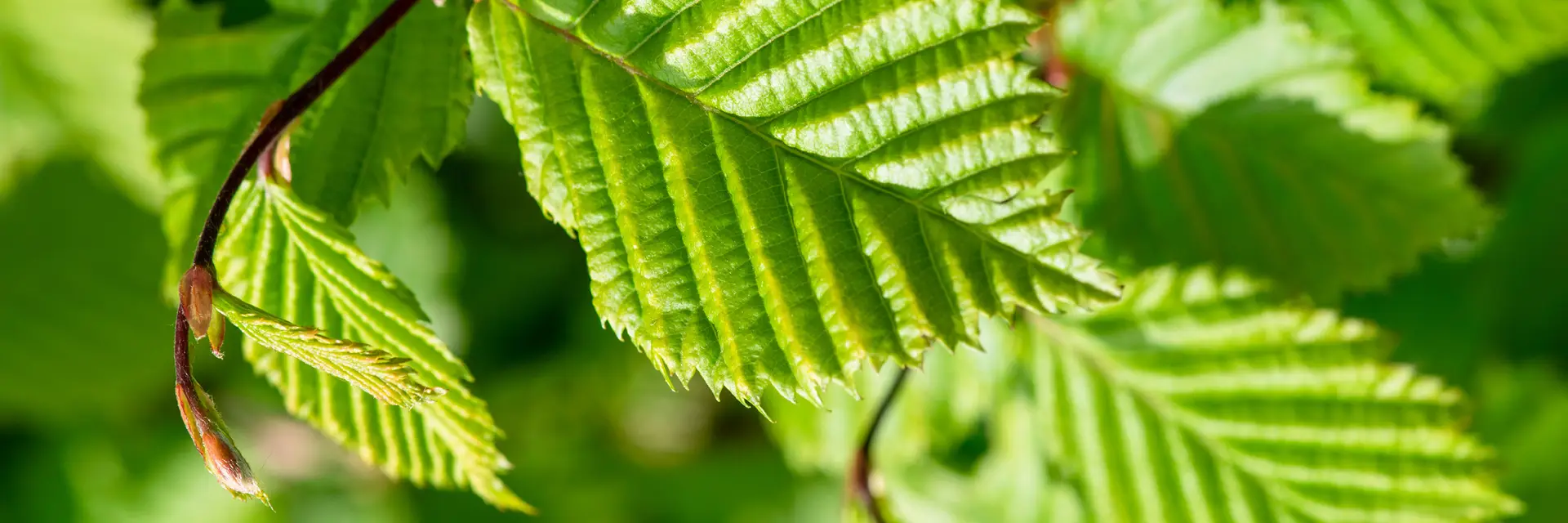
Hornbeam hedging (Carpinus betulus) creates dense, traditional boundaries with strongly veined green foliage that turns yellow-gold in autumn. Although deciduous, regularly clipped Hornbeam often retains some dry brown leaves through winter, providing useful seasonal screening and structure. It is particularly well suited to heavy clay, moisture-retentive soils, colder sites and partial shade, and is often a better choice than Beech in more challenging conditions. Choose from bare-root, pot-grown and instant Hornbeam hedging, or Pleached Hornbeam where screening is needed above an existing wall or fence.
Choose the Right Hornbeam for Your Project
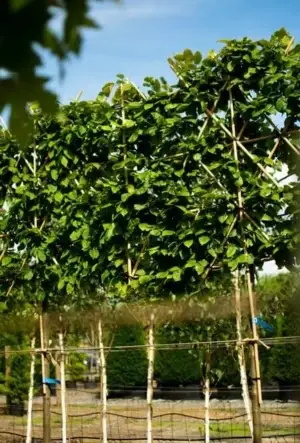
Hornbeam can provide screening from ground level as a conventional hedge or higher-level privacy as a trained pleached tree. Choose the form that matches where you need the screening.
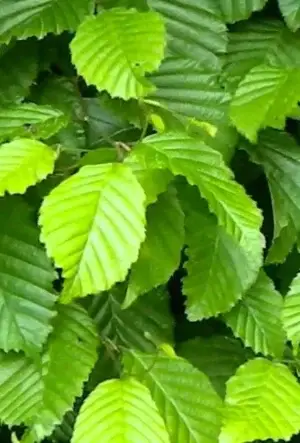
Hornbeam or Beech Hedging?
Both make dense deciduous hedges, but the site usually decides which is the safer choice. Hornbeam is generally more dependable on heavier, colder or more moisture-retentive ground.
| Compare | Hornbeam Hedge Plants | Beech Hedging |
|---|---|---|
| Heavy clay | Usually the stronger choice where drainage remains adequate | Better suited to freer-draining soil |
| Partial shade | Generally more tolerant | Suitable for light shade but prefers brighter conditions |
| Cold and frost pockets | Very hardy and dependable | Can be less reliable in severe frost pockets |
| Winter foliage | May retain some dry brown leaves when regularly clipped | Usually retains copper-brown leaves more consistently |
| Leaf appearance | Strongly veined, serrated and textured | Smoother, glossier and more uniform |
| Best fit | Difficult soils, colder sites and a robust natural look | Freer-draining sites and stronger copper winter colour |
Expert nursery advice
Gwynne's Grower's Tip
For privacy from ground level, I would normally choose conventional Hornbeam hedging. If there is already a sound wall or fence and the problem is overlooking above it, Pleached Hornbeam can put the foliage where it is actually needed while keeping the lower stem clear. Hornbeam is also one of my preferred choices on heavier clay where Beech can be less dependable, but damp soil is not the same as permanent waterlogging. If water sits in the planting line after prolonged rain, improve the drainage or planting position before ordering either form.
Helpful answers
Frequently asked questions
01Why Choose Hornbeam Hedging?
- Dense growth that responds well to regular formal clipping
- Strong performance on heavier clay and moisture-retentive soil
- Suitable for full sun and partial shade
- Hardy in cold and frost-prone UK gardens
- Attractive ribbed foliage with green, yellow, gold and brown seasonal colour
- Some winter leaf retention on young, regularly clipped growth
- Suitable for maintained hedges from approximately 1m to 5m
- Native habitat and nesting structure for garden wildlife
- Available in bare-root, pot-grown and instant formats
02Is Hornbeam a Good Privacy Hedge?
Hornbeam forms a dense network of branches and is an effective choice for seasonal privacy. Regular formative pruning encourages growth close to the base, helping the plants knit together into a continuous boundary. A clipped hedge often retains part of its dry foliage during winter, but the amount of screening varies. Customers needing dependable green foliage throughout winter should compare suitable evergreen hedging rather than treating Hornbeam as evergreen.
03Can Hornbeam Grow in Clay or Damp Soil?
Hornbeam is one of the better formal hedge plants for heavy clay and moisture-retentive ground. It generally performs more reliably than Beech in these conditions, provided excess water can drain and air remains available around the roots. Damp soil should not be confused with permanent waterlogging. If water remains in the planting trench for long periods after rain, the drainage or planting position should be corrected before the hedge is installed.
04Is Hornbeam Evergreen?
No. Hornbeam is deciduous, but a regularly clipped hedge often retains some dry golden-brown leaves during winter. The amount retained varies with pruning time, exposure, weather and the age of the hedge, so Hornbeam should provide seasonal structure and partial winter screening rather than be sold as an evergreen hedge.
05How Quickly Does Hornbeam Hedging Grow?
Hornbeam commonly produces approximately 20–40cm of annual growth once established. Stronger growth may be possible in fertile soil with adequate moisture and light, but growth rates should be treated as indicative rather than guaranteed. New bare-root plants may make limited shoot growth during their first season while roots establish.
06How Many Hornbeam Plants Do I Need?
The correct number depends on the height and root type selected. Smaller bare-root whips are normally planted more closely than larger plants, while pot-grown and instant densities also vary by size. Use the plants-per-metre figure displayed beside the exact product variation you are ordering rather than relying on one generic spacing for every Hornbeam plant.
Helpful next steps
Browse all Q&A Hornbeam expert growing advice
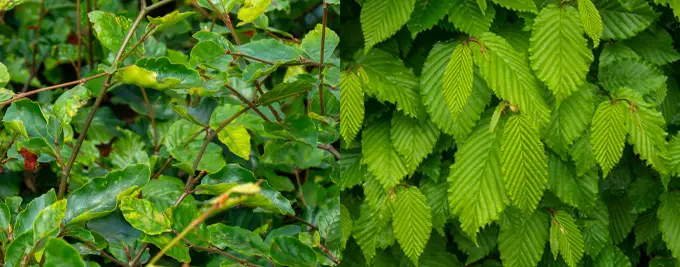 Q&ABeech or Hornbeam: Which Hedge Is Better?Beech and Hornbeam create similarly dense, traditional-looking hedges, but they perform best in different conditions. The right choice depends mainly on your soil, exposure, shade and preferred winter…Read answer
 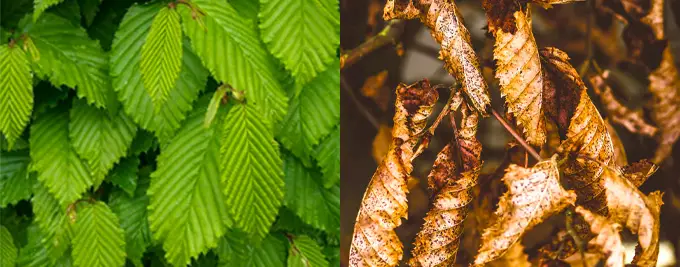 Q&AWhat Do Hornbeam Leaves Look Like?Hornbeam has distinctive textured foliage that changes noticeably through the seasons. Learning to recognise the leaf shape, veins and toothed edges can also help you distinguish Hornbeam from…Read answer
 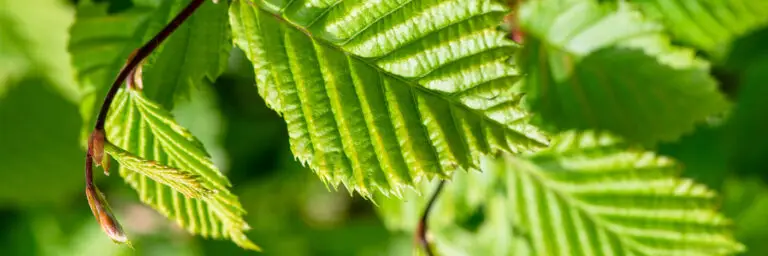 Q&AIs Hornbeam Good for Wildlife?Hornbeam is a native deciduous hedge with a dense structure that can support birds, insects and small mammals. Its wildlife value depends partly on how broadly it is…Read answer