Box Hedging Care Guide: Planting, Spacing and Pruning
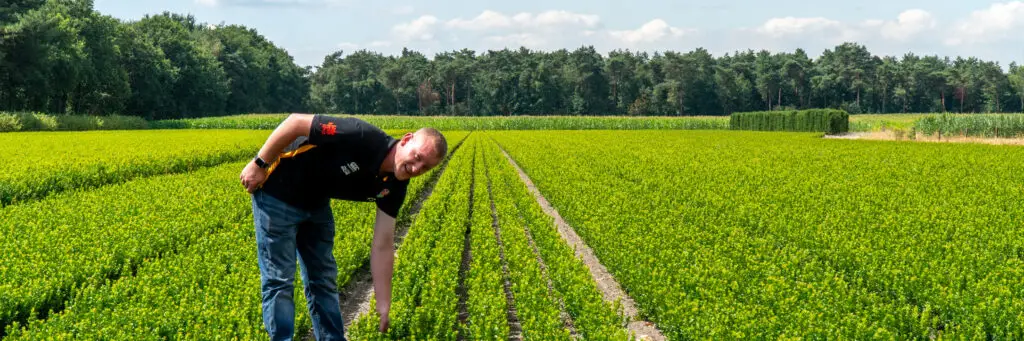
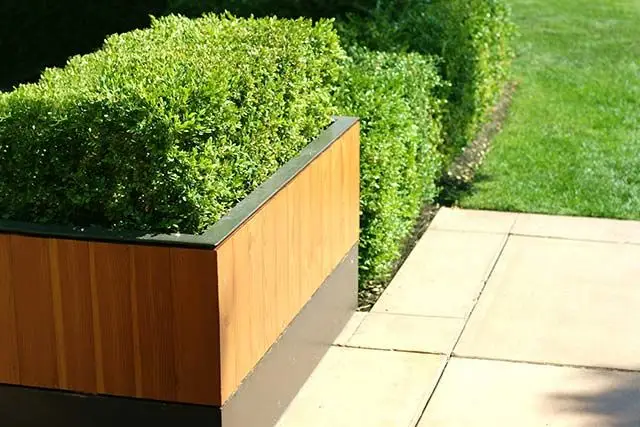
Common Box, Buxus sempervirens, is a slow-growing evergreen used for low formal hedges, edging, knot gardens and topiary. This guide explains how to choose, plant, space, water, feed and prune plants from our Box hedging range, while reducing the risks from Box blight and Box tree caterpillar.
Box remains a distinctive and useful garden plant, but it is no longer a trouble-free choice in every part of the UK. Before planting a large scheme, consider whether Box blight or Box tree caterpillar is already common locally and whether you can inspect and maintain the plants regularly. Where the risk or workload is unacceptable, compare our Box hedge alternatives before ordering.
Reviewed by Gwynne Bodsworth, Founder and GrowerLast reviewed 14 August 2026
Expert nursery advice
Gwynne's Grower's Tip
“Box still gives a clipped finish that few plants match, but customers need to choose it with their eyes open. Give it well-drained soil, good airflow and sensible watering, then inspect it regularly for blight and caterpillar. Where those problems are already severe locally, one of the modern Box alternatives may be the more dependable long-term choice.”
Gwynne Bodsworth• Founder and Grower, Hedging Plants Direct
“Common Box is usually my first suggestion when a customer wants a very neat low evergreen hedge, edging around formal beds or a plant that can be clipped into topiary. Its slow growth makes it controllable, but do not crowd the plants, keep the foliage as dry as practical and clean tools between different Box areas.”
Native evergreen shrub used for formal hedging and topiary
Evergreen or deciduous
Evergreen
Typical growth rate
Slow, usually around 10–20cm a year under suitable conditions
Preferred position
Sun, partial shade or shade; shelter and airflow are both important
Soil
Moist but well drained, with reasonable fertility and organic matter
Watering
Water after planting and during dry periods for the first two growing seasons
Pruning period
Young plants can be shortened in May; mature hedges are best given their main trim in August
Feeding
Balanced spring feed only where needed; feed after hard renovation to support recovery
Hardiness
RHS H6, hardy through the UK in suitable conditions
Typical hedge height
Commonly maintained from 20cm to 1.5m; taller hedges are possible with patience
Planting season
Pot-grown plants in suitable weather; bare root and root ball mainly from autumn to early spring
Root types commonly available
Bare root, root ball and pot grown, subject to live availability
About Box hedging
Common Box belongs to the Buxaceae family and is native to parts of Britain, Europe, western Asia and North Africa. It forms a densely branched evergreen shrub with small opposite leaves. The compact foliage and ability to respond to repeated clipping made Box a defining plant of formal gardens, parterres, knot gardens, low edging and topiary.In April and May, unclipped or lightly clipped plants can produce small greenish-yellow flowers. They are visually modest but rich in pollen and can attract bees. The dense evergreen structure also provides shelter for insects, small mammals and birds. Box is potentially harmful if eaten, so it should not be treated as an edible edging plant and pets should be discouraged from chewing the foliage.
What does Box look like?
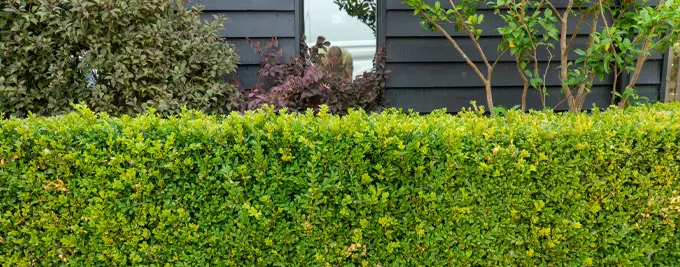
Healthy Box has small, leathery, glossy green leaves on a close woody framework. New growth is softer and lighter in colour before hardening. The plant’s naturally rounded habit makes it easy to train into straight-edged hedges, balls, cones and other shapes.
How large can Box become?
Unclipped Buxus sempervirens can eventually exceed 4m, but it is slow and most garden plants are kept far smaller. Common maintained heights are approximately 20–60cm for edging and knot gardens, 60cm–1.2m for formal boundaries and up to 1.5m or more where a taller evergreen screen is required.
Choosing the right Box hedge
Box is the right plant where its precise clipped appearance is important, the site drains well and the owner is prepared to inspect it regularly. It may be the wrong plant where Box blight has repeatedly affected the same garden, Box tree caterpillar causes severe annual defoliation or the planting would create a very long, humid and difficult-to-monitor continuous hedge.
Choosing traditional Box or a Box alternative
Requirement or risk
Traditional Box
Practical decision
Very crisp low formal edging
Excellent
Box remains one of the best plants for a fine clipped finish
Topiary and geometric shapes
Excellent
Slow growth and dense leaves give precise control
Low-maintenance planting
Variable
Slow growth reduces trimming, but pest and disease monitoring adds work
Known local Box blight
Higher risk
Improve airflow and hygiene or choose an alternative
Persistent Box tree caterpillar
Higher risk
Regular inspection is essential; replacement may be more practical
Deep shade
Usually tolerant
Avoid stagnant, damp air and severe root competition
Hot exposed full sun
Variable
Dry soil and reflected heat can scorch foliage
Permanently wet ground
Poor
Select another species or resolve drainage before planting
Useful alternatives to Box
Small-leaved evergreen alternatives include Euonymus Green Spire, Euonymus Jean Hugues, shrubby honeysuckle and Japanese holly. No alternative copies every quality of Box, so compare growth rate, hardiness, soil preference, clipping frequency and final size. Browse the Box Hedge Alternatives category or the broader small hedge plants range for suitable options
When to plant Box hedging
Autumn and spring are the easiest times to plant Box because temperatures are moderate and the soil normally contains useful moisture. Pot-grown plants can be planted in other seasons if the ground is workable and watering is reliable. Bare-root and root-balled Box are seasonal and should be planted promptly after delivery.
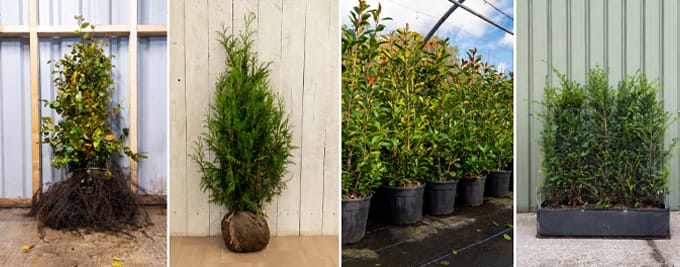
Pot-grown Box
Pot-grown Box offers the greatest flexibility. Avoid frozen, saturated or baked ground and postpone planting during extreme heat if irrigation cannot be guaranteed. Water the pot before planting and continue checking the original compost because it can dry independently of the surrounding soil.
Bare-root Box
Bare-root plants are normally supplied from November to early spring. Keep roots covered and damp, open one bundle at a time and plant without delay. Although Box is evergreen, bare-root stock is lifted in the cooler season when transplant stress is lower.
Root-balled Box
Root-balled plants are field grown and supplied with soil held around the roots. Plant them during the cooler lifting season, keep the ball intact and avoid lifting the plant by its stems. Larger root balls provide immediate size but need considerably more establishment water than small bare-root plants.
Weather to avoid
Frozen soil that cannot be broken and firmed
A water-filled planting trench
Extreme heat and drying wind
Very wet clay that smears into solid walls
Planting immediately before a period when the hedge cannot be checked
Where to plant Box hedging
Sun and shade
Box can grow in full sun, partial shade and deep shade. The best position balances light, moisture and airflow. In full sun, especially beside paving or walls, dry roots and reflected heat can scorch foliage. In dense shade, plants may remain damp for longer and can be crowded by neighbouring growth, increasing Box blight risk.
Soil and drainage
Box prefers moist but well-drained soil rich in organic matter. It tolerates clay, loam, chalk and sand where structure and moisture are suitable. Heavy soil should be opened over a broad strip rather than improved only inside small holes. Sandy soil benefits from organic matter and mulch, but Box should not be planted into a permanently saturated trench or allowed to dry completely.
Airflow and disease prevention
Good airflow is particularly important with Box. Avoid squeezing a hedge between dense perennials, walls and overhanging shrubs where the leaves remain wet. Allow access for inspection and trimming, avoid routine overhead irrigation and do not let weeds or fallen leaves collect inside the hedge.
Coastal and exposed gardens
Established Box can cope with many exposed situations, but drying wind, salt spray and hot sun can mark the foliage. A sheltered or semi-sheltered position is safer, particularly for young plants. Where direct salt exposure is severe, select a more reliably coastal hedge.
Containers
Box can be grown in large containers for edging and topiary. Use a substantial container with drainage holes and a loam-based peat-free compost. Container plants need closer monitoring because roots can become waterlogged in winter and dry rapidly in summer.
How to prepare the planting area
Measure and mark the hedge line. Exclude gateways and corners before calculating plant numbers.
Clear weeds and turf. Prepare a strip wide enough for the roots to spread and for future maintenance.
Check drainage. If water remains after rain, correct the cause before planting.
Loosen the soil. Prepare a continuous trench or broad planting area rather than polished individual holes.
Improve soil where useful. Mix peat-free Hedge Planting Compost with the existing soil to improve structure and moisture retention.
Water plants beforehand. Saturate dry pots and root balls; keep bare roots damp.
Apply mycorrhizal fungi correctly. Use Rootgrow in direct contact with the roots and follow the label.
Avoid strong fertiliser in the hole. Concentrated feed can damage new roots.
Prepare clean tools. Box hygiene begins before planting, particularly where Box already grows elsewhere in the garden.
Arrange protection. Guards are rarely needed for every Box hedge, but use suitable plant protection where rabbits, deer, machinery or foot traffic create a real risk.
How to plant a Box hedge
Lay out the plants at the stated density. Use the figure for the exact height and root type.
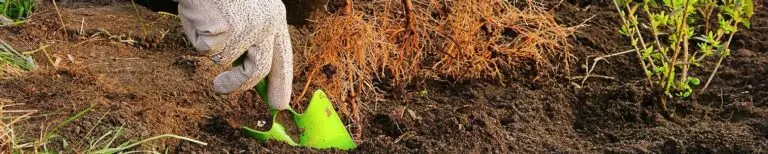
Dig a continuous trench or suitably wide holes. The depth should match the roots, not bury the stems.
Set the nursery soil mark at ground level. Planting too deeply increases the risk of decline.
Spread bare roots naturally. Enlarge the hole rather than folding roots back sharply.
Remove pots and inspect the roots. Tease out tight circling roots gently.
Keep root balls intact. Remove non-biodegradable packaging but retain suitable natural wrapping where instructed.
Backfill gradually. Work soil around the roots and remove large air pockets.
Firm carefully. Each plant should stand upright without the surrounding strip becoming compacted.
Water thoroughly. Wet the root system and surrounding soil through their full depth.
Mulch the line. Apply Hedge Bio Mulch, leaving a clear gap around stems and low leaves.
Keep foliage clean and dry. Wash soil splash from leaves with a directed low-level watering method, then allow the foliage to dry.
Record and inspect. On large schemes, note the planting date, size, source and any early symptoms.
Planting a low formal edge
Use a string line and set the plants accurately because small deviations remain visible in a formal design. Do not bury low branches. A slightly wider spacing can improve ventilation but will take longer to close, so balance disease risk against the desired speed of coverage.
Planting larger root-balled Box
Large plants require greater trench width, careful lifting and more water. Position them before removing lifting straps, check the final height and backfill evenly. Individual staking is rarely needed for a low Box hedge, but exposed taller plants may need temporary support.
Box hedge spacing and plants per metre
Box spacing changes with plant height and root type. The current Hedging Plants Direct calculator uses six plants per metre for 20–30cm bare-root plants, five per metre for 30–40cm bare-root plants and progressively fewer plants as root-balled size increases. This is more useful than applying a universal 30–40cm spacing to every size.
Current Hedging Plants Direct Box planting densities
Plant size and format
Plants per metre
Approximate centre spacing
Practical note
Bare root 20–30cm
6
About 17cm
Close spacing for economical low edging
Bare root 30–40cm
5
20cm
Useful balance of height, density and cost
Root ball 40–50cm
4
25cm
More immediate body and larger root systems
Root ball 50–60cm
3
About 33cm
Allow for broader established crowns
Root ball 60–80cm
3
About 33cm
Needs careful watering during establishment
Root ball 80–100cm
3
About 33cm
Useful where immediate height is important
Root ball 100–125cm
2
50cm
Large plants with higher handling and irrigation needs
Root ball 125–150cm
2
50cm
For taller formal screens, subject to seasonal availability
Pot-grown Box
Varies by size and pot
Varies by size and pot
Call or Email for recommendation
How to calculate quantities
Multiply the hedge length by the plants-per-metre figure. A 12m hedge using 20–30cm bare-root Box at six per metre needs 72 plants. The same line using 60–80cm root balls at three per metre needs 36 plants.
Should Box be planted more widely to reduce blight risk?
Wider spacing improves airflow and can reduce the speed at which disease moves through a dense canopy, but it also increases the time needed for the hedge to close. On high-risk sites, choose fewer, larger plants or allow slightly wider spacing, then prune carefully to build density without creating a permanently wet, airless wall of foliage.
Watering and establishment
Water Box deeply after planting and whenever the root zone begins to dry during the first two growing seasons. Because Box is evergreen, leaves continue to lose water in mild winter weather. Avoid frequent overhead watering, which wets the foliage and can increase fungal risk.
Immediately after planting
Water slowly enough to settle the soil around every root. Recheck the hedge after drainage and straighten plants that have sunk. Direct water to the soil rather than spraying the foliage.
First growing season
Check below the mulch regularly. Full-sun sites beside paving, sandy soil and exposed gardens dry quickly. Heavy clay may remain wet, so test before irrigating. Keep the strip weed free because grass competes strongly with the shallow roots.
Second growing season
Continue watering during prolonged dry spells. A hedge can look established above ground while roots remain concentrated near the original trench. Larger root balls need greater volumes for longer than small bare-root plants.
Winter watering
Water only when the soil is dry and unfrozen. Box in containers, under eaves or beside walls can become dry during mild windy winter periods. Do not leave containers standing in water.
Using irrigation
A correctly positioned hedge irrigation system keeps water at soil level and reduces leaf wetness. Test the far end, check that emitters are not blocked and adjust the schedule for rainfall and soil type.
Signs of drought stress
Bronze or orange foliage during hot weather
Dry, crisp leaf edges
Soft new growth wilting
Dry pot compost beneath a damp surface
Shoot tips dying back after planting
Signs of excess water
General yellowing, especially in low areas
Stagnant-smelling or soft roots
Plants declining despite consistently wet soil
Water remaining in the trench after rain
Repeated root problems in containers without free drainage
How and when to feed Box hedging
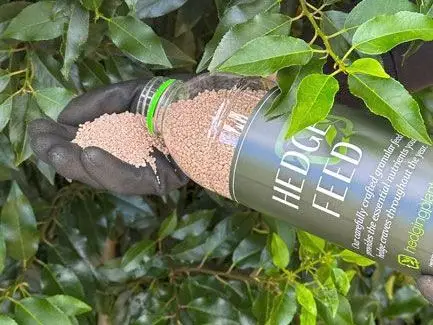
Box does not need frequent feeding in reasonable soil. Apply a balanced Hedge Feed in spring where growth is weak, foliage is pale or the soil is poor, following the product label. Mulching and moisture management normally matter more during establishment than repeated fertiliser applications.
Do not place concentrated feed against bare roots or stems. Avoid high-nitrogen feeding late in summer because soft growth is vulnerable to frost, scorch and disease. Feed after hard renovation in late spring to support recovery, then water and mulch the root zone.
How and when to prune a Box hedge
Young plants
Young Box can be shortened by up to one third in May where extra branching is needed. Remove damaged growth and lightly shape the sides as the plants establish. Avoid repeated clipping of very weak or recently drought-stressed plants.
Mature hedges
Give a mature Box hedge its main trim in August, after the new shoots have hardened and extension growth has slowed. This helps the plant remain neat through winter and reduces the flush of soft growth that follows earlier hard trimming.
How often should Box be trimmed?
One well-timed annual trim is enough for many hedges. Very formal edging and topiary may need a light additional tidy between May and August, but frequent trimming creates an extremely dense canopy with poor airflow. In gardens at risk from Box blight, fewer dry-weather cuts are preferable.
Shape and hygiene
Keep the base at least as wide as the top so light reaches the lower foliage. A gently rounded or convex top sheds water better than a broad flat surface. Prune in dry weather, collect clippings and clean tools between separate Box areas and between gardens.
Renovating old Box
Old, misshapen Box can respond to hard pruning in late spring, commonly May. Reduce severe work in stages where the plant is weak. After cutting back, apply a balanced feed, mulch and water during dry weather. Regrowth is slow, so renovation requires patience.
Bird nesting
Check carefully for active nests before cutting. It is an offence to damage or destroy a wild bird’s nest while it is in use or being built. Dense evergreen Box can conceal nests even when the hedge is low.
Box hedge growth rate and eventual size
Common Box normally grows around 10–20cm a year. Best4Hedging and Hedges Direct commonly use about 10–15cm, while the Hedging Plants Direct category and product attributes use 10–20cm. Site, water, soil, light and trimming affect the result, so growth should never be promised as a fixed annual amount.
Small plants may take three to five years to form a convincing low hedge, depending on starting size and spacing. Root-balled plants provide greater initial height and width but can pause while establishing. An unpruned plant can eventually exceed 4m, although most formal hedges are maintained below 1.5m.
Seasonal Box hedge care calendar
Seasonal Box care in UK gardens
Season
Main tasks
Important checks
Winter
Plant bare-root and root-balled stock when soil is workable; inspect evergreen moisture; clean tools
Waterlogging, winter scorch, rabbit damage and black stem streaks
Early spring
Complete seasonal planting; renew mulch; apply feed only where needed
Box tree caterpillar activity may begin; check inside dense foliage
May
Shorten young plants for branching; renovate old Box after frost risk reduces
Flowers, new growth, blight symptoms and active nests
June–July
Water during drought; monitor pests; lightly tidy only where necessary
Webbing, caterpillars, leaf spots, bronze foliage and dry containers
August
Give the main annual trim in dry weather; collect clippings and clean tools
Airflow, hedge shape, low wet foliage and nesting birds
Autumn
Prepare new planting lines; plant pot-grown Box; mulch after soil is moist
Drainage, fallen infected leaves and local disease history
Box hedge pests, diseases and common problems
Begin diagnosis by separating environmental stress from Box blight and Box tree caterpillar. Brown foliage alone is not enough to identify the cause. Check the roots, stems, leaf undersides, webbing, weather history and whether the problem is localised or spreading. This section provides first checks only. For photographs, detailed symptom comparison and treatment decisions, use our specialist Box Hedge Problems, Pests and Diseases guide.
Box tree caterpillar monitoring
Inspect from spring through autumn, looking deep inside the hedge. Early feeding may be hidden. Pheromone traps can indicate adult moth activity but do not remove every moth or caterpillar. Hand removal is practical on small hedges. Before using any pesticide or biological product, check that it is currently authorised for the intended UK use and follow its label exactly.
Common Box symptoms and first actions
Symptom
Likely causes
How to check
First action
Brown leaves with black stem streaks
Possible Box blight
Look for rapid leaf fall, dark lesions and white spores in humid conditions
Isolate the area, stop clipping and follow the detailed disease guide
Chewed leaves and webbing
Box tree caterpillar
Search inside the plant for striped caterpillars, frass and silk
Remove caterpillars by hand where practical and monitor closely
Bronze or orange foliage
Drought, heat, wind or root damage
Check moisture and exposure before assuming disease
Correct watering and protect from severe drying conditions
General yellowing
Waterlogging, root stress or nutrient shortage
Inspect drainage and roots, especially on clay or in containers
Correct excess moisture before feeding
Pale papery spring shoots
Frost damage
Compare exposed outer growth with sheltered foliage
Wait for recovery and prune dead tips after new growth appears
Pink spore masses on dead leaves
Possible Volutella blight
Inspect undersides and compare with Box blight symptoms
Prune dead growth in dry weather and improve plant health
Sticky foliage or distorted shoot tips
Box sucker or scale insect
Inspect new growth and stems closely
Encourage predators and use non-chemical controls where practical
Sparse lower foliage
Top-heavy clipping, shade, crowding or old age
Assess hedge profile and light at the base
Taper the sides and renovate gradually
If Box tree caterpillars are found
If you find active Box tree caterpillars, hand removal can be practical on small plants and short hedges. Where an infestation is more widespread, a suitable caterpillar treatment may be required.Always read and follow the product instructions and check that any pesticide or biological control is currently authorised and suitable for its intended use in the UK.
Box blight prevention
Reduce risk by buying healthy plants, maintaining airflow, spacing sensibly, watering at soil level, pruning only in dry weather and cleaning tools. Remove fallen leaves from inside and beneath the hedge. Do not compost confirmed infected material unless current local guidance says the composting process is suitable.
When to choose an alternative
Replacement becomes reasonable when blight recurs despite hygiene and design changes, caterpillars repeatedly strip the plants, the hedge requires disproportionate chemical intervention or the site remains humid and unsuitable. A small surviving feature may be retained while larger continuous plantings are replaced with varied alternatives.
Wildlife and environmental value
Box is native and its dense evergreen structure provides year-round shelter. Small spring flowers supply pollen and attract bees where pruning allows them to develop. The leaves support Box-specific insects, including the introduced Box tree caterpillar, while the dense canopy can conceal bird nests.
A wildlife-friendly approach does not mean allowing severe pests to spread unchecked. Monitor carefully, favour physical and cultural controls and avoid unnecessary broad-spectrum pesticides that can affect non-target invertebrates. Check for nests before cutting.
Box care by root type
Bare-root Box
Plant promptly during the cool season, keep roots damp and use the closer size-specific spacing. Water through the first spring and summer and replace confirmed failures during the next planting season.
Pot-grown Box
Pot-grown plants can be planted in more seasons but the original compost can dry or remain saturated independently of the garden soil. Loosen circling roots, keep the top of the root ball level and monitor moisture inside it.
Root-balled Box
Keep the soil ball intact, plant during the cooler lifting period and water deeply. Larger root-balled plants provide immediate impact but require greater establishment care and should not be allowed to dry after planting.
Instant Box hedging
The current main product page does not list a standard instant Box variation. Where bespoke trough-grown Box is supplied, prepare the trench before delivery, join units without gaps and follow the unit-specific irrigation and handling instructions.
Frequently asked questions about Box hedging
Is Box hedging still worth planting in the UK?
Yes, in suitable gardens where the plants can be monitored and maintained. Box still provides an exceptional clipped finish, but Box blight and Box tree caterpillar make it a higher-maintenance choice in some areas. Check local history and compare alternatives before planting a large continuous scheme.
How fast does Box hedging grow?
Common Box normally grows around 10–20cm a year. Growth is slower in dry, compacted or heavily shaded sites and may pause after transplanting. Its slow extension is useful for precise formal hedges but means large gaps take time to close.
How many Box plants do I need per metre?
The current Hedging Plants Direct calculator uses six 20–30cm bare-root plants per metre, five 30–40cm bare-root plants, four 40–50cm root balls, three 50–100cm root balls and two plants per metre for 100–150cm root balls.
How far apart should Box hedging be planted?
Spacing ranges from about 17cm for six small bare-root plants per metre to 50cm for two large root balls per metre. Use the product-specific calculator because one universal distance does not suit every starting size.
When is the best time to plant Box?
Autumn and spring are easiest. Bare-root and root-balled Box are mainly planted from autumn to early spring. Pot-grown plants can be planted at other times when the ground is workable and reliable watering is available.
Can Box grow in shade?
Yes. Box tolerates partial and deep shade, but dense shade combined with stagnant damp air can increase disease risk. Maintain airflow, avoid overcrowding and account for root competition beneath mature trees.
Can Box grow in full sun?
Yes, provided the soil remains moist but well drained. Full sun beside paving or walls can cause drought and leaf scorch, so mulch and water carefully while plants establish.
When should I trim a Box hedge?
Give a mature Box hedge its main trim in August after new growth has hardened. Young plants can be shortened in May to encourage branching. Renovate neglected plants in late spring and always prune in dry weather.
How often should Box be clipped?
Once a year is sufficient for many hedges. Very formal edging may need a light additional tidy, but repeated clipping creates dense foliage with poor airflow. In a garden at risk from Box blight, fewer dry-weather cuts are preferable.
Why is my Box hedge turning brown?
Brown foliage can result from drought, heat, wind, frost, root damage, Box blight or Box tree caterpillar. Look for black stem streaks, webbing and chewed leaves, then check soil moisture and drainage before choosing a treatment.
Can Box recover after caterpillar damage?
Often yes, if stems and roots remain alive. Remove caterpillars, water during dry conditions and allow the plant to regrow before heavy clipping. Repeated severe defoliation can weaken the hedge, so continued monitoring is essential.
Can Box blight be cured?
There is no simple curative treatment. Early detection, hygiene, removal of affected material, improved airflow and reduced leaf wetness can help manage outbreaks. Follow current authoritative advice and consider alternatives where infection repeatedly returns.
Does Box need feeding?
Not routinely in fertile soil. Apply a balanced feed in spring where growth is weak or after hard renovation. Correct drought, waterlogging and compaction before assuming a nutrient shortage.
Can an old Box hedge be cut back hard?
Yes. Established Box often responds to hard pruning in late spring and can be reduced to old wood. Recovery is slow, so feed, mulch and water afterwards and consider renovating weak plants in stages.
Is Box poisonous?
Box is potentially harmful if eaten, including to dogs. It is suitable as ornamental hedging but should not be used where children or pets are likely to chew the leaves, and clippings should be cleared away.
What is the best alternative to Box?
There is no single perfect substitute. Euonymus Green Spire and Jean Hugues, shrubby honeysuckle and Japanese holly are useful small-leaved evergreen options. Choose according to soil, exposure, final height and how often you are prepared to trim.
Related hedge advice
Useful planting, pruning and hedge-care advice from our nursery.
Learn about common box hedge problems, pests and diseases including box blight and box caterpillar, with the best methods for treatment and prevention.
Learn how you can easily plant a hedge with our comprehensive step-by-step guide. From picking the right species to planting techniques and after care.
Enjoy healthy, lush hedges with our comprehensive guide on how to fertilise your hedge. Discover the importance of using the right types of hedge fertiliser
Bare root, root ball, pot-grown and instant hedging suit different budgets, planting times and levels of initial coverage. Understanding how each is supplied makes it easier to choose the right format for your project.
Box responds well to clipping, but the age of the hedge and the weather conditions both matter. Choosing the right time helps maintain dense, even growth while reducing the risk of scorch, soft regrowth…
Explore the complete Box hedge plant range to compare seasonal bare-root plants and larger root-balled sizes. The Common Box product page displays live prices, stock, pack options and the current plants-per-metre figure for each available variation.
Hedging Plants Direct is a family-run nursery business established in 1982 and supplies retail, trade and commercial customers across the UK. Before ordering a large Box scheme, review the maintenance commitment and the local history of blight and caterpillar. Where another plant is more appropriate, compare our Box hedge alternatives and small hedge plants.