Yew Hedging Care Guide: Planting, Spacing and Pruning
Yew hedging establishes best in well-drained soil when it is planted at the correct depth, watered consistently for its first two growing seasons and kept free from grass and weed competition. English Yew, Taxus baccata, is a dense native evergreen that grows in sun or shade, responds exceptionally well to clipping and can regenerate from old wood. This guide explains how to choose, plant, space, water, feed, prune and troubleshoot plants from our Yew hedging range.
Yew is long lived and adaptable, but it has two important limitations. It dislikes waterlogged soil, and its foliage, bark and seeds are highly poisonous if eaten. Never plant Yew within reach of horses or grazing livestock, collect clippings immediately and keep them away from children, pets and animals.
Reviewed by Gwynne Bodsworth, Founder and GrowerLast reviewed 13 August 2026
Expert nursery advice
Gwynne's Grower's Tip
Yew rewards patience. It may not race away like Leylandii, but once it establishes it creates one of the best evergreen hedges you can grow. The two things I stress most are drainage and watering: never leave the roots in stagnant soil, but do not let a newly planted Yew hedge dry out either.
Gwynne Bodsworth• Founder and Grower, Hedging Plants Direct
English Yew is my choice when a customer wants a formal evergreen hedge that can be kept for generations. It handles shade, takes a crisp trim and, unlike most conifers, can recover from cuts into old wood. Start with the right spacing, keep the root zone weed free and be particularly careful not to overwater heavy soil.
English Yew topiary is becoming more popular due to issues with Box. It must be remembered that Yew needs light soil to thrive and doesn't do well in damp shady areas.
Water regularly while establishing, especially during dry weather
Pruning period
Late spring and late summer
Feeding
Feed in spring with a balanced fertiliser
Hardiness
Fully hardy in the UK
Typical hedge height
1–5 m+
Planting season
Pot grown: year-round; bare root/root ball: autumn to early spring
Root types commonly available
Pot grown, bare root and root ball
About Yew hedging
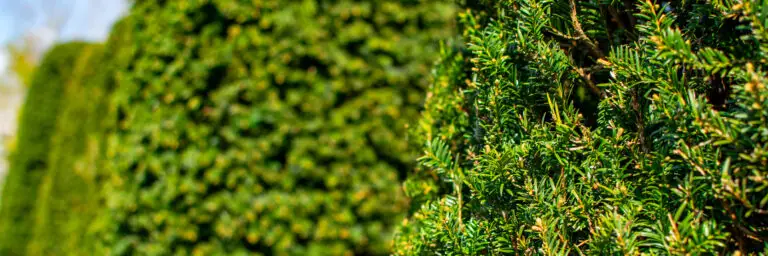
English Yew (Taxus baccata) is a native evergreen conifer that has been grown as a hedge in Britain for centuries. Its dense growth, dark green foliage and ability to respond well to regular trimming make it particularly suited to formal hedges, screens and garden boundaries.
Unlike faster-growing conifers such as Leylandii, Yew has a relatively steady growth rate of around 20–30 cm per year once established. This slower, controlled growth makes mature Yew hedges easier to maintain and allows them to develop a dense structure over many years.
Choosing the right Yew hedge
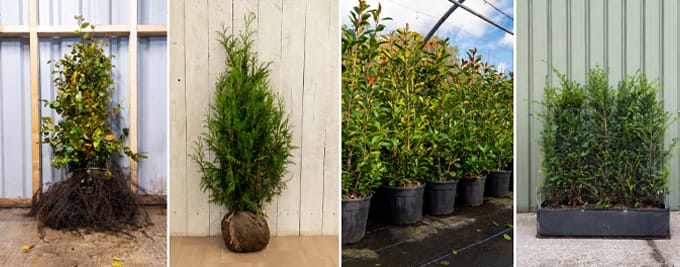
The best Yew plant is not always the tallest plant available. Young 40–60cm plants are economical, handle transplanting well and often establish strongly. Larger root-balled and instant options provide more immediate coverage, but their concentrated root systems need more careful handling, soil preparation and watering.
Choosing between Yew root types and starting sizes
Format
Best suited to
Main advantage
Important consideration
Bare root
Long hedges, value-led projects and winter planting
Lowest cost per plant and quick to handle
Roots must be kept damp and planted promptly during dormancy
Pot grown
Flexible planting dates and smaller domestic projects
Can be planted through most of the year
The original pot compost can dry independently of the surrounding soil
Root balled
Larger hedges and projects needing more initial height
Substantial field-grown plants with immediate structure
Seasonal, heavy and sensitive to poor handling or insufficient water
Instant hedging
Immediate connected screening and formal landscape schemes
A metre of established hedge from planting day
High water demand and careful trench preparation during establishment
Yew for low hedges and Box-style edging
Yew can be maintained as a low hedge, particularly where a longer-lived and more disease-resilient alternative to Box is wanted. Its needles are coarser than Box leaves, so the finished texture is different, but it responds well to close clipping. Browse our Box hedge alternatives and small hedge plants for other compact choices.
Yew for privacy and tall boundaries
For a tall evergreen screen, Yew is slower than Leylandii or Western Red Cedar but more forgiving when a hedge needs to be narrowed or reduced later. Larger root-balled or instant plants shorten the wait for initial height. Plan access for future trimming and do not allow a tall hedge to become wider than the site can accommodate.
Yew for shade
Yew is one of the best evergreen hedges for shade. It can survive in deep shade, but dense growth still depends on adequate soil, moisture and freedom from competing tree roots. In a very dark position beneath mature trees, expect slower extension and a less even surface until the hedge establishes.
Yew for exposed and coastal gardens
Established Yew tolerates exposure well, including many inland windy sites. Young plants can still suffer wind-rock and winter desiccation. Direct salt spray may scorch foliage, so a sheltered position or temporary permeable wind protection is advisable on severe coastal sites.
When to plant Yew hedging
Autumn and spring are the best general planting periods because the soil is usually moist and temperatures are moderate. Bare-root and root-balled Yew are seasonal, while pot-grown and instant plants can be installed at other times if the ground is workable and reliable irrigation is available.
Bare-root Yew
Plant bare-root Yew while dormant, normally from November to March or early April depending on weather and nursery supply. Keep the roots wrapped, cool and damp until planting. Do not leave plants exposed beside the trench while the remaining ground is prepared.
Pot-grown Yew
Pot-grown Yew can be planted for most of the year. Autumn and spring are easiest. Summer planting is possible, but only where the plants can be watered deeply and checked frequently. Water every pot before planting so dry compost does not repel water after installation.
Root-balled Yew
Root-balled plants are lifted and supplied during the cooler dormant season, normally from autumn to early spring. Keep the soil ball intact, never lift a plant by its stem and plant soon after delivery. Larger sizes may require machinery or several people to move safely.
Instant Yew hedging
Instant Yew can be planted throughout much of the year, but autumn or spring reduces stress. Prepare the whole trench and access route before delivery. Postpone planting during frozen ground, standing water, extreme heat or drought if the site cannot be irrigated immediately.
Where to plant Yew hedging
Sun and shade
Yew grows from full sun to deep shade. Full sun encourages dense, even growth when moisture is adequate. Shade tolerance makes it valuable beside buildings and beneath light tree canopies, although heavy root competition and permanently dry shade can slow establishment.
Soil type and pH
Yew grows in clay, loam, chalk and sandy soils across a broad pH range. The critical requirement is oxygen around the roots. Heavy clay is suitable only where excess water can drain. Very sandy soil benefits from organic matter and mulch so it does not dry rapidly.
Waterlogged soil
Do not plant Yew into a trench that remains full of water. Persistent saturation can cause root death and Phytophthora root rot. On moisture-retentive ground, improve the entire planting strip or form a broad raised ridge so the root crown sits above the wettest level. Avoid a small compost-filled hole that behaves like a sump.
Distance from boundaries and paving
Allow enough space for the planned hedge width and future access. A formal Yew hedge can be kept relatively narrow, but it still needs light and air around both faces. Keep the main stem line far enough from walls and fences to allow trimming, and locate services before digging.
Never plant within reach of grazing animals
Yew is highly poisonous to horses and livestock. Do not use it as a paddock hedge and do not rely on a lightweight guard or young fence to prevent browsing. Clippings can be especially hazardous because animals may eat cut material they would otherwise ignore.
How to prepare the planting area
Measure the finished hedge line. Exclude gateways, planned gaps and changes in direction.
Check drainage after rain. Correct any section where water remains standing.
Clear weeds and turf. Prepare a broad weed-free strip rather than small isolated holes.
Relieve compaction. Fork or cultivate compacted soil without smearing wet clay.
Improve poor soil moderately. Blend peat-free Hedge Planting Compost with the existing soil where it will improve structure or water retention.
Form a ridge on damp ground. Raise the planting line where drainage cannot be improved sufficiently.
Water pot-grown and instant roots. Saturate dry compost before planting.
Keep bare roots protected. Open one bundle at a time and cover the remainder.
Apply optional mycorrhizal fungi correctly. Place Rootgrow in direct contact with roots, following its current label.
Avoid strong fertiliser in the trench. Concentrated feed can damage roots and does not compensate for poor soil preparation.
Prepare protection in advance. Use appropriate plant protection where rabbits, deer, machinery or foot traffic are a genuine risk.
How to plant a Yew hedge
Lay out the plants at the correct density. Use the live figure for the exact height and root type.
Dig a continuous trench or suitable holes. The soil should be loosened wider than the roots but not unnecessarily deep.
Set the old soil mark at ground level. Do not bury the stem or root flare.
Spread bare roots naturally. Enlarge the hole rather than folding roots sharply.
Remove pots and inspect roots. Tease out tightly circling outer roots gently.
Keep root balls intact. Remove non-biodegradable wrapping and follow the supplied instructions for natural hessian or wire.
Join instant units closely. Avoid open gaps between metre-long sections.
Backfill in stages. Work soil around the roots and remove large air pockets.
Firm carefully. Each plant should stand upright without the strip being compacted solid.
Water deeply. Wet the original roots and the surrounding prepared soil.
Mulch the line. Apply Hedge Bio Mulch, leaving a clear gap around stems.
Protect young plants where necessary.Spiral rabbit guards may help small bare-root plants in high-risk gardens, but they must be inspected and removed before restricting growth.
Record long or commercial schemes. Note planting date, size, root type and irrigation checks.
Yew hedge spacing and plants per metre
Yew spacing varies with the starting height and root type. The current product calculator uses four small bare-root plants per metre, three plants per metre for many 40–125cm options, two larger root balls per metre and one very large 250–275cm specimen per metre. Always use the live density for the selected variation.
Current Hedging Plants Direct Yew planting densities
Plant size and format
Plants or units per metre
Approximate spacing
Practical note
Bare root 20–30cm
4
25cm
Economical young plants for low or long hedges
Bare root 30–40cm
4
25cm
Close planting for quick joining
Bare root 40–60cm
3
About 33cm
Strong balance of value and starting height
Pot grown 30–60cm
Check selected option
Varies
Current smaller pot sizes do not all show a visible calculator density
Pot grown 60–80cm
3
About 33cm
Current live calculator density
Pot grown 80–100cm
3
About 33cm
More immediate foliage with careful root-ball watering
Pot grown 100–125cm
Check selected option
Varies
Confirm the current product recommendation before ordering
Instant 80–100cm
1 metre-long unit
Units placed end to end
One connected trough section fills approximately one metre
Root ball 60–125cm
3
About 33cm
Applies to current 60–80, 80–100 and 100–125cm options
Root ball 125–200cm
2
50cm
Applies to current 125–150, 150–175 and 175–200cm options
Root ball 200–225cm
Check selected option
Varies
Confirm density for this substantial specimen size
Root ball 250–275cm
1
1m
Very large specimens requiring machinery, staking assessment and high water volumes
Calculating plant quantities
Multiply the measured hedge length by the plants-per-metre figure. A 12m hedge using 40–60cm bare-root Yew at three per metre needs 36 plants. The same length using 125–150cm root balls at two per metre needs 24 plants. A 12m instant run requires approximately twelve metre-long units.
Single row or double row?
A single row at the product-specific density is normally sufficient for a formal garden Yew hedge. A staggered double row can create a broader landscape screen, but it needs substantially more width, water and long-term trimming. Do not double the plant quantity without planning the finished dimensions.
Watering and establishment
Water newly planted Yew deeply and consistently for at least the first two growing seasons, but never leave the roots saturated. Evergreen foliage continues to lose water in winter, so root moisture must be checked during dry, mild and windy periods as well as in summer.
Immediately after planting
Water enough to settle soil through the full root depth. Recheck the hedge afterwards and straighten plants that have sunk or leaned. Large root balls and instant units require much more water than small bare-root whips.
First growing season
Check below the mulch regularly. Sandy, exposed and paved sites dry fastest. Heavy clay should be inspected before additional irrigation because the surface may appear dry while the lower trench remains saturated. Keep a weed-free strip to reduce competition.
Second growing season
Continue deep watering during prolonged dry weather. A hedge can look established above ground while its roots remain concentrated around the original trench. Large root-balled and instant Yew may need intensive monitoring for longer than young whips.
Winter watering
Water only when the soil is dry and unfrozen. Recently planted Yew beside walls, beneath overhangs or in rain shadows can dry through winter. Avoid routine watering of already wet clay.
Using hedge irrigation
A correctly installed hedge irrigation system is useful on long garden, commercial and instant-hedge projects. Test the far end of the line and inspect the soil manually. Adjust timers for rainfall and season rather than using one schedule all year.
Signs of drought
Needles become dull, bronze or brown from the tips.
New growth wilts or stops extending.
The original pot or root-ball soil is dry below the surface.
Recently planted stems die back unevenly.
Foliage browns most strongly on the exposed side.
Signs of waterlogging
Soil remains saturated long after rain.
Foliage turns pale green, yellow or dull bronze.
Individual plants decline in the lowest section of the trench.
Fine roots are dark, soft or lacking.
Growth remains weak despite feeding and wet soil.
How and when to feed Yew hedging
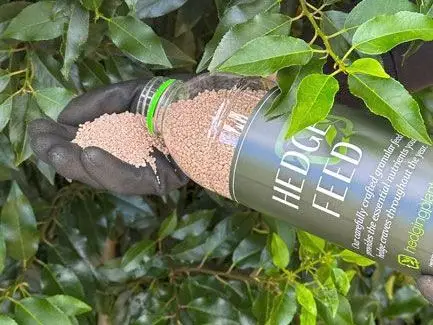
Yew does not need frequent feeding in fertile garden soil. Water, drainage, mulch and weed control have a greater influence during establishment. Where growth is weak after those factors have been checked, apply a balanced Hedge Feed as a spring top dressing according to its current label.
Spread feed over moist soil around the active root area rather than against the stems. Water afterwards if rain is not expected. Never feed a yellowing hedge simply because the soil is wet: waterlogging and root disease will not be corrected by fertiliser. Avoid high-nitrogen applications late in summer because soft growth may be vulnerable to winter damage.
Renewing organic mulch in spring or autumn helps retain moisture, suppress weeds and improve soil gradually. Keep mulch clear of the stems. The general hedge fertilising guide explains how to decide whether a hedge genuinely needs additional nutrients.
How and when to prune a Yew hedge
Formative pruning
During the first few years, shorten long side shoots to encourage dense branching and a tapered shape. Allow the leading shoots to continue until the hedge approaches its final height. Keep the base wider than the top so sunlight reaches the lower foliage.
Main annual trim
Trim an established Yew hedge once a year in summer or early autumn. August and September are common periods, provided no active nests are present. Remove the current season’s extension and cut back to the desired outline without making the top wider than the base.
Very formal Yew hedges
A formal hedge can receive an earlier light trim and a second late-summer tidy. Multiple light trims create a smoother surface than one severe cut. Avoid repeatedly clipping during drought unless the root zone is adequately moist.
Renovating an overgrown hedge
Yew is unusual among conifers because it can regenerate from old wood. For a very large hedge, staged renovation is safest: lower the top in the first spring, reduce one side the following spring and the second side in the third year. This retains some foliage while new shoots develop.
Coppicing bare or failed bases
Where an established hedge has become completely bare at the base, Yew can be cut to around 15–20cm above ground in early spring. This is a drastic option and recovery takes several years. Correct drainage and root problems first, and consider professional advice for valuable old hedges.
Handling poisonous clippings
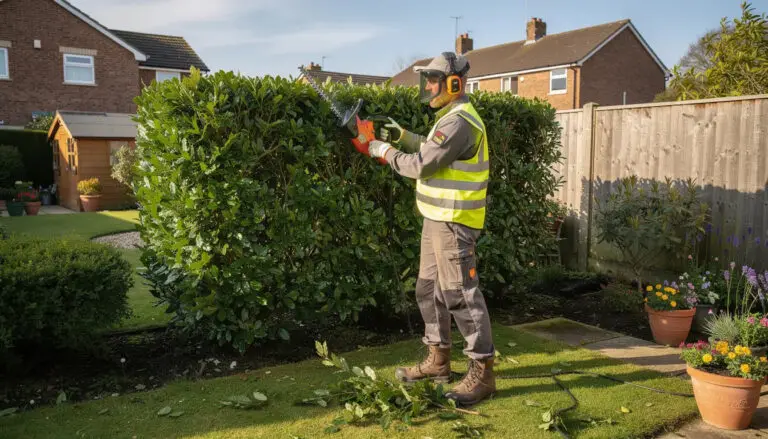
Wear gloves and long sleeves when handling Yew clippings. Collect all cut material immediately and store or dispose of it where children, pets, horses and livestock cannot reach it. Never throw Yew clippings into a paddock or leave them beside a livestock fence.
Bird nesting checks
Inspect the hedge carefully before cutting and delay work if an active nest is present. Wild birds, nests and eggs are legally protected. Agricultural hedgerows in England may also be subject to cutting restrictions from 1 March to 31 August, with defined exemptions.
Yew hedge growth rate and eventual size
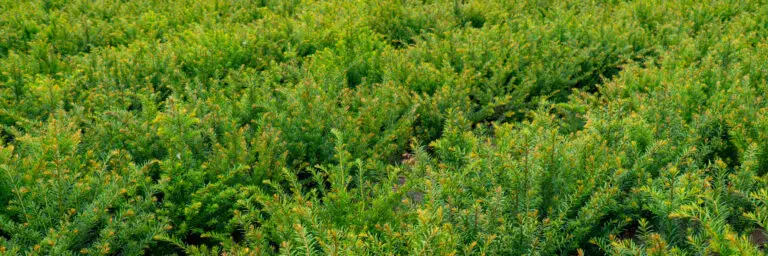
English Yew commonly makes about 20–30cm of annual extension once established, with 20–40cm possible under favourable conditions. The first season may be slower while transplanted roots recover. Larger plants provide more immediate height but do not necessarily extend faster than smaller well-established plants.
Growth depends on light, soil temperature, drainage, moisture, root competition and pruning. Yew growing in deep dry shade may be much slower. A hedge in fertile, moisture-retentive but well-drained soil can make stronger extension and will need more regular clipping.
Left unpruned, Taxus baccata can exceed 12m and become a substantial tree. As hedging, it can be maintained from around 60cm to 5m or more. Very tall hedges create greater maintenance, neighbour and safety considerations, so choose the intended height before planting.
Seasonal Yew hedge care calendar
Seasonal tasks for English Yew hedging in the UK
Period
Main tasks
Important checks
January–February
Plant bare-root and root-balled stock in workable ground; repair guards and firm wind-rocked plants
Frozen soil, saturated trenches, livestock access and winter drought
March–April
Complete seasonal planting; apply mulch; begin staged renovation of overgrown hedges
Dry root balls, poor drainage, late frost and early bird nesting
May–June
Water new hedges, weed the strip and apply a balanced spring feed only where required
Vine weevil, scale insects, uneven irrigation and active nests
July
Maintain irrigation and lightly shape very formal hedges only after nest checks
Drought scorch, heat around guards and dry instant units
August–September
Give the principal annual trim; collect all poisonous clippings immediately
Active nests, hedge taper and drought stress before cutting
October–December
Prepare planting lines, plant in suitable weather and monitor evergreen moisture
Waterlogging, wind-rock, exposed roots and animal access
Yew hedge pests, diseases and common problems
Yellow or brown Yew foliage is more often caused by root conditions, drought or transplant stress than by a serious insect. Start with the soil, planting depth and moisture pattern. If one section repeatedly fails in wet ground, investigate root disease before replanting.
Common Yew hedge symptoms and practical first actions
Symptom
Likely causes
How to check
First action
Yellowing foliage
Waterlogging, root stress, planting too deeply or nutrient shortage
Check soil moisture and whether decline follows low sections
Correct drainage and depth before feeding
Brown needles on exposed side
Drought, drying wind or winter desiccation
Inspect root-ball moisture and exposure
Water deeply if dry and improve temporary shelter
One plant suddenly collapses
Dry root ball, damaged roots, Phytophthora or honey fungus
Inspect roots and stem base; compare surrounding drainage
Obtain a sound diagnosis before replacing repeatedly
Not growing
Normal first-year establishment, shade, drought, compaction or waterlogging
Check buds, roots, moisture and competition
Correct conditions and allow a full growing season
Sparse lower growth
Top-heavy profile, deep shade or missed formative pruning
Assess light at the base and hedge shape
Taper the sides and renovate gradually
Notched foliage and weak pots
Possible vine weevil
Check for notched needles and cream larvae around container roots
Improve plant health and use current non-chemical or labelled controls if needed
Sticky foliage or small shell-like insects
Scale insects
Inspect stems and undersides of needles closely
Prune heavily infested shoots and encourage natural predators
Phytophthora root rot
Yew is particularly susceptible to Phytophthora root diseases in wet soil. Affected plants may yellow, bronze, wilt and die while neighbouring plants in better-drained ground remain healthy. Roots become dark and lack fine white tips. Improve drainage and obtain a reliable diagnosis before replanting Yew into the same position.
Honey fungus
Honey fungus is less common but can kill Yew and other woody plants. Look for white fungal sheets beneath bark at soil level, black bootlace-like strands and honey-coloured mushrooms in autumn. Symptoms overlap with waterlogging, so do not assume the cause from foliage alone.
Vine weevil
Adult vine weevils notch foliage, while larvae can damage roots, particularly in containers and newly planted pot-grown Yew. Inspect weak plants and their root balls. Healthy established hedges usually tolerate limited adult feeding. Use cultural or biological controls appropriate to the site and current product labels.
Scale insects, gall mites and tortrix moth
These pests can occur on Yew but rarely justify routine treatment. Confirm the organism first, prune localised infestations where practical and encourage predators. Avoid broad-spectrum pesticides unless damage is serious and a currently authorised product is appropriate.
Can a damaged Yew hedge recover?
Yes, Yew often recovers from severe pruning and physical damage because it can regrow from old wood. Recovery is less likely where roots have died from prolonged saturation or advanced root disease. Remove dead growth, correct the cause and avoid combining hard pruning with drought or excessive feeding.
Wildlife and environmental value
Yew is one of Britain’s native evergreen trees. A dense hedge provides year-round shelter and nesting cover, while its structure can form a protected route through a garden for hedgehogs and other small wildlife. Female plants produce red arils that are eaten by birds, which disperse the seeds.Wildlife value does not remove the toxicity risk. The seed inside each aril is highly poisonous to people and many animals, and the foliage is poisonous if eaten. Check for active nests before trimming and keep clippings inaccessible.
Yew toxicity and safe garden use
All parts of Yew are poisonous if eaten except the red fleshy aril itself, and the hard seed inside that aril is highly toxic. Yew should never be planted where grazing animals can browse it. Do not place it directly beside horse paddocks, livestock fields or areas where clippings could be blown or thrown into grazing land.Wear gloves when pruning and wash hands afterwards. Supervise children around fruiting plants and teach them not to eat any part. Keep dogs and other pets away from pruned material. If ingestion is suspected, seek urgent medical or veterinary advice rather than waiting for symptoms.
Yew care by root type
Bare-root Yew
Bare-root plants offer excellent value and usually establish well when planted promptly during dormancy. Protect roots from drying, firm the trench carefully and water through the first two growing seasons. Small plants need closer spacing but are easier to handle and often settle more quickly than very large specimens.
Pot-grown Yew
Pot-grown Yew gives flexible planting dates. Loosen circling roots, plant the root ball level with the soil and check moisture inside the original compost. A wet clay trench can surround a dry pot root ball, so inspect both areas separately.
Root-balled Yew
Root-balled Yew provides greater starting height but must be handled by the soil ball, not the stem. Plant during the cooler lifting season, keep the root crown at the correct level and apply enough water to wet the complete ball. Large sizes may need staking assessment and machinery access.
Instant Yew hedging
Instant units create immediate connected screening, but the visible hedge is not yet rooted into the site. Prepare a continuous trench, position units end to end and water every metre. Check the middle and far end of long runs rather than assuming the first section represents the whole hedge.
Frequently asked questions about Yew hedging
How fast does a Yew hedge grow?
English Yew usually grows about 20–30cm per year once established, although 20–40cm may be possible in favourable conditions. Growth is slower in deep dry shade, poor soil and during the first season after planting. The rate is moderate rather than extremely slow.
When is the best time to plant a Yew hedge?
Autumn and spring are the easiest planting periods. Bare-root and root-balled Yew should be planted while dormant, normally from autumn to early spring. Pot-grown and instant hedging can be planted at other times when the ground is workable and reliable watering is available.
How many Yew plants do I need per metre?
Small 20–40cm bare-root Yew currently uses four plants per metre, 40–60cm bare root and many 60–125cm pot-grown or root-balled sizes use three, and larger 125–200cm root balls use two. Always use the density displayed for the exact variation.
How far apart should Yew hedging be planted?
Current spacing ranges from 25cm for four small plants per metre to 50cm for two larger root balls per metre. A 250–275cm specimen may be planted at one per metre. Plant size and root type determine the correct distance.
Can Yew grow in shade?
Yes. Yew is one of the most shade-tolerant evergreen hedge plants and grows in sun, partial shade and deep shade. Growth may be slower beneath mature trees because of root competition and dry soil, so preparation and establishment watering remain important.
Can Yew grow in clay soil?
Yes, provided the clay drains. Yew tolerates heavy and moisture-retentive soil but is vulnerable to root rot in prolonged saturation. Improve the whole planting strip or use a broad raised ridge where standing water cannot otherwise be avoided.
When should I trim a Yew hedge?
Trim an established Yew hedge in summer or early autumn, commonly during August or September. Very formal hedges may receive an earlier light trim as well. Check for active bird nests before cutting and collect all poisonous clippings immediately.
Should Yew be cut back after planting?
Do not automatically remove the height from a well-branched plant. Shorten long side shoots and weak or damaged growth to encourage a dense framework, while allowing the main leader to continue until the hedge approaches its planned height. Very thin young plants may need more formative pruning than bushy specimens.
Can Yew be cut back into old wood?
Yes. Yew is one of the few conifers capable of regenerating from old bare wood. Renovate a large hedge gradually over several years where possible. Major reductions are best started in mid-spring, after severe frost but before strong summer growth.
Why is my Yew hedge turning yellow?
Yellow foliage commonly indicates wet roots, poor drainage, planting too deeply or transplant stress. Check soil moisture and whether affected plants sit in a low section before applying feed. Phytophthora root rot should be considered where decline continues in saturated ground.
Why is my Yew hedge turning brown?
Brown needles can result from drought, drying wind, winter desiccation, root damage or root disease. Check moisture inside the original root ball and compare exposed and sheltered sides. Browning accompanied by persistently wet soil and root death requires further diagnosis.
How often should a new Yew hedge be watered?
Water deeply at planting and whenever the root zone begins to dry during the first two growing seasons. Frequency depends on soil, rainfall, exposure and plant size. Large root balls and instant units need greater volumes, while clay should be checked carefully to prevent saturation.
Does Yew need feeding?
Not routinely in fertile soil. Apply a balanced hedge feed in spring where growth remains weak after drainage, watering and weed competition have been checked. Do not feed a waterlogged or badly drought-stressed hedge in place of correcting the cause.
Is Yew poisonous?
Yes. Yew foliage, bark, wood and seeds are highly poisonous if eaten. The red aril flesh itself is not considered poisonous, but the seed inside is highly toxic. Never plant Yew within reach of grazing animals and keep clippings away from children and pets.
Is Yew suitable beside a horse paddock?
No. Yew should not be planted within reach of horses or other grazing livestock. All green material and clippings present a serious poisoning risk. Choose a genuinely livestock-appropriate hedge and maintain a suitable stock-proof fence instead.
Can Yew be kept as a low hedge?
Yes. Yew can be maintained as a low formal hedge and is a long-lived alternative to Box, although its needles give a coarser texture. Begin formative clipping early and keep the base slightly wider than the top.
How tall can a Yew hedge grow?
Yew can exceed 12m as an unpruned tree. As hedging it is commonly maintained from around 60cm to 5m. Very tall hedges require specialist access and regular management, so set a realistic final height before planting.
Is Yew good for wildlife?
Yes. Dense evergreen foliage provides year-round shelter and nesting cover, and female plants can produce red arils eaten by birds. The plant remains highly poisonous to people and many animals, so wildlife benefits do not remove the need for careful placement and handling.
Related hedge advice
Useful planting, pruning and hedge-care advice from our nursery.
Compare the best hedge plants for privacy in UK gardens, including evergreen, fast-growing and seasonal options for different soils, sites and screening needs
Best time to trim hedges in the UK explained: seasonal timing, nesting bird rules, hedge types, tools and aftercare. Get a neat, healthy hedge all year.
Enjoy healthy, lush hedges with our comprehensive guide on how to fertilise your hedge. Discover the importance of using the right types of hedge fertiliser
Bare root, root ball, pot-grown and instant hedging suit different budgets, planting times and levels of initial coverage. Understanding how each is supplied makes it easier to choose the right format for your project.
Choosing taller Yew plants can give a new garden hedge immediate structure and privacy, but plant height is only part of the decision. Root type, bushiness, spacing, site access and the amount of establishment…
Yew is a familiar evergreen hedge, but its foliage, bark and seeds require particular care around animals. This guide explains the practical risks for dog owners and livestock keepers, including how to manage berries…
Planting Yew at the right time reduces stress and makes first-season watering easier. The most suitable planting window depends on whether you are buying bare-root, root-balled, pot-grown or instant Yew hedging.
English Yew is often described as slow growing, but a healthy, established hedge can still make useful progress each year. Its actual rate depends on establishment, drainage, moisture, light, root competition and how it…
Explore the complete Yew hedge plant range to compare bare-root, pot-grown, root-balled and instant formats. The English Yew product page shows current heights, seasonal availability, prices, pack options and the recommended density for the selected variation.
Hedging Plants Direct is a family-run nursery business established in 1982 and supplies homeowners, landscapers, developers, trade buyers and commercial customers across the UK. Pot-grown Yew provides flexible planting dates, while bare-root and root-balled stock is seasonal. Mixed-format orders may be dispatched together when all plants are available.