Hedging Plants for Fences & Walls
Fence & wall screening

Hedging Plants for Fences & Walls

Browse hedging plants for covering fences and walls, from evergreen screens to fast-growing and instant options. Choose a hedge that suits the available width, light, soil and level of screening you need.

Hedge Plants or Pleached Trees?

Both can screen a boundary, but they solve different problems around fences and walls.
CompareHedge PlantsPleached Trees
Best forSoftening or hiding the boundary from ground level upwardsAdding screening above an existing fence or wall
Foliage positionGrowth starts near ground level and forms a continuous hedgeA trained canopy sits above a clear stem
Initial coverDepends on the species, supplied size and root typeImmediate height and structure, with canopy density varying by size and maturity
SpaceNeeds enough border width for the maintained hedge and access for trimmingNeeds suitable planting space plus room for the trained heads to develop
MaintenanceRegular clipping of sides and top once establishedTraining, tying and pruning the raised canopy as it develops
Choose whenThe fence or wall itself needs to be softened, hidden or screenedThe lower boundary is adequate but overlooking remains above it
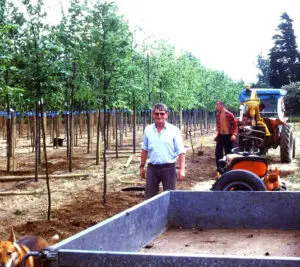
Gwynne Bodsworth, founder and grower at Hedging Plants Direct
Expert nursery advice

Gwynne's Grower's Tip

When you are planting in front of a fence, leave enough room for the hedge to develop and for you to maintain it. The fastest-growing plant is not always the best choice if the border is narrow. I would first decide how much width you can realistically give the hedge, whether you need winter foliage and how much initial coverage you want. Then choose the species and starting size around those limits rather than planting too close to the boundary and trying to control it later.
Helpful answers

Frequently asked questions

01What Is the Best Hedge to Cover a Fence?

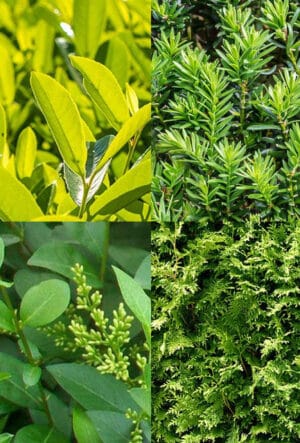
The best hedge depends on the available width, light, soil, exposure and whether you need year-round foliage. Cherry Laurel, Portuguese Laurel, Yew, Privet, Griselinia, Photinia Red Robin, Thuja and Oleaster are all useful options in suitable conditions.

Where winter screening matters, start with evergreen species. If the border is narrow, prioritise a hedge that can be maintained at the required width rather than simply choosing the fastest-growing plant.

02How Far Should I Plant a Hedge From a Fence or Wall?

There is no single planting distance that suits every hedge. Allow enough room for the roots, the intended maintained width and access for future trimming, while also considering the foundations and condition of the boundary.

Use our guide to planting a hedge beside a fence or wall and check the mature spread and spacing advice for the exact species you are buying.

03What Is the Fastest-Growing Hedge for Covering a Fence?

Leylandii is one of the fastest-growing evergreen hedge choices, while Cherry Laurel and Common Privet can also establish quickly in suitable conditions.

Growth speed should be balanced against available width and maintenance. A vigorous hedge planted into a narrow border can require more frequent pruning to stop it becoming too wide.

04Which Evergreen Hedges Will Hide a Fence All Year?

Suitable evergreen choices include Cherry Laurel, Portuguese Laurel, Yew, Griselinia, Photinia Red Robin, Holly, Oleaster, Thuja and Leylandii.

The best choice depends on your soil, drainage, exposure, available light and the final height and width you want to maintain.

05What Can I Plant If I Need Screening Above a Fence?

If the existing fence or wall already provides enough cover at ground level, pleached trees can add screening higher up without creating a full-height hedge from the base.

Choose the clear stem height and trained head size to match the height of the boundary and the area you want to screen. Evergreen pleached species are useful where winter coverage is important.

Helpful next steps

More help planning your boundary

Browse all Q&A

Choosing Hedging Plants for Fences and Walls

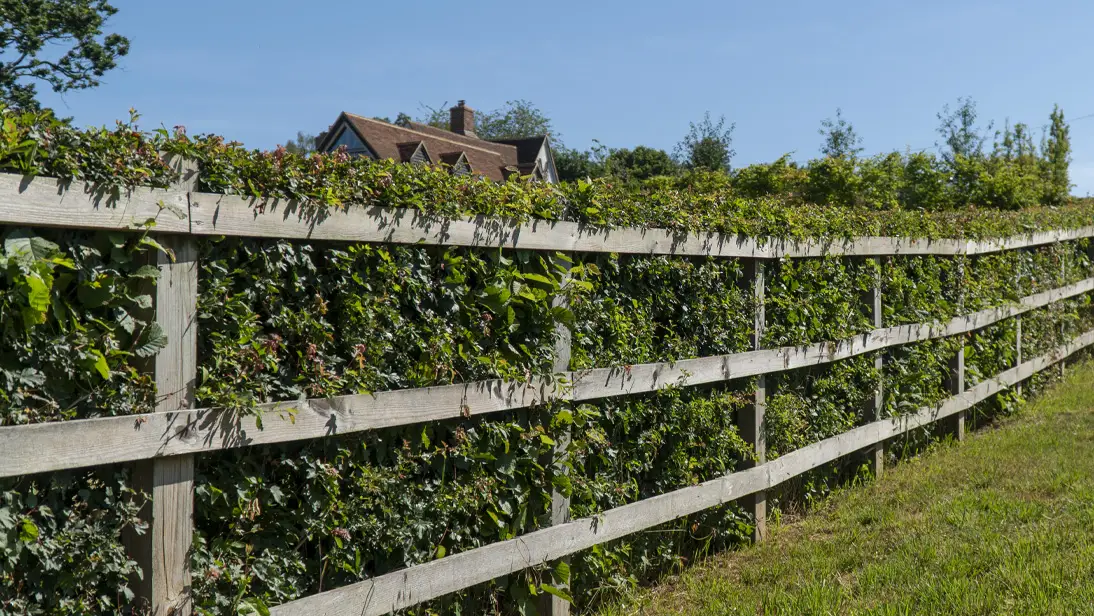
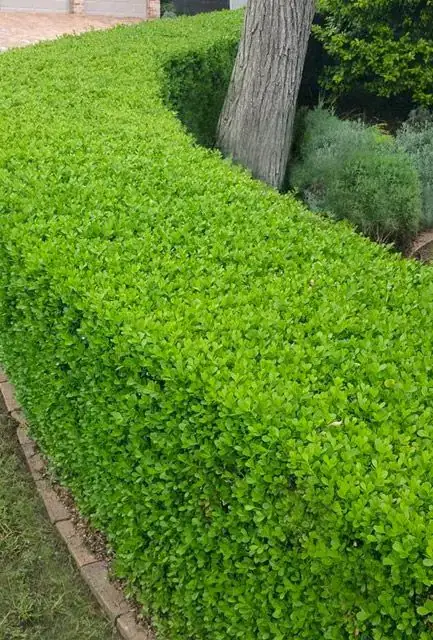
A hedge can soften a hard boundary, hide ageing fence panels and create a more natural garden backdrop. The right choice depends on the width available in front of the fence or wall, the amount of winter screening you need, the light and soil conditions, and how regularly you are prepared to trim.

Before ordering, decide the maintained height and width rather than choosing on growth rate alone. Vigorous plants can cover a boundary quickly, but they also need enough room to develop and may require more regular clipping.

Evergreen Hedges for Year-Round Cover

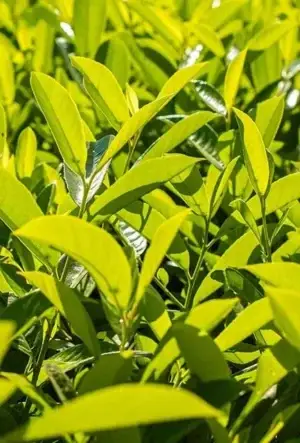
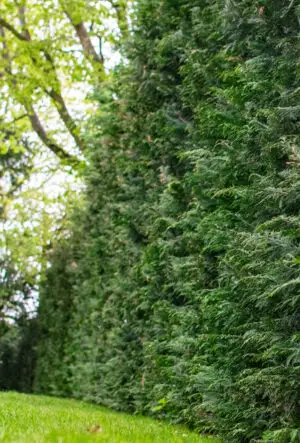
Evergreen hedge plants are usually the best starting point when the aim is to keep a fence or wall hidden throughout winter. Cherry Laurel gives broad, dense foliage and strong coverage where there is enough width, while Portuguese Laurel has a neater, more refined habit.

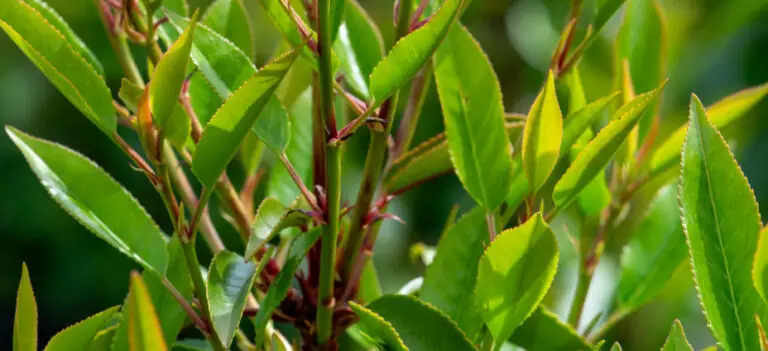
Yew hedging is slower growing but clips very well and is useful where a controlled formal screen is more important than maximum speed. Griselinia, Photinia Red Robin, Thuja and Oleaster can also make useful evergreen boundary screens where the site suits them.

Compare our full range of evergreen hedge plants if winter coverage is the main priority.

Fast-Growing and Seasonal Fence Screening

If quicker coverage matters, look at vigorous species such as Cherry Laurel, Common Privet and Leylandii. Fast-growing hedge plants can close gaps sooner, but they should still be matched to the width of the border and the amount of maintenance you can give them.

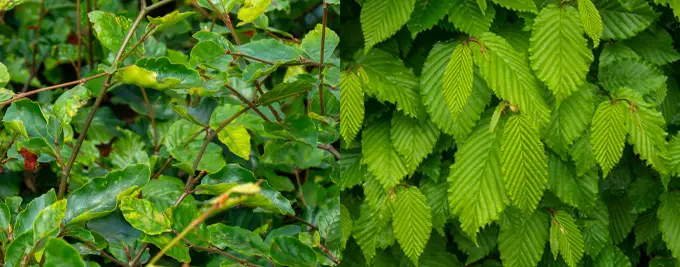
Deciduous hedges can also work very well beside fences. Beech and Hornbeam form dense clipped boundaries during the growing season and can retain some dry foliage through winter. Hornbeam is particularly useful on heavier soils, while Beech generally prefers better-drained ground.

How Much Space Should You Leave Beside a Fence?

Do not plant purely to get the stems as close to the fence as possible. The hedge needs enough room to establish, reach its intended maintained width and be trimmed without constantly fighting the boundary.

The right distance varies with the species, supplied size, mature spread and how wide you intend to keep the hedge. Read our guide to planting a hedge beside a fence or wall before setting out the planting line.

Need Screening Above the Fence?

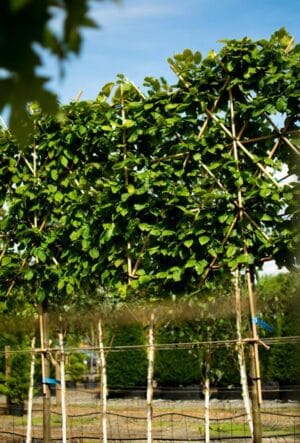
If the existing boundary already provides enough cover at ground level but neighbouring windows or views remain visible above it, a conventional hedge may not be the most efficient answer. Pleached trees have clear stems with trained heads of branches and foliage, making them particularly useful for raised screening above fences and walls.

Choose between evergreen and deciduous pleached species depending on whether winter coverage is essential, and check the clear stem height and canopy dimensions against the boundary you are trying to screen.

Choose the Starting Size and Root Type

Starting size affects how much of the boundary is hidden on planting day. Pot-grown hedge plants offer a wide choice of species and sizes, while bare root hedging can be economical for longer fence lines during the dormant season. Larger root-balled plants provide more initial structure, and instant hedging gives the greatest immediate coverage.

Planting and Establishment

Prepare the planting line by removing turf, thick grass and perennial weeds, then loosen compacted soil. Apply Rootgrow mycorrhizal fungi at planting according to the product instructions so it comes into direct contact with the roots.

New hedges need thorough and consistent watering while establishing, especially where a fence or wall creates a dry strip or rain shadow. On longer runs, a hedge irrigation system can make watering more consistent. Once the hedge is planted and beginning to establish, Hedge Feed can be applied according to the product instructions.

Buy Hedge Plants for Fences and Walls Direct from Our Nursery

Buy hedge plants for fence and wall screening directly from our family-run nursery for gardens, landscaping schemes and trade or commercial planting projects. Compare the products above by size, root type, price and availability, or contact our nursery team if you need help choosing a suitable species or calculating quantities for a boundary.