
Hedging care & growing guide
Cotoneaster Hedge Care Guide: Planting, Spacing and Pruning
Cotoneaster hedging is generally easy to establish when it is planted in free-draining soil, watered carefully during its first growing seasons and pruned to suit the particular species. Our Cotoneaster hedge plants include upright screening varieties as well as a low, spreading form, so spacing, pruning and eventual size should not be treated as one-size-fits-all.
This guide covers Cotoneaster franchetii, Cotoneaster lacteus and Cotoneaster dammeri, including when and how to plant them, plants per metre, watering, feeding, pruning, growth rates and common problems. It also explains the important differences between bare-root and pot-grown plants and how to choose the right Cotoneaster for the position.
Expert nursery advice
Gwynne's Grower's Tip
Cotoneaster is easy to look after once established, but I would first make sure you are buying the right type for the job. Franchetii and Lacteus make proper upright hedges, while Dammeri naturally wants to spread along the ground. With the upright varieties, good preparation and steady watering while the roots establish matter far more than heavy feeding. Let the plants make some growth before shaping them, then prune lightly enough to retain plenty of flowering wood if the berries and wildlife value are important to you.
From our nursery
Visit our Cotoneaster hedges

Cotoneaster franchetii Hedge
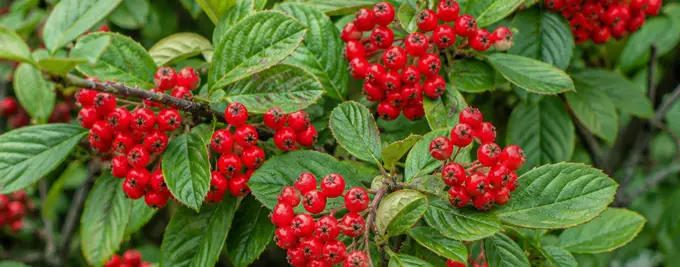
Franchetii would usually be my first choice for a traditional Cotoneaster hedge. It has a naturally branching, upright habit, attractive grey-green foliage and gives both flowers and orange-red berries. It is also the only Cotoneaster in our current range available bare root, making it particularly useful when you have a longer hedge to plant economically during the dormant season.

Cotoneaster lacteus Hedge
Lacteus is the one I would look at when a larger-leaved, stronger-growing evergreen Cotoneaster is wanted for a substantial hedge or screen. The dark foliage gives it a fuller appearance than Franchetii and the clusters of white flowers are followed by red berries. Give it enough width to develop properly and avoid trying to force it into a very narrow hedge.

Cotoneaster dammeri Hedge
Dammeri is quite different from our other Cotoneasters. I would choose it for low evergreen cover, banks, edging or places where you want growth to spread sideways rather than form a tall privacy screen. Its low habit also makes it useful where a conventional upright hedge would become too large. Allow enough room for the stems to spread naturally.
Not sure which Cotoneaster hedge to choose?
Compare the available plants, formats and starting sizes in the complete range.
Explore our complete Cotoneaster hedging rangeCotoneaster hedge quick-care summary
| Botanical name | Cotoneaster franchetii, C. lacteus, C. dammeri |
|---|---|
| Plant type | Woody flowering shrubs; upright or spreading depending on species |
| Evergreen or deciduous | Evergreen; C. franchetii may be semi-evergreen |
| Typical growth rate | Franchetii/lacteus 20–40cm a year; dammeri 10–20cm vertical growth |
| Preferred position | Full sun or partial shade |
| Soil | Most well-drained soils; avoid waterlogging |
| Watering | Water thoroughly at planting; monitor closely for first two growing seasons |
| Pruning period | Spring or after flowering; formal hedges may need a summer trim |
| Feeding | Usually minimal; balanced spring feed if growth is weak |
| Hardiness | RHS H6 |
| Typical hedge height | Franchetii/lacteus medium to tall; dammeri low and spreading |
| Planting season | Pot grown year-round in suitable weather; bare root while dormant |
| Root types commonly available | Pot grown; bare root also available for franchetii |
Cotoneaster berries, safety and invasive species
Cotoneaster berries are ornamental and valuable to wildlife but should not be eaten. Some Cotoneaster species also have invasive-plant restrictions in the UK, but these rules apply to particular named species rather than every plant in the genus.
Can you eat Cotoneaster berries?
No. Cotoneaster fruit should be treated as ornamental rather than edible. Do not encourage children or pets to eat the berries, particularly in quantity.
Are all Cotoneasters invasive?
No. Cotoneaster is a large genus and UK invasive-plant concerns apply to particular species. Current RHS guidance specifically highlights Cotoneaster bullatus, C. horizontalis, C. integrifolius, C. microphyllus and C. simonsii as potentially invasive species.
Our current hedging range consists of Cotoneaster franchetii, Cotoneaster lacteus and Cotoneaster dammeri, which are different species. If planting beside open countryside or an ecologically sensitive area, check the latest RHS and government guidance because plant legislation and recommendations can change.
Never deliberately introduce garden plants into the wild, and dispose of unwanted plant material responsibly.
About Cotoneaster hedging
Cotoneaster is a varied genus in the rose family, with evergreen and semi-evergreen shrubs ranging from low ground-cover plants to substantial screening shrubs. Hedging Plants Direct currently supplies three contrasting species: upright Cotoneaster franchetii and Cotoneaster lacteus, plus low-spreading Cotoneaster dammeri.
Cotoneasters belong to the Rosaceae family and are valued for their combination of foliage, small white or pink-tinged flowers and colourful berries. Their flowers provide food for pollinating insects and the berries are used by birds, giving a well-managed Cotoneaster hedge considerably more seasonal interest than a plain evergreen screen.
Cotoneaster franchetii
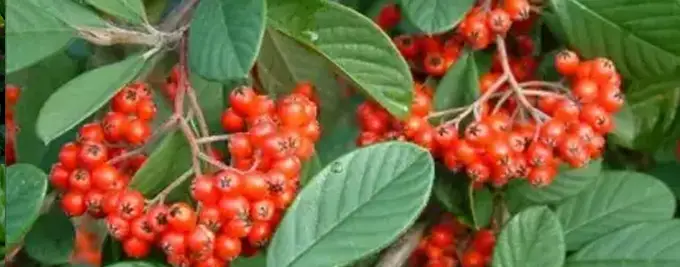
Cotoneaster franchetii, or Franchet's Cotoneaster, has arching branches, small grey-green leaves with paler undersides, white to pink-tinged flowers and orange-scarlet fruit. It makes an adaptable upright hedge and may behave as evergreen or semi-evergreen depending on conditions.
Cotoneaster lacteus
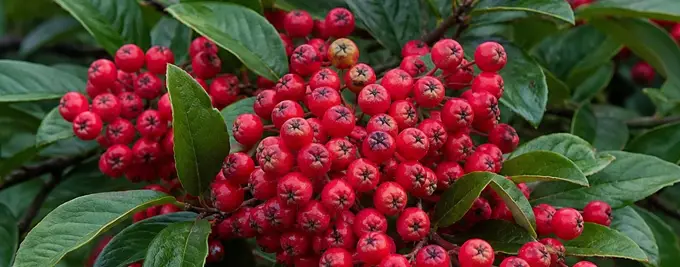
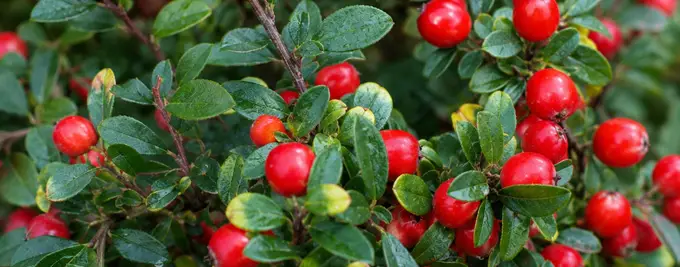
Cotoneaster lacteus, or Late Cotoneaster, is a larger, bushier evergreen with glossy dark leaves. Clusters of white flowers are followed by red berries, often persisting well into the colder months. It is better suited to a substantial hedge or screen than a very narrow boundary.
Cotoneaster dammeri
Cotoneaster dammeri, or Bearberry Cotoneaster, is fundamentally different. It is a prostrate evergreen that spreads sideways and is most useful for low hedging, edging, banks and ground cover rather than tall privacy screening.
Choosing the right Cotoneaster hedge
Choose Franchetii for a conventional medium-height Cotoneaster hedge, Lacteus where you want a larger, fuller evergreen screen, and Dammeri for low spreading cover. All three prefer well-drained ground, while flowering and berry production are generally strongest in good light.
| Variety | Habit | Best suited to | Important difference |
|---|---|---|---|
| Cotoneaster franchetii | Upright, arching | Formal or informal medium hedges, boundaries and screening | Only variety in our current range offered bare root as well as pot grown |
| Cotoneaster lacteus | Large, dense and bushy | Medium to tall hedges and substantial screens | Larger leaves and naturally develops into a broad shrub |
| Cotoneaster dammeri | Prostrate and spreading | Low hedges, edging, banks, slopes and ground cover | Spreads sideways rather than making a conventional tall screen |
Best Cotoneaster for privacy
For a conventional privacy hedge, choose Franchetii or Lacteus. Lacteus naturally becomes the larger shrub, while Franchetii is particularly useful where a versatile hedge with smaller foliage is preferred. Dammeri is not a substitute for either when height and screening are the priorities.
Sun and shade
All three species grow in full sun or partial shade. A sunnier site generally produces more flowers and berries. Deep shade, especially where there is strong competition from established trees, is less likely to produce a dense and heavily flowering hedge.
Exposed sites
Franchetii and Lacteus are hardy plants and can tolerate exposure once established. However, evergreen Cotoneasters can suffer foliage damage from severe winter exposure and cold drying winds. Dammeri is better given some shelter from cold winds.
Wildlife planting
All three have wildlife value through their flowers and fruit. If berries are a priority, avoid repeatedly clipping away all of the flowering growth during spring and early summer.
When to plant Cotoneaster hedging
Autumn and spring are the easiest times to establish Cotoneaster because the soil is normally moist and workable. Pot-grown plants can be planted throughout the year in suitable conditions, while bare-root Cotoneaster franchetii should be planted during its dormant-season availability.
Pot-grown Cotoneaster
Pot-grown Franchetii, Lacteus and Dammeri can be planted throughout the year provided the ground is workable and you can supply enough water afterwards. Autumn and spring are usually easier because evaporation is lower and soil moisture is more dependable.
Summer planting is possible, but the original compost root ball can dry rapidly. Water the plant thoroughly before planting and expect to monitor it closely during warm, dry or windy weather.
Bare-root Cotoneaster
Our current bare-root option is Cotoneaster franchetii. Plant bare-root plants during their dormant-season availability and keep the roots cool, covered and moist until they are in the soil. Do not leave exposed roots lying in sun or drying wind.
When to delay planting
- Do not plant into frozen ground.
- Delay planting where soil is saturated or waterlogged.
- Avoid planting during extreme heat or severe drought unless reliable irrigation is available.
- If conditions deteriorate after delivery, protect the roots correctly until the planting ground becomes workable.
Where to plant Cotoneaster hedging
Cotoneaster grows in a wide range of UK soils provided drainage is good. Plant in full sun or partial shade for the best balance of growth, flowering and berries, and avoid persistently waterlogged soil. Dammeri benefits from shelter from cold winds.
Light
Choose full sun or partial shade. Cotoneaster will tolerate some shade, but flowering and berry production are usually strongest where the plants receive good light.
Soil and drainage
Franchetii, Lacteus and Dammeri can grow on chalk, clay, loam or sandy soils and tolerate acid, neutral or alkaline conditions. Drainage is more important than soil type. Persistent waterlogging deprives roots of oxygen and can lead to poor growth, yellowing and root decline.
Exposed and coastal positions
Franchetii is the most obvious choice in the current range for a conventional hedge on an exposed position. Lacteus is also hardy but its larger evergreen leaves can show damage after severe cold or drying winds. Dammeri is better positioned with some protection from cold winds.
Planting beside walls and fences
Do not squeeze the root ball directly against the base of a wall or fence. As a practical guide, allow at least about 45cm between the root ball and a wall where possible so rainfall can reach the soil and there is room for roots to develop. Also leave enough space for the eventual hedge width and for future trimming access.
Competing vegetation
Avoid planting directly into established grass, dense ground cover or beneath thirsty mature trees without first considering root competition. Young Cotoneaster establishes more reliably when the planting strip is kept weed-free.
How to prepare the planting area
Prepare a weed-free, well-drained strip before the plants arrive. Loosen compacted soil, improve poor ground moderately with organic matter where needed, water dry container root balls before planting and keep bare roots moist. Avoid putting concentrated fertiliser directly beneath new roots.
- Mark the hedge line. Use a string line where a straight boundary is required and calculate quantities from the density of the exact product size you are planting.
- Remove weeds and grass. Clear a continuous strip so young roots are not competing immediately for moisture and nutrients.
- Check drainage. Resolve persistent standing water or severe compaction before planting rather than trying to correct waterlogging with fertiliser later.
- Loosen the planting strip. A cultivated trench is useful for a long hedge, while individual holes work well where soil between plants is already open and friable.
- Improve poor soil moderately. Where the soil would benefit from added organic matter, mix Hedge Planting Compost through the excavated soil rather than creating a soft compost-filled pocket beneath the plant.
- Water pots before planting. A dry root ball can remain difficult to re-wet after it goes into the ground.
- Protect bare roots. Keep bare-root Franchetii wrapped and moist until each plant is ready to go into the trench.
- Apply mycorrhizal fungi correctly if used. Rootgrow Mycorrhizal Fungi should be placed in direct contact with the roots according to the product instructions.
- Avoid excessive fertiliser in the hole. Correct depth, good soil contact and reliable moisture are more important during initial establishment.
How to plant a Cotoneaster hedge
Set plants out at the density specified for the exact product variation, plant at the same depth as they were previously growing, firm the soil around the roots and water thoroughly. The main handling difference is that bare roots must never be allowed to dry, while pot-grown root balls should be watered before planting.
- Set out the plants first. Measure the line and position each plant according to the current plants-per-metre figure for its size and root type.
- Dig a trench or individual holes. Make the cultivated area comfortably wide enough for the root system without digging unnecessarily deep.
- Check planting depth. The previous soil mark or top of the established root ball should finish approximately level with the surrounding soil.
- Prepare pot-grown plants. Remove the pot carefully and tease out only tightly circling outer roots rather than breaking the root ball apart.
- Prepare bare-root plants. Spread the roots naturally without bending them upwards or forcing them into a hole that is too small.
- Position the plant upright. For an informal hedge, allow the natural arching framework to develop rather than forcing every branch into a perfectly vertical shape.
- Backfill around the roots. Work soil between the roots and around the root ball so large air pockets are removed.
- Firm gently. The plant should be stable without compacting the entire root zone.
- Water thoroughly. Soak the root area immediately after planting, including during cool weather unless the ground is already saturated.
- Mulch the soil. Apply an organic mulch such as Hedge Bio Mulch over moist soil, keeping it clear of the stems.
- Stake only where necessary. Ordinary young hedge plants should not automatically require staking, but larger specimens on exposed sites may need temporary support while the roots establish.
Cotoneaster hedge spacing and plants per metre
Cotoneaster spacing depends on the species, plant size and root format. Do not use one generic distance for the whole category. Current HPD densities range from six bare-root plants per metre for small Franchetii down to two larger pot-grown Franchetii per metre, while Lacteus and Dammeri have their own product-specific figures.
Always use the plants-per-metre figure shown for the exact product variation you order. Plants per metre can be converted into approximate centre-to-centre spacing by dividing 100cm by the number of plants.
| Product | Size / format | Plants per metre | Approx. centres |
|---|---|---|---|
| Cotoneaster franchetii | Bare root 40–60cm | 6 | 16.7cm |
| Cotoneaster franchetii | Bare root 60–90cm | 5 | 20cm |
| Cotoneaster franchetii | Pot grown 40–60cm | 4 | 25cm |
| Cotoneaster franchetii | Pot grown 60–80cm | 3 | About 33cm |
| Cotoneaster franchetii | Pot grown 80–100cm | 2 | 50cm |
| Cotoneaster lacteus | Pot grown 30–50cm | 4 | 25cm |
| Cotoneaster lacteus | Pot grown 50–70cm | 3 | About 33cm |
| Cotoneaster dammeri | 3 litre pot | 4 | 25cm |
The 5 litre Cotoneaster dammeri variation was sold out when this guide was researched and its live density was not displayed, so no unverified 5 litre density is included here.
Should Cotoneaster be planted in a double row?
For normal garden hedging, use the live single-row planting density shown for the plants you buy. Do not simply double the quantity to create a staggered row. A wider double-row scheme can be useful in some landscape specifications, but plant numbers and row spacing should be designed for the particular project rather than assumed from the single-row figures above.
Watering and establishment
Water Cotoneaster thoroughly immediately after planting and monitor the original root area closely during dry periods through its first two growing seasons. Once established it is reasonably drought tolerant, but young hedges can fail surprisingly quickly if the root ball dries before roots have moved into the surrounding soil.
Immediately after planting
Water slowly and thoroughly so moisture reaches the full depth of the roots and settles soil around them. A quick splash over the surface is not enough.
During the first two growing seasons
There is no reliable fixed timetable such as watering every day or twice a week. Push a finger or trowel into the soil and check the original root zone. Water deeply when it is beginning to dry, then allow excess water to drain away.
Hot weather, strong wind, sandy soil and planting close to walls increase water demand. Heavy clay and poorly drained sites need greater caution because repeatedly adding water to saturated ground can damage roots.
Pot-grown plants
Pay particular attention to the original potting compost. The root ball can be dry even when the surrounding garden soil feels damp, especially shortly after planting.
Signs of drought stress
- Leaves curling or losing their normal firmness.
- Dull foliage followed by browning or premature leaf drop.
- Weak extension growth.
- One recently planted specimen declining faster than established plants nearby.
Signs of excessive moisture
- Persistently wet or sour-smelling soil.
- General yellowing combined with poor growth.
- Root decline despite apparently plentiful watering.
A connected hedge irrigation system can make long hedge lines easier to water evenly, but soil moisture should still be checked rather than relying solely on a timer.
How and when to feed Cotoneaster hedging
Cotoneaster growing in reasonable garden soil normally needs little additional fertiliser. If growth is weak and drainage, watering and competition are satisfactory, apply a balanced feed in spring. Do not use fertiliser to compensate for waterlogging, drought or planting too deeply.
Healthy Cotoneaster planted into reasonable soil does not need heavy routine feeding. Organic matter and mulch gradually improve soil structure and nutrient availability and are often more useful than repeatedly applying strong fertiliser.
When feeding can help
- Growth remains weak after the hedge has established.
- The soil is known to be low in fertility.
- Foliage suggests a nutrient problem after water, drainage and root health have been checked.
- An older hedge is growing in a heavily cultivated or depleted site.
If additional feeding is appropriate, a balanced granular fertiliser such as our Hedge Feed can be applied in spring according to its label. Water the soil if conditions are dry.
What to avoid
Do not apply excessive high-nitrogen fertiliser late in the growing season. Soft late growth has less time to mature before winter and excessive feeding can produce lush shoots without solving the underlying cause of poor establishment.
How and when to prune Cotoneaster hedging
Cotoneaster can be pruned in spring or after flowering. Informal hedges usually need only wayward growth shortened after flowering, while formal Franchetii or Lacteus hedges may need clipping in spring and again in summer. Avoid unnecessary hard pruning late in summer because it removes flowering wood for the following year.
Young Cotoneaster hedges
Concentrate first on building a well-branched framework. Shorten excessively long or poorly positioned shoots where necessary to encourage side growth, but avoid repeatedly cutting the top back hard while the plants are still developing the required height.
Established informal hedges
Remove long shoots after flowering to keep the plants within their allotted space while retaining as much of the flowering and fruiting framework as practical.
Formal Franchetii and Lacteus hedges
A formal hedge may need a light clip in spring followed by another trim during summer. Keep the base slightly wider than the top so light continues to reach the lower growth. Larger Cotoneaster leaves are often tidier when individual shoots are cut with secateurs rather than sliced across with a hedge trimmer.
Cotoneaster dammeri
Dammeri usually needs very little pruning. Remove shoots spreading into paths or unwanted areas and, where necessary, trim after flowering or in mid to late summer while preserving the plant's naturally low spreading habit.
Renovating an overgrown Cotoneaster
Overgrown Cotoneaster can respond to harder renovation pruning in early spring. Expect a temporary loss of flowers and berries while the replacement growth develops. Where possible, renovate progressively rather than unnecessarily removing the entire framework at once.
Before cutting any hedge
Inspect the hedge carefully for active bird nests before pruning. If a nest is being built or used, delay the work until it is no longer active.
Cotoneaster growth rate and eventual size
Franchetii and Lacteus are moderate-growing upright shrubs, with Hedging Plants Direct listing around 20–40cm of annual growth once established. Dammeri is much lower and Hedging Plants Direct lists 10–20cm vertical growth, although its ability to spread sideways is more important than its height.
| Variety | Typical HPD growth rate | Natural habit |
|---|---|---|
| Cotoneaster franchetii | Approximately 20–40cm per year | Large upright and arching shrub |
| Cotoneaster lacteus | Approximately 20–40cm per year | Large, bushy evergreen shrub |
| Cotoneaster dammeri | Approximately 10–20cm vertical growth per year | Low, prostrate and strongly spreading |
Growth rates are guides rather than guarantees. Soil preparation, water availability, light, exposure, competition and the size of plant used all affect annual extension growth.
Why a new hedge may appear slow at first
Recently planted plants are developing roots as well as shoots. A modest first season does not necessarily mean the hedge is failing. Keep the root zone moist but not saturated and control competing weeds before trying to force growth with additional fertiliser.
Maintained height
Franchetii and Lacteus can both be clipped into medium or relatively tall hedges where sufficient width is available. Dammeri should be regarded primarily as low evergreen cover rather than a tall privacy hedge.
Seasonal care for Cotoneaster hedging
Cotoneaster needs relatively little routine maintenance once established. Most work centres on planting in the cooler months, checking moisture through spring and summer, feeding only where necessary, pruning around flowering and keeping an eye out for pests, disease and winter exposure.
| Period | Main jobs |
|---|---|
| January–February | Plant bare-root Franchetii when ground is workable. Check new plants after frost, wind or waterlogging. Renovate badly overgrown shrubs in early spring if necessary. |
| March–April | Ideal planting period for pot-grown plants. Mulch moist soil. Apply a balanced feed only where needed. Begin checking newly planted root balls as weather warms. |
| May–June | Monitor watering closely. Allow flowers to develop where wildlife and berries are priorities. Inspect for aphids, scale and webbing. |
| July–August | Water during dry weather. Lightly trim formal hedges or remove overlong shoots after flowering. Avoid unnecessary hard pruning. |
| September–October | Good period for pot-grown planting as soil cools and moisture increases. Enjoy developing fruit and check young plants before winter exposure. |
| November–December | Bare-root Franchetii season begins according to availability. Plant while ground is unfrozen and free draining. Check evergreens during prolonged dry, windy weather. |
Cotoneaster pests, diseases and common problems
Most Cotoneaster problems are caused by establishment stress, drought, waterlogging or exposure rather than serious disease. Genuine pests and diseases include aphids, scale insects, Cotoneaster webber caterpillars, fireblight and honey fungus. Diagnose the pattern of symptoms before treating the hedge.
Cotoneaster leaves turning yellow
Check soil moisture before reaching for fertiliser. Yellowing soon after planting can result from waterlogged roots, drought, planting stress or poor root establishment. If several plants in one wet section of the hedge are affected, inspect drainage first. If one root ball is dry while surrounding soil is moist, improve the way that individual plant is being watered.
Cotoneaster leaves turning brown
Brown foliage can result from drought, drying wind, severe winter exposure, root damage or pest feeding. Look at whether browning is confined to the exposed side of the hedge, concentrated on newly planted plants or associated with webbing, insects or shoot dieback.
Leaf drop after planting
Some temporary leaf loss can occur after planting, particularly on stressed plants and on semi-evergreen Franchetii. Check that stems remain healthy, the root system is neither bone dry nor saturated and new buds remain viable before assuming the plant has died.
Cotoneaster webber caterpillars
Fine silk webbing combined with browned, dried foliage and small caterpillars points towards Cotoneaster webber damage. Although affected sections can look dead, plants often produce another flush of foliage and recover. Where damage is localised, prune out heavily webbed shoots and encourage natural predators rather than reaching automatically for pesticide.
Aphids and woolly aphids
Look for colonies of insects on young growth, distorted shoots, sticky honeydew or white waxy material. Small populations are often tolerated by healthy plants and provide food for beneficial insects. Prune heavily affected tips where practical and avoid excessive nitrogen feeding, which encourages soft growth.
Scale insects
Scale may appear as small shell-like bumps attached to stems or leaves and can be accompanied by sticky honeydew. Check several parts of the plant carefully before diagnosing it because old bark and natural stem markings can be mistaken for scale.
Fireblight
Fireblight is a bacterial disease of Cotoneaster and other plants in the rose family. Warning signs include flowers that suddenly wilt, shoots that shrivel and die, sunken cankers and, during active infection, reddish-brown staining beneath affected bark. Remove affected material back into healthy wood and clean tools carefully between cuts. There is no chemical cure, so follow current RHS and plant-health guidance if fireblight is suspected.
Honey fungus
Persistent dieback, poor growth or sudden collapse where other susceptible woody plants have died should prompt closer inspection of the root collar and surrounding soil. Because several root problems can look similar above ground, obtain a reliable diagnosis before removing an established hedge.
Hedge not growing
Check the basics in this order: root moisture, drainage, planting depth, weed or grass competition, light and root competition from nearby trees. A new hedge may also put relatively little energy into top growth during its initial establishment period.
Sparse growth at the base
Keep the hedge slightly wider at the bottom than at the top so the lower branches receive light. Young plants can be lightly shortened to encourage branching. A hedge that has become broad and heavy across the top may need gradual reshaping over more than one season.
Can a brown Cotoneaster recover?
Yes, depending on the cause. Scratch a small area of bark on a questionable shoot; green living tissue beneath the surface indicates that part is still alive. Correct drought, waterlogging or exposure first, remove clearly dead material and allow time for new buds to develop before replacing a recently planted plant unnecessarily.
Wildlife and environmental value
Cotoneaster provides more than evergreen structure. Its flowers are used by pollinating insects and its autumn and winter fruit provides food for birds. Dense branching can also provide shelter, while RHS research found Cotoneaster franchetii particularly effective at trapping airborne pollutants.
Flowers for pollinators
Cotoneaster flowers may be small, but they can be valuable to bees and other pollinating insects. Leaving some flowering growth untrimmed gives the hedge greater wildlife value than repeatedly clipping every new shoot.
Berries for birds
Franchetii develops orange-scarlet fruit, while Lacteus and Dammeri carry red fruit. These provide seasonal food for birds as well as autumn and winter colour.
Shelter and nesting cover
The branching structure of an established upright Cotoneaster hedge can provide useful shelter. Always inspect a hedge for active nests before pruning and postpone cutting where a nest is being built or occupied.
Urban planting
RHS research into hedges found Cotoneaster franchetii particularly effective at trapping pollutants on its small hairy leaves, adding another potential benefit where a hedge is planted beside an urban road or built-up area.
Cotoneaster care by root type
The current range is supplied mainly pot grown, with Cotoneaster franchetii also available bare root. Pot-grown plants offer a broad planting season but need careful root-ball watering, while bare-root plants must be protected from drying and planted promptly during the dormant season.
| Root type | Current Cotoneaster availability | Main care point |
|---|---|---|
| Bare root | Cotoneaster franchetii | Keep roots cool and moist and plant promptly during the dormant season |
| Pot grown | Franchetii, Lacteus and Dammeri | Water the original root ball before planting and monitor it closely while establishing |
Bare-root Franchetii
Keep the roots wrapped until planting and never leave them exposed to sun or wind. Spread the roots naturally in prepared soil, plant at the previous soil depth, firm carefully and water thoroughly.
Pot-grown Cotoneaster
Water the container thoroughly before planting. Once planted, continue checking the original root ball rather than judging moisture only from the surrounding ground. Pot-grown hedging can be planted outside the traditional dormant season, but warm-weather planting requires substantially more watering.
Root-balled and instant Cotoneaster are not currently part of the live range checked for this guide and should not be presented as normal purchasing options unless the product range changes.
Frequently asked questions about Cotoneaster hedging
Is Cotoneaster evergreen?
Most of the Cotoneasters in our hedging range are evergreen. Cotoneaster lacteus and Cotoneaster dammeri are evergreen, while Cotoneaster franchetii is evergreen to semi-evergreen and may lose more foliage in harsh or exposed conditions.
How far apart should Cotoneaster hedge plants be?
Spacing depends on the species, size and root type. Current Hedging Plants Direct densities range from six small bare-root Franchetii plants per metre to two larger pot-grown Franchetii per metre. Lacteus is currently planted at three or four per metre depending on size, while the 3 litre Dammeri is four per metre. Always use the figure for the exact variation ordered.
When is the best time to plant a Cotoneaster hedge?
Autumn and spring are usually the easiest times to establish Cotoneaster because conditions are cooler and soil moisture is more reliable. Pot-grown plants can be planted throughout the year when the ground is workable, while bare-root Franchetii should be planted during its dormant-season availability.
How fast does a Cotoneaster hedge grow?
Franchetii and Lacteus are moderate growers, with our current product information giving approximately 20–40cm of annual growth once established. Dammeri is much lower, with around 10–20cm of vertical growth, although its sideways spread is more significant than its height. Actual growth depends on soil, moisture, light and establishment.
When should you prune a Cotoneaster hedge?
Prune Cotoneaster in spring or after flowering. Informal hedges generally need only long shoots shortened after flowering, while formal Franchetii and Lacteus hedges may need a spring clip and another light trim in summer. Check carefully for active bird nests before cutting.
Can Cotoneaster be hard pruned?
Yes, an overgrown Cotoneaster can usually respond to renovation pruning in early spring. Hard pruning will remove much of that season's flowering potential, so expect fewer flowers and berries until new growth matures. Where practical, renovate a valuable mature hedge progressively rather than cutting everything back at once.
Can Cotoneaster grow in shade?
Cotoneaster grows in full sun or partial shade, but flowering and berry production are normally strongest in good light. Deep shade combined with competition from trees or dry soil can result in thinner growth. Franchetii and Lacteus are better choices than Dammeri where a conventional hedge is required.
How often should a new Cotoneaster hedge be watered?
Do not rely on a fixed schedule. Water thoroughly after planting, then check the original root zone regularly and water deeply as it begins to dry. Newly planted Cotoneaster should be monitored especially closely through dry periods during its first two growing seasons.
Does Cotoneaster need feeding?
Established Cotoneaster in reasonable garden soil usually needs little additional feed. If growth is weak after drainage, watering and weed competition have been checked, a balanced fertiliser can be applied in spring according to the product instructions. Mulching with organic matter is also useful.
Why is my Cotoneaster turning brown?
Brown Cotoneaster foliage can result from dry roots, winter wind, planting stress, waterlogging or pest damage. Check soil moisture and look closely for webbing, insects or dead shoots before deciding on treatment. Recently planted plants commonly suffer from uneven root-ball moisture.
Why are my Cotoneaster leaves turning yellow?
Yellow leaves are commonly associated with root stress rather than a simple shortage of fertiliser. Check for saturated soil, a dry original root ball, planting too deeply and weed competition first. Only consider additional feeding once the root environment is healthy.
Are Cotoneaster berries poisonous?
Cotoneaster berries are ornamental and should not be eaten. They are valuable as food for birds, but children and pets should not be encouraged to consume them, particularly in quantity.
Is Cotoneaster invasive in the UK?
Some Cotoneaster species are subject to invasive-plant concerns, but not every Cotoneaster is the same. Current RHS guidance specifically highlights C. bullatus, C. horizontalis, C. integrifolius, C. microphyllus and C. simonsii. Our current hedging range comprises C. franchetii, C. lacteus and C. dammeri. Always check current official guidance near sensitive habitats.
Which Cotoneaster is best for a privacy hedge?
Cotoneaster franchetii and Cotoneaster lacteus are the suitable choices in our range for an upright privacy hedge. Franchetii is versatile and available in both bare-root and pot-grown formats, while Lacteus naturally develops into a larger, fuller evergreen shrub. Dammeri is low and spreading rather than a tall screening hedge.