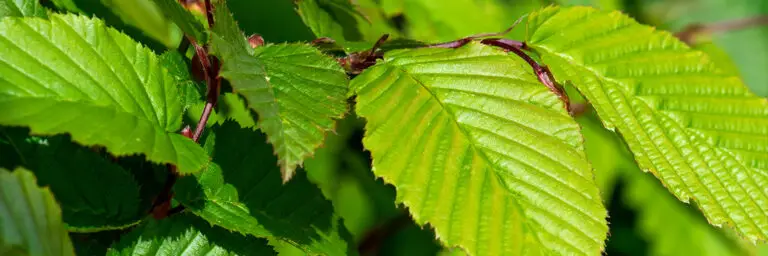
Hornbeam Hedging Care Guide: Planting, Spacing and Pruning
Hornbeam hedging grows best when it is planted at the correct depth in fertile soil that holds moisture without remaining waterlogged, then watered and kept free from weed competition during its first two growing seasons. It is a hardy native deciduous hedge that tolerates heavier clay, cold positions and partial shade better than Beech, making it useful for gardens, rural boundaries and commercial landscaping. This guide explains how to choose, plant, space, water, feed, prune and troubleshoot plants from our Hornbeam hedging range.
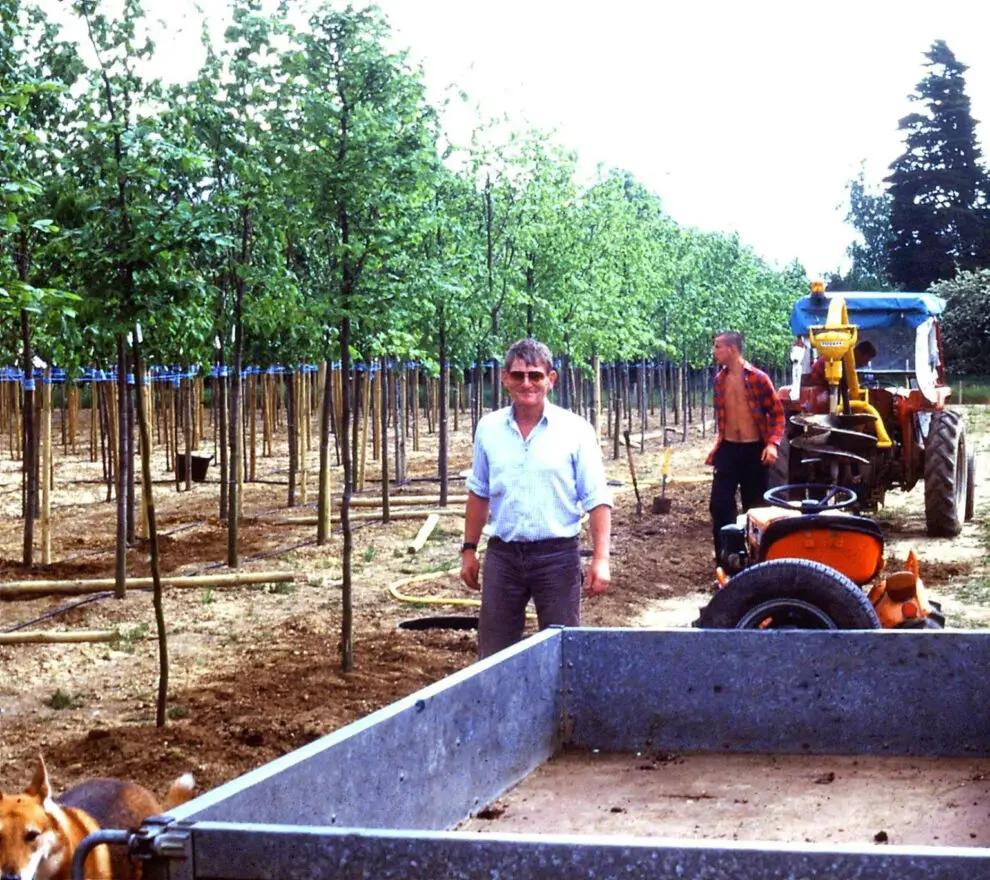
“Hornbeam is one of the plants I recommend when a customer likes the traditional look of Beech but has heavier soil, a colder site or a boundary that receives more shade. It clips into a dense formal hedge, but the planting line still needs preparation and the roots must never be left sitting in stagnant water.”
Gwynne Bodsworth• Founder and Grower, Hedging Plants Direct
Hornbeam is a dependable native hedge for gardens, fields and commercial landscapes. Its deeply veined leaves give it a strong texture, and a hedge trimmed in late summer will often retain part of its golden-brown foliage through winter. I particularly value it on heavier clay and colder sites where Beech may be less reliable.
Native deciduous tree commonly maintained as a formal or informal hedge
Evergreen or deciduous
Deciduous
Typical growth rate
Usually about 20–40cm a year once established; stronger extension is possible in favourable conditions
Preferred position
Full sun or partial shade; tolerant of cold and exposed inland sites
Soil
Fertile clay, loam, chalk or sandy soil with reasonable drainage; tolerates heavier moisture-retentive ground better than Beech
Watering
Water thoroughly after planting and during dry weather for the first two growing seasons
Pruning period
Formative pruning in winter; trim an established hedge once in mid to late summer
Feeding
Usually little is needed in reasonable soil; use a balanced spring feed if growth is weak
Hardiness
RHS H7 and hardy throughout the UK
Typical hedge height
About 1–5m, depending on the site and management
Planting season
Bare root from leaf fall to early spring; pot grown and instant plants can be planted year-round in suitable weather
Root types commonly available
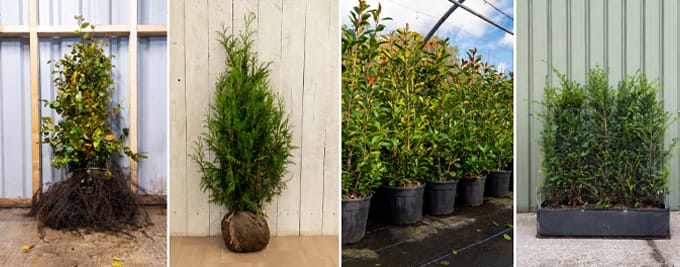
Bare root, pot grown and instant hedging
About Hornbeam hedging
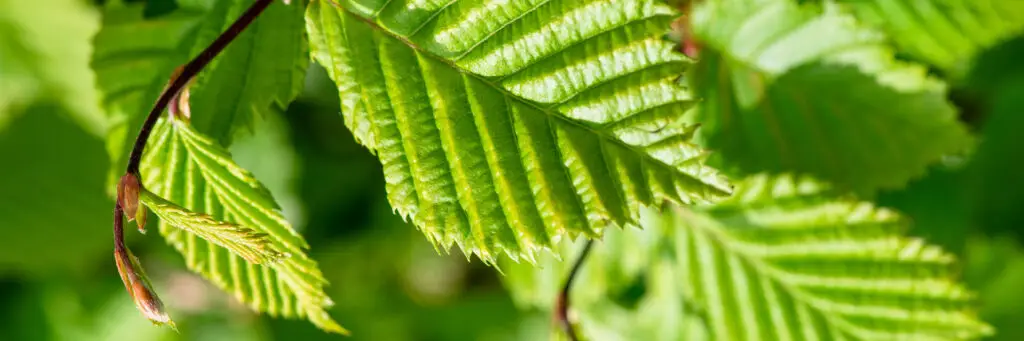
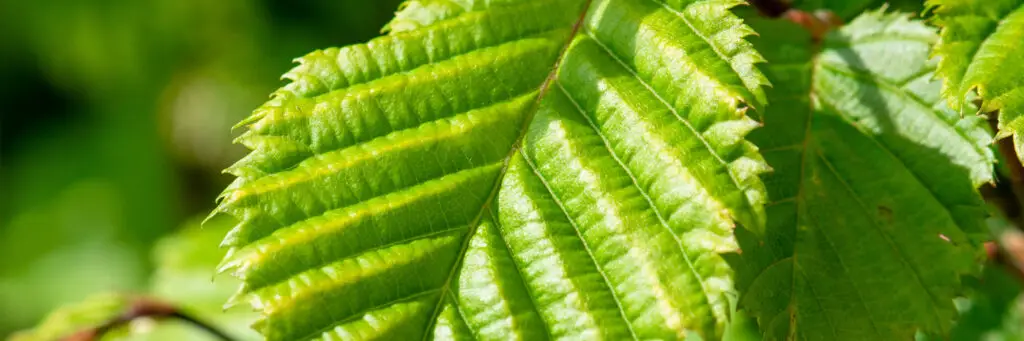
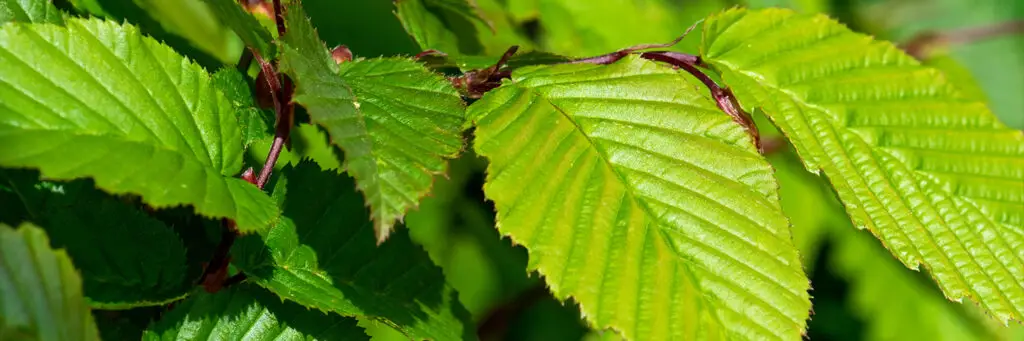
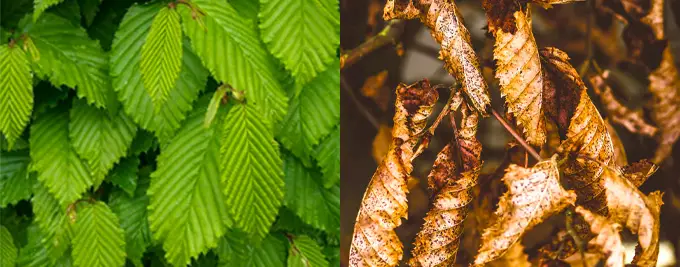
Carpinus betulus belongs to the birch family, Betulaceae, and is native to Britain and much of Europe. Left unpruned, it becomes a substantial tree, but close planting and regular clipping produce a dense hedge with a fine network of branches. Hornbeam coppices and responds to pruning well, which is why it has long been used for field boundaries, formal garden compartments, avenues and woodland edges.The leaves are oval with sharply serrated edges and strongly impressed veins, giving the foliage a corrugated appearance. In spring they open fresh green, becoming deeper green through summer before turning yellow, gold and brown in autumn. Catkins and small hop-like fruit clusters may appear where the hedge is left less tightly clipped.
Is Hornbeam evergreen?
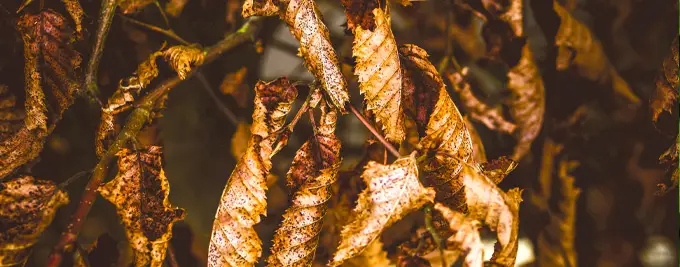
No. Hornbeam is deciduous, but young clipped shoots often retain dry leaves through part of the winter. This process is known as marcescence. Retention varies with pruning time, hedge age, exposure, weather and vigour. A sheltered hedge trimmed in late summer may hold more leaves than an exposed hedge, and Hornbeam normally retains less winter foliage than a comparable Beech hedge.
Why customers choose Hornbeam
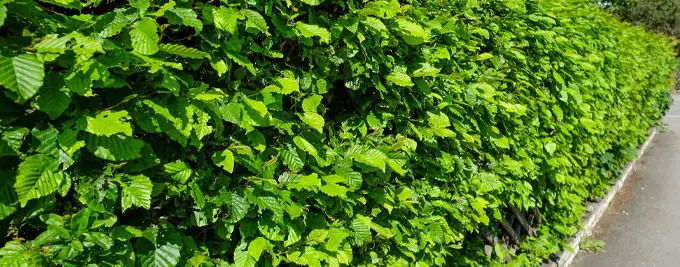
It creates a dense formal or informal boundary.
It tolerates heavier clay and moisture-retentive soils better than Beech.
It performs in sun or partial shade.
It is hardy in cold and exposed inland locations.
Its native status and dense branch structure support wildlife.
It responds well to clipping, renovation, coppicing and hedge laying.
Bare-root, pot-grown and instant formats suit different budgets and project timescales.
Choosing the right Hornbeam hedge
Hornbeam is especially useful where the desired appearance is similar to Beech but the soil is heavier, the garden is colder or the planting line receives more shade. It is not the best choice for permanently flooded soil, severe coastal salt exposure or customers who require glossy green foliage throughout winter.
Where Hornbeam hedging performs well and where another hedge may be more suitable
Situation
Hornbeam suitability
Practical note
Privacy hedge
Good
Dense branching and some winter leaf retention provide useful seasonal screening, but it is not evergreen
Formal hedge
Excellent
Clips cleanly and can be maintained from about 1m to several metres
Informal or native hedge
Good
Allow flowers, fruits and a broader structure by pruning less tightly
Heavy clay
Very good
More tolerant than Beech, provided the site does not remain stagnant or flooded
Partial shade
Good
Growth may be slower and less dense in deep shade beneath mature trees
Cold or frost-prone garden
Very good
Hornbeam is exceptionally hardy and generally more dependable than Beech
Exposed inland site
Good
Protect new plants from wind-rock and drying while roots establish
Coastal salt exposure
Variable
Some shelter is advisable; repeated direct salt spray can scorch young foliage
Permanently waterlogged ground
Poor
Hornbeam tolerates damp soil, not roots deprived of air for long periods
Reliable green winter screen
Poor
Choose an appropriate evergreen hedge instead
Hornbeam or Beech?
Hornbeam and Beech form similarly dense deciduous hedges and are both normally trimmed in late summer. Choose Hornbeam for heavier clay, colder gardens, frost pockets and sites that are more moisture retentive. Choose Beech on free-draining soil where smoother foliage and stronger copper winter leaf retention are the priorities. See our Beech hedging care guide for detailed Beech planting and aftercare.Hornbeam leaves have more obvious ribs and serrated edges, while Beech foliage is smoother and glossier with a gently wavy margin. Hornbeam usually develops a more textured, rustic character. Beech often gives a more uniform formal appearance and normally holds dry leaves for longer.
When to plant Hornbeam hedging
The easiest planting periods are autumn and early spring, when the soil is naturally moist and temperatures are moderate. Bare-root Hornbeam is planted during dormancy, while pot-grown and instant hedging can be planted at other times if the ground is workable and reliable irrigation is available.
Bare-root Hornbeam
Plant bare-root Hornbeam from leaf fall until early spring, normally between November and March or early April depending on weather and nursery supply. Plant promptly after delivery. Keep the roots wrapped, cool and moist until they enter the ground, and never leave bundles open in sun or drying wind.
Pot-grown Hornbeam
Pot-grown plants can be planted throughout the year. Autumn and spring reduce watering pressure, while summer planting requires frequent moisture checks. Water the pots before planting and postpone the work during extreme heat if irrigation cannot be guaranteed.
Instant Hornbeam hedging
Instant units can be installed for much of the year, but their large concentrated root systems need careful handling. Prepare the complete trench before delivery, avoid saturated or frozen ground and have enough labour or lifting equipment available to move the units without breaking the root mass.
Weather conditions to avoid
Frozen soil that cannot be broken and firmed around the roots
Waterlogged trenches that remain full after rain
Extreme heat, drought or strong drying winds
Very wet clay that smears into solid trench walls
Planting immediately before a site will be inaccessible for watering
Where to plant Hornbeam hedging
Sun and shade
Hornbeam grows in full sun or partial shade. It is often recommended for shade, but “shade tolerant” does not mean it will form an equally dense hedge under every canopy. Deep shade combined with root competition from mature trees can produce slower growth, sparse lower branches and a hedge that leans towards the light.
Clay and moisture-retentive soil
Hornbeam is one of the best formal hedging choices for heavy clay and seasonally damp ground. Its tolerance is relative, not unlimited. If water stands in the planting trench for days, improve drainage, alter the planting line or select a plant specifically suited to wet ground. Do not create a small pocket of compost in clay that acts as a sump.
Other soil types and pH
Carpinus betulus grows in fertile clay, loam, chalk and sandy soils and tolerates a broad pH range. Very sandy sites benefit from added organic matter and mulch to retain moisture. Chalky ground should be loosened over a broad strip, while compacted development soil may require deeper cultivation before planting.
Exposure and wind
An established Hornbeam hedge filters wind and is useful on exposed inland sites. Young whips and larger plants can still suffer wind-rock and rapid moisture loss. Firm them carefully, keep the root zone moist and use temporary permeable protection where exposure is severe.
Distance from walls, fences and boundaries
Set the planting line far enough inside the boundary to allow the hedge to reach its planned width without crossing a pavement or neighbour’s land. Leave access for trimming both sides. Check for drains, cables and pipes before digging, and consider future height in relation to windows, road visibility and overhead lines.
How to prepare the planting area
Measure the finished line. Exclude gateways and deliberate gaps before calculating plant numbers.
Mark the centre. Use a string line for a straight formal hedge.
Remove competing vegetation. Clear turf, perennial weeds and thick grass over a broad strip.
Assess drainage. Check the area after rain and resolve persistent standing water before planting.
Loosen compacted soil. Prepare a continuous trench rather than isolated polished holes where possible.
Improve poor soil moderately. Mix peat-free hedge planting compost with the excavated soil where organic matter will improve structure and moisture retention.
Water plants before planting. Saturate dry pot-grown root balls and keep bare roots damp.
Prepare optional mycorrhizal fungi. Apply Rootgrow directly to the roots in accordance with its label.
Avoid concentrated fertiliser in the trench. Strong feed can damage roots and does not correct poor drainage or compaction.
Organise protection. Have guards, fencing or visible site markers ready where browsing or machinery is a risk.
How to plant a Hornbeam hedge
Lay out every plant. Use the density shown for the exact size and root type.
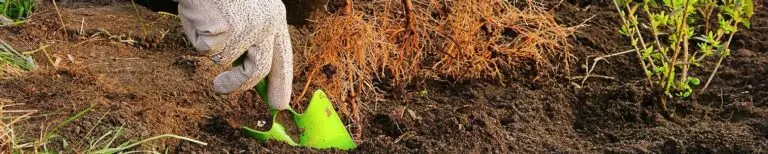
Dig a trench or suitable planting holes. The prepared area should be wider than the root system but not unnecessarily deep.
Set the correct depth. The old soil mark or root flare should finish level with the surrounding soil.
Spread bare roots naturally. Enlarge the hole rather than bending roots sharply back on themselves.
Remove pots and inspect roots. Tease out tightly circling outer roots without breaking the root ball apart.
Keep instant root systems intact. Position metre units closely so the foliage joins without large gaps.
Backfill gradually. Work soil between roots and eliminate large air pockets.
Firm carefully. Use the heel gently so each plant stands upright without compacting the entire strip.
Water thoroughly. Wet the original roots and the surrounding soil through their full depth.
Mulch the line. Apply Hedge Bio Mulch or another suitable organic mulch, leaving a gap around stems.
Protect where required. Install spiral rabbit guards, netting or temporary fencing according to the local risk.
Record long schemes. Note the planting date, size, root type and irrigation checks for commercial or development work.
Planting bare-root Hornbeam
Open one bundle at a time and keep the remaining roots covered. Plant to the nursery soil mark and spread the roots into friable soil. Firm each plant and water the full line after planting. Small whips do not normally need individual stakes, but the planting strip may need markers to protect it from mowers and contractors.
Planting pot-grown Hornbeam
Water the pot thoroughly, remove it and inspect for circling roots. Set the top of the root ball level with the soil. After planting, check moisture inside the original pot compost because it can remain dry even when the surrounding clay is wet.
Planting instant Hornbeam
Prepare a level continuous trench before the units arrive. Position each section closely against the next, backfill evenly and water every root system slowly. One irrigation point at the first unit may not wet the far end of a long run, so inspect several positions.
Hornbeam hedge spacing and plants per metre
Hornbeam spacing changes with starting height and root type. The current Hedging Plants Direct product calculator ranges from six plants per metre for small 40–60cm bare-root whips to three per metre for 175–200cm plants. Use the live variation as the final specification because sizes and densities may change.
Current Hedging Plants Direct Hornbeam planting densities
Plant size and format
Plants or units per metre
Approximate spacing
Practical note
Bare root 40–60cm
6
About 17cm
Economical young whips for fast knitting and long runs
Bare root 60–90cm
5
20cm
Popular balance of price, height and density
Bare root 90–120cm
5
20cm
Taller start while retaining a close planting pattern
Bare root 120–150cm
4
25cm
Allow for larger crowns and roots
Bare root 150–175cm
4
25cm
More immediate height with greater establishment demand
Bare root 175–200cm
3
About 33cm
Large bare-root plants need careful handling and watering
Pot grown 80–100cm
4
25cm
Current live calculator density
Other pot-grown sizes
Contact us for more infomation
Instant 80–100cm
1 unit
One metre-long unit
Position sections end to end in a continuous trench
Other instant sizes
Confirm on live variation
Usually one unit per metre
Check width and current product specification before ordering
How to calculate the number of plants
Multiply the measured hedge length by the product-specific plants-per-metre figure. A 10m hedge using 60–90cm bare-root Hornbeam at five per metre needs 50 plants. The same 10m line using 175–200cm bare-root plants at three per metre needs 30 plants. A 10m instant run using metre-long units needs ten sections.
Single or double row?
A single row at the stated product density is normally sufficient for a formal domestic Hornbeam hedge. A staggered double row may be specified for a broad landscape screen, wildlife boundary or unusually dense hedge, but it needs more width and a separate planting plan. Do not simply double the product calculator without considering final access and management.
Watering and establishment
Water Hornbeam thoroughly after planting and whenever the root zone begins to dry during the first two growing seasons. Hornbeam tolerates moisture-retentive soil, but it does not benefit from constant saturation. Check the soil before irrigating and respond to plant size, weather and soil type.
Immediately after planting
Water slowly enough to wet the complete root system and settle soil around it. Recheck the line once the water drains and straighten any plants that have sunk or leaned. A brief surface spray is not enough for large pot-grown or instant roots.
First growing season
Check beneath the mulch at least weekly during dry weather. Sandy sites, exposed slopes and strips beside paving dry quickly. Heavy clay holds water longer, so inspect before applying more. Keep grass and weeds away because they compete strongly with young Hornbeam roots.
Second growing season
Continue watering during prolonged drought even when the hedge has produced good top growth. The root system may still be concentrated close to the original planting trench. Larger and instant plants can require greater volumes for longer than small whips.
Winter watering
Hornbeam is deciduous, so winter water loss through foliage is lower than for evergreen hedges. Newly planted roots can still dry during a prolonged mild, windy spell, particularly beneath walls, overhangs or on light soil. Water only when the ground is dry and unfrozen.
Hedge irrigation
A correctly installed hedge irrigation system improves consistency on long garden and commercial plantings. Position it along the active root zone, test the far end and inspect the soil manually. Timers should be adjusted for rainfall rather than left on the same schedule throughout the year.
Signs of drought stress
Leaves droop, curl or become crisp at the edges.
New shoots stop extending.
Foliage turns prematurely yellow or brown during summer.
The original pot root ball feels dry below the surface.
Recently planted stems die back from the tips.
Signs of waterlogging
Water stands in the trench long after rain.
Plants yellow or die in the lowest sections.
Roots become dark, soft or smell stagnant.
Growth remains weak despite moist soil and feeding.
Fungal root decline develops repeatedly in the same area.
How and when to feed Hornbeam hedging
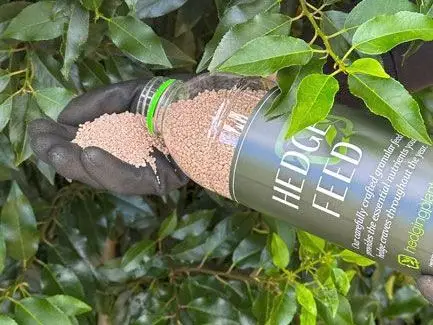
Hornbeam usually grows without regular feeding in fertile garden soil. New plants benefit more from correct moisture, weed control and mulch than from repeated fertiliser applications. Apply a balanced or general Hedge Feed in spring where soil is poor or growth is pale and weak, following the product label.
Spread feed over moist soil around the root zone rather than placing it against the stems. Water afterwards if rain is not expected. Do not feed a hedge that is wilting in waterlogged ground, and avoid high-nitrogen feeding late in summer because soft growth may not harden before winter.
Apply an organic mulch in late winter or spring to improve soil structure and retain moisture. Keep the mulch away from direct stem contact. On heavy clay, organic matter should be managed across the whole strip rather than used to create a soft pocket around each plant.
How and when to prune a Hornbeam hedge
Formative pruning during the first two years
For a dense formal hedge, shorten strong leading and side shoots by about one third during the first and second winters where the plants are thin or poorly branched. The aim is to encourage side shoots near the base, not to reduce every healthy plant automatically. Bushy plants may need little beyond damaged growth being removed.
Maintaining an established hedge
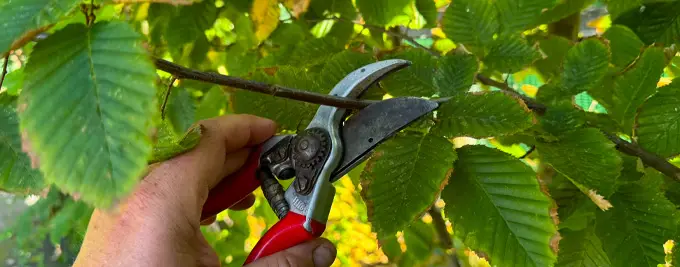
Trim an established Hornbeam hedge once in mid to late summer, commonly during August. Remove the current season’s extension while retaining enough young growth to support winter leaf retention. A particularly formal hedge may need a light earlier tidy, but repeated hard cutting is usually unnecessary.
Shaping the sides and top
Keep the base slightly wider than the top so sunlight reaches the lower branches. Cut the sides first, working upwards, then finish the top using a string line where a level formal finish is required. Avoid allowing the top to become a wide heavy shelf that shades the base.
Managing an overgrown Hornbeam hedge
Hornbeam responds well to renovation and can regrow from older wood. Reduce a very large hedge during dormancy, ideally in stages where removing all the height and width at once would create severe stress or habitat loss. Remove dead and crossing growth, then allow recovery before refining the shape.
Bird nests and legal checks
Inspect the hedge carefully before cutting. Wild birds, active nests and eggs are protected by law. There is no date that makes cutting legal when a nest is in use. Agricultural hedgerows in England may also be subject to a statutory no-cut period from 1 March to 31 August, with defined exemptions.
Hornbeam hedge growth rate and eventual size
A maintained Hornbeam hedge normally produces around 20–40cm of growth per year once established. Stronger growth may be possible in fertile soil with adequate moisture and light, but annual growth varies according to the site, plant size, establishment and pruning.
New bare-root plants may make limited shoot growth during their first season while they establish roots. Pot-grown and instant hedging provide more immediate height, but larger plants can pause after planting and need more water. Growth is influenced by soil temperature, moisture, shade, competition, pruning and the health of the original roots.
Hornbeam can become a tree over 20m tall if left unpruned. As a hedge it can be maintained from around 1m to 5m or more, although very tall hedges require specialist equipment and greater long-term maintenance. Choose a realistic final height before planting and begin formative pruning early.
Frozen soil, waterlogging, wind-rock, rabbit or deer damage and active nests before work
Early spring
Complete dormant planting; mulch; apply a balanced feed only where required; inspect bud break
Dry root balls, failed plants, compacted soil and late frost damage
Late spring
Water new hedges, maintain the weed-free strip and check irrigation
Aphids, caterpillars, mildew and uneven growth
Summer
Water during drought; keep mulch and guards maintained; lightly tidy formal hedges if necessary
Drought scorch, mower damage and active bird nests
Mid to late summer
Give the main annual trim, normally in August
Hedge profile, lower-branch shade and nest activity
Autumn
Prepare new planting lines, order bare-root stock and allow leaves to colour
Drainage, weed competition, access and local protection requirements
Hornbeam hedge pests, diseases and common problems
Most Hornbeam problems are caused by establishment conditions rather than a serious pest or disease. Check moisture, planting depth, root condition, competition and physical damage before applying feed or treatment.
Common Hornbeam symptoms and practical first actions
Symptom
Likely causes
How to check
First action
Yellow summer leaves
Waterlogging, drought, root stress, compaction or nutrient shortage
Check moisture below the surface and compare high and low areas
Correct moisture and drainage before feeding
Brown crispy margins
Drought, wind scorch, salt exposure or root damage
Inspect exposure and the original root ball
Water deeply if dry and improve temporary shelter
Leaves falling in autumn
Normal deciduous behaviour
Check the season and whether buds and stems remain healthy
No action is normally required
No spring growth
Late dormancy, dead roots, drought or severe browsing
Scratch a small stem area and look for green tissue
Water if dry and replace only after confirming death
White powder on foliage
Powdery mildew
Look for a superficial dusty coating, often during warm dry-root conditions
Improve moisture consistency and airflow
Small coral-pink spots on dead twigs
Coral spot
Inspect weakened or damaged stems
Prune back to healthy wood with clean tools
Sudden local decline
Dry root ball, waterlogging, honey fungus or physical root damage
Inspect roots, bark base and nearby woody plants
Obtain diagnosis before replacing repeatedly
Sparse lower branches
Top-heavy shape, shade, wide spacing or missed formative pruning
Assess the hedge profile and light at the base
Taper the sides and renovate in stages
Aphids and caterpillars
Aphids and leaf-eating caterpillars may occur, but light populations are usually tolerated by an established hedge and support predators and birds. Monitor young plants where severe feeding could slow establishment. Avoid routine broad-spectrum pesticide use and identify the insect before deciding whether control is necessary.
Powdery mildew
Powdery mildew produces a pale dusty coating on leaves. It is often worse where roots are dry while foliage remains crowded. Water at soil level, maintain a tapered hedge shape and remove heavily affected fallen leaves. The disease is usually cosmetic on an otherwise healthy Hornbeam.
Coral spot
Coral spot appears as small pink or orange pustules on dead and weakened twigs. Remove affected dead wood back to healthy tissue during dry weather and clean pruning tools. Improve the underlying conditions that weakened the hedge, such as waterlogging, drought or repeated mechanical damage.
Honey fungus
Honey fungus can cause progressive decline and root death. Possible signs include white fungal sheets beneath bark at soil level, black bootlace-like rhizomorphs and honey-coloured mushrooms in autumn. Symptoms overlap with waterlogging and drought, so obtain a reliable diagnosis before removing a long hedge or replanting the same trench.
Can a damaged Hornbeam recover?
Yes, Hornbeam often recovers from pruning and physical damage if the roots and lower stems remain alive. Remove dead growth back to healthy wood, correct moisture and protect the plant from further browsing. Do not combine severe pruning, drought and heavy feeding. Replace plants where the roots are dead or repeatedly waterlogged.
Wildlife and environmental value
Hornbeam is native to Britain and provides dense nesting and shelter structure when grown as a hedge. Its catkins and small fruits support insects and birds, while the leaves are used by several caterpillars. A broad hedge with a dense base offers more habitat than a narrow line clipped hard on every side.
Leaving some informal sections less tightly cut allows more flowers and fruits to develop. Retained winter leaves provide shelter, and fallen foliage contributes organic matter beneath the hedge. Check for active bird nests before pruning and avoid unnecessary pesticide use.
Hornbeam care by root type
Bare-root Hornbeam
Bare-root plants are cost effective for long hedges and normally establish well when planted promptly during dormancy. Protect roots from drying, firm the soil carefully and water through the first two growing seasons. Smaller whips may need closer spacing but usually recover from transplanting quickly.
Pot-grown Hornbeam
Pot-grown plants can be planted year-round and provide more immediate foliage. Their compost can dry independently of the surrounding soil, so check inside the original root ball. Loosen circling roots and avoid planting too deeply.
Instant Hornbeam
Instant units create an immediate connected hedge but carry a concentrated root mass and greater water demand. Prepare the whole trench before delivery, join units carefully and inspect moisture along the full run. The hedge looks mature immediately, but the roots still need time to establish in the site soil.
Root-balled Hornbeam
Root-balled Hornbeam may occasionally be supplied for larger or bespoke landscaping projects. It is normally lifted and planted during the cooler
dormant season. Keep the soil ball intact, avoid lifting the plant by its
stem and follow the size-specific handling, spacing and staking instructions
supplied with the order.
Frequently asked questions about Hornbeam hedging
Is Hornbeam evergreen?
No. Hornbeam is deciduous, but a regularly clipped hedge often retains some dry golden-brown leaves during winter. The amount varies with age, exposure, pruning time and weather. Choose an evergreen hedge where dependable green winter foliage is essential.
How fast does a Hornbeam hedge grow?
Hornbeam usually grows about 20–40cm a year once established, although 30–60cm may occur in favourable soil with adequate moisture. New bare-root plants can grow more slowly during their first season while roots establish. Growth rates are estimates rather than guarantees.
When is the best time to plant Hornbeam?
Autumn to early spring is the easiest planting period. Bare-root Hornbeam is normally planted from November to March or early April, while dormant. Pot-grown and instant plants can be planted year-round when the ground is workable and reliable watering is available.
How many Hornbeam plants do I need per metre?
The current Hedging Plants Direct calculator ranges from six plants per metre for 40–60cm bare-root whips to three per metre for 175–200cm plants. The 80–100cm pot-grown size uses four per metre, while instant hedging is normally supplied as one metre-long unit per metre.
How far apart should Hornbeam be planted?
Spacing ranges from roughly 17cm for six small whips per metre to about 33cm for three larger plants per metre. Use the live density shown for the exact size and root type. One generic spacing is not appropriate for every Hornbeam plant.
Can Hornbeam grow in clay soil?
Yes. Hornbeam is one of the best formal hedge plants for heavy and moisture-retentive clay. It still needs air around its roots, so resolve severe compaction and standing water before planting. Hornbeam tolerates damp ground better than Beech but is not a plant for permanent waterlogging.
Can Hornbeam grow in shade?
Yes, Hornbeam grows in partial shade and is generally more shade tolerant than Beech. Deep shade beneath mature trees can still cause slow, sparse or one-sided growth because the hedge receives little light and strong root competition. Improve soil preparation and expect slower establishment.
When should I trim a Hornbeam hedge?
Trim an established Hornbeam hedge once in mid to late summer, usually during August. Formative pruning of young plants and major renovation are carried out during dormancy. Always check for active bird nests before cutting and follow agricultural hedgerow rules where they apply.
Can Hornbeam be cut back hard?
Yes, established Hornbeam normally responds well to hard renovation and can regrow from older wood. Carry out major reductions during dormancy and consider completing severe work in stages. Correct drought, waterlogging or root damage before expecting strong recovery.
Why is my Hornbeam hedge turning yellow?
Autumn yellowing is normal. Yellow leaves during spring or summer may indicate waterlogging, drought, root stress, soil compaction or a nutrient problem. Check moisture and drainage before applying fertiliser. Plants declining only in low areas usually point to excess water.
Why are the leaves turning brown?
Brown leaves in autumn and winter are normal on Hornbeam. Crisp brown margins during summer more often indicate drought, wind scorch, salt exposure or damaged roots. Check moisture inside the root ball and correct the cause before pruning away all marked foliage.
Why has my Hornbeam lost its winter leaves?
Winter leaf retention varies naturally. Young clipped growth holds leaves better than older untrimmed branches, but severe exposure and weather can cause earlier loss. Hornbeam generally retains less foliage than Beech. Leaf loss alone does not mean the hedge is unhealthy.
How often should I water a new Hornbeam hedge?
Water thoroughly at planting, then check root-zone moisture regularly through dry weather for the first two growing seasons. Frequency depends on soil, weather and plant size. Clay requires less frequent irrigation than sandy soil, while instant plants need greater volumes than small whips.
Does Hornbeam need feeding?
Not routinely in fertile soil. Use a balanced hedge feed in spring if soil is poor or growth is persistently weak after moisture and drainage have been checked. Mulch and weed control usually provide more establishment benefit than repeated fertiliser applications.
Is Hornbeam better than Beech?
Hornbeam is usually better on heavy clay, colder sites, frost pockets and moisture-retentive ground. Beech often gives smoother foliage and stronger copper winter leaf retention on free-draining soil. The best choice depends on the site rather than one plant being universally superior.
How tall can a Hornbeam hedge grow?
Hornbeam can become a tree over 20m tall if it is not managed. As a hedge it is commonly maintained between about 1m and 5m. Choose a realistic final height because tall hedges require specialist equipment and create greater long-term maintenance.
Is Hornbeam good for wildlife?
Yes. Hornbeam is native and provides nesting cover, shelter, catkins, fruits and leaves used by insects. A broad hedge with a dense base and some less frequently clipped sections offers greater wildlife value than a very narrow hedge cut hard every year.
Related hedge advice
Useful planting, pruning and hedge-care advice from our nursery.
Learn how you can easily plant a hedge with our comprehensive step-by-step guide. From picking the right species to planting techniques and after care.
Enjoy healthy, lush hedges with our comprehensive guide on how to fertilise your hedge. Discover the importance of using the right types of hedge fertiliser
Compare native hedge plants for UK gardens and find the right species or prepared mixture for wildlife, screening, clay soil, shade and rural boundaries.
Bare root, root ball, pot-grown and instant hedging suit different budgets, planting times and levels of initial coverage. Understanding how each is supplied makes it easier to choose the right format for your project.
Hornbeam responds well to regular clipping, but routine trimming, formative pruning and major renovation are best carried out at different times. Choosing the right pruning period helps maintain a dense, well-shaped hedge from the…
Hornbeam is valued for its fresh green summer foliage, warm autumn colour and strong winter structure. Understanding how its leaves behave after autumn will help you decide whether it provides enough winter screening for…
Hornbeam has distinctive textured foliage that changes noticeably through the seasons. Learning to recognise the leaf shape, veins and toothed edges can also help you distinguish Hornbeam from similar-looking Beech hedging.
Hornbeam is a dependable native hedging plant, but the time it takes to form a useful screen depends on more than the figure printed on a plant label. Starting size, establishment care, soil, light…
Hornbeam can be planted in several different forms, and the best planting time depends mainly on whether the plants are supplied bare root, pot grown or as instant hedging. Choosing suitable soil and weather…
Explore the full Hornbeam hedging range to compare economical bare-root whips, flexible pot-grown plants and established instant hedging. The product page shows the current heights, pack options, seasonal availability and live plants-per-metre figure for the selected variation.
Hedging Plants Direct is a family-run nursery business established in 1982 and supplies homeowners, landscapers, developers, trade buyers and commercial customers across the UK. Bare-root Hornbeam is seasonal, pot-grown plants provide greater planting flexibility, and instant hedging is available where immediate structure is required.