
Hedging care & growing guide
Field Maple Hedge Care Guide: Planting, Spacing & Pruning
A Field Maple hedge is relatively easy to establish and maintain when it is planted at the correct density, kept free from competing weeds and watered carefully while its roots establish. Our Field Maple hedging plants are Acer campestre, a hardy native deciduous species suited to informal, countryside and more regularly clipped garden hedges.
This guide covers when and where to plant Field Maple, the correct spacing for the different sizes we supply, watering, feeding, pruning, growth rate and seasonal care. It also explains what to do if a hedge develops yellow or brown foliage, sparse growth, poor establishment or symptoms that may indicate a pest or disease.
Field Maple gives dense green foliage through the growing season and excellent yellow-gold autumn colour, but it is deciduous and should not be chosen where an evergreen screen is essential throughout winter. Once established, it is a tough, adaptable hedge that can cope with many UK soils and relatively exposed sites.
Expert nursery advice
Gwynne's Grower's Tip
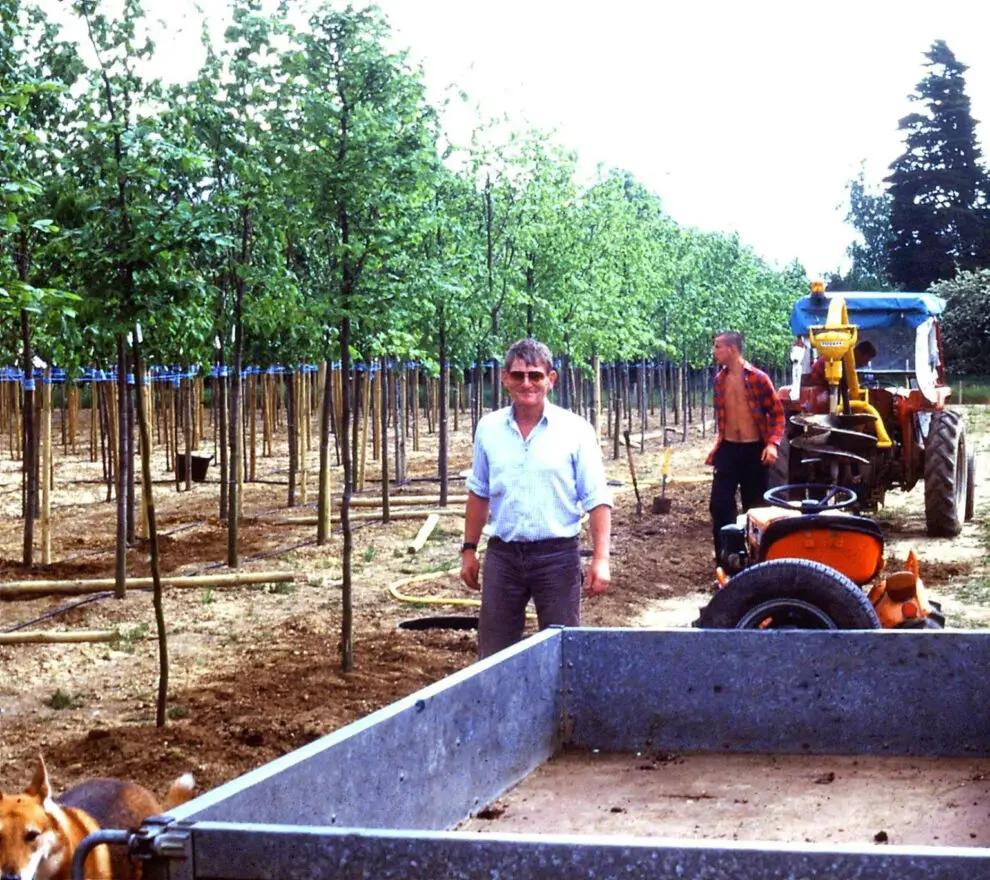
For Field Maple, I would put most of the effort into the first couple of seasons. Prepare a good weed-free planting line, use the spacing for the actual size you have bought and make sure water reaches the roots rather than just wetting the soil surface. Once it has established, Field Maple is a tough hedge and does not need constant attention. The main thing I would avoid is pruning it like Privet in spring. Maples can bleed sap, so I prefer the main shaping work after leaf fall, from late autumn into midwinter.
From our nursery
Visit our Field Maple hedges

Field Maple Hedge
Field Maple is a useful choice where you want a native deciduous hedge with good autumn colour and a more natural appearance than a dense evergreen. Bare-root plants are particularly useful for longer hedge runs during the dormant season, while pot-grown plants give more flexibility over planting time. Whichever format you choose, use the planting density shown for that exact height rather than applying one spacing figure to every size.
Not sure which Field Maple hedge to choose?
Compare the available plants, formats and starting sizes in the complete range.
Explore our complete Field Maple hedging rangeField Maple hedge quick-care summary
| Botanical name | Acer campestre |
|---|---|
| Plant type | Native broadleaf tree grown as hedging |
| Evergreen or deciduous | Deciduous |
| Typical growth rate | Around 20–40cm per year |
| Preferred position | Full sun or light/partial shade |
| Soil | Fertile, moist but well-drained; adaptable to clay, loam, sand and chalk |
| Watering | Water deeply during establishment and dry spells |
| Pruning period | Late autumn to midwinter |
| Feeding | Spring feed where growth or soil fertility warrants it |
| Hardiness | RHS H6 |
| Typical hedge height | Commonly maintained around 1.5–4m |
| Planting season | Bare root in dormancy; pot grown year-round in suitable weather |
| Root types commonly available | Bare root and pot grown |
About Field Maple hedging
Field Maple, Acer campestre, is the UK's only native maple and makes a hardy deciduous hedge with small lobed leaves, a dense twiggy framework and particularly attractive yellow-gold autumn colour. It suits garden boundaries, countryside-style planting and mixed native schemes, but loses its leaves in winter rather than providing evergreen screening.
Field Maple, Acer campestre, is a native broadleaf species in the maple family, Sapindaceae. In the wild it occurs in woodland, scrub and traditional hedgerows, but regular pruning allows the naturally much larger tree to be maintained as a dense garden or landscape hedge.
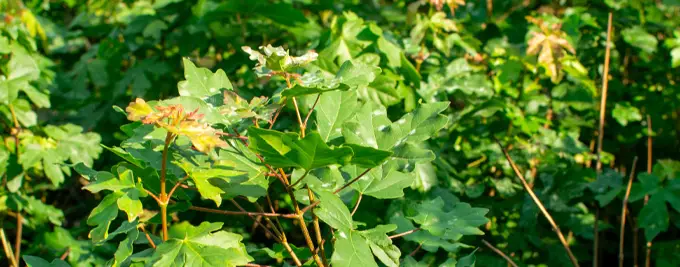
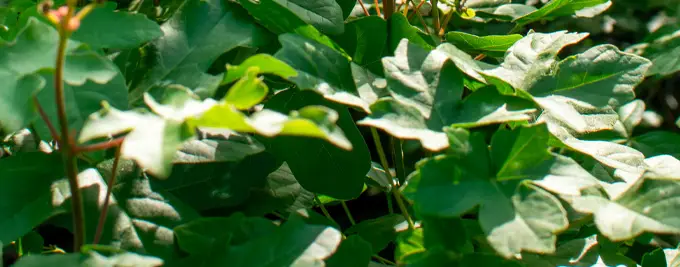
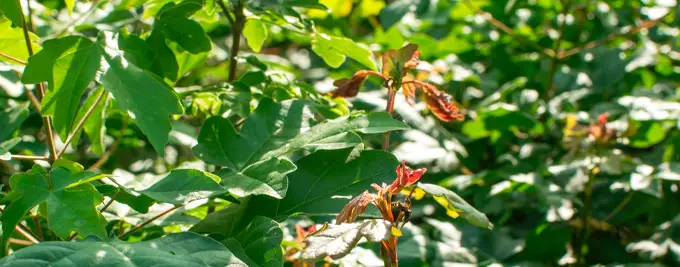
The leaves are relatively small for a maple and usually have five rounded lobes. They remain green through spring and summer before turning shades of yellow and gold in autumn. Small yellow-green flowers are followed by the characteristic paired winged fruits, often called maple keys or samaras.
As a hedge, Field Maple has a softer and more natural appearance than many evergreen species. Its branching structure can become dense with regular formative pruning, making it suitable for garden boundaries, native planting schemes, larger landscapes and country properties.
It is important to remember that Field Maple is deciduous. It can provide good screening while in leaf and its twiggy branch structure still gives some definition in winter, but it should not be treated as an evergreen privacy hedge.
Our current Field Maple Hedge range includes both bare-root and pot-grown plants in several heights.
Choosing the right Field Maple hedge
Choose Field Maple when you want a hardy native hedge with seasonal privacy, autumn colour and wildlife value rather than an evergreen screen. It performs best in sun or light shade and moist but well-drained soil, but is tolerant of exposed positions, chalk and a useful range of ordinary garden soils.
Field Maple is especially useful where the hedge needs to look natural within a garden, landscape or countryside setting. Regular clipping can also produce a neat formal boundary, although the foliage and branching retain a softer appearance than Yew, Laurel or other evergreens.
| Requirement | Field Maple suitability | What to consider |
|---|---|---|
| Seasonal privacy | Very good | Dense while in leaf, but deciduous in winter |
| Year-round evergreen privacy | Not suitable | Choose an evergreen hedge if winter foliage is essential |
| Informal or countryside hedging | Excellent | Native character suits rural and wildlife-focused planting |
| Formal clipped hedge | Good | Responds well to regular formative shaping |
| Exposed positions | Good | Young plants still need careful watering while establishing |
| Coastal sites | Generally good | Very exposed salt-laden sites can still be stressful to new plants |
| Light or partial shade | Good | Best density and autumn colour normally come with reasonable light |
| Deep shade | Less suitable | Growth may become thinner and slower |
| Clay or chalk | Good where drained | Avoid sites that remain permanently waterlogged |
| Wildlife planting | Excellent | Flowers, foliage, fruits and branch structure support different wildlife |
Field Maple is naturally capable of becoming a sizeable tree. It can still be used in smaller gardens when there is room for the hedge's width and the owner is prepared to prune it regularly, but it should not be planted and then left unmanaged in a confined space.
When to plant Field Maple hedging
Bare-root Field Maple is planted during the dormant season, normally from November into early spring, while pot-grown plants can be planted through much more of the year. Whatever the root type, postpone planting when soil is frozen, saturated or baked dry, and take extra care with watering when planting during warm weather.
Bare-root Field Maple
Bare-root Field Maple is normally supplied while dormant. The current Hedging Plants Direct range is generally available from around November into early spring, subject to weather and the growing season. Plant as soon as practical after delivery and never allow the exposed roots to dry out.
Autumn and winter planting gives the plant time to begin settling into the soil before the demands of spring leaf growth. Avoid planting when the soil is frozen solid or so waterlogged that working it destroys the soil structure.
Pot-grown Field Maple
Pot-grown Field Maple gives greater flexibility and can usually be planted throughout the year when ground conditions are suitable. Spring and autumn are particularly convenient because temperatures are moderate and soil moisture is easier to manage.
Summer planting is possible, but a pot-grown plant can move from a relatively small root ball into warm, drying soil. Water the root ball thoroughly before planting and monitor the original compost carefully afterwards. Delay planting during extreme heat or drought where adequate irrigation cannot be provided.
Weather matters more than the calendar
- Do not plant into frozen ground.
- Avoid planting into saturated, waterlogged soil.
- Delay planting during extreme heat where possible.
- Keep bare roots damp and protected from wind while setting out the hedge.
- Water every root type thoroughly after planting, including during winter if the surrounding soil is dry and unfrozen.
Where to plant Field Maple hedging
Field Maple grows best in full sun or light shade in fertile, moist but well-drained soil. It is more adaptable than many ornamental maples and can cope with chalk, clay, loam and sandy soils when drainage is adequate, making it useful for exposed gardens and many countryside planting situations.
Light
Full sun or light to partial shade is ideal. A Field Maple hedge can tolerate some shade, but very dark positions can reduce growth and make the lower part of the hedge less dense. Reasonable light also helps the foliage develop its best autumn colour.
Soil and drainage
Field Maple is adaptable to a useful range of soil textures, including chalky and heavier ground, but the roots should not sit permanently in stagnant water. Improve severely compacted ground before planting and correct any underlying drainage problem rather than trying to hide it with additional compost.
Exposed and coastal positions
Field Maple is one of the more useful native choices for exposed planting. Established plants are tough, but newly planted hedging has a much smaller effective root system, so wind can increase moisture loss before the roots have spread into the surrounding soil.
Walls, fences and boundaries
Allow enough space to reach both sides of the finished hedge for pruning and maintenance. Consider its intended mature width rather than planting immediately against a solid fence or wall. Keep the planting line away from underground services and avoid positioning a potentially large unmanaged Field Maple where its future canopy or roots would create an obvious conflict.
Prepare the planting area
Prepare a Field Maple planting strip by removing perennial weeds and grass, loosening compacted soil and correcting drainage before the plants arrive. Good existing topsoil should form most of the backfill. Soil conditioner can help poor structure, while Rootgrow should contact the roots directly if it is being used.
- Remove weeds and grass. Clear the planting line thoroughly, especially perennial weeds. Grass growing right up to newly planted hedging competes strongly for moisture.
- Check drainage. Digging a deeper hole does not solve waterlogging. Deal with compaction, drainage or a perched water table before planting where possible.
- Choose trenches or individual holes. A trench is useful for long hedge lines and variable ground; individual holes work well where the soil is already in good condition.
- Loosen the surrounding soil. Break up compacted sides and bases without digging much deeper than the roots need.
- Improve poor soil selectively. Where the soil structure needs help, mix a suitable soil conditioner such as Hedge Planting Compost through the excavated soil rather than replacing all the native soil with compost.
- Pre-water pot-grown plants. A dry root ball can be surprisingly difficult to re-wet after planting.
- Protect bare roots. Keep them wrapped, shaded and damp until each plant goes into the ground.
- Apply Rootgrow correctly. If using Rootgrow mycorrhizal fungi, follow the product directions and ensure it contacts the roots rather than scattering it over the soil surface afterwards.
- Avoid concentrated fertiliser in the planting hole. Correct planting, soil contact and moisture are more important than trying to force immediate top growth.
How to plant Field Maple hedging
Plant Field Maple at the same soil level at which it was previously growing, spread or loosen the roots according to root type, backfill with friable soil and water the entire root zone thoroughly. The most common establishment mistakes are planting too deeply, allowing bare roots to dry and failing to wet the original pot-grown root ball.
- Set out the hedge. Mark a straight line and position the plants using the density specified for the exact height and root type ordered.
- Prepare the roots. Keep bare roots moist. Water pot-grown plants thoroughly before removing their containers.
- Dig to the correct depth. The trench or hole should accommodate the roots comfortably without burying the stem deeper than its previous soil level.
- Handle the root type correctly. Spread bare roots naturally without sharply folding them. Remove pots and gently loosen tightly circling outer roots on pot-grown plants.
- Set the planting depth. The old soil mark on bare-root plants or the top of the pot-grown root ball should finish approximately level with the surrounding soil.
- Apply Rootgrow if required. Follow the Rootgrow instructions so the fungi make direct contact with the roots.
- Backfill gradually. Work friable soil around the root system and eliminate large air pockets.
- Firm gently. The plant should stand securely without compacting the planting strip into a hard surface.
- Water thoroughly. Wet the complete root system and a little of the surrounding soil rather than applying a token amount to the surface.
- Check the final level. Correct plants that sink or lean after watering.
- Mulch the line. Apply roughly 5–8cm of suitable organic mulch such as Hedge Bio Mulch over moist, weed-free soil while leaving a clear space around each stem.
- Support only where necessary. Small whips rarely need staking, but taller plants on exposed sites may need temporary support to reduce windrock.
Planting bare-root Field Maple
Do not leave the roots exposed while you work along a long hedge line. Take out only the plants you can set promptly. Spread the roots into loosened soil and use the existing soil mark on the stem as a guide to planting depth.
Planting pot-grown Field Maple
Water the pot first, remove it carefully and inspect the root ball. Tease apart tight circling roots without dismantling the complete root system. During the first season, check moisture inside the original compost as well as the surrounding soil.
Field Maple hedge spacing and plants per metre
Field Maple spacing depends on the plant size and root type. Current Hedging Plants Direct variation data ranges from six bare-root plants per metre for 40–60cm stock to four per metre for larger bare-root plants, while the currently verified pot-grown sizes up to 120cm use four plants per metre.
Do not use one universal Field Maple spacing for every plant. Larger plants naturally require more room, and the density shown for the exact product variation should take priority over a generic spacing recommendation.
| Root type | Plant height | Plants per metre | Approx. centre-to-centre spacing |
|---|---|---|---|
| Bare root | 40–60cm | 6 per metre | About 17cm |
| Bare root | 60–90cm | 5 per metre | 20cm |
| Bare root | 90–120cm | 5 per metre | 20cm |
| Bare root | 120–150cm | 4 per metre | 25cm |
| Pot grown | 40–60cm | 4 per metre | 25cm |
| Pot grown | 60–90cm | 4 per metre | 25cm |
| Pot grown | 90–120cm | 4 per metre | 25cm |
Single row or double row?
The figures above are the current densities used for the individual Field Maple hedge product. They should not automatically be doubled to create a two-row hedge. Where a specific landscape, wildlife or grant specification calls for staggered double rows, follow that specification because row spacing and total plant density may differ.
For most garden boundaries, accurate setting out and even spacing are more important than squeezing additional plants into the line. Overcrowding increases cost and competition without necessarily creating a better mature hedge.
Watering and establishment
Water Field Maple thoroughly after planting and then according to the moisture at root depth rather than a fixed calendar. During the first growing season, newly planted roots cannot yet exploit a large volume of soil, so dry, windy and warm conditions may require additional watering even when the surrounding garden looks established.
Water every Field Maple thoroughly immediately after planting. This settles soil around the roots as well as supplying moisture.
How to decide when to water
Check below the surface beside the root system. If the soil at root depth is beginning to dry, water slowly and thoroughly. If it is still properly moist, wait and check again rather than adding water automatically.
A deep application that reaches the main root system is more useful than repeatedly wetting only the top few centimetres. With pot-grown plants, pay particular attention to the original root ball because it can dry even when the surrounding soil is damp. On longer hedge runs, a properly installed Hedge and Garden Irrigation system can make even watering easier to manage.
Adjust for the soil
- Sandy or free-draining soil: dries more quickly and may need checking frequently during warm weather.
- Loam: usually holds useful moisture while still draining well.
- Heavy clay: may remain moist much longer. Check before adding more water and do not confuse waterlogging with drought.
Signs of drought stress
Wilting, curled leaves, dry leaf edges, premature browning and reduced extension growth can indicate water stress. Recently planted hedging is particularly vulnerable because new roots have not yet spread far beyond the planting area.
Signs of excessive moisture
Persistent yellowing, weak growth or wilting while the soil remains saturated can indicate poor root aeration or drainage. Adding more water to already saturated ground makes the problem worse.
Continue monitoring through the first full growing season and into the second where conditions are dry, exposed or the plants were relatively large at planting. An established Field Maple should become progressively less dependent on supplementary watering.
How and when to feed Field Maple hedging
Established Field Maple does not require heavy feeding in ordinary fertile soil. Feed in spring where soil fertility is poor or growth is genuinely weak after water, weeds and drainage have been checked. Avoid pushing soft late-season growth with unnecessary high-nitrogen fertiliser.
Feeding should support good growing conditions rather than compensate for poor planting or watering. A newly planted hedge that is dry, waterlogged or surrounded by grass will not be fixed simply by adding fertiliser.
When feeding is useful
- Soil is known to be low in fertility.
- Established plants show consistently weak extension growth without another obvious cause.
- The planting strip has been depleted by previous intensive planting.
- A balanced spring feed forms part of the site's normal maintenance programme.
Apply a suitable balanced hedge fertiliser such as Hedge Feed in spring according to the product directions and water it in if conditions are dry. Do not exceed the recommended rate.
Avoid repeated high-nitrogen feeding late in summer. Very soft late growth has less time to mature before autumn and winter weather.
Mulch as part of soil management
Organic mulch such as Hedge Bio Mulch is often more useful than simply increasing fertiliser. It suppresses competing weeds, reduces evaporation and contributes organic matter as it breaks down. Keep mulch clear of the stems and apply it to moist soil rather than using it to cover dry ground.
How and when to prune Field Maple hedging
Carry out the main pruning of Field Maple from late autumn to midwinter after leaf fall. This timing is important because maples can bleed sap when cut later. Young hedges benefit from light formative pruning to build low branching, while established hedges usually need one main annual shaping cut.
Best time to prune Field Maple
The main pruning window for Field Maple is from late autumn to midwinter. Avoid treating it like a hedge that receives its main cut in late winter or spring, because maples can bleed sap from fresh cuts as they move towards active growth.
Young Field Maple hedges
During the first few dormant seasons, concentrate on building a dense framework rather than rushing to achieve maximum height. Where a young plant is sparse or has very long unbranched shoots, shorten selected shoots to encourage branching. Well-branched plants do not need to be cut hard simply because they are newly planted.
Established hedges
Once the hedge is at or approaching its required dimensions, trim the sides and top during the late-autumn to midwinter window. Keep the base slightly wider than the top so light can reach the lower branches. This helps reduce the risk of a thin or bare base.
How much should be removed?
For routine maintenance, remove the season's excess extension growth needed to return the hedge to its intended outline. Avoid repeatedly cutting well inside the established framework unless renovation is necessary.
Overgrown Field Maple
An overgrown hedge can be reduced, but major renovation is safer when staged across dormant seasons rather than removing a very large proportion of the framework in one operation. Retain useful young growth and reassess regrowth before making the next major reduction.
Check for nesting birds
Always inspect the hedge carefully before cutting. If an active wild bird nest is present, leave the occupied area undisturbed until it is no longer in use. This applies regardless of whether the pruning date would otherwise be horticulturally suitable.
Field Maple growth rate and eventual size
The current Hedging Plants Direct Field Maple product gives a typical growth rate of about 20–40cm per year. Actual growth varies with plant size, establishment, soil, moisture, light and competition. A clipped hedge can be maintained at a fraction of the species' natural size, while an unpruned Field Maple can become a substantial tree.
For hedge planning, use approximately 20–40cm of annual extension growth as a sensible current guide rather than treating faster figures as a guarantee.
Growth is usually slower during establishment because the plant is developing roots as well as shoots. Once established, good moisture, adequate light and fertile soil can produce stronger growth, while drought, shade, weed competition, compacted soil and root problems will reduce it.
How tall can a Field Maple hedge be?
Field Maple can be maintained as a hedge at around 1.5–4m and can also be managed taller where the site and maintenance equipment allow. The selected height is determined by pruning rather than by a naturally dwarf habit.
What happens if it is not pruned?
Acer campestre is naturally a tree rather than a permanently small shrub. Left unpruned for many years it can exceed 12m, so hedge owners should not assume it will stop automatically at the desired boundary height.
Seasonal Field Maple hedge care
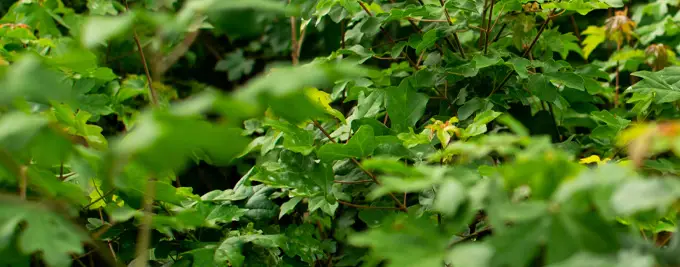
Field Maple needs relatively little intervention once established. Winter is the main bare-root planting and pruning period; spring is the time to inspect establishment and feed if genuinely required; summer care centres on moisture and weed competition; and autumn is useful for planting, mulching and assessing the hedge before dormancy.
| Season | Main jobs | What to watch |
|---|---|---|
| Winter | Plant bare-root stock when conditions allow; carry out main pruning from late autumn to midwinter; check supports and guards | Frozen or waterlogged soil; exposed bare roots; windrock |
| Spring | Check newly planted hedges, renew mulch, control weeds and feed only where needed | Drying root balls, poor bud break, weed competition |
| Summer | Monitor soil moisture, especially during hot or windy spells; keep the planting strip weed free | Drought stress, leaf scorch, pests and active bird nests |
| Autumn | Plant pot-grown stock in suitable conditions, prepare for bare-root season and replenish mulch where necessary | Normal autumn yellowing should not be mistaken for disease |
| Late autumn to midwinter | Complete the main annual shaping cut after leaf fall | Avoid delaying major maple pruning into spring |
Pests, diseases and common Field Maple problems
Most Field Maple problems are caused by establishment stress, drought, poor drainage or normal seasonal leaf change rather than serious disease. The species can, however, be affected by gall mites, aphids, caterpillars, tar spot, Verticillium wilt and honey fungus, so diagnosis should start with the pattern of symptoms and condition of the roots and soil.
Field Maple leaves turning yellow
Yellow foliage in autumn is normal and is one of Field Maple's main ornamental features. Yellowing during the growing season needs more investigation. Check moisture at root depth, drainage, recent weather, weed competition and whether the problem affects the whole hedge or only individual plants.
Brown or scorched leaves
Brown edges or scorched foliage on a newly planted hedge commonly follows drought, drying winds or damage to the root system during establishment. Check whether the soil is actually dry before watering because root damage from waterlogging can also cause wilting and browning.
Hedge not growing
New Field Maple may put less growth on above ground while the root system establishes. Persistent poor growth can result from insufficient moisture, poor drainage, deep planting, heavy competition from grass or weeds, low light, damaged roots or an unsuitable soil structure.
Sparse growth at the base
A hedge that is repeatedly allowed to become wider at the top can shade its own lower branches. Keep the sides slightly tapered so the base receives light. On a young hedge, selective formative pruning can also encourage lower branching.
Tar spot
Tar spot produces conspicuous dark or black spots on maple leaves. It often looks more serious than it is and does not usually cause major long-term damage to an otherwise healthy plant. Removing heavily affected fallen leaves can reduce the amount of infected material overwintering around the hedge.
Gall mites, aphids and caterpillars
These can cause bumps, distorted foliage, sticky deposits or local chewing. Light infestations are often tolerated by an established hedge and form part of the food web supported by Field Maple. Avoid treating every cosmetic leaf symptom automatically.
Verticillium wilt
Sudden wilting, yellowing or dieback affecting individual branches or plants may require closer investigation, particularly where the soil remains moist enough that ordinary drought seems unlikely. Verticillium is soil-borne and can cause internal discoloration in affected stems. There is no simple curative spray, so seek reliable diagnosis before replanting or moving contaminated soil.
Honey fungus
Honey fungus attacks roots and the lower stem. Symptoms can include poor growth, progressive dieback and plant death. White fungal material beneath loose bark near ground level, dark root-like rhizomorphs or clusters of honey-coloured mushrooms can support the diagnosis. If several established plants are failing, professional identification is worthwhile before removing or replacing the hedge.
Can a damaged Field Maple recover?
Recovery depends on the cause. A plant suffering temporary drought or transplant stress can recover when the root system is still healthy, whereas a plant with extensive root death or confirmed vascular disease may not. Correct the cause first and avoid adding strong fertiliser to a severely stressed hedge.
Wildlife and environmental value of Field Maple
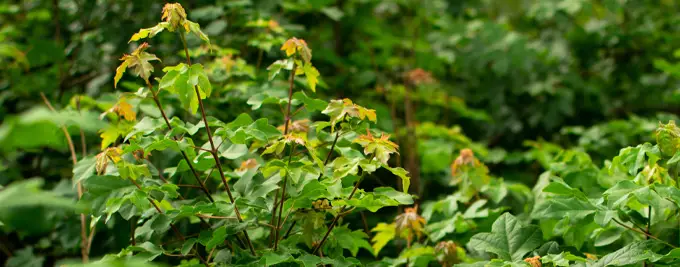
Field Maple is a valuable native hedge species because different parts of the plant support different wildlife. Its spring flowers provide nectar and pollen, its foliage supports aphids and moth caterpillars and therefore their predators, and its winged fruits are eaten by birds and small mammals.
Field Maple is useful for wildlife for more than simply being a native plant. Its small flowers provide nectar and pollen, while the foliage supports aphids and several moth caterpillars. Those insects in turn provide food for predators including ladybirds, hoverflies and birds.
The characteristic winged fruits provide another food source, particularly for birds and small mammals. A mature, twiggy hedge also creates shelter and potential nesting habitat.
For the greatest wildlife value, avoid unnecessary pesticide use and do not keep the ground beneath the hedge completely sterile. A sensible mulch and some surrounding habitat diversity are generally more useful than treating every insect seen on the foliage as a pest.
Before any pruning or trimming, check carefully for active bird nests and leave occupied sections undisturbed.
Field Maple care by root type
Hedging Plants Direct currently supplies Field Maple as bare-root and pot-grown plants. Bare-root stock needs rapid planting and protection from drying during dormancy, while pot-grown stock gives more planting flexibility but requires careful monitoring of the original compost-filled root ball until roots establish into the surrounding soil.
| Root type | Planting | Most important early care |
|---|---|---|
| Bare root | Plant during the dormant supply season and keep roots damp until they are covered | Prevent root drying, use the previous soil mark for depth, water after planting and keep the strip weed free |
| Pot grown | Plant in suitable ground through much more of the year; remove the pot and loosen tight outer roots | Keep the original root ball moist, particularly during warm weather, while roots spread into the surrounding soil |
Bare-root establishment
A bare-root plant has no protective compost around the root system, so drying between delivery and planting is one of the greatest avoidable risks. Keep the roots covered and damp, plant promptly and water the completed hedge thoroughly.
Pot-grown establishment
A pot-grown plant may look more established above ground but its effective root system is initially confined to the old container volume. Check that original root ball during dry weather rather than assuming rain or irrigation has penetrated it.
Frequently asked questions about Field Maple hedging
Is Field Maple evergreen?
No. Field Maple is deciduous, so its green leaves normally turn yellow or gold in autumn before falling. A well-branched hedge still provides structure in winter, but it should not be chosen where dense evergreen screening is essential throughout the year.
How fast does a Field Maple hedge grow?
Our current Field Maple product gives a typical growth rate of around 20–40cm per year. Actual growth depends on establishment, soil, moisture, light, plant size and competition. Newly planted hedging may grow more slowly above ground while its root system becomes established.
How many Field Maple plants do I need per metre?
It depends on the size and root type. Our current bare-root plants range from six plants per metre for 40–60cm stock to four per metre for 120–150cm stock. The currently verified pot-grown sizes up to 120cm use four plants per metre. Always use the density shown for the exact product variation you are ordering.
When is the best time to plant Field Maple hedging?
Bare-root Field Maple is best planted during its dormant supply season, normally from around November into early spring. Pot-grown plants can be planted through much more of the year when the ground is workable. Avoid frozen, saturated or exceptionally dry ground and provide extra irrigation when planting in warm weather.
When should I prune a Field Maple hedge?
Carry out the main pruning from late autumn to midwinter. This is particularly important with maples because cuts made later as sap begins moving can bleed. Use formative pruning on young hedges to encourage branching, then maintain the required height and shape with the main dormant-season trim.
How tall can a Field Maple hedge grow?
Field Maple can comfortably be maintained as a hedge at around 1.5–4m, with taller hedges possible where there is sufficient space and suitable equipment. If it is left unpruned, Acer campestre is capable of becoming a substantial tree exceeding 12m, so its eventual hedge height is controlled by pruning.
Can Field Maple grow in shade?
Field Maple grows best in full sun or light to partial shade. It can tolerate some shade, but very dark positions may produce slower, thinner growth and poorer density near the base. If dense screening is the priority, give the hedge as much useful light as the site allows.
Can Field Maple grow in clay or chalky soil?
Yes. Field Maple is adaptable and is particularly useful on many clay and chalky sites, provided the soil drains adequately. Heavy clay that remains saturated for long periods should be improved or drained before planting because Field Maple prefers moist but well-drained ground rather than permanent waterlogging.
What does a Field Maple hedge look like in winter?
Field Maple loses its leaves in autumn, so the winter hedge consists mainly of its dense twiggy framework. It will not provide the solid green screen of an evergreen hedge. Older twigs can also develop distinctive corky ridges, which help identify Field Maple during dormancy.
How often should I water a new Field Maple hedge?
Water according to conditions rather than following a fixed weekly schedule. Check the soil at root depth and water thoroughly when it is beginning to dry. Sandy soils and exposed sites dry faster, while heavy ground may stay wet much longer. Pot-grown plants need particular attention to moisture inside their original root ball.
Why are my Field Maple leaves turning yellow?
Yellow Field Maple leaves are completely normal in autumn. Yellowing during spring or summer needs investigation. Check soil moisture, drainage, planting depth, weed competition and the pattern of symptoms before feeding or treating the plant, because both drought and damaged waterlogged roots can cause premature yellowing.
Is Field Maple good for wildlife?
Yes. Field Maple supports several parts of the food web. Its flowers provide nectar and pollen, its leaves support aphids and moth caterpillars and therefore their predators, and its winged fruits are eaten by birds and small mammals. A mature hedge also provides valuable shelter and potential nesting habitat.
How can I tell if a bare Field Maple is dead or just dormant?
A leafless Field Maple in winter is normally dormant, not dead. Look for firm stems and healthy buds and gently scratch a very small patch of young bark if necessary; living tissue immediately beneath should normally appear moist and greenish. Do not discard newly planted bare-root plants simply because they remain leafless during winter.
More Field Maple questions
Useful answers from our Field Maple hedging knowledge base.
What Are the Different Hedging Root Types?
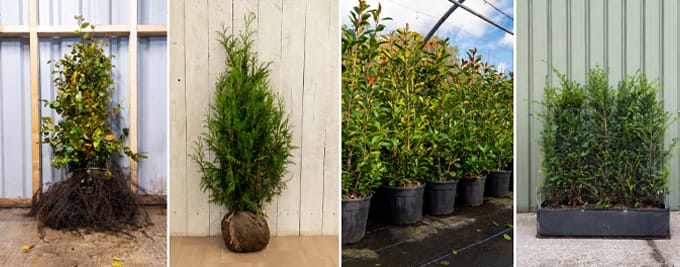
Bare root, root ball, pot-grown and instant hedging suit different budgets, planting times and levels of initial coverage. Understanding how each is supplied makes it easier to choose the right format for your project.