
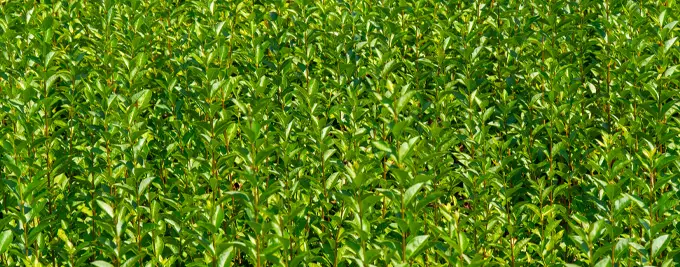
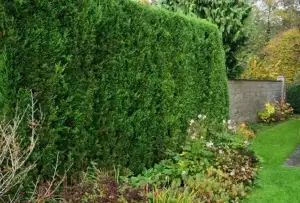
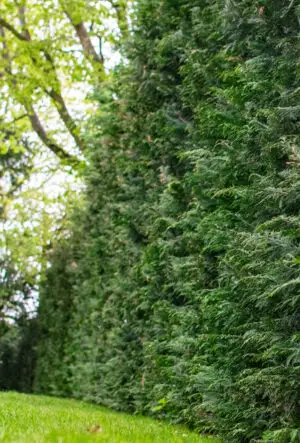
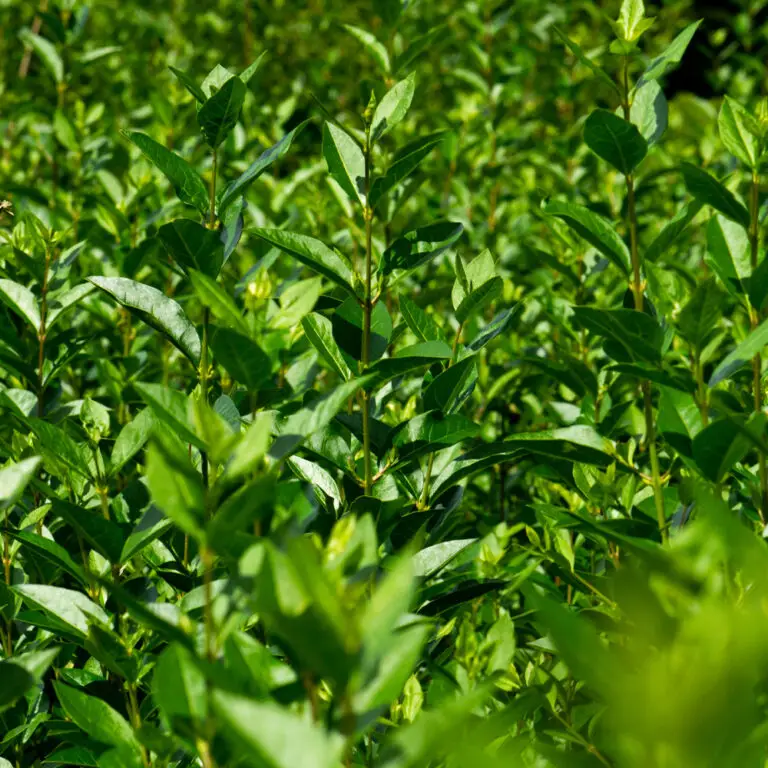
Privet hedging plants are a popular choice for creating dense, attractive boundaries in UK gardens and landscaping projects. Their vigorous growth and ability to respond well to regular trimming make Privet suitable for formal hedges, privacy screening, front gardens and longer commercial planting schemes.Choose fast-growing Common Privet for a traditional dark green hedge, Golden Privet for brighter variegated foliage, or native Wild Privet for informal and wildlife-focused planting. Depending on the variety and size selected, our range includes bare root, pot-grown, root-balled and instant Privet hedging.
Choose the Right Privet for Your Hedge
Privet is not one single hedge. Choose the variety that best matches the look, screening level and wildlife value you want, then select the size and root type.
- SALE
 Common Privet HedgeLigustrum ovalifoliumBest for fast, dense formal hedges and privacy. Dark green semi-evergreen foliage, with the widest choice of bare root, pot-grown, root-balled and instant sizes.FloweringFast 30-60cm per yearBare RootRoot BalledPot GrownInstant Hedging
 - SALEGolden Privet HedgeLigustrum ovalifolium AureumChoose for a brighter formal hedge with green-and-gold foliage. Generally slower than Common Privet and colours best in full sun or bright partial shade.Colourful FoliageMedium 20-40cm per yearBare RootPot Grown
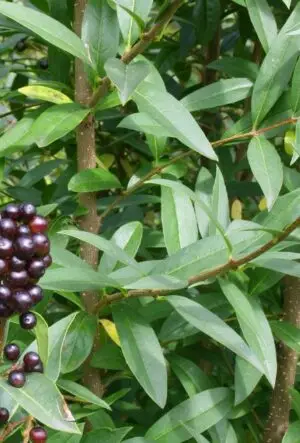
- SALEWild Privet Hedge (Ligustrum vulgare)Ligustrum VulgareNative choice for informal, rural and wildlife-focused hedges. More likely to lose leaves in winter, with flowers and berries when trimming is less frequent.FloweringMedium 20-40cm per yearPot Grown


Expert nursery advice
Gwynne's Grower's Tip
With Privet, choose the variety first and the starting size second. Common Privet is normally the most practical option when you want a fast, regularly clipped privacy hedge, while Golden Privet is more about foliage colour and Wild Privet suits a looser native or wildlife-focused boundary. For a long run planted in the dormant season, smaller bare-root plants can be very cost-effective and establish well if watered properly. Larger root-balled or instant plants make sense when immediate height matters, but they need more handling and dependable establishment watering.
Helpful answers
Frequently asked questions
01Which Privet Hedge Is Right for Your Garden?
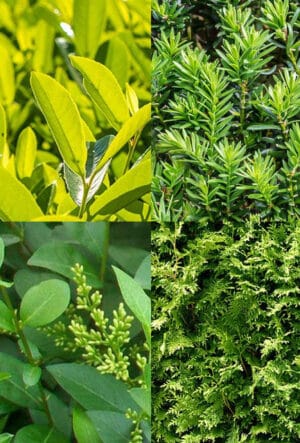
The three Privet varieties within this category have different foliage, growth habits and uses. Choosing the correct plant will give a better result than treating every Privet as interchangeable.
02Why Choose Privet Hedging?
- Vigorous growth that can establish a dense boundary relatively quickly
- Responds well to regular clipping and formal shaping
- Suitable for maintained hedges from approximately 90cm to 2.5m, depending on variety and site
- Tolerates full sun and partial shade
- Adaptable to a wide range of UK soil types where drainage is reasonable
- Useful in urban gardens and locations affected by pollution
- Available in green, golden-variegated and native wildlife-focused forms
- Common Privet is available in bare root, pot-grown, root-balled and instant formats
- Flowers and berries can provide seasonal wildlife value when sections are not clipped too tightly
03Is Privet a Good Hedge for Privacy?
Common Privet is one of the strongest choices in this category for a fast, dense privacy hedge. Regular formative trimming encourages the plants to branch near the base and knit together into a solid boundary. Larger pot-grown, root-balled and instant plants can provide more immediate height, while smaller bare-root plants offer an economical way to establish a longer hedge.Privet should not, however, be described as a guaranteed evergreen screen. It is normally semi-evergreen, and colder or more exposed conditions can cause increased winter leaf loss. Customers who require dependable year-round foliage should take this into account when comparing hedge species.
04How Quickly Does Privet Hedging Grow?
Common Privet can produce approximately 30–60cm of growth in a year once established under suitable conditions. Golden and Wild Privet are often closer to 20–40cm annually. These are indicative ranges rather than guaranteed results, as growth depends on the starting plant size, soil, light, watering, competition and pruning.Privet may make limited top growth during its first season while roots spread into the surrounding soil. Correct planting and consistent watering are usually more important during this period than heavy feeding.
05How Many Privet Plants Do I Need?
The correct number depends on the variety, plant height and root type selected. Smaller bare-root Common Privet may require up to six plants per metre, while larger pot-grown or root-balled plants need fewer. Instant hedging is supplied in metre-long units.Use the planting density shown beside the exact product variation you are ordering rather than relying on one universal Privet spacing. Our Privet hedge spacing guide explains the current plants-per-metre figures and how to calculate the quantity required.
Helpful next steps
Browse all Q&A Growing Advice for Privet Hedging Plants
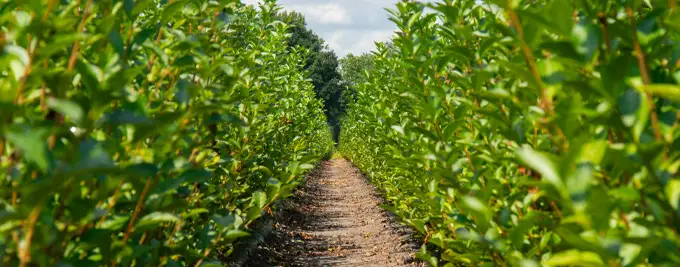 Q&AHow Can I Make a Privet Hedge Grow Faster?A Privet hedge can grow quickly once its roots are established, but dry soil, weed competition, deep shade and unsuitable pruning can all slow it down. The best…Read answer
 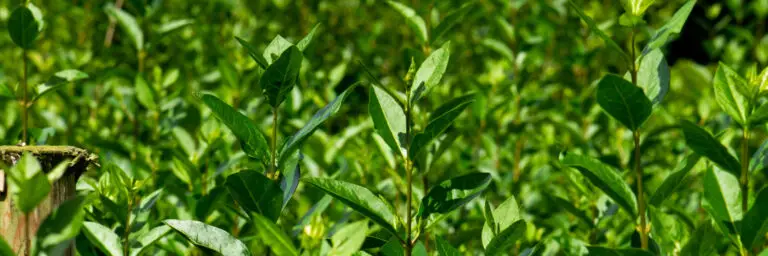 Q&AIs Privet Evergreen?Privet is often chosen for privacy, but its winter appearance is less predictable than that of a fully evergreen hedge. The variety, local weather and amount of shelter…Read answer Q&AIs Privet Poisonous?Privet is a familiar garden hedge, but its leaves and berries are not edible. This guide explains the practical risk to people, pets and grazing animals, and the…Read answer
 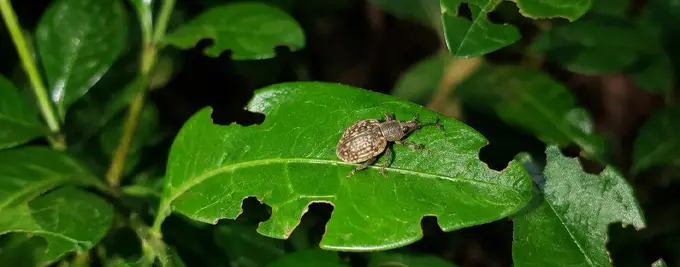 Q&AWhat Is Eating My Privet Hedge?Chewed, notched or stripped Privet leaves can have several causes, and the shape of the damage is often more useful than the amount missing. This guide will help…Read answer
 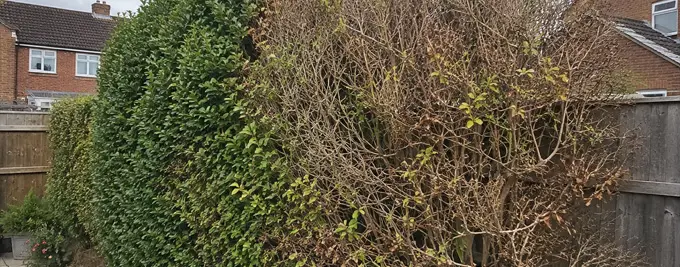 Q&AWhy Is My Privet Hedge Dying?A Privet hedge can lose leaves, turn brown or die back for several different reasons. The position and pattern of the damage usually provide the first clue, so…Read answer