
Garden Trees
Browse garden trees for elevated screening, attractive boundaries and year-round garden structure. Choose from trained pleached trees and evergreen ornamental trees for domestic gardens, landscaping schemes and larger commercial projects. Buy directly from our established family-run nursery, supplying retail, trade and commercial customers across the UK.

Pleached Trees (4)
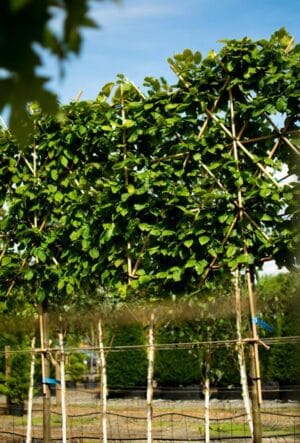
Shop pleached trees for elevated privacy screening above fences and walls. Buy direct from our established family-run nursery, with UK delivery available.
Prices from: £485.00Shop NowOrnamental Trees (4)
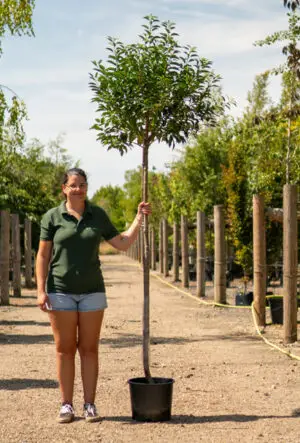
We don’t just grow and sell Hedging from our Essex based nursery, we also have a large variety of Ornamental trees available, including both deciduous and evergreen species, and are available for nationwide delivery.
Prices from: £249.95Shop Now
Choose Garden Trees by Type
The right tree will depend on whether you need privacy, seasonal interest, evergreen foliage or a strong architectural feature.
Our range is divided into two main categories:
Pleached trees are trained to form a raised panel of branches and foliage above a clear stem. Ornamental trees have a more conventional rounded or shaped head and can be planted as individual features or repeated along a boundary.
Before ordering, check the total height, clear stem height, canopy dimensions, stem girth, root type and recommended planting position shown on the individual product page.
Pleached Trees for Privacy Above Fences and Walls
Pleached trees are particularly useful where an existing fence or wall provides sufficient coverage at ground level but additional privacy is needed higher up.
Each tree has a clear lower stem and a trained head supported on a framework. When several trees are planted in a row, the heads can grow together to form an elevated screen, sometimes described as a pleached hedge or a hedge on stilts.
Browse our complete range of Pleached Trees to compare evergreen and deciduous options.
Pleached Hornbeam Trees
Pleached Hornbeam Trees provide fresh green foliage during spring and summer, followed by yellow and golden autumn colour.
Hornbeam is deciduous, so it should not be expected to provide the same winter screening as an evergreen tree. Its trained branch framework continues to give the garden structure after leaf fall.
Pleached Hornbeam is well suited to formal boundaries, avenues and gardens where seasonal change is part of the design.
Read our Hornbeam Hedging Care Guide for further information about Hornbeam planting conditions, watering and pruning.
Pleached Photinia Red Robin Trees
Pleached Photinia Red Robin Trees combine evergreen foliage with colourful red young growth.
They are useful where customers want screening above a fence while also introducing brighter foliage into the garden. Photinia generally performs best in a suitable sheltered position with adequate light, drainage and establishment watering.
Regular trimming helps maintain the trained head and can encourage further colourful young growth.
Read our Photinia Red Robin Care Guide for more detailed planting and pruning advice.
Pleached Cherry Laurel Trees
Pleached Cherry Laurel Trees have large, glossy evergreen leaves and can create a substantial raised screen.
They provide a different appearance from the smaller foliage of Hornbeam and Photinia. The broad leaves create a bolder canopy, which can work well along larger boundaries or where dependable evergreen foliage is important.
Allow enough room for the trained heads to develop and plan regular trimming to maintain the required dimensions.
Read our Laurel Hedging Care Guide for advice on soil, watering, feeding and pruning Laurel plants.
Pleached Liquidambar Trees
Pleached Liquidambar Sweet Gum Trees offer green summer foliage followed by changing shades of yellow, orange and red in autumn.
Liquidambar is deciduous and is best chosen for architectural form and seasonal colour rather than complete year-round privacy.
Its trained canopy can be used to line a path, frame a seating area or form a decorative boundary where autumn interest is an important part of the planting design.
Ornamental Trees for Evergreen Structure
Our Ornamental Trees category currently includes evergreen trees with clear stems and shaped heads.
These trees can be planted individually as focal points or repeated to introduce height and structure. They can also provide screening, although their narrower individual heads will normally create a different effect from a continuous row of pleached trees.
Cherry Laurel Trees
Cherry Laurel Trees have clear stems topped with rounded heads of broad evergreen foliage.
They can provide height and greenery without filling the complete boundary from ground level. This makes them useful for entrances, formal planting and positions where customers want a tree shape rather than a conventional Laurel hedge.
Check the current head width and eventual dimensions before choosing the planting position.
Photinia Red Robin Trees
Photinia Red Robin Trees provide evergreen structure with bright red young foliage.
They can be used as individual features, repeated along a path or planted near a boundary where raised foliage is required. The level of screening will depend on the number of trees, their spacing and the supplied head size.
Photinia trees still require establishment watering and suitable growing conditions. A tree form should not be treated as maintenance-free simply because the lower stem is clear.
Portuguese Laurel Trees
Portuguese Laurel Trees have dark evergreen leaves and a more refined appearance than broad-leaved Cherry Laurel.
Their shaped heads can introduce formal structure around entrances, patios and garden boundaries.
Portuguese Laurel grows more moderately than vigorous Cherry Laurel, but the head will still need occasional pruning to maintain its intended size and shape.
Choosing Trees for Privacy and Screening
The best screening tree will depend on where the unwanted view begins.
If privacy is needed above an existing fence or wall, pleached trees are normally the most direct solution because their trained heads are positioned above clear stems.
Where screening is needed from ground level, a conventional hedge may be more appropriate. Browse our Privacy Hedge Plants for evergreen, semi-evergreen and deciduous alternatives.
Before choosing screening trees, consider:
- The height of the existing fence or wall
- The level at which additional screening must begin
- Whether winter foliage is essential
- The available planting width
- The distance from buildings and boundaries
- The amount of light that should pass beneath the canopy
- The soil type and drainage
- Access for future trimming
- Delivery and access to the planting area
A taller tree does not automatically provide screening in the right place. The clear stem and canopy measurements are often more important than the total height.
Evergreen or Deciduous Garden Trees
Evergreen Trees
Evergreen trees retain their foliage throughout the year and are normally the strongest choice where winter privacy is important.
The current evergreen range includes Photinia, Cherry Laurel and Portuguese Laurel trees in ornamental or pleached forms.
Evergreen foliage does not mean the tree will require no maintenance. Pruning, watering, feeding and checks for wind damage are still needed.
Deciduous Trees
Deciduous trees lose their foliage during winter but can offer spring growth, summer shade and autumn colour.
Pleached Hornbeam and Liquidambar are useful where seasonal change and architectural structure are more important than complete winter screening.
Deciduous canopies also allow more light into the garden after leaf fall, which may be beneficial near patios, windows and smaller outdoor spaces.
How to Compare Tree Sizes
Large garden trees are described using several measurements. Check each of these before ordering.
Total Height
Total height is measured from the base of the pot or root system to the highest part of the tree.
This measurement alone does not show where the foliage begins.
Clear Stem Height
The clear stem is the distance from the soil level to the bottom of the trained head or canopy.
When screening above a fence, compare the clear stem height with the height of the existing boundary.
Canopy or Head Dimensions
The head measurements show the approximate height and width of the leafy or trained section.
For pleached trees, this may be the size of the supporting frame. For ornamental trees, it may describe the current shaped head.
Stem Girth
Girth is measured around the trunk and provides an indication of stem thickness and maturity.
Trees with heavier girths are normally more substantial and may require more people or suitable equipment to unload, move and plant.
Root Type
Check whether the selected tree is supplied pot grown or root balled.
Pot-grown trees can generally be planted when the soil is workable and reliable watering is available. Root-balled trees are seasonal and require careful handling to protect the soil surrounding the roots.
Planning Delivery and Garden Access
Garden trees can be tall, wide and heavy. Pleached frames may be considerably wider than the tree’s container or root ball.
Before ordering, check:
- The width and height of gates
- Access from the delivery point
- Narrow paths and turns
- Steps and changes in ground level
- Overhead cables and branches
- Buildings, garages and carports
- The number of people needed to move the trees
- Whether lifting or handling equipment will be required
Prepare the planting positions and support system before delivery where possible.
Trees should be supported by the root ball or container and trunk when moved. Do not lift a pleached tree using its bamboo frame or trained branches.
How to Plant Garden Trees
Mark the planting positions before digging, particularly when several trees will form a row.
Dig each hole wider than the pot or root ball but no deeper than necessary. Trees should normally be planted at approximately the same depth at which they were previously growing.
Remove grass, perennial weeds, old roots and building debris. Loosen compacted soil around the planting hole and investigate drainage problems before planting.
Apply Rootgrow at Planting
Apply Rootgrow Mycorrhizal Fungi according to the product instructions.
Rootgrow must come into direct contact with the roots. Apply it immediately before positioning the tree rather than spreading it randomly throughout the backfill soil.
Rootgrow can support establishment but does not replace correct planting depth, staking, suitable soil or regular watering.
Improve the Soil with Hedge Planting Compost
Mix Hedge Planting Compost with the excavated soil where additional organic matter or improved soil structure is needed.
Use it as a soil conditioner rather than filling the complete planting hole with compost alone. Tree roots need to move into the surrounding ground as they establish.
Compost should not be used to disguise persistent waterlogging or severe soil compaction.
Stake and Support New Trees
Newly planted trees need suitable support while their roots establish.
Pleached trees have broad trained heads that can catch the wind, making appropriate staking particularly important. The support system should hold the trunk securely without rubbing against the bark.
Check stakes, ties and frames regularly. Loosen or replace ties before they restrict the trunk as it thickens.
Irrigation and Watering
Newly planted garden trees require thorough and consistent watering.
Apply water across the complete root area rather than wetting only the soil surface. Large pots, root balls and trained canopies can lose significant moisture during warm, dry or windy conditions.
A hedge and garden irrigation system can make it easier to water a row of trees evenly.
Position porous pipe or drip outlets around the root areas rather than directly against the trunks. Test the system to make sure each tree receives water, particularly where the planting line slopes or covers a long distance.
Do not rely entirely on light rainfall. Fences, walls and tree canopies can prevent rain from reaching the roots.
Rabbit Protection for Young Trees
Rabbits can damage the bark of young trees, particularly in rural gardens, paddocks, developments and planting sites beside fields.
Use suitable guards or temporary fencing where rabbit pressure is known. Browse our Plant Protection products for available options.
Standard spiral guards may suit young, narrow stems but are not appropriate for every tree size. Larger trunks may need wider guards, mesh or fencing.
Check guards regularly to make sure they are not rubbing against the bark, trapping excessive moisture or restricting the growing trunk.
Where deer, livestock or machinery are present, more substantial protection may be required.
Applying Hedge Feed After Planting
Hedge Feed can be applied after planting according to the instructions on the product.
Spread the feed over the soil around the root area rather than placing concentrated fertiliser directly against the trunk or exposed roots.
Water after feeding where required.
Feeding should support correct planting and aftercare. It will not compensate for dry roots, poor drainage, deep planting, damaged irrigation or unsuitable soil conditions.
Caring for Pleached and Ornamental Trees
Keep the Root Area Clear
Remove grass and weeds from around the root area while the trees establish. Competing vegetation can take moisture and nutrients away from newly developing roots.
A suitable mulch can help retain moisture, but leave a clear space around the trunk.
Check Stakes and Ties
Inspect supports after strong winds and several times during the growing season.
Adjust ties before they become tight. Replace damaged stakes or frames promptly to prevent movement at the root system.
Trim Trained Heads
Pleached tree canopies need regular trimming and training to maintain their shape.
Selected young branches can be tied gently to the frame to fill gaps and connect adjoining heads. Use soft ties and check them regularly.
The correct pruning time depends on the tree species. Refer to the appropriate species care guide rather than using one pruning date for every tree.
Monitor Watering
Continue checking the soil after the first few weeks. Larger trees may need establishment watering for more than one growing season, particularly on dry or exposed sites.
Check beneath the surface rather than judging moisture by appearance alone.
Trees for Trade and Commercial Projects
We supply garden trees to homeowners, landscapers, designers, developers and commercial customers across the UK.
For larger projects, provide the nursery team with:
- The total planting length
- The required screening height
- The height of any existing boundary
- Preferred evergreen or deciduous foliage
- Available planting width
- Soil and exposure information
- Delivery postcode
- Details of access and unloading facilities
This information helps identify suitable species, tree sizes and quantities.
Garden Trees FAQs
What Is the Best Tree for Screening Above a Fence?
Pleached trees are usually the clearest choice where screening is required above an existing fence or wall.
Check the clear stem height and trained head dimensions rather than choosing by total height alone. Evergreen Photinia or Cherry Laurel may suit year-round screening, while Hornbeam and Liquidambar provide deciduous seasonal options.
What Is the Difference Between a Pleached Tree and an Ornamental Tree?
A pleached tree has a clear stem and a flat trained head supported on a framework. Several can be planted in a row to create a raised screen.
The ornamental trees in this range have clear stems with more conventionally shaped heads. They are suitable for feature planting, repeated formal planting and lighter screening.
Are Pleached Trees Evergreen?
Some pleached trees are evergreen and others are deciduous.
Photinia Red Robin and Cherry Laurel retain foliage throughout the year. Hornbeam and Liquidambar lose their leaves and provide less winter screening.
Do Pleached Trees Provide Immediate Privacy?
Pleached trees provide immediate height and structure, but the amount of privacy depends on the maturity and density of the trained head.
Younger trees may have visible gaps between their branches or between neighbouring frames. These can fill as the trees grow and are trained.
How Many Pleached Trees Do I Need?
The quantity depends on the width of the trained head and the recommended spacing for the selected product.
Measure the full planting line and divide it using the actual head width shown on the product page. Do not assume every pleached tree has the same frame dimensions.
Can Garden Trees Be Planted Throughout the Year?
Pot-grown trees can generally be planted when the soil is workable and adequate watering is available.
Root-balled trees are seasonal and are normally supplied during the dormant period. Avoid planting into frozen, waterlogged or extremely dry ground.
Do Garden Trees Need Irrigation?
A permanent irrigation system is not compulsory, but newly planted trees require dependable watering.
Irrigation is particularly useful when several large or pleached trees are planted in a row. The system must still be tested and monitored to ensure every root area receives water.
Should I Use Rootgrow When Planting Trees?
Rootgrow can be applied when planting according to the product instructions.
It must come into direct contact with the roots. Rootgrow supports establishment but does not replace soil preparation, correct planting, staking or watering.
Can I Use Hedge Planting Compost for Trees?
Hedge Planting Compost can be mixed with the excavated soil where additional organic matter or improved soil structure would be beneficial.
Do not fill the complete planting hole with compost alone. The roots need to grow into the surrounding soil.
Do Trees Need Rabbit Protection?
Plant protection is advisable where rabbits are present or likely to reach the planting area.
Choose a guard or fencing system suited to the trunk size and level of pressure. Check it regularly and remove or adjust it before it restricts the tree.
Can Trees Be Used Instead of a Hedge?
Trees can provide raised screening, shade and structure, but they do not normally create dense coverage from ground level.
Where complete low-level privacy is required, compare trees with our Privacy Hedge Plants.
Do You Supply Trees to Trade and Commercial Customers?
Yes. We supply retail, trade and commercial customers, including landscapers, designers, developers and contractors.
Contact our nursery team with the planting dimensions, preferred tree type and delivery details for help choosing suitable products.
Buy Garden Trees Direct from Our Nursery
Buy garden trees directly from our established family-run nursery. Browse pleached trees for elevated privacy or ornamental trees for evergreen structure and feature planting.
We supply retail, trade and commercial customers across the UK. Contact our nursery team for help comparing tree sizes, calculating quantities and planning planting, delivery and access.