
Hedging care & growing guide
Thuja Hedge Care Guide: Planting, Spacing & Pruning
Thuja hedges are generally straightforward to grow when they are planted into well-prepared, free-draining soil and kept consistently moist while establishing. This guide explains how to plant, space, water, feed and prune Thuja hedging plants, together with practical advice for dealing with browning, slow growth and other common problems.
There are important differences within the range. Western Red Cedar (Thuja plicata) is the faster-growing option and is well suited to taller evergreen screening, while White Cedar ‘Smaragd’ (Thuja occidentalis ‘Smaragd’) has a much slower, naturally narrow habit. The correct spacing, pruning and expected growth therefore depend on which Thuja you are growing.
Good establishment matters particularly with evergreen hedging because the foliage continues to lose moisture during mild and windy weather. Correct planting depth, thorough watering, weed control and avoiding waterlogged ground will do more for a young Thuja hedge than heavy feeding.
Expert nursery advice
Gwynne's Grower's Tip
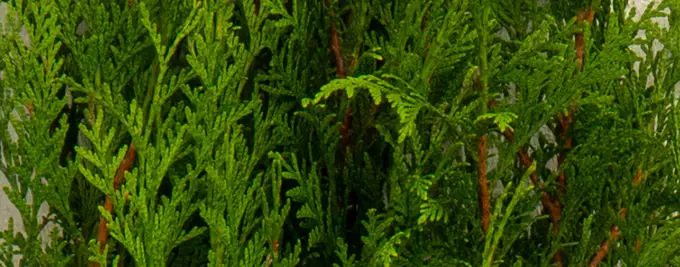
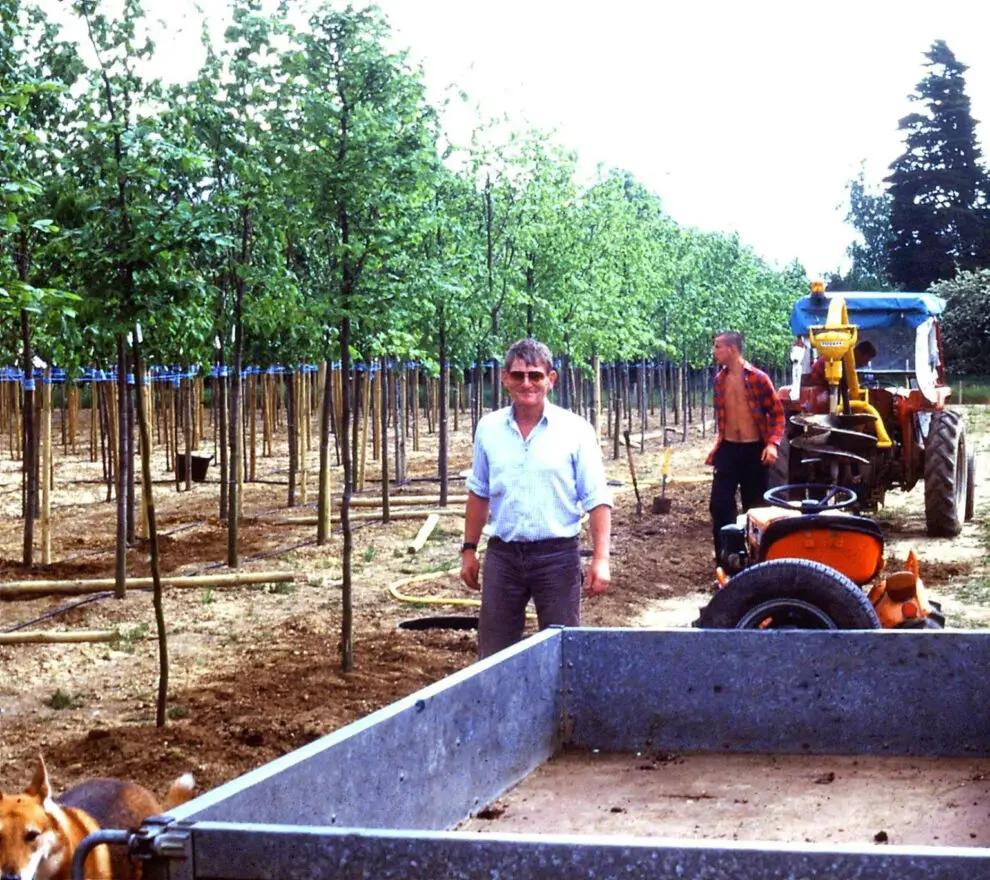
With Thuja, I would concentrate on getting the planting and watering right before worrying about fertiliser. Plant at the same depth as the existing root system, water the whole root ball thoroughly and keep the ground around the hedge free from grass and weeds while it establishes. Once the hedge is growing strongly, trim it regularly rather than allowing it to become too wide and then trying to cut it back heavily. With conifers, keeping green foliage on the outside of the hedge is always the safer approach.
From our nursery
Visit our Thuja hedges

Western Red Cedar Hedge
Western Red Cedar is the Thuja I would choose where the main aim is a substantial evergreen privacy hedge. It grows considerably faster than ‘Smaragd’ and is suitable for taller boundaries, but that extra growth means it needs regular trimming once established. Keep it watered well after planting and start controlling the width while the plants are still young rather than waiting until the hedge becomes oversized.

White Cedar Hedge
‘Smaragd’ is the better Thuja where you want a slower-growing, naturally upright conifer rather than a vigorous tall screen. Its narrow conical habit means it needs much less intervention than Western Red Cedar and suits more restricted spaces. Give it good light, avoid ground that remains waterlogged and pay particular attention to watering during establishment, especially in exposed or drying conditions.
Not sure which Thuja hedge to choose?
Compare the available plants, formats and starting sizes in the complete range.
Explore our complete Thuja hedging rangeThuja hedge quick-care summary
| Botanical name | Thuja plicata; Thuja occidentalis ‘Smaragd’ |
|---|---|
| Plant type | Evergreen conifer |
| Evergreen or deciduous | Evergreen |
| Typical growth rate | Western Red Cedar 30–60cm/yr; ‘Smaragd’ 10–20cm/yr |
| Preferred position | Sun to partial shade; ‘Smaragd’ best in good light |
| Soil | Moist but well-drained, fertile soil |
| Watering | Regularly during establishment and dry spells |
| Pruning period | Spring to late summer |
| Feeding | General balanced feed in spring if required |
| Hardiness | Western Red Cedar H6; ‘Smaragd’ H7 |
| Typical hedge height | ‘Smaragd’ compact; Western Red Cedar suitable for tall screens |
| Planting season | Pot grown when ground is workable; root balls in cool season |
| Root types commonly available | Western Red Cedar: pot grown, root ball and instant; ‘Smaragd’: pot grown |
About Thuja hedging
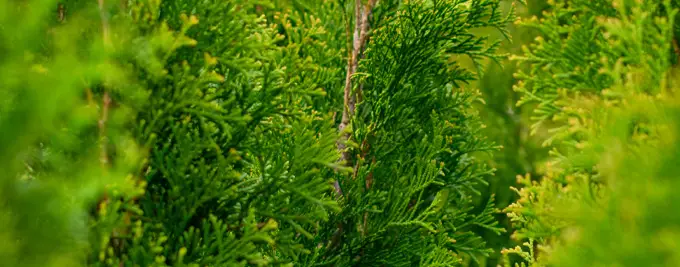
Thuja are evergreen conifers with dense sprays of aromatic, scale-like foliage. Hedging Plants Direct currently offers two quite different forms: vigorous Western Red Cedar for substantial screening and slower-growing White Cedar ‘Smaragd’ for a narrower, more controlled evergreen hedge.
Thuja belongs to the cypress family, Cupressaceae. Its flattened sprays of evergreen foliage create dense year-round cover, making Thuja particularly useful for privacy, screening and defining boundaries.
Western Red Cedar
Western Red Cedar (Thuja plicata) is the faster-growing choice in our range. It produces aromatic green foliage and can make a substantial evergreen screen when regularly maintained.
White Cedar ‘Smaragd’
White Cedar ‘Smaragd’ (Thuja occidentalis ‘Smaragd’) grows much more slowly and naturally forms a narrow, conical plant. It is better suited to situations where controlled growth and a formal upright appearance are more important than rapid screening.
This difference is important throughout the guide. Advice on growth rate, spacing and pruning should never assume that every Thuja behaves like Western Red Cedar.
Choosing the right Thuja hedge
Choose Western Red Cedar when you need a faster, taller evergreen screen. Choose ‘Smaragd’ when a slower, narrower and naturally formal conifer is more appropriate. Both need adequate root moisture and drainage, but their eventual size and maintenance requirements are very different.
| Feature | Western Red Cedar | White Cedar ‘Smaragd’ |
|---|---|---|
| Botanical name | Thuja plicata | Thuja occidentalis ‘Smaragd’ |
| Growth | Fast, around 30–60cm per year in good conditions | Slow, around 10–20cm per year |
| Best use | Tall privacy and screening | Narrower formal hedges and structured planting |
| Maintenance | Regular trimming needed | Light pruning only in many situations |
| Current HPD formats | Pot grown, root ball and instant hedging | Pot grown |
Western Red Cedar is generally the stronger choice for a large boundary or where relatively rapid evergreen coverage is required. ‘Smaragd’ is more appropriate where space is restricted or where you want a naturally columnar appearance with less annual trimming.
Thuja plicata tolerates a range of soils and can grow in sun or partial shade. ‘Smaragd’ performs best with good light and should be protected from severe drying conditions while young.
If a hedge will eventually exceed 2m on a boundary, consider its long-term effect on neighbouring properties before planting. UK high-hedge legislation can apply to lines of two or more evergreen or semi-evergreen plants over 2m, although individual circumstances vary.
When to plant a Thuja hedge
Pot-grown Thuja can be planted through much of the year when the ground is workable and reliable watering is available. Root-balled Western Red Cedar is a cool-season product and is best planted promptly during its lifting season. Avoid frozen, waterlogged or exceptionally dry ground.
Pot-grown Thuja
Pot-grown Thuja can be planted across a wide part of the year, provided the soil is workable and you can keep the root system consistently moist afterwards. Autumn and spring generally make establishment easier because temperatures are lower and natural rainfall is more useful.
Root-balled Western Red Cedar
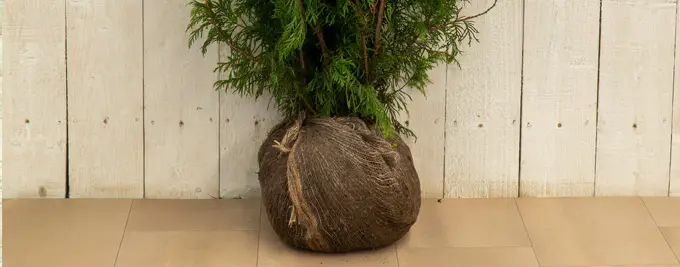
Root-balled Western Red Cedar is field grown and seasonally lifted. Plant it as soon as practical after delivery during the cool planting season. Do not leave root balls exposed to drying winds or direct sun.
Instant Thuja hedging
Instant hedging can provide immediate height and density but contains a much larger established root system. Careful planting and dependable watering are therefore particularly important.
Delay planting if the ground is frozen solid, saturated with standing water or so dry that the surrounding soil cannot be properly rehydrated. Summer planting is possible with pot-grown plants, but only where watering can be maintained consistently.
Where to plant Thuja hedging
Thuja grows best in moist but well-drained soil where the roots do not repeatedly dry out or remain waterlogged. Western Red Cedar tolerates sun and some shade, while ‘Smaragd’ is best given good light. Allow enough room to maintain both sides of a boundary hedge.
Prepare a position where the soil retains useful moisture but drains freely after heavy rain. Thuja can grow in clay, loam, sandy and chalky soils provided root-zone conditions are suitable.
- Sun: suitable for both Western Red Cedar and ‘Smaragd’.
- Partial shade: generally tolerated well by Western Red Cedar.
- Deep shade: growth may become less dense, so assess the site carefully.
- Exposed positions: established Western Red Cedar is hardy, but young Thuja benefits from protection against severe drying winds.
- Waterlogged soil: avoid unless drainage can be corrected.
For boundary planting, set the hedge far enough inside your property to allow for its eventual width and for access to the rear face when trimming. Do not plant immediately against a wall or solid fence if this will prevent watering, light penetration or future maintenance.
Thuja would not be my first recommendation for a site receiving regular salt-laden coastal winds. In very exposed coastal situations, choose a hedge specifically proven for that exposure.
Preparing the ground for a Thuja hedge
Clear competing weeds and grass, loosen compacted soil and prepare a trench or generous individual holes so the roots can expand into the surrounding ground. Improve poor soil where necessary, but do not create a small pocket of rich compost surrounded by compacted soil.
- Remove perennial weeds, turf and grass from the planting line.
- Loosen compacted ground across the root zone rather than only digging narrow holes.
- Prepare a trench for a continuous hedge or individual holes for more widely spaced plants.
- Improve poor soil with organic matter where necessary, mixing it with the existing soil rather than replacing the soil completely.
- Correct obvious drainage problems before planting.
- Water dry pot-grown root balls before removing the containers.
- Keep root-balled plants cool and moist until they are planted.
Rootgrow Mycorrhizal Fungi can be applied at planting where desired. It must make direct contact with the roots and should be used according to the product instructions.
Where the soil needs additional organic matter, Hedge Planting Compost can be incorporated as a soil improver. Avoid placing concentrated fertiliser directly against newly planted roots.
How to plant a Thuja hedge
Plant Thuja at approximately the same depth it was previously growing, keep the root system intact, firm the surrounding soil without compacting it excessively and water thoroughly. Larger root-balled and instant plants need especially careful handling and aftercare.
- Set out the hedge first. Mark the planting line and place the plants at their correct centres before digging or backfilling.
- Prepare the roots. Remove the pot from container-grown plants without breaking the root ball apart. Keep root-balled plants intact and remove any non-biodegradable wrapping or ties as appropriate.
- Position at the correct depth. The top of the existing root ball should normally finish approximately level with the surrounding soil. Avoid burying the stem.
- Backfill carefully. Return the excavated soil around the roots, incorporating soil improver only where needed.
- Firm the soil. Remove large air pockets while avoiding excessive compaction.
- Water thoroughly. Soak the entire root zone immediately after planting.
- Support only where needed. Large plants on exposed sites may need temporary support, but do not bind stems tightly.
- Mulch the surface. Add an organic mulch while keeping it clear of direct contact with the main stems.
After planting, the most important job is keeping the entire root ball and surrounding soil evenly moist while new roots grow into the site.
Thuja hedge spacing and plants per metre
Western Red Cedar spacing should be matched to the plant size being supplied. Hedging Plants Direct currently recommends three root-balled plants per metre at 100–150cm, two per metre at 150–200cm, two 125–150cm pot-grown plants per metre and one 175–200cm instant hedge unit per metre.
The spacing below follows the current Hedging Plants Direct Thuja category data rather than using a generic conifer spacing.
| Western Red Cedar size | Plants per metre | Approx. centres |
|---|---|---|
| Root ball 100–125cm | 3 per metre | 33cm |
| Root ball 125–150cm | 3 per metre | 33cm |
| Root ball 150–175cm | 2 per metre | 50cm |
| Root ball 175–200cm | 2 per metre | 50cm |
| Pot grown 125–150cm | 2 per metre | 50cm |
| Instant hedging 175–200cm | 1 unit per metre | 100cm |
What about White Cedar ‘Smaragd’?
Do not automatically apply the Western Red Cedar table to ‘Smaragd’. It grows more slowly and has a naturally narrower habit. Follow the planting density supplied for the exact ‘Smaragd’ product and size when purchasing.
Planting unnecessarily close together does not guarantee a healthier hedge. Roots still need adequate soil, moisture and air, and larger plants already provide more initial width than young plants.
Watering and establishing a Thuja hedge
Water a newly planted Thuja thoroughly and keep the root zone consistently moist while it establishes. Check the soil rather than following a rigid calendar: sandy ground dries quickly, heavy soil retains water longer and waterlogged roots can be just as damaging as drought.
Thuja is evergreen, so moisture loss through the foliage continues outside the main summer growing period. Newly planted plants do not yet have roots extending far beyond the original root ball, making consistent watering particularly important.
During the first growing season
- Check moisture at root-ball depth rather than judging the surface alone.
- Water slowly enough for moisture to penetrate the complete root system.
- Increase checks during hot, dry or windy weather.
- Do not assume light rain has reached the root ball.
- Reduce watering where heavy soil remains wet.
For longer hedge lines, hedge irrigation can make it easier to apply water evenly.
Signs of drought stress
Foliage may lose freshness, dull in colour or begin browning, often with the most exposed plants affected first.
Signs of excessive moisture
Persistently saturated soil, weak growth, widespread discolouration or individual plants declining despite wet ground can indicate poor root conditions. Investigate drainage before simply adding more water.
A surface mulch can reduce evaporation and weed competition. Keep mulch away from direct contact with the stems.
How and when to feed Thuja
Healthy Thuja in reasonable soil does not need heavy feeding. Where growth is weak or soil fertility is low, apply a balanced general fertiliser in spring. Correct watering, drainage and weed control should be addressed before attempting to solve establishment problems with fertiliser.
Feed in spring when active growth is beginning if the hedge would benefit from additional nutrients. Spread fertiliser over the root zone and follow the product rate rather than applying concentrated material immediately around the stems.
Hedge Feed is a balanced granular 7-7-7 fertiliser and can be used where feeding is appropriate.
- Do not use heavy feeding to compensate for drought or waterlogging.
- Avoid placing fertiliser directly against exposed new roots during planting.
- Avoid excessive high-nitrogen feeding late in the season, which can encourage soft growth.
- Maintain an organic surface mulch where appropriate to improve soil condition and moisture retention.
An established Thuja hedge growing strongly in good garden soil may need little supplementary feeding.
How and when to prune a Thuja hedge
Trim established Western Red Cedar in spring and again in summer where needed, keeping the final cuts within healthy green foliage. ‘Smaragd’ needs much less pruning. Regular light trimming is safer than allowing Thuja to become oversized and then attempting severe reduction.
Young Thuja hedges
Allow the main leader to continue growing until the hedge approaches its intended height. Lightly shorten straggly side growth where necessary to encourage a denser framework without repeatedly cutting the top.
Established Western Red Cedar
Trim during the growing season, typically in spring and again in summer where growth requires it. Shape the hedge so the top is slightly narrower than the base, allowing light to reach the lower foliage.
White Cedar ‘Smaragd’
‘Smaragd’ is naturally compact and needs relatively little pruning. Remove untidy or protruding growth and trim only enough to maintain the required shape.
Avoid cutting deeply into bare wood
Although Thuja can sometimes produce shoots from older wood more readily than several other conifers, regrowth is not reliable enough to depend upon. The safest approach is to retain green foliage on the finished surface and control the hedge before it becomes excessively wide.
Avoid major trimming during very hot, dry weather and aim to finish routine conifer trimming by late summer. Always check carefully for active bird nests before cutting.
Thuja foliage can irritate sensitive skin. Wear gloves and suitable protective clothing when trimming and handling large quantities of cut foliage.
Thuja growth rate and eventual size
Western Red Cedar is the fast-growing Thuja in the HPD range at approximately 30–60cm per year in favourable conditions. ‘Smaragd’ is much slower at about 10–20cm. Growth varies with soil, water, light, plant size, establishment and pruning.
| Thuja | Typical HPD growth rate | Character |
|---|---|---|
| Western Red Cedar | 30–60cm per year | Fast-growing, suitable for tall screens |
| White Cedar ‘Smaragd’ | 10–20cm per year | Slow-growing, naturally compact and upright |
These figures are useful expectations rather than guarantees. A newly planted hedge may spend part of its first season developing roots before producing strong extension growth.
Western Red Cedar is naturally a very large tree if never controlled. The RHS records the species as capable of exceeding 12m and potentially reaching around 35m in tree form. A hedge is therefore kept dramatically smaller by regular pruning.
‘Smaragd’ is fundamentally different. The RHS gives an eventual garden height of approximately 1.5–2.5m, making it much more suitable where a naturally restrained conifer is required.
Seasonal Thuja hedge care
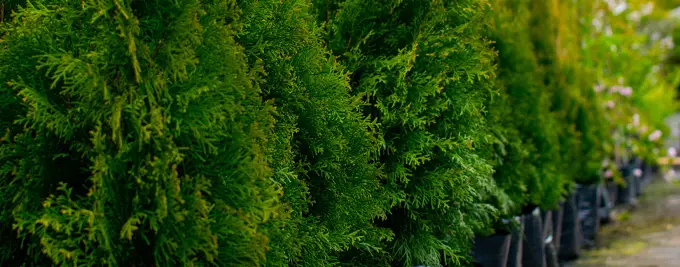
Most Thuja care revolves around spring feeding and trimming, reliable watering through dry weather, a second light trim where needed in summer and checking drainage and root moisture through autumn and winter.
| Season | Useful jobs |
|---|---|
| Winter | Plant root-balled Western Red Cedar when conditions are suitable. Check newly planted evergreens during prolonged dry or windy spells. Avoid frozen or waterlogged ground. |
| Spring | Plant pot-grown Thuja, check soil moisture, apply a balanced feed if required, renew mulch and carry out the first maintenance trim once appropriate. |
| Summer | Prioritise watering during dry weather. Check for browning and pests. Lightly trim vigorous Western Red Cedar where needed, avoiding very hot or drought-stressed periods. |
| Late summer | Complete routine conifer trimming rather than leaving it until autumn. Continue watering new hedges where conditions remain dry. |
| Autumn | A useful planting period for pot-grown Thuja. Prepare ground for seasonal root-balled stock and check drainage before winter rainfall. |
Thuja pests, diseases and common problems
Brown Thuja foliage does not automatically mean disease. Drought, waterlogging, pruning damage and exposure are common causes, but conifer aphids, Thuja blight, Phytophthora root rot and honey fungus can also cause dieback. Diagnose the pattern before treating the hedge.
Thuja turning brown after planting
Check root moisture first. Newly planted evergreens can brown if the original root ball dries out, particularly during sunny or windy weather. Conversely, roots sitting in saturated ground can also decline. Compare affected plants with neighbouring plants and inspect the soil at root depth.
Brown patches after trimming
If browning follows pruning, particularly where cuts have exposed bare internal wood, pruning damage may be responsible. Hot, dry conditions at the time of trimming can increase stress.
Conifer or cypress aphids
Aphids can cause yellowing followed by brown shoot dieback. They can be difficult to see because their colouring blends with the stems. Dark sooty deposits associated with honeydew can help indicate their presence. Encourage natural predators and inspect affected shoots closely before deciding on control.
Thuja blight
Thuja blight is caused by Didymascella thujina and particularly affects Western Red Cedar. Look for dead scale leaves carrying dark brown to black fruiting bodies. Young plants and dense, poorly ventilated growth can be more severely affected.
Root diseases
If one whole plant or a group of plants dies while adjacent Thuja remain healthy, investigate the roots and drainage. Phytophthora root rot and honey fungus are among the possible causes. Persistent waterlogging increases the risk of root decline.
Hedge not growing
Check planting depth, root moisture, drainage, weed competition and light before adding fertiliser. Recently planted Thuja may produce limited top growth while establishing its root system.
Sparse growth at the base
Keep the hedge slightly wider at the base than the top so lower foliage receives light. Regular formative trimming while young is more effective than attempting to correct a tall, narrow hedge years later.
Can a brown Thuja recover?
Recovery depends on the cause and whether healthy green growth remains. Drought-stressed plants can recover once root conditions improve, but completely dead brown shoots may not refill quickly. Do not cut large areas back to bare wood expecting guaranteed regrowth.
Thuja hedges and wildlife
A dense Thuja hedge can provide year-round shelter, cover and potential nesting structure for garden birds and other wildlife. However, Thuja is non-native and does not provide the same range of flowers, berries and associated food sources as a diverse native hedge.
The principal wildlife value of a Thuja hedge is its physical structure. Dense evergreen foliage can provide shelter from weather and concealed places for birds to roost or potentially nest.
Thuja should not, however, be described as equivalent to a mixed native wildlife hedge. It does not provide the succession of blossom, berries and associated insects offered by species such as hawthorn, blackthorn and hazel.
You can increase the wider wildlife value of a Thuja boundary by planting flowering shrubs, herbaceous plants and other nectar-rich species nearby.
Before trimming any hedge, check carefully for active bird nests. Wild birds' nests are legally protected while they are being built or used.
Thuja care by root type
Western Red Cedar is currently available from Hedging Plants Direct as pot-grown, root-balled and instant hedging, while ‘Smaragd’ is listed as pot-grown. Each can establish successfully, but larger field-grown and instant plants need particularly careful handling and watering.
Pot-grown Thuja
Water the pot before planting if the compost is dry. Remove the container, keep the root ball intact and plant at the same depth. Pot-grown plants offer the widest planting window but still need reliable watering after summer planting.
Root-balled Western Red Cedar
Keep the root ball intact and moist from delivery until planting. Lift the plant by supporting the root ball rather than pulling it by the stem. Plant promptly during the cool lifting season and remove or loosen non-biodegradable ties and wrapping as appropriate without destroying the root ball.
Instant Western Red Cedar hedging
Prepare the full planting area before delivery. Instant hedging has a substantial established root system and should be positioned accurately, thoroughly watered and kept consistently moist while new roots grow into the surrounding soil.
Whichever format you choose, larger plants do not remove the need for establishment care. Their bigger foliage mass can mean they require more careful watering until rooted into the site.
Frequently asked questions about Thuja hedging
How fast does a Thuja hedge grow?
Western Red Cedar can typically grow around 30–60cm per year in favourable conditions, while White Cedar ‘Smaragd’ is much slower at around 10–20cm per year. Actual growth depends on soil, moisture, light, establishment and pruning, so these figures should be treated as useful expectations rather than guarantees.
How far apart should Thuja hedging be planted?
Spacing depends on the Thuja, plant size and root type. Current Hedging Plants Direct guidance for Western Red Cedar ranges from three plants per metre for 100–150cm root balls to two per metre for larger 150–200cm plants, while 175–200cm instant hedging is planted at one unit per metre.
When is the best time to plant a Thuja hedge?
Autumn and spring are generally the easiest times to establish Thuja because temperatures are moderate and the soil normally retains more moisture. Pot-grown plants can be planted through a wider part of the year if watering is available, while root-balled Western Red Cedar should be planted during its cool-season lifting period.
Can Thuja grow in shade?
Western Red Cedar can grow in sun or partial shade, although good light generally produces denser growth. White Cedar ‘Smaragd’ is best given a bright position. Very deep shade can lead to thinner growth, so consider a more shade-tolerant hedge where sunlight is extremely limited.
When should I prune a Thuja hedge?
Trim Western Red Cedar during the growing season, normally in spring and again in summer where necessary. Avoid major trimming during hot, dry weather and aim to finish routine conifer cutting by late summer. ‘Smaragd’ grows much more slowly and normally needs only light shaping.
Will Thuja grow back if I cut into brown wood?
Thuja can occasionally regrow from older wood more readily than some conifers, but recovery is not reliable enough to depend upon. Keep routine cuts within healthy green foliage wherever possible. Regular light pruning is much safer than allowing the hedge to become oversized and then attempting severe reduction.
Why is my Thuja hedge turning brown?
Brown Thuja foliage can be caused by drought, waterlogging, trimming damage, exposure, aphids or disease. Check root moisture and drainage first, then look at the pattern of damage and inspect shoots for pests or fungal symptoms. Browning does not automatically mean the hedge has Thuja blight.
Can a brown Thuja hedge recover?
A Thuja hedge can recover when browning is caused by reversible stress such as drought and enough healthy green tissue remains. Completely dead shoots may not refill quickly, particularly if they have been cut back to bare wood. Correct the underlying watering, drainage, pest or disease problem before pruning damaged areas heavily.
How often should I water a newly planted Thuja hedge?
Water according to soil and weather conditions rather than a fixed timetable. The full root ball should remain consistently moist but not waterlogged while the hedge establishes. Check more frequently in hot, dry or windy weather and remember that light rain may not penetrate deeply enough to wet the roots.
What soil is best for Thuja?
Thuja performs best in fertile, moist but well-drained soil. It can tolerate a wide range of soil types, including clay, loam, sand and chalk, provided the roots receive adequate moisture without sitting permanently in saturated ground.
Does Thuja need fertiliser?
Thuja does not need heavy feeding when it is growing strongly in reasonable garden soil. A balanced general fertiliser can be applied in spring where additional nutrition is useful, but feeding will not correct drought, waterlogging, incorrect planting depth or severe weed competition.
What is the difference between Western Red Cedar and Thuja ‘Smaragd’?
Western Red Cedar is a fast-growing Thuja used for substantial evergreen privacy screens, while ‘Smaragd’ is much slower and naturally narrow and conical. Western Red Cedar currently grows around 30–60cm per year in Hedging Plants Direct guidance, compared with approximately 10–20cm for ‘Smaragd’.
Is Thuja poisonous?
RHS plant profiles classify Thuja as harmful if eaten and a potential skin allergen. Do not deliberately ingest the foliage, and wear gloves and suitable clothing when handling or pruning it, particularly if you have sensitive skin.
How tall can Western Red Cedar grow?
Western Red Cedar is naturally a very large tree and can exceed 12m if allowed to grow freely. As hedging it is kept much smaller by regular pruning. Decide your intended finished height before planting and begin controlling the hedge before it becomes too tall or wide to maintain safely.