
Hedging care & growing guide
Guelder Rose Hedge Care Guide: Planting, Spacing and Pruning
Guelder Rose hedging is straightforward to establish when it is planted into moisture-retentive, well-drained soil, spaced to match the size and root type, and kept reliably watered while new roots develop. This guide covers every stage of caring for Guelder Rose hedging plants, from planting and spacing to feeding, pruning, troubleshooting and long-term maintenance.
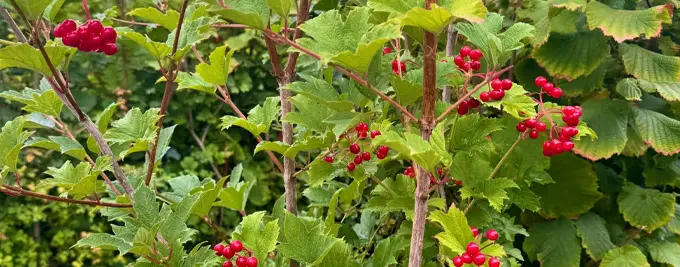
Viburnum opulus is a hardy native deciduous shrub valued for its white flowers, red autumn colour and clusters of bright red ornamental berries. It grows in full sun or partial shade and is particularly well suited to informal, wildlife-rich and mixed native hedges.
Because Guelder Rose is deciduous, it is better suited to seasonal screening than permanent evergreen privacy. During establishment, correct planting depth, weed control, mulching and condition-led watering are generally more important than heavy feeding.
Expert nursery advice
Gwynne's Grower's Tip
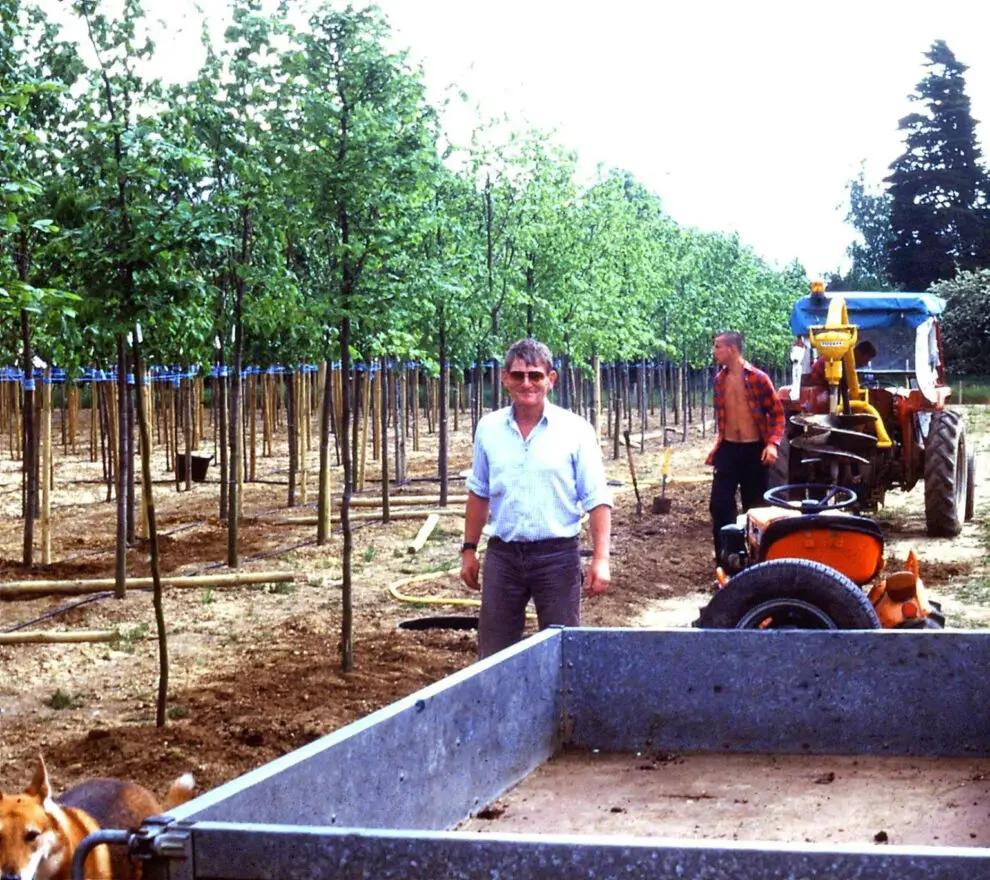
Guelder Rose is happiest where the soil holds some moisture without staying stagnant. The biggest early mistake is allowing a newly planted hedge to dry out, particularly where grass and weeds are competing along the row. Plant at the density shown for the size you have bought, keep the root zone clear and water thoroughly when the soil begins to dry. Once established it usually needs very little feeding. If flowers and berries matter, prune selectively rather than shearing hard, because cutting after flowering can remove developing fruit.
From our nursery
Visit our Guelder Rose hedges

Guelder Rose Hedge
The same Guelder Rose product is available in bare-root and pot-grown formats. Bare-root plants are an economical choice for longer hedge runs during the dormant season, while pot-grown plants give more flexibility over planting time and include larger sizes for quicker initial presence. Choose the size to suit the project, then follow the live plants-per-metre figure for that exact variation rather than applying one universal spacing.
Not sure which Guelder Rose hedge to choose?
Compare the available plants, formats and starting sizes in the complete range.
Explore our complete Guelder Rose hedging rangeGuelder Rose hedge quick-care summary
| Botanical name | Viburnum opulus |
|---|---|
| Plant type | Native flowering hedge shrub |
| Evergreen or deciduous | Deciduous |
| Typical growth rate | Approx. 20–40cm per year |
| Preferred position | Full sun or partial shade |
| Soil | Moist but well-drained; most soil types |
| Watering | Keep evenly moist while establishing |
| Pruning period | Minimal; shape after flowering if berries are not required |
| Feeding | Usually light; spring feed if needed |
| Hardiness | RHS H6 |
| Typical hedge height | Commonly maintained at 1.5–3m |
| Planting season | Bare root Nov–Apr; pot grown year-round in suitable weather |
| Root types commonly available | Bare root and pot grown |
Guelder Rose berries and safety
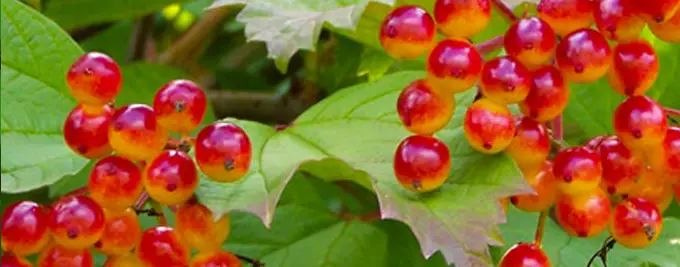
Guelder Rose produces attractive red berries, but they should be treated as ornamental rather than edible garden fruit. The RHS specifically advises that the fruit is not to be eaten, so the safest public guidance is not to recommend harvesting or consuming it.
The translucent red berries are one of the main autumn features of Guelder Rose and are valuable as ornamental and wildlife fruit. However, they should not be treated as an edible crop.
The Royal Horticultural Society lists the fruit of Viburnum opulus as ornamental and not to be eaten, including by pets. Historical and traditional references to processing Guelder Rose fruit exist, but that is not a reason to recommend eating berries from a garden hedge.
Where young children or pets regularly use the area, consider the position of the hedge and remove fallen fruit where this is a practical concern. Wear gloves when carrying out substantial pruning or handling if skin sensitivity is an issue.
About Guelder Rose hedging
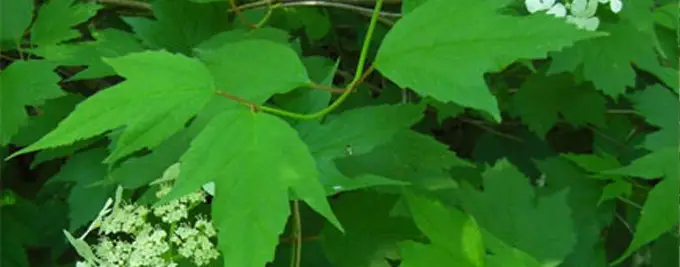
Guelder Rose, Viburnum opulus, is a hardy native deciduous shrub grown as an informal hedge, wildlife boundary or component of mixed native planting. Its main seasonal features are white late-spring to early-summer flowers, lobed foliage that colours in autumn and clusters of red ornamental berries.
Guelder Rose is a vigorous, bushy deciduous shrub native to Britain and Ireland. Its lobed leaves are sometimes compared with maple foliage, turning attractive red shades in autumn before falling for winter. In late spring and early summer it produces broad clusters of white flowers, followed on suitable untrimmed growth by translucent red berries.
As a hedge, Guelder Rose has a softer and more natural appearance than tightly clipped evergreen species. It is particularly useful for wildlife planting, informal garden boundaries and mixed native hedges, and it can also be grown as a single-species flowering hedge.
It should not be chosen where dense evergreen screening is required throughout winter because the plant is deciduous. Its strengths are seasonal interest, native habitat value and its ability to make a substantial shrub or hedge in a wide range of ordinary garden soils where drainage and moisture are reasonably balanced.
Hedging Plants Direct currently supplies Guelder Rose Hedge as both bare-root and pot-grown plants. The same species is supplied across several sizes, so the main differences when choosing between them are planting season, initial size and the recommended density for the particular variation.
Choosing the right Guelder Rose hedge
Choose Guelder Rose when you want a hardy deciduous hedge with flowers, autumn colour and wildlife value rather than year-round evergreen screening. It works particularly well for informal boundaries and mixed native planting and grows in sun or partial shade on many soil types.
Guelder Rose is best suited to a natural or semi-formal hedge. It can be kept within a defined shape, but repeated close clipping reduces much of the flowering and fruiting that makes the species valuable. For a very formal, geometrically clipped hedge, another species will normally be easier to maintain.
Where Guelder Rose works particularly well
- Informal garden boundaries and country-style hedges.
- Native and wildlife planting schemes.
- Mixed hedges where seasonal flowers, berries and autumn colour add variety.
- Sunny or partly shaded positions.
- Moisture-retentive clay, loam or similar soils where drainage remains adequate.
- Exposed or coastal gardens where the site is otherwise suitable.
Where another hedge may be a better choice
- Where year-round opaque evergreen screening is essential.
- Where a very narrow, tightly clipped formal hedge is required.
- Sites that remain chronically waterlogged around the roots.
- Very dry ground where reliable establishment watering cannot be provided.
A brighter position generally gives the plant the best opportunity to flower and fruit well, although it will also grow in partial shade. In smaller gardens, regular selective pruning can control size while retaining a more natural flowering habit.
When to plant Guelder Rose hedging
Bare-root Guelder Rose is planted during dormancy, normally from November into early spring, while pot-grown plants can be planted through much more of the year. Whatever the root type, avoid planting into frozen, saturated soil or during very hot, dry weather.
Bare-root Guelder Rose
Bare-root plants are supplied without a pot or permanent soil root ball and should be planted while dormant. Hedging Plants Direct normally supplies this format during the cooler bare-root season, approximately November to April depending on weather and availability.
Plant as soon as reasonably practical after delivery. Until planting, keep the roots cool, protected from wind and drying, and never leave them exposed in the sun.
Pot-grown Guelder Rose
Pot-grown plants have a wider planting window because their established root system arrives protected by compost. They can be planted at most times of year when soil and weather conditions are suitable.
Autumn and spring are particularly convenient because the soil is normally moist and temperatures are moderate. Summer planting is possible, but the hedge will depend much more heavily on careful watering until new roots have moved into the surrounding soil.
Weather conditions to avoid
- Frozen ground that cannot be properly cultivated.
- Saturated or waterlogged soil.
- Very hot, dry periods unless planting cannot be delayed and intensive aftercare is available.
- Planting immediately before severe drying winds where the plants cannot be adequately watered and protected.
Where to plant Guelder Rose hedging
Plant Guelder Rose in full sun or partial shade in reasonably fertile, moisture-retentive but well-drained soil. It tolerates a broad range of soil textures and pH levels, but good establishment is harder where roots are left either persistently dry or standing in stagnant water.
Light and exposure
Guelder Rose grows in full sun or partial shade. A reasonably bright position is preferable when a strong display of flowers and berries is an important part of the planting, although some shade is well tolerated.
The species is hardy and can be grown in exposed as well as more sheltered situations. On very windy sites, larger newly planted specimens may need temporary support while their roots establish, but permanent staking should not be automatic.
Soil and drainage
Guelder Rose grows in clay, loam, chalky and sandy soils and tolerates acidic, neutral and alkaline conditions. Its preferred conditions are moderately fertile, humus-rich soil that remains reasonably moist without becoming stagnant.
On heavy ground, inspect drainage before planting rather than simply adding large quantities of compost to individual holes. On very free-draining ground, incorporating suitable organic matter through the planting strip can help improve moisture retention.
Walls, fences and competing vegetation
Allow enough room for the hedge to develop without being forced hard against a solid wall or fence. Remove grass and perennial weeds from the intended hedge line because established turf can compete strongly with young hedging for water and nutrients.
Where mature trees or large shrubs are nearby, expect greater root competition and shade. The new hedge may need closer watering attention during its first growing seasons.
How to prepare the planting area
Prepare the whole hedge line before planting by removing competing weeds and grass, checking drainage and loosening compacted soil. Improve poor soil across the planting area rather than creating an isolated pocket of rich compost, and make sure roots or pot-grown root balls are properly hydrated before planting.
- Mark the hedge line. Use a string line where a straight boundary is required and confirm the final planting positions from the size-specific plants-per-metre recommendation.
- Remove weeds and grass. Clear a useful strip along the hedge rather than cutting individual holes through established turf.
- Check the soil. Break up compaction and investigate areas where rainwater sits for long periods before planting.
- Improve poor soil if needed. Work suitable organic matter into the excavated soil or broader planting strip rather than replacing all the native soil with compost.
- Water pot-grown plants. If the compost is dry, soak or thoroughly water the pots before planting so the root ball begins evenly moist.
- Protect bare roots. Keep bare-root plants covered and damp until each plant is ready to go into the ground.
Trench or individual planting holes?
Either method can work. A trench is convenient for a long continuous hedge and makes it easier to improve compacted soil across the whole row. Individual holes are perfectly suitable where the soil is already in good condition. In both cases, make the cultivated area wide enough for roots to spread naturally rather than forcing them into a narrow slot.
Using mycorrhizal fungi
If using Rootgrow mycorrhizal fungi, apply it according to the product instructions so that it comes into direct contact with the roots at planting. It is an establishment aid, not a substitute for correct planting depth, good soil preparation or watering.
Avoid putting concentrated fertiliser directly against new roots. Feeding can be considered later according to soil condition and plant performance.
How to plant a Guelder Rose hedge
Plant Guelder Rose at approximately the same depth it was growing previously, spread or settle the roots naturally, firm the soil carefully and water thoroughly. Bare-root and pot-grown plants need slightly different handling, but neither should be planted deeply enough to bury the stem above the original soil line.
- Set out the plants first. Position the hedge using the correct density for the exact plant size and root type.
- Dig an adequate hole or trench. The roots should fit without being folded sharply upwards or compressed into a narrow space.
- Check planting depth. Aim to keep the plant at roughly the same soil level at which it previously grew. Avoid burying the stem significantly deeper.
- For bare-root plants, spread the roots naturally. Trim only genuinely damaged root ends if necessary and keep healthy roots intact.
- For pot-grown plants, remove the container. If roots are tightly circling the outside of the root ball, loosen them gently before planting.
- Backfill with the excavated soil. Work soil around the roots to remove large air pockets, firming progressively without stamping the ground excessively hard.
- Water thoroughly. Give the full planting line a deep initial watering so the soil settles around the roots.
- Mulch the root zone. Apply an organic mulch over moist soil, keeping the material clear of direct contact with the stems.
- Support only where required. Stake larger, top-heavy plants on exposed sites if root movement is likely, then remove unnecessary support once establishment is secure.
Immediately after planting
Recheck the finished soil level after watering, especially where loose cultivated ground settles. Keep the hedge line clear of grass and weeds and begin checking soil moisture rather than waiting for foliage to wilt severely before watering.
Guelder Rose hedge spacing and plants per metre
Guelder Rose spacing should follow the exact size and root type being planted rather than one generic figure. The current Hedging Plants Direct product calculator ranges from 5 plants per metre for some smaller bare-root sizes to 1 plant per metre for the largest current pot-grown size.
The table below follows the live plants-per-metre settings on the Hedging Plants Direct Guelder Rose product at the time this guide was prepared. Centre-to-centre distances are approximate conversions and are useful for setting out the planting line.
| Current plant variation | Plants per metre | Approx. spacing |
|---|---|---|
| Bare root 40–60cm | 4 per metre | 25cm centres |
| Bare root 60–90cm | 5 per metre | 20cm centres |
| Bare root 90–120cm | 5 per metre | 20cm centres |
| Pot grown 40–60cm | 4 per metre | 25cm centres |
| Pot grown 60–90cm, 3 litre | 4 per metre | 25cm centres |
| Pot grown 90–120cm, 10 litre | 3 per metre | Approx. 33cm centres |
| Pot grown 120–150cm, 10 litre | 1 per metre | Approx. 100cm centres |
Why does spacing vary?
Larger established plants already occupy more physical space, while younger bare-root plants can be planted more densely to create a continuous hedge framework. For this reason, one universal spacing recommendation is not appropriate across every Guelder Rose size.
For a standard garden hedge, a single row is normally sufficient when planted at the specified density. If a project requires an unusually wide double row, calculate it as a separate design rather than simply doubling the single-row quantity without considering the finished width.
Always check the live product variation before ordering because sizes, container specifications and recommended densities can change.
Watering and establishment
Water Guelder Rose thoroughly when it is planted and keep checking the root zone through its first growing season, extending careful aftercare into the second season where conditions are dry. Aim for deep, condition-led watering rather than a rigid daily schedule.
Newly planted Guelder Rose needs reliable moisture while roots establish into the surrounding soil. Water the hedge thoroughly immediately after planting, then inspect the soil regularly rather than watering automatically to a fixed timetable.
During the first growing season
- Water deeply when the root zone is beginning to dry.
- Increase checks during warm, dry or windy weather.
- Expect sandy or free-draining soil to dry more quickly.
- On heavy clay, check that the soil is not remaining saturated before adding more water.
- Keep grass and weeds away from the root zone to reduce competition.
- Maintain an organic mulch over moist ground without piling it against the stems.
Large pot-grown plants can have a particularly high demand during their first summer because the original root ball may dry faster than the surrounding soil. Check the moisture within the original root area rather than judging only by the surface.
Recognising too little or too much water
Wilting, dry or crisp leaf margins and stalled extension growth during warm weather can indicate moisture stress. Yellowing or wilting while the soil remains persistently wet can instead indicate poor aeration or root stress caused by excess water.
Guelder Rose is deciduous, so winter water demand is much lower once plants are dormant. However, recently planted specimens in unusually dry sheltered locations should not be allowed to remain completely dry for prolonged periods.
Long hedge runs
For longer planting schemes, a correctly installed hedge irrigation system can make even watering easier, but the soil should still be checked so irrigation is adjusted to rainfall and soil type.
How and when to feed
Established Guelder Rose usually needs little routine fertiliser in reasonable garden soil. An annual organic mulch is often sufficient, while a balanced feed in spring can be useful where soil is poor or growth is clearly weak. Avoid pushing soft late-season growth with excessive nitrogen.
Guelder Rose is not normally a heavy-feeding hedge. Where the soil is reasonably fertile and the plants are growing steadily, maintaining organic matter and reducing weed competition can be more useful than repeatedly adding fertiliser.
Newly planted hedges
Concentrate first on root establishment, moisture and soil condition. Avoid putting concentrated fertiliser into direct contact with new roots at planting.
Established hedges
If growth is weak and there is no obvious problem with watering, drainage, shade or root competition, a balanced general-purpose or hedge fertiliser can be applied in spring according to its label directions. Water dry ground appropriately after feeding where required by the product instructions.
Hedge Feed is an optional choice for hedges that would benefit from supplementary nutrition, rather than something that must be applied every year regardless of condition.
Mulching
An annual layer of organic mulch helps add organic matter while reducing moisture loss and weed competition. Apply it over already moist soil and leave a clear gap around the base of each stem.
Avoid heavy applications of high-nitrogen fertiliser late in the growing season, when encouraging soft new growth is unnecessary.
How and when to prune
Guelder Rose needs little routine pruning. Remove dead, damaged or crossing stems when necessary and, if shaping is required, prune selectively after flowering. Remember that cutting flowered shoots can remove developing berries, so a wildlife or fruit-focused hedge should be pruned more lightly.
Young Guelder Rose hedges
Allow newly planted plants to establish before imposing a severe shape. Where young shoots are vigorous, light formative tipping can encourage branching, but the aim should be a naturally dense framework rather than repeatedly cutting back every new shoot.
Established hedges
Guelder Rose generally needs only light pruning. Remove dead, damaged, weak or badly crossing wood and selectively shorten shoots that are extending beyond the desired hedge outline.
If the hedge needs shaping, a useful time is after flowering. There is an important trade-off: berries develop from pollinated flowers, so cutting away flowered shoots can also remove much of the developing autumn fruit. Where berries and wildlife value are the priority, restrict pruning mainly to essential corrective work.
Keeping the base dense
A young hedge that is allowed to race upwards without producing enough side growth can become open at the bottom. Encourage branching gradually with selective formative pruning rather than repeatedly taking large amounts from a stressed or newly planted hedge.
Renovating an overgrown hedge
Viburnum opulus is capable of responding to substantial renovation. Where a mature specimen has become congested, selected older stems can be removed low down to encourage replacement shoots. For a hedge, spreading major renovation over more than one season usually retains better structure and appearance than unnecessarily cutting every stem at once.
Check for nesting birds
Before any spring or summer cutting, inspect the hedge carefully for active bird nests. If an active nest is present, delay the work until it is no longer in use.
Growth rate and eventual size
Guelder Rose is a medium-growing hedge, with Hedging Plants Direct currently quoting approximately 20–40cm of annual growth under suitable conditions. A managed hedge is commonly kept around 1.5–3m, although unpruned plants can develop into much larger shrubs.
Hedging Plants Direct currently describes Guelder Rose as a medium-growing hedge with typical annual extension of around 20–40cm. This is a useful planning range rather than a guarantee: annual growth varies with plant size, establishment, soil, moisture, light, competition and weather.
Expect an establishment period
Recently planted hedges often invest heavily in new roots before producing their strongest top growth. A plant that makes relatively little extension during its first season is not necessarily failing if its stems, buds and foliage remain healthy.
Maintained hedge height
For many gardens, Guelder Rose works well as an informal hedge around 1.5–3m high. It can be managed outside this range, but taller hedges require more space and maintenance and very low hedges do not make best use of the species' naturally vigorous shrub habit.
Unpruned size
The species can develop into a substantial multi-stemmed shrub. Hedging Plants Direct currently gives an overall height of up to about 5m, while the RHS records a broader ultimate height range of 4–8m and spread of 2.5–4m for mature plants in favourable conditions.
Seasonal care
Guelder Rose needs different attention through the year: dormant-season planting, spring establishment checks, summer watering and pest monitoring, and autumn preparation and fruit interest. The seasonal pattern should guide checks rather than become a rigid maintenance calendar.
| Season | Main Guelder Rose care |
|---|---|
| Late autumn and winter | Plant bare-root hedging when the ground is workable. Pot-grown plants may also be planted in suitable conditions. Avoid frozen or waterlogged soil. Keep newly planted roots protected from drying. |
| Early spring | Complete dormant planting, check soil moisture, renew mulch where needed and consider a balanced feed only where soil or plant performance justifies it. |
| Late spring | Enjoy flowering, keep newly planted hedges watered during dry weather and begin checking foliage for Viburnum beetle larvae and aphids. |
| Early summer | If shaping is required, prune selectively after flowering while remembering that this may reduce the autumn berry crop. Check carefully for active bird nests before cutting. |
| Mid to late summer | Prioritise watering during prolonged dry weather, maintain a weed-free root zone and inspect foliage for pest damage. Avoid unnecessary severe pruning during stressful hot conditions. |
| Autumn | Enjoy red foliage and berries, plant pot-grown stock in favourable conditions, prepare new hedge lines and renew mulch after rain where useful. Bare-root supply normally resumes as dormancy begins. |
Pests, diseases and common problems
Most Guelder Rose problems are manageable once the cause is correctly identified. Moisture stress, poor establishment and competition are common after planting, while Viburnum beetle and aphids can damage foliage. Persistent dieback on wet ground deserves closer investigation for root or disease problems.
Leaves turning yellow
Start by checking the soil rather than immediately adding fertiliser. Yellowing accompanied by persistently wet soil can indicate root stress from poor drainage or overwatering. On a newly planted hedge, also check planting depth, grass competition and whether the original root ball is remaining excessively wet or dry.
Brown or crisp leaves
Dry, scorched or crisp leaf edges during warm weather commonly point towards drought, drying winds or establishment stress. Check moisture below the surface and water thoroughly when the root zone is drying rather than repeatedly wetting only the top centimetre of soil.
Leaves dropping
Autumn leaf fall is completely normal because Guelder Rose is deciduous. Significant leaf loss during the active growing season should prompt checks for drought, saturated soil, severe pest damage or another source of stress.
Holes and skeletonised leaves
Guelder Rose is particularly susceptible to Viburnum beetle. Larvae feed mainly from spring into early summer and can leave foliage heavily perforated or skeletonised; adults cause further feeding damage later in summer.
Healthy established plants usually survive even conspicuous feeding. Where practical, tolerate light damage, inspect leaves and remove larvae by hand, and encourage natural predators. Avoid unnecessary pesticide use.
Aphids and distorted new shoots
Clusters of small sap-feeding insects, distorted soft growth and sticky honeydew can indicate aphids. Light infestations are often tolerated by an otherwise healthy hedge. Encourage natural predators and remove badly affected soft tips only where this will not unnecessarily damage the hedge.
Leaf spotting
Individual dark or discoloured spots can result from leaf-spotting diseases. Remove heavily affected fallen material, avoid creating persistently stagnant conditions around the foliage and maintain reasonable airflow. If symptoms are severe, recurrent or difficult to identify, obtain a proper diagnosis rather than applying a treatment speculatively.
Dieback on persistently wet soil
Long-term saturation can damage roots directly and can also favour root diseases including Phytophthora. A hedge that is wilting or dying back despite wet soil needs its drainage and root condition investigated. Improving the site is more important than repeatedly adding water or fertiliser.
The hedge is not growing
Slow top growth in the first season can simply reflect establishment. Check that the plants were not planted too deeply, the root zone has not dried out, drainage is adequate, and grass or mature tree roots are not dominating the planting strip.
Sparse growth at the base
Check light levels and general plant health first. Once healthy growth is established, selective formative pruning can encourage side shoots. Avoid trying to correct a stressed, newly planted hedge with severe cutting.
Is a bare-root plant dead or still dormant?
A dormant bare-root plant may remain leafless after planting while roots establish. Check for healthy buds and flexible stems. If necessary, a very small scratch on a minor twig can show living green tissue beneath the bark. Avoid repeatedly scratching or cutting main stems simply to test them.
Wildlife and environmental value
Guelder Rose is a valuable native wildlife hedge because it provides flowers for insects, summer foliage and shelter, and red berries for birds later in the year. Allowing some flowering and fruiting wood to remain makes it more useful to wildlife than repeatedly clipping every shoot.
Guelder Rose contributes several different resources through the year. Its flowers attract pollinating and other beneficial insects, including hoverflies, while the dense branching and foliage provide shelter within a native hedge.
The bright red berries provide a seasonal food source for birds later in the year. A mixed native hedge containing Guelder Rose can therefore add both structural diversity and a different flowering and fruiting period alongside species such as Hawthorn, Blackthorn and Dog Rose.
Pruning for wildlife value
If berries are an important objective, avoid shearing the whole hedge immediately after flowering because this removes many of the shoots carrying developing fruit. Selective pruning gives a better balance between controlling the hedge and retaining wildlife value.
Before hedge cutting during the breeding season, check carefully for active bird nests. Do not disturb or destroy an active nest; delay the work until the nest is no longer in use.
Care by root type
Hedging Plants Direct currently supplies Guelder Rose as bare-root and pot-grown plants. Both establish into the same long-term hedge, but bare roots need dormant-season handling and protection from drying, while pot-grown plants have a wider planting window and require careful root-ball watering.
| Root type | Planting and handling | Early aftercare |
|---|---|---|
| Bare root | Plant during the dormant season, normally from November into early spring. Keep roots covered, cool and moist before planting and spread them naturally in the prepared soil. | Water thoroughly after planting and monitor through the first spring and summer. Do not assume winter planting removes the need for establishment watering once growth begins. |
| Pot grown | Can be planted through a much wider part of the year when soil and weather conditions are suitable. Thoroughly hydrate a dry root ball and remove the pot before planting. | Check the original root ball carefully during dry weather because it can dry differently from the surrounding soil. Summer-planted specimens need particularly attentive watering. |
Root type changes the way the plant is handled and established, not the mature character of the hedge. Choose bare root for seasonal value and efficient planting of longer runs, or pot grown where a wider planting window or larger initial plants are more important.
Frequently asked questions about Guelder Rose hedging
How far apart should I plant Guelder Rose hedging?
Guelder Rose spacing depends on the size and root type you buy. Current Hedging Plants Direct recommendations range from about 20cm centres for some bare-root sizes to approximately 100cm for the largest current pot-grown plants. Always use the plants-per-metre figure shown for the exact product variation rather than applying one spacing to every size.
How many Guelder Rose plants do I need per metre?
Current Guelder Rose densities range from 1 to 5 plants per metre depending on the variation. The 60–90cm and 90–120cm bare-root plants currently use 5 per metre, while smaller pot-grown and bare-root options generally use 4 per metre. Larger pot-grown plants are spaced more widely, so check the live variation before ordering.
When is the best time to plant Guelder Rose?
Autumn to early spring is an excellent time to plant Guelder Rose, particularly bare-root plants supplied during dormancy. Pot-grown Guelder Rose can be planted through much more of the year when the ground is workable and adequate watering is available. Avoid frozen or waterlogged ground and, where possible, very hot or dry periods.
How fast does Guelder Rose grow?
Guelder Rose is a medium-growing hedge and Hedging Plants Direct currently gives a typical rate of around 20–40cm per year. Actual growth varies with soil, moisture, light, plant size and establishment. Newly planted hedges may make less top growth in their first season while they develop a stronger root system.
How tall does Guelder Rose grow?
Guelder Rose can be maintained as a hedge at roughly 1.5–3m for many garden situations, but an unpruned plant develops into a much larger shrub. Hedging Plants Direct currently gives an overall height of up to about 5m, while the RHS records a broader mature range of 4–8m in favourable conditions.
Does Guelder Rose grow in shade?
Guelder Rose grows well in full sun or partial shade. A reasonably bright position is preferable if abundant flowering and berries are a priority. It is not necessary to give the plant full sun all day, but very deep shade may reduce flowering and produce a more open hedge.
Does Guelder Rose like wet soil?
Guelder Rose likes soil that retains moisture, but the safest recommendation is moist and well drained rather than permanently waterlogged. Heavy clay can suit it well where excess water can still drain away. Persistent saturation reduces oxygen around the roots and can contribute to poor growth, yellowing and root problems.
When should I prune a Guelder Rose hedge?
Guelder Rose needs relatively little pruning. If shaping is necessary, prune selectively after flowering, but remember that removing flowered shoots can also remove developing berries. For a wildlife hedge where autumn fruit matters, restrict pruning mainly to dead, damaged, crossing or badly positioned stems and check for active bird nests before cutting.
Why is my Guelder Rose not producing berries?
A lack of berries can result from poor flowering, limited pollination or pruning away flowered shoots before the fruit develops. Heavy clipping after flowering is a common conflict where berries are wanted. Give the hedge suitable light, avoid unnecessary pruning of flowering wood and remember that fruit production naturally varies from year to year.
Are Guelder Rose berries edible?
We recommend treating Guelder Rose berries as ornamental and not eating them. The Royal Horticultural Society specifically lists the fruit of Viburnum opulus as not to be eaten and also advises that pets should not eat it. Historical culinary references exist, but they should not override this conservative garden-safety advice.
Why does my Guelder Rose have holes in its leaves?
Numerous holes or lace-like, skeletonised leaves are characteristic of Viburnum beetle, a pest to which Guelder Rose is particularly susceptible. Larvae cause much of the damage in spring and early summer, with adults feeding later. Established plants usually recover, so light damage can often be tolerated while encouraging natural predators and removing larvae manually where practical.
Why are my Guelder Rose leaves turning yellow or brown?
Check soil moisture first. Yellow leaves on persistently wet ground can indicate waterlogged or stressed roots, while dry brown edges and wilting during warm weather more often indicate drought or drying winds. Newly planted plants can also show transplant stress. Correct the underlying moisture or drainage problem before assuming the hedge needs more fertiliser.
Is bare-root or pot-grown Guelder Rose better?
Neither is inherently better once established. Bare-root Guelder Rose is well suited to economical dormant-season planting of longer hedge runs, while pot-grown plants offer a wider planting window and larger initial sizes. The best choice depends on planting date, budget and the amount of immediate visual presence required.