
Windbreak Hedging for Windy & Exposed Sites
Windbreak & exposed sites

Windbreak Hedging for Windy & Exposed Sites

Shop windbreak hedging for windy and exposed sites, including evergreen and deciduous options for gardens, open plots and rural boundaries. The best windbreak hedge should filter and slow the wind rather than act like a solid barrier, while also matching your soil, exposure, available width and need for winter screening. Compare suitable plants and starting sizes for the level of shelter you need.

Evergreen or Native Mixed Windbreak?

Both can reduce exposure, but they suit different priorities and boundary styles.
CompareEvergreen HedgingNative Mixed Hedging
Winter shelterKeeps foliage and provides more consistent year-round screeningMore seasonal, depending on the species mix
Best fitGardens and boundaries where shelter and privacy are both importantRural boundaries, field edges and naturalistic planting
AppearanceUsually denser and more uniformMore varied, informal and species-rich
Wildlife valueVaries by speciesTypically strong habitat and food value when the mix is well chosen
MaintenanceRegular clipping helps maintain the required height and widthUsually managed as a broader, more natural hedge
Choose whenYou want dependable shelter with a neater garden screenYou want a robust countryside-style windbreak with biodiversity benefits
Gwynne Bodsworth, founder and grower at Hedging Plants Direct
Expert nursery advice

Gwynne's Grower's Tip

For a windy site, I would choose toughness and establishment ability before maximum growth rate. A hedge works best when it filters the wind rather than trying to stop it completely. Smaller, well-rooted plants often establish more securely than very large top-heavy plants on an exposed boundary. Also separate ordinary inland exposure from salt-laden coastal wind, because the plant choice can be very different. Get the species right for the site first, then decide how quickly you need height and how much winter cover matters.
Helpful answers

Frequently asked questions

01What Is the Best Hedge for a Windy or Exposed Site?

The best choice depends on whether the exposure is inland or coastal, how much winter screening you need, and the soil conditions. Hawthorn, Hornbeam, Oleaster, Western Red Cedar, Yew and selected native mixed hedges can all be useful in suitable situations.

Choose for site tolerance first, then compare growth rate, final size and appearance.

02Are Evergreen Hedges Good Windbreaks?

Yes. Evergreen hedges can provide useful year-round shelter because they retain foliage through winter. The species still needs to suit the site's soil, exposure and climate, and very exposed coastal positions require plants that can tolerate salt-laden wind.

03Is a Hedge Better Than a Solid Fence for Reducing Wind?

A hedge can be very effective because it filters and slows the air rather than trying to block it completely. A solid barrier can push wind over the top and create turbulence beyond it. The aim of a windbreak hedge is therefore controlled permeability as well as sufficient height and width.

Choosing Windbreak Hedging for an Exposed Site

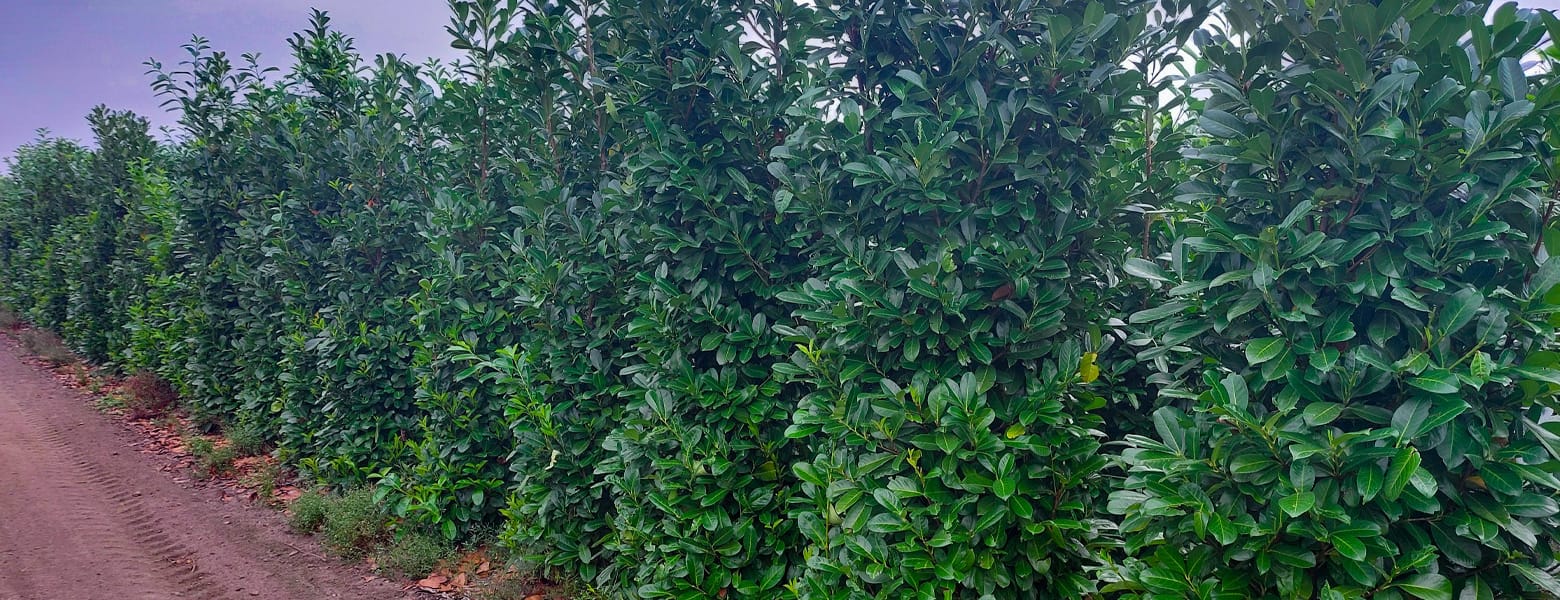
A good windbreak hedge reduces wind speed while still allowing some air to pass through. This is why a living hedge can create more useful shelter than a completely solid boundary, which may push wind over the top and create turbulence beyond it.

Start by identifying the type of exposure. An open inland garden, a hilltop, a rural field edge and a salt-laden coastal site do not place the same demands on plants. Soil conditions matter as well: an exposed site may also be dry, wet, heavy or free-draining, and the hedge needs to suit the combination rather than the wind alone.

Evergreen or Deciduous?

Evergreen hedging is useful where year-round shelter and screening are important. Deciduous and mixed native hedges can also make effective windbreaks, particularly on rural boundaries where wildlife value and a more natural appearance matter.

Starting Size Matters

Very large plants are not automatically the best choice on an exposed site. Taller plants present more surface area to the wind before their roots have established. Choose a sensible starting size for the site, plant at the correct spacing and allow enough width for the hedge to develop into a stable, permeable barrier.