
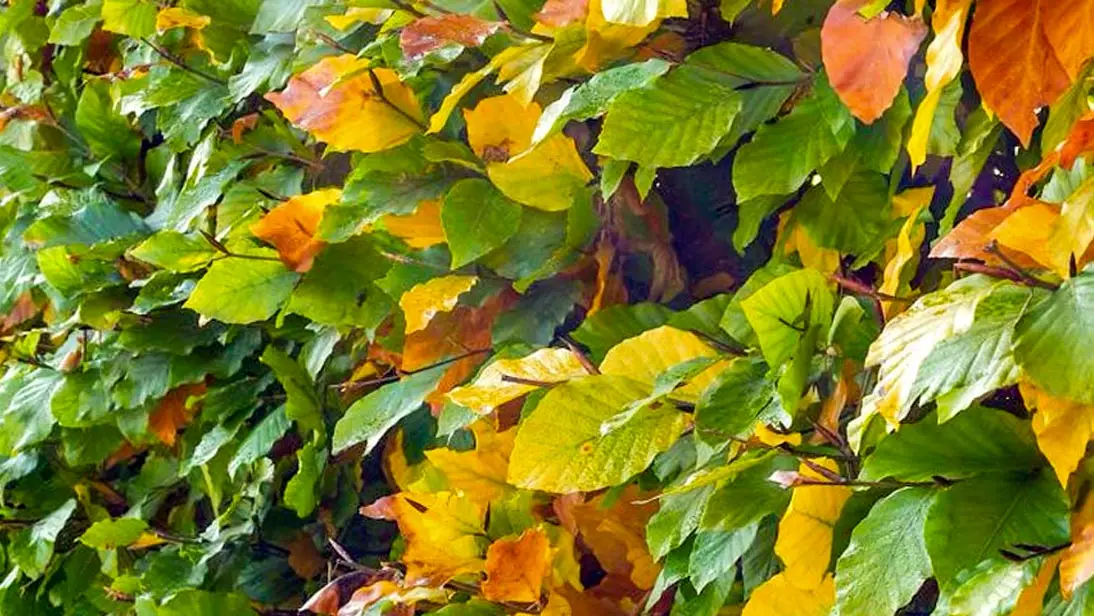
Beech hedging plants are a classic choice for dense, attractive boundaries with fresh spring growth, rich summer foliage and warm copper and bronze autumn colour. Shop traditional Green Beech, Purple or Copper Beech and our Green and Purple Beech Mix, with bare-root, pot-grown and instant options available across the range depending on size and season.
Choose the Right Beech Hedge
Green and Purple Beech are forms of Fagus sylvatica with similar planting and maintenance needs. Choose mainly by foliage colour, site and the effect you want to create.
- SALE
 Green Beech HedgeFagus sylvaticaThe traditional Beech hedge. Fresh green foliage changes to copper and bronze in autumn, with clipped hedges commonly retaining some dry foliage through winter. Green Beech has the broadest choice of sizes and root types.Colourful FoliageMedium 20-40cm per yearBare RootPot GrownInstant Hedging
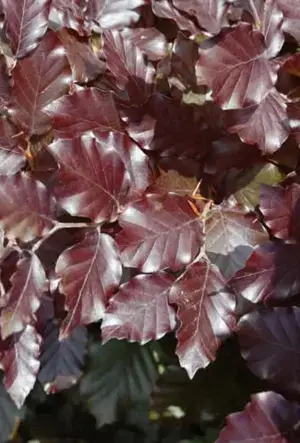
 - Purple or Copper Beech HedgeFagus sylvatica PurpureaChoose Purple or Copper Beech for darker burgundy-purple summer foliage and stronger colour contrast. It develops its richest purple tones in good light before changing to copper-red in autumn.Colourful FoliageMedium 20-40cm per yearBare RootPot GrownInstant Hedging
- SALEGreen and Purple Beech Hedging MixColourful Beech Hedging MixA same-species colour mix containing 75% Green Beech and 25% Purple Beech. Supplied as five-plant bare-root metre packs for customers who want a patterned Beech hedge without calculating the mix themselves.Colourful FoliageMedium 20-40cm per yearBare Root

Green Beech vs Purple or Copper Beech
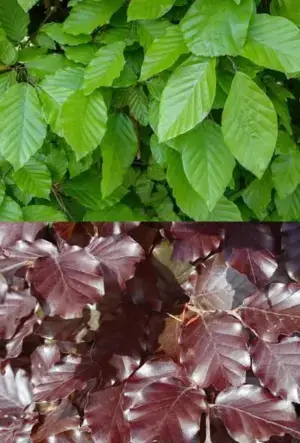
Both are forms of Fagus sylvatica and can make dense, formal hedges. The main differences are foliage colour, visual effect and the light needed for the strongest purple colouring.
| Compare | Green Beech | Purple or Copper Beech |
|---|---|---|
| Summer foliage | Bright to deeper green foliage | Dark green, burgundy to rich purple foliage |
| Autumn & winter | Copper and bronze autumn colour; clipped hedges commonly retain some dry leaves | Copper-red autumn colour; clipped hedges commonly retain some dry leaves |
| Best position | Full sun or partial shade | Good light or full sun for the strongest purple colour |
| Best suited to | Traditional formal hedges, privacy boundaries and larger schemes | Colour contrast, formal gardens and statement boundaries |
| Typical growth | Approximately 20–40cm per year once established | Approximately 20–40cm per year once established |
| Availability | Broad choice of bare-root, pot-grown and instant options depending on size and season | Bare-root, pot-grown and instant options depending on the product, size and season |
Expert nursery advice
Nursery Advice for Choosing Beech Hedging
For most gardens, start by deciding whether you want the classic look of Green Beech or the stronger colour contrast of Purple or Copper Beech. Both prefer ground that holds reasonable moisture but drains freely. On persistently wet, very heavy or frost-prone sites, Hornbeam hedging is often the more dependable alternative.
Beech is deciduous. A young or regularly clipped hedge commonly retains some dry copper-brown foliage through winter, but retention varies with pruning, exposure, plant health, site conditions and weather. It should not be treated as guaranteed evergreen screening.
Helpful answers
Beech Hedging FAQs
01Is Beech hedging evergreen?
No. Beech is deciduous. Its leaves die in autumn, but a young or regularly clipped hedge commonly retains some dry copper-brown foliage through winter. The amount retained varies with pruning, exposure, plant health, site conditions and weather, so Beech should not be treated as guaranteed evergreen screening.
02How quickly does a Beech hedge grow?
Green, Purple and mixed Beech hedging generally produce around 20–40cm of annual growth once established under suitable conditions. This is an indicative range rather than a guarantee. Growth varies with plant size, soil, sunlight, water, competition and pruning.
03How many Beech hedge plants do I need per metre?
The correct planting density depends on the size and root type selected. Small bare-root Green Beech may require up to seven plants per metre, while larger bare-root, pot-grown and instant plants require fewer. The Green and Purple Beech Mix is supplied as five plants for each metre. Always use the planting density shown beside the exact product variation you are ordering.
04When is the best time to plant Beech hedging?
Bare-root Beech is normally planted during the dormant season, when it is available. Pot-grown Beech can be planted whenever the soil is workable, although planting in warm or dry conditions creates a greater watering commitment. Check the live product options and delivery dates for the size and root type you want.
05Does Beech hedging grow in shade?
Green Beech grows well in full sun or partial shade. Purple or Copper Beech is best given good light if you want the strongest purple foliage colour. In deeper shade, growth may be weaker and Purple Beech can appear greener.
06What is the difference between Green Beech and Purple or Copper Beech?
Both are forms of Fagus sylvatica with similar planting and maintenance needs. Green Beech has bright to deeper green summer foliage that changes to copper and bronze, while Purple or Copper Beech develops darker burgundy-purple foliage before turning copper-red. Green Beech is the traditional choice and is available in the broadest range of sizes and root types; Purple Beech is often chosen for stronger colour contrast.