
Hedging care & growing guide
Griselinia Hedge Care Guide: Planting, Spacing and Pruning
Griselinia is a relatively easy evergreen hedge to establish when it is planted in well-drained soil and kept consistently moist while its roots settle in. This guide explains how to plant, space, water, feed and prune Griselinia, together with how to diagnose common problems. If you are still choosing plants or sizes, see our Griselinia hedging plants range.
Most of the green Griselinia we sell is Griselinia littoralis, commonly called New Zealand Privet or New Zealand broadleaf. We also offer the variegated form, Griselinia littoralis 'Variegata'. Their basic care is similar, but the variegated plant is less vigorous and less hardy, so position and exposure deserve more consideration.
Our current live Griselinia range is pot grown, so the planting and establishment advice below concentrates on container-grown plants and the planting densities shown against our current product sizes.
Expert nursery advice
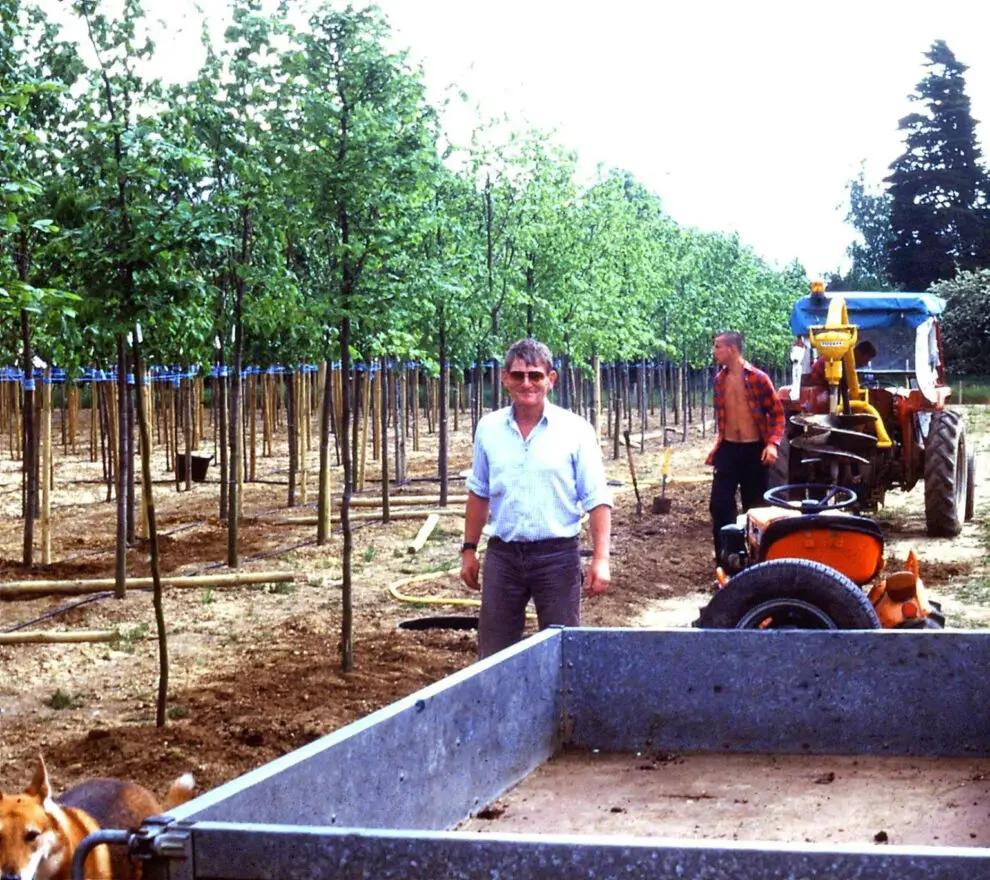
Gwynne's Grower's Tip
Griselinia establishes most reliably when the roots stay evenly moist but are never left sitting in water. With pot-grown plants, I would check the original root ball as well as the soil around it because one can be dry while the other is still damp. Keep the planting line weed-free and trim the sides while the hedge is young to build density low down. If a plant is struggling, check moisture and drainage before adding more feed. On colder inland sites, give variegated Griselinia more shelter than the standard green form.
From our nursery
Visit our Griselinia hedges

New Zealand Privet Hedge
Standard green Griselinia is the one I would normally choose where you want a dense evergreen screen with good tolerance of coastal conditions. It responds well to regular trimming and can make a substantial hedge, but good drainage is important. Choose the plant size according to how quickly you need coverage, then use the planting density shown for that particular size rather than relying on one spacing figure for every Griselinia plant.

Variegated New Zealand Privet Hedge
The variegated form is better where the cream-edged foliage is part of the design rather than where maximum speed or ultimate hedge size is the priority. I would give it a sunnier, more sheltered position than standard green Griselinia, especially in colder areas. It can make an attractive lower evergreen boundary, but I would not treat its eventual size or hardiness as identical to ordinary Griselinia littoralis.
Not sure which Griselinia hedge to choose?
Compare the available plants, formats and starting sizes in the complete range.
Explore our complete Griselinia hedging rangeGriselinia hedge quick-care summary
| Botanical name | Griselinia littoralis |
|---|---|
| Plant type | Evergreen shrub / hedging plant |
| Evergreen or deciduous | Evergreen |
| Typical growth rate | Around 20-40cm per year in good conditions |
| Preferred position | Sun; light shade tolerated |
| Soil | Fertile, well-drained soil |
| Watering | Keep evenly moist while establishing |
| Pruning period | Late spring to summer |
| Feeding | Spring if growth or soil requires it |
| Hardiness | H5 green form; H4 'Variegata' |
| Typical hedge height | Commonly maintained around 1.5-3m |
| Planting season | Pot grown: year-round when conditions allow |
| Root types commonly available | Pot grown |
About Griselinia hedging
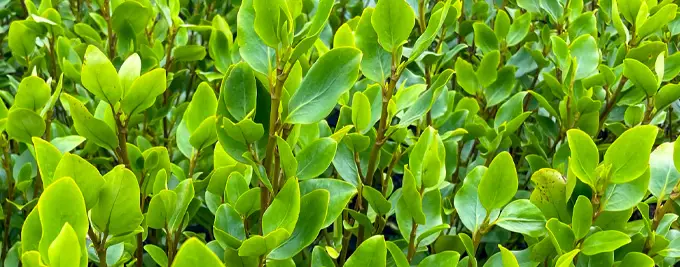
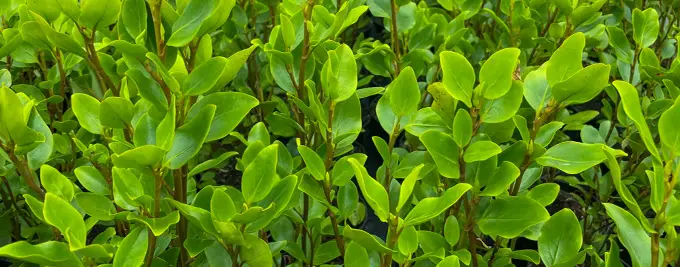
Griselinia littoralis is an evergreen shrub native to New Zealand. It develops leathery, oval, glossy leaves and responds well to clipping, making it suitable for informal screening or a more regularly trimmed evergreen hedge.
Standard green Griselinia
Our New Zealand Privet hedge is the standard green Griselinia littoralis. This is the stronger choice where height, screening and exposure tolerance are more important than ornamental variegation.
Variegated Griselinia
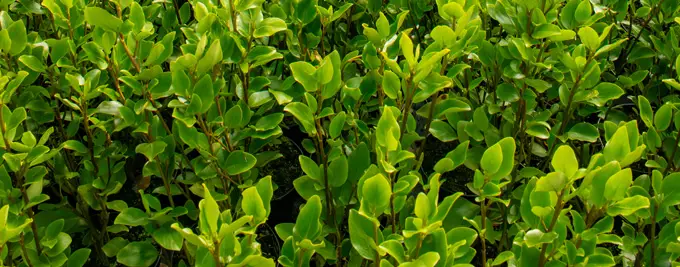
Variegated New Zealand Privet, Griselinia littoralis 'Variegata', has green leaves edged in creamy white. It is better treated as a somewhat smaller and less hardy hedge than the standard green species.
Why use Griselinia as a hedge?
- Evergreen foliage provides screening through the year.
- It clips readily into a dense hedge.
- The green species is useful for coastal and exposed gardens.
- It can be maintained at a practical garden height with regular pruning.
- Its comparatively large, bright leaves give a softer appearance than many small-leaved formal hedges.
Griselinia also produces small yellow-green flowers. Male and female flowers occur on separate plants, and female plants may produce dark purple fruits where compatible male plants are growing nearby.
Choosing the right Griselinia hedge
For most screening hedges, standard green Griselinia littoralis is the more versatile choice. The variegated cultivar is worthwhile where its foliage is an important ornamental feature, but it should not automatically be treated as a direct substitute for the green species.
| Feature | Green Griselinia | Variegated Griselinia |
|---|---|---|
| Botanical name | Griselinia littoralis | Griselinia littoralis 'Variegata' |
| Best use | Screening, boundaries and larger evergreen hedges | Ornamental evergreen boundaries and lower hedges |
| Foliage | Glossy fresh green | Green with creamy-white margins |
| Vigour | More vigorous | Generally less vigorous |
| Hardiness | RHS H5 | RHS H4 |
| Exposure | Good coastal choice once established | Give more protection from cold drying winds |
| Natural eventual size | Potentially a large shrub if unpruned | Considerably more compact in the RHS cultivar profile |
Privacy and tall boundaries
The standard green species is the better choice where the priority is a substantial privacy hedge. Regular side trimming while young helps develop a dense framework rather than allowing all the growth to run upwards.
Coastal gardens
Green Griselinia is particularly useful in coastal gardens because its leathery evergreen foliage copes well with maritime exposure once established. Even coastal-tolerant plants still need careful watering during establishment.
Sun and shade
Griselinia performs most strongly in a bright position. It can cope with some light shade, but growth may be slower or less dense as light levels fall. The variegated cultivar is best given good light so that it remains vigorous and well coloured.
Difficult wet ground
Griselinia is not the plant I would choose for persistently waterlogged ground. Improve drainage or select a hedge better suited to wet soil rather than trying to compensate with fertiliser.
When to plant Griselinia hedging
Our current live Griselinia range is pot grown, which gives considerably more flexibility over planting time than seasonal bare-root hedging.
Best planting conditions
Autumn and spring are often particularly convenient because the soil is generally moist and temperatures are moderate. The roots can establish without the same moisture demand that newly planted evergreens experience during hot summer weather.
Summer planting
You can plant pot-grown Griselinia in summer, but only if you can keep the original root ball and surrounding soil reliably moist. Water the plants thoroughly before planting and monitor them closely afterwards during dry weather.
When to delay planting
- When the soil is frozen or covered by snow.
- When the ground is saturated or waterlogged.
- During periods of exceptional heat or drought unless irrigation and close aftercare are practical.
- When severe weather would make planting or establishment unnecessarily stressful.
Where to plant Griselinia hedging
Light
A sunny position normally gives the strongest, densest growth. Some light or partial shade can be tolerated, particularly by standard green Griselinia, but a very dark position can reduce vigour and density.
Soil and drainage
Griselinia is adaptable to a range of soil textures and pH levels provided excess water can drain away. Heavy soil is not automatically unsuitable, but persistent winter waterlogging is a different matter. Deal with drainage before planting rather than placing the roots in a permanently wet trench.
Coastal exposure
Standard Griselinia littoralis is a useful evergreen hedge for coastal gardens and can tolerate maritime exposure well once established. Newly planted hedges are still vulnerable to drying because their root systems have not yet explored the surrounding soil.
Walls and fences
Allow enough working room to water, trim and inspect both the hedge and the boundary. Avoid squeezing plants tightly against a wall or fence merely to maximise garden space. The exact offset depends on the intended hedge width, access and the foundation or boundary involved.
Nearby trees and established hedges
Large established plants can compete strongly for water. If you plant Griselinia beside mature trees or another hedge, expect establishment to require closer moisture monitoring and keep the planting strip free from grass and weeds.
How to prepare the planting area
- Clear weeds first. Remove perennial weeds, grass and competing vegetation from the planting strip rather than planting into an established lawn.
- Check drainage. If water sits in the planting area for long periods after rain, solve the drainage issue before planting.
- Loosen compacted soil. Break up compacted sides and bases so roots can move beyond the original planting hole.
- Water dry containers. If the compost in the pots is dry, water thoroughly before taking the plants out of their containers.
- Improve poor soil where appropriate. Organic matter or a suitable planting compost can improve structure, but mix amendments with the existing soil instead of surrounding each plant with a completely different pocket of material.
Using mycorrhizal fungi
If using RootGrow Mycorrhizal Fungi, apply it at planting so the product comes into direct contact with the roots, following the current pack instructions. It is an establishment aid, not a substitute for good watering, drainage or soil preparation.
Avoid excessive fertiliser in the planting hole
Do not assume that more feed means faster establishment. A newly planted hedge first needs a healthy root environment and reliable moisture. Correct obvious drainage or watering problems before reaching for extra fertiliser.
How to plant a Griselinia hedge
- Set out the hedge line. Position the plants at the density recommended for the size you have purchased before digging.
- Water the pots if needed. A dry root ball is harder to re-wet once it has been planted.
- Dig the holes or trench. Make them wide enough for the root balls and loosen compacted soil around the sides.
- Remove each pot carefully. Support the root ball rather than pulling the plant by its stem.
- Check the planting depth. Position the top of the root ball roughly level with the surrounding finished soil. Do not bury the stem deeply.
- Backfill around the roots. Refill with the excavated soil, incorporating appropriate soil improver only where needed.
- Firm gently. Remove large air pockets without compacting wet soil excessively.
- Water thoroughly. Soak the root zone immediately after planting so the existing root ball and surrounding soil are both moist.
- Mulch the surface. Apply mulch around the plants without piling it directly against the stems.
- Check stability. Large plants on exposed sites may need temporary support until new roots anchor them, but avoid unnecessary staking of smaller stable plants.
After planting, check individual plants rather than assuming the whole hedge line is equally wet. Container root balls can dry at a different rate from the surrounding garden soil.
Griselinia hedge spacing and plants per metre
The right spacing depends on the size and form of plant you buy. Larger, more developed Griselinia plants require fewer plants per linear metre than smaller plants.
| Current green Griselinia size | Verified planting density | Approx. centre-to-centre spacing |
|---|---|---|
| 60-90cm pot grown | 4 plants per metre | 25cm |
| 90-120cm pot grown | 3 plants per metre | About 33cm |
| 120-150cm pot grown | 2 plants per metre | 50cm |
These figures are based on the current planting-density information shown against our live New Zealand Privet hedge sizes.
What about smaller Griselinia?
The 40-60cm green plant is currently listed, but a variation-specific calculator density was not exposed in the live page data used to prepare this guide. Check the current product selector before ordering rather than applying one of the larger-size figures automatically.
What about Variegated Griselinia?
The current variegated plant is a smaller pot-grown product and was out of stock when this guide was prepared. Use the planting density displayed on its live product page when it returns to stock rather than copying the density for the green species without checking.
Single or double row?
For a normal garden boundary, the product density shown per linear metre is the clearest starting point. A staggered double row creates a wider planting and uses considerably more plants; do not simply double quantities unless that wider specification is genuinely required.
Watering and establishing Griselinia hedging
Immediately after planting
Water the hedge thoroughly so moisture reaches through each original root ball and into the surrounding soil. A quick wetting of the surface is not enough.
The first growing season
New Griselinia needs much closer attention than an established hedge because its effective root system is still concentrated around the original container. Check the soil regularly, particularly during warm, windy or dry periods.
Water deeply enough to moisten the root zone, then allow the soil's natural drainage to work. The aim is steady moisture, not permanently saturated ground.
Hot and dry weather
Evergreen leaves continue to lose water while the roots are establishing. During dry weather, check more frequently and water before the root ball dries completely. A mulch helps reduce evaporation and competition from weeds.
Winter
Established Griselinia usually needs little supplementary winter watering in normal UK weather. Recently planted hedges can still become dry during prolonged rain-free, windy periods, especially on light soils or in rain shadows.
Signs of too little water
- Loss of leaf shine or wilting.
- Dry, crisp leaf margins or browning.
- Premature leaf drop.
- Weak extension growth.
Signs of excessive moisture or poor drainage
- Persistent yellowing while the soil remains wet.
- Weak growth despite adequate feeding.
- Root decline or dieback in chronically saturated ground.
If different plants along one hedge are deteriorating at different rates, check the actual root-zone moisture at each plant rather than assuming they all need the same treatment.
How and when to feed Griselinia hedging
Newly planted Griselinia
Concentrate first on correct planting, moisture and drainage. Do not try to compensate for dry roots or waterlogged soil by applying extra fertiliser.
Established hedges
If an established hedge is growing normally and has healthy foliage, heavy feeding is unnecessary. Where soil fertility is low or annual growth has become weak, a balanced fertiliser in spring can support the coming growing season.
Our Hedge Feed is one option where feeding is appropriate. Apply according to the current product instructions rather than increasing the dose in an attempt to force faster growth.
Late-season feeding
Avoid pushing soft, nitrogen-rich growth late in the season. New growth produced too late has less time to mature before colder weather.
Mulch and soil condition
Maintaining a mulch layer and keeping the hedge free from competing weeds can often improve establishment more effectively than repeated feeding. Organic matter also supports soil structure over time.
How and when to prune Griselinia hedging
Pruning a young Griselinia hedge
During the first couple of years, concentrate on building a dense framework. Allow the leading shoots to gain useful height while shortening long or straggly side growth. This encourages branching lower down instead of producing a tall, thin hedge.
Pruning an established hedge
Once the hedge is close to its required dimensions, trim the sides and top to maintain its shape. One main trim may be sufficient for an informal hedge; a more formal hedge may need an additional light trim as new growth develops.
When should Griselinia be trimmed?
Late spring into summer is a useful main pruning period. Avoid unnecessary hard pruning immediately before severe cold weather, particularly with variegated Griselinia, which is less hardy than the green species.
How to keep the base dense
Do not allow the top to become much wider than the bottom. A slightly narrower top lets light reach the lower foliage and makes it easier to maintain growth near ground level.
Can an overgrown Griselinia be cut back hard?
Griselinia can respond to substantial pruning, but renovation is more stressful than routine clipping and recovery depends on the health, age and growing conditions of the hedge. For a large neglected hedge, reduce it in a planned way during active growth rather than assuming every old bare stem will regenerate equally well.
Check for nesting birds
Always inspect a hedge carefully before cutting. If there is an active bird nest, leave that part of the hedge undisturbed until the nest is no longer in use.
Griselinia growth rate and eventual size
How fast does Griselinia grow?
For standard green Griselinia littoralis, around 20-40cm of annual extension growth is a sensible working expectation in good conditions once the hedge has established. Weather, soil, moisture, light, plant size and competition can all make actual growth faster or slower.
Expect an establishment period
A newly planted hedge may spend more energy developing roots than producing obvious top growth. Do not judge its long-term growth rate solely from the first few months after planting.
How tall can green Griselinia become?
Standard G. littoralis is naturally a large shrub. The RHS gives an ultimate height range of about 4-8m under suitable conditions if it is allowed to grow freely. In a garden hedge it is normally kept considerably smaller through pruning.
How large does Variegated Griselinia grow?
Do not assume 'Variegata' will make the same size hedge at the same speed. It is generally less vigorous, and the RHS cultivar profile gives an eventual height and spread of approximately 1.5-2.5m. This makes it better suited to ornamental and more moderate-height hedging than to very tall screening.
What affects growth rate?
- Water supply during establishment.
- Drainage and soil structure.
- Available light.
- Exposure and winter damage.
- Competition from grass, weeds or established trees.
- How heavily and frequently the hedge is clipped.
Seasonal Griselinia hedge care
| Season | Main Griselinia jobs |
|---|---|
| Spring | Plant pot-grown hedges, check winter damage, refresh mulch, feed where needed and begin formative pruning as active growth resumes. |
| Early summer | Carry out the main trim once active nests have been ruled out; monitor newly planted hedges closely for water stress. |
| Mid to late summer | Continue watering during dry spells and give formal hedges a light second trim if necessary. Avoid forcing soft late growth with excessive nitrogen. |
| Autumn | A useful planting period while soil is still workable. Water newly planted hedges thoroughly and maintain mulch before winter. |
| Winter | Check newly planted plants after severe wind, avoid working saturated or frozen ground and monitor exposed or variegated plants for cold damage. |
These are seasonal priorities rather than fixed calendar rules. Always adapt watering and pruning to the actual weather and condition of the hedge.
Griselinia pests, diseases and common problems
Why are my Griselinia leaves turning yellow?
Start by checking the roots and soil. Persistent yellowing in wet ground can indicate poor drainage or damaged roots, while a newly planted hedge can also yellow after periods of drought or other establishment stress. Do not diagnose a nutrient deficiency solely from leaf colour.
Why are the leaves turning brown?
Brown or crisp foliage can follow drought, drying winds, severe cold or a combination of root stress and exposure. Check whether the damage is concentrated on the exposed side of the hedge and whether the original root ball has become dry.
Why is my Griselinia dropping leaves?
Some leaf loss can follow transplant stress, drought, saturated soil or weather damage. Look at the pattern of symptoms and the condition of stems and roots before deciding on treatment.
Why is my Griselinia hedge not growing?
Slow top growth during the first establishment period is not automatically a failure. Check water availability, drainage, weed competition, shade and whether the root ball has begun integrating with the surrounding soil. Feeding will not correct a root ball that is repeatedly drying out.
Why is the hedge sparse at the bottom?
A hedge can become top-heavy if young side growth is never shortened or if the top is allowed to shade the base. Encourage branching while plants are young and maintain the hedge with the top no wider than the lower section.
Leaf spot
Leaf spot can produce discoloured or damaged patches on foliage. Remove badly affected fallen material, keep the hedge reasonably open to air movement and avoid creating persistently wet foliage where practical. If damage is widespread or diagnosis is uncertain, seek an accurate identification before considering any treatment.
Honey fungus
The RHS lists honey fungus as a possible but relatively uncommon problem on Griselinia. Progressive dieback combined with fungal growth around the root or collar area deserves closer investigation. Because management depends on a correct diagnosis, seek specialist or RHS guidance if honey fungus is suspected.
Can a damaged Griselinia recover?
Yes, if the stems and root system remain healthy, a stressed Griselinia can often produce fresh growth once the underlying cause is corrected. Remove only clearly dead material, correct watering or drainage problems and allow time for recovery before deciding that a recently stressed plant has failed completely.
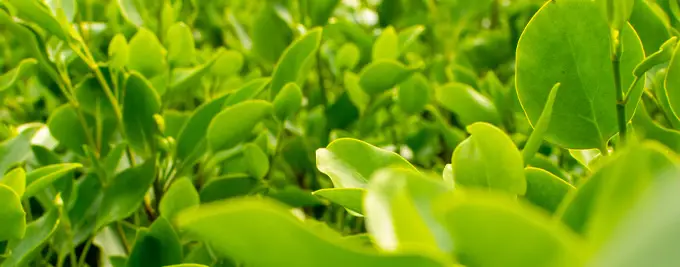
Griselinia wildlife and environmental value
Griselinia is not a UK native hedge, but a dense established hedge can still contribute useful structure and shelter in a garden.
- Evergreen foliage provides cover through winter.
- Dense branching can offer sheltered nesting opportunities.
- Small flowers add seasonal interest.
- Female plants may produce purple fruits where suitable male pollination is available.
Male and female flowers are carried on separate plants, so fruit should not be treated as guaranteed on every Griselinia hedge.
Before trimming any dense hedge, check carefully for active nests. Do not disturb a nest that is currently in use.
Griselinia care by root type
Pot-grown Griselinia
Pot-grown plants can be planted whenever ground and weather conditions are suitable. Before planting, check the moisture in each container and thoroughly water any dry root balls.
Remove the container carefully and set the root ball at approximately the same depth it was previously growing. After backfilling, water deeply enough to wet both the original container compost and surrounding soil.
During establishment, do not check only the garden soil several centimetres away from the plant. The original root ball can sometimes become dry while the surrounding ground remains damp.
Current live Griselinia product pages show pot-grown plants. If additional root formats are introduced in future, this section should be updated with format-specific handling rather than applying pot-grown instructions to them automatically.
Frequently asked questions about Griselinia hedging
How many Griselinia plants do I need per metre?
It depends on the size you buy. Our current green Griselinia densities include 4 plants per metre for 60-90cm plants, 3 per metre for 90-120cm plants and 2 per metre for 120-150cm plants. Always check the live product density for the exact size being ordered because larger plants need wider spacing.
How far apart should I plant Griselinia?
For the current verified green sizes, 4 plants per metre is approximately 25cm between centres, 3 per metre about 33cm and 2 per metre 50cm. These are size-specific figures rather than one universal Griselinia spacing, so check the product variation before ordering.
When is the best time to plant Griselinia in the UK?
Pot-grown Griselinia can be planted throughout the year when the ground is workable, but autumn and spring are usually easiest because conditions are cooler and naturally moister. Avoid planting into frozen or waterlogged soil, and take extra care with irrigation if planting during hot or dry weather.
How fast does Griselinia grow?
Standard green Griselinia commonly grows around 20-40cm a year once established in good conditions. This is not guaranteed: water supply, drainage, light, exposure, soil and pruning all affect growth. The variegated cultivar is generally less vigorous and should not be expected to match the green species exactly.
When should I prune Griselinia?
Late spring to summer is a good main pruning period for Griselinia. Young hedges benefit from side trimming to encourage dense branching, while established hedges can be clipped to their required height and width. Always check carefully for active bird nests before cutting.
Can Griselinia be cut back hard?
A healthy established Griselinia can often recover from substantial pruning, but renovation is more stressful and regrowth is not guaranteed from every old bare stem. Carry out major reductions during active growth and consider reducing a badly overgrown hedge in stages rather than making a severe late-season cut.
Why are my Griselinia leaves turning yellow?
Check soil moisture and drainage first. Yellow leaves can accompany root stress caused by persistently wet soil, while recently planted Griselinia may also yellow after drought or transplant stress. Do not automatically add fertiliser: establish whether the root ball is too wet, too dry or otherwise stressed before treating a nutrient deficiency.
Why is my Griselinia turning brown?
Brown Griselinia foliage is commonly associated with drought, drying winds, cold damage or root stress. Check whether the original root ball has dried out and whether damage is concentrated on the exposed side. Correct the underlying growing conditions before removing anything except clearly dead growth.
Can a dying Griselinia hedge recover?
Often yes, provided the roots and stems are still alive and the cause of the decline can be corrected. Check drainage, root-ball moisture, exposure and recent weather first. Give a stressed hedge time to produce new growth before removing plants unless they are clearly dead or a serious root disease has been confirmed.
Is Griselinia suitable for coastal gardens?
Yes. Standard green Griselinia littoralis is a good evergreen choice for many coastal gardens and copes well with maritime exposure once established. Newly planted hedges still need careful watering because coastal wind can increase moisture loss before the roots have spread into the surrounding soil.
Does Griselinia grow in shade?
Griselinia grows most strongly with good light and is best in sun, although standard green plants can tolerate some light shade. Growth may become slower or less dense as shade increases. Give variegated Griselinia a bright position to support strong growth and good foliage colour.
How tall does Griselinia grow?
Unpruned standard Griselinia littoralis can become a large shrub, with the RHS giving an ultimate height of about 4-8m. A hedge can be maintained much lower by regular trimming. 'Variegata' is considerably smaller, with an RHS ultimate height of around 1.5-2.5m.
How often should I water a newly planted Griselinia hedge?
Water according to soil and weather conditions rather than following a fixed daily schedule. Keep the root zone consistently moist during establishment, checking both the original pot root ball and surrounding soil. Increase monitoring during hot, dry or windy periods and reduce watering when natural rainfall is keeping the root zone moist.
Should I feed Griselinia?
Feed Griselinia when soil fertility or weak growth makes it useful, rather than feeding automatically throughout the year. A balanced hedge fertiliser can be applied in spring to established plants where required. Do not use extra fertiliser to compensate for poor drainage, dry roots or another establishment problem.
What is the difference between green and variegated Griselinia?
Green Griselinia littoralis is generally larger, more vigorous and hardier. 'Variegata' has attractive cream-edged leaves but is more compact and less cold-tolerant. The RHS rates green Griselinia H5 and 'Variegata' H4, so the variegated form benefits from a more sheltered position in colder gardens.
Related hedge advice
Useful planting, pruning and hedge-care advice from our nursery.
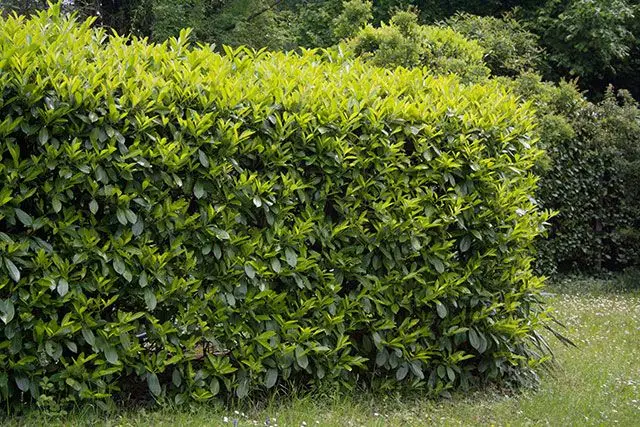
Best Hedges for Privacy in UK Gardens
Compare the best hedge plants for privacy in UK gardens, including evergreen, fast-growing and seasonal options for different soils, sites and screening needs
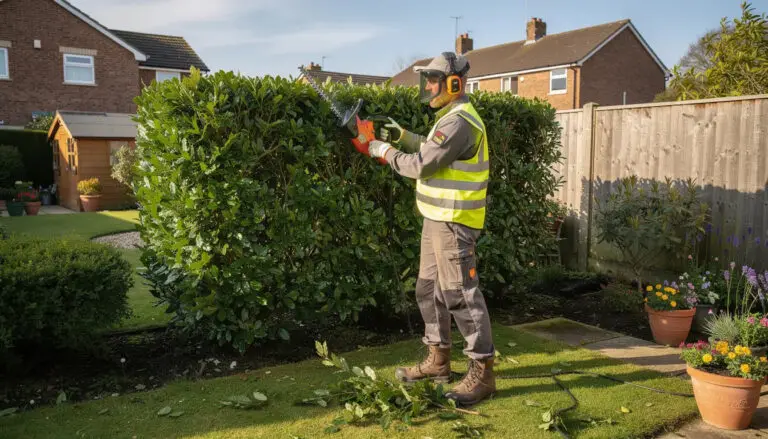
Best Time to Trim Hedges in the UK: A Comprehensive Guide
Best time to trim hedges in the UK explained: seasonal timing, nesting bird rules, hedge types, tools and aftercare. Get a neat, healthy hedge all year.
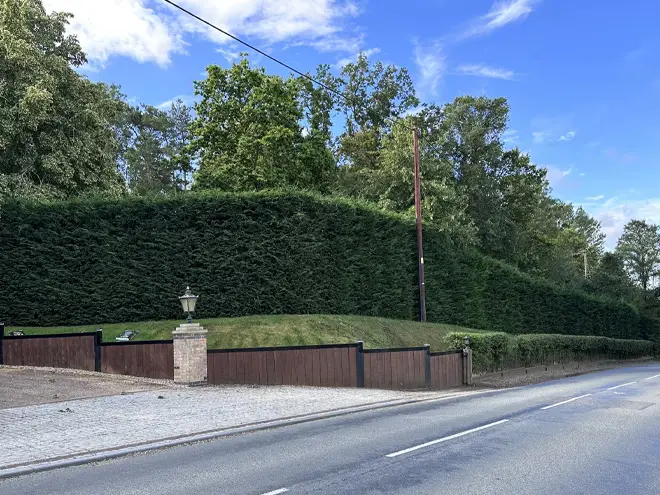
Fast Growing Hedge Plants – Best Choices for Quick Privacy and Year Round Coverage
Need quick privacy in the garden? Discover the best fast growing hedging plants and simple tips to establish a dense, healthy screen fast.
More Griselinia questions
Useful answers from our Griselinia hedging knowledge base.
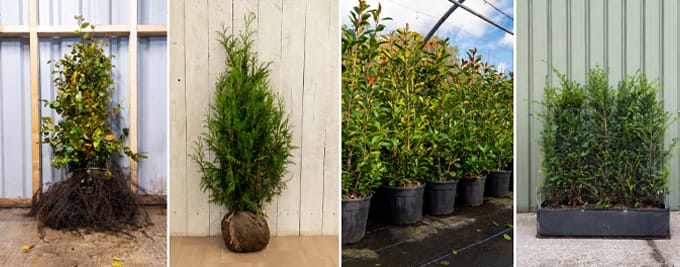
What Are the Different Hedging Root Types?
Bare root, root ball, pot-grown and instant hedging suit different budgets, planting times and levels of initial coverage. Understanding how each is supplied makes it easier to choose the right format for your project.