
Fast Growing Hedge Plants – Best Choices for Quick Privacy and Year Round Coverage
When you need instant impact in your garden, fast-growing hedge plants are the perfect solution. Whether you’re looking for privacy, wind protection, or an attractive natural boundary, there are plenty of quick growing hedges that deliver lush, evergreen coverage within just a few seasons.
In this guide, we’ll look at the best fast growing hedges for UK gardens, how quickly they grow, and why autumn and winter are the best times to plant them.
Why Choose Fast Growing Hedge Plants
Instant Privacy and Shelter
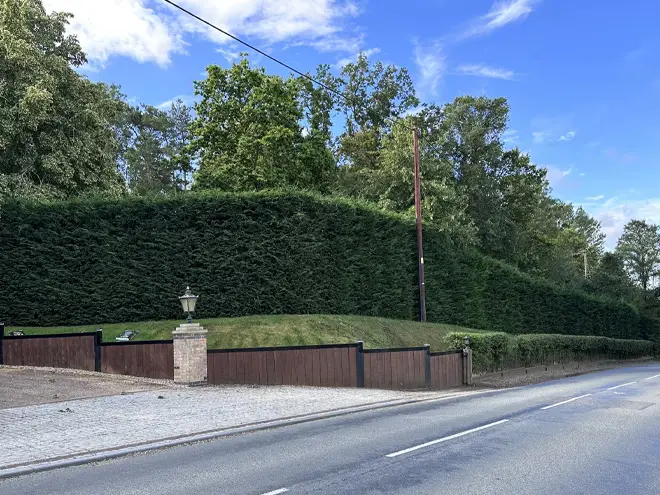
Fast-growing hedges are ideal for creating a private, enclosed space quickly. Species such as Leylandii, Cherry Laurel, and Privet can put on 30–60cm of growth each year, forming dense coverage in just a couple of seasons.
They also provide excellent wind protection, help reduce noise, and support local wildlife all while remaining an attractive, natural feature in the landscape.
Cost Effective Long Term Solution
Compared with fencing, fast growing hedges offer a longer lasting, more environmentally friendly alternative. Once established, a hedge is low maintenance, helps improve soil stability, and can even increase property value thanks to its year round structure and greenery.
The Best Fast Growing Hedge Species for UK Gardens
Each species has its own character and growth habit, so your choice depends on your style, soil type, and level of privacy required.
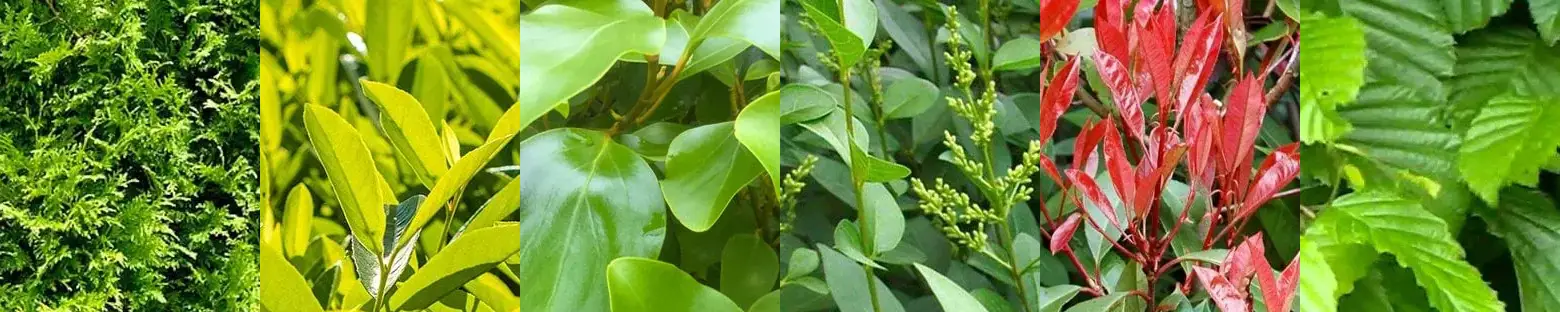
Leylandii (x Cupressocyparis leylandii)
Among the fastest growing evergreen hedges in the UK, Leylandii remains a classic choice for instant privacy.
It grows up to 90cm per year, forming a tall, dense barrier that provides excellent wind protection.
For a softer look, it can be kept to your preferred height with annual trimming in late summer.
Cherry Laurel (Prunus laurocerasus ‘Rotundifolia’)
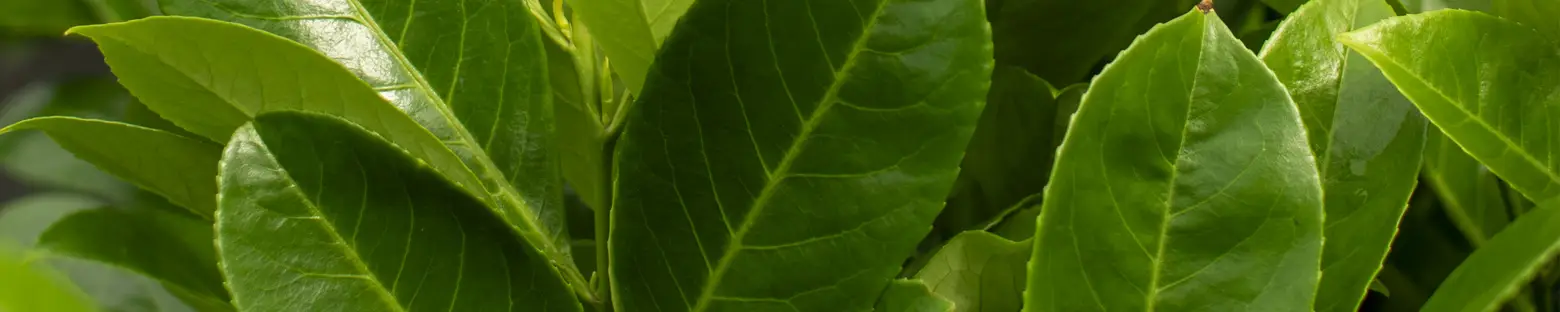
Cherry Laurel is another excellent fast growing hedge plant that combines evergreen density with broad, glossy leaves.
It grows around 30–60cm per year, creating a solid green wall that’s perfect for screening along driveways and boundaries.
Laurel hedging thrives in sun or partial shade and tolerates most soil types, making it one of the most versatile hedges in the UK.
New Zealand Privet (Griselinia littoralis)
Griselinia is a bright, fresh green hedge plant that performs especially well in coastal areas.
Fast growing and salt-tolerant, it can reach 30cm per year in good conditions.
Its cheerful colour and smooth leaves make it ideal for softening walls or adding contrast against darker evergreens.
Privet (Ligustrum ovalifolium)
Privet hedging is one of the most reliable quick growing hedge plants for low maintenance gardens.
Semi evergreen in colder regions and fully evergreen in mild areas, it grows 30–60cm per year and responds well to clipping, allowing you to maintain a neat, formal shape all year round.
Photinia × fraseri ‘Red Robin’
For colour as well as speed, Photinia Red Robin brings striking red new growth each spring and matures to a glossy green.
It grows around 30cm per year and can be used as either a standalone feature or mixed hedge for added seasonal interest.
Hornbeam (Carpinus betulus)
Although technically deciduous, Hornbeam retains its coppery-brown leaves through winter, giving it a near-evergreen appearance.
It grows 30–45cm per year and copes extremely well with heavy clay or exposed sites where other species may struggle.
When to Plant Fast Growing Hedges
Best Planting Season
The best time to plant fast growing hedges in the UK is from autumn to early spring (October to March).
Cooler temperatures and consistent rainfall allow roots to establish quickly without the stress of summer heat.
This period also coincides with the availability of bare root and rootballed hedge plants, which offer excellent value and strong establishment rates.
Root Types and Planting Tips
Bare Root Hedging: Ideal for larger projects. Economical, lightweight, and easy to plant during dormancy.
Rootballed Plants: Provide instant impact with mature roots wrapped in soil for protection.
Pot-Grown Hedges: Can be planted year-round but require regular watering in dry months.
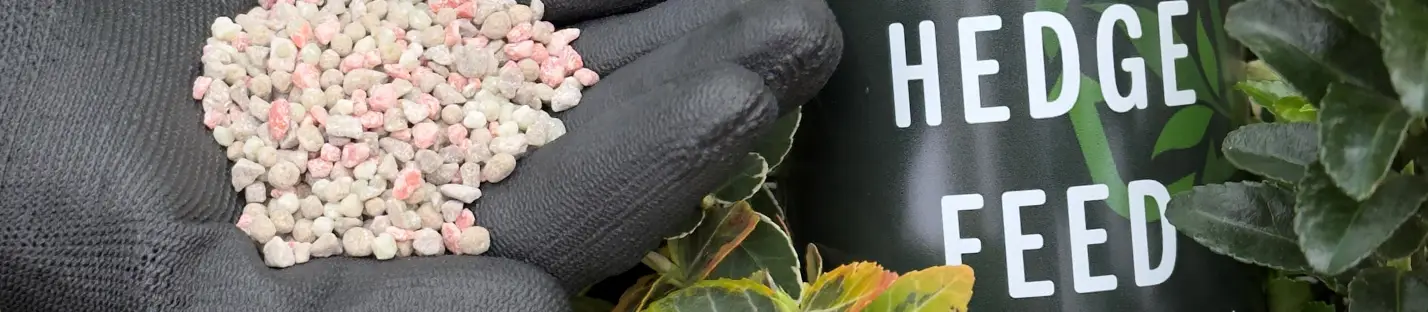
Enhance root development by applying RootGrow Mycorrhizal Fungi at planting, then feed in late autumn with Hedge Feed for healthy growth and deep green foliage.
For larger planting projects or hot, dry sites, consider installing Hedge Irrigation to maintain consistent moisture during the first year.

Caring for Fast Growing Hedges
Once established, most fast-growing hedging plants require just a few simple steps to stay in top condition:
Trim once or twice a year to maintain shape and density.
Feed annually in spring or autumn with Hedge Feed slow-release fertiliser.
Mulch around the base to retain soil moisture and suppress weeds.
Water well during prolonged dry periods, especially in the first two years.
Frequently asked questions – Fast Growing Hedges
What is the fastest growing hedge in the UK?
Leylandii is widely regarded as the fastest-growing hedge in the UK, with potential growth of up to 90cm per year. Cherry Laurel and Privet are also popular quick-growing options for evergreen coverage and privacy.
When is the best time to plant fast growing hedge plants?
The ideal time to plant fast-growing hedges is from autumn through early spring when soil is moist and warm. This allows roots to establish before summer. Avoid planting during frosty or waterlogged conditions.
How can I make my hedge grow faster?
Use RootGrow when planting to encourage healthy root systems, feed with Hedge Feed twice a year, and ensure your hedge has adequate water particularly during dry spells. Regular trimming also encourages thicker, bushier growth.
Which fast growing hedges are best for year round privacy?
For evergreen coverage all year, choose species such as Laurel, Leylandii, Photinia Red Robin, and Griselinia. These hold their leaves throughout winter and provide consistent shelter, colour, and privacy in every season
How to stop the neighbours overlooking the garden?
To stop neighbours overlooking your garden, the most effective long term solution is to create year round privacy screening along the boundary using a fast growing evergreen hedge. Planting options like Cherry Laurel, Leylandii, Griselinia, Photinia ‘Red Robin’ or Privet will build a dense green barrier that blocks sightlines and reduces noise, and you’ll get faster results by choosing taller plants or planting smaller hedging closer together for quicker thickening. For the best establishment, plant in autumn to early spring, use RootGrow at planting to boost root development, feed with a slow-release fertiliser such as Hedge Feed, and keep watering consistent in the first year (a simple hedge irrigation line is ideal during dry spells).
What is the best hedge for noise reduction?
The best hedge for noise reduction is a dense, evergreen hedge with thick foliage (and ideally some depth), because it breaks up sound waves and blocks line of sight better all year round. In UK gardens, Cherry Laurel is one of the top choices for noise reduction thanks to its large leaves and very dense growth, while Yew is excellent if you want a slightly slower growing but exceptionally thick, long lived sound-buffer hedge. If you need height quickly, Leylandii can work well as a tall, fast screen (best kept regularly trimmed to stay dense), and Privet is a good budget option that thickens quickly when clipped. For maximum noise reduction, aim for a hedge that’s kept wide and full from the base, plant at the correct spacing, and consider using a double staggered row where space allows more depth almost always reduces noise more effectively than height alone.