
Is Privet Evergreen?
Privet is often chosen for privacy, but its winter appearance is less predictable than that of a fully evergreen hedge. The variety, local weather and amount of shelter all affect how many leaves it retains.
Quick Answer
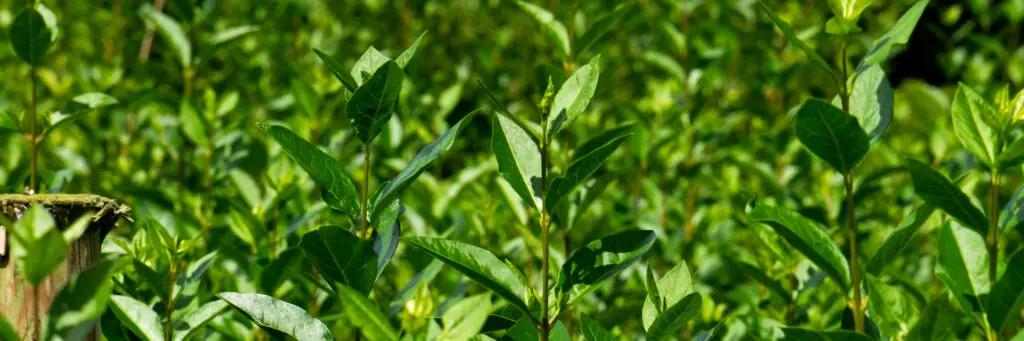
Privet is normally described as semi-evergreen in the UK, rather than reliably evergreen. Common and Golden Privet often retain most of their leaves during a mild, sheltered winter but may lose considerably more in cold or exposed conditions. Wild Privet is naturally more prone to winter leaf loss. Healthy plants normally produce fresh foliage again in spring, but Privet should not be treated as a guaranteed year-round green screen.
Quick Facts
| General classification | Semi-evergreen in most UK gardens |
|---|---|
| Common Privet | Often retains much of its foliage in mild winters |
| Golden Privet | Usually semi-evergreen under UK garden conditions |
| Wild Privet | Semi-evergreen, however more prone to winter leaf loss |
| Greatest winter leaf retention | Mild, sheltered positions |
| Greater winter leaf loss | Cold, exposed or windswept positions |
| Spring recovery | Healthy plants normally produce fresh leaves |
| Guaranteed year-round foliage | No |
What does semi-evergreen mean?
A semi-evergreen hedge sits between a fully evergreen plant and a deciduous one.
A true evergreen normally carries living foliage throughout every season, although individual old leaves are still replaced. A deciduous hedge loses its foliage during autumn or winter.
Semi-evergreen Privet may retain most of its leaves through one winter and lose considerably more during another. The amount of foliage remaining depends on the variety, winter temperatures, exposure and the condition of the hedge.
This explains why one Privet hedge can remain dense and green while another hedge of the same species becomes noticeably thinner during winter.
Is Common Privet evergreen?
Common Privet, Ligustrum ovalifolium, is best described as semi-evergreen, depending on the site and winter conditions.
In a mild, sheltered garden, it may hold most of its dark green leaves throughout winter. A hedge in a cold, exposed or windswept position is more likely to shed some or much of its foliage before producing fresh growth in spring.
The RHS describes Ligustrum ovalifolium as a semi-evergreen or evergreen shrub. For practical customer advice, however, it is safer to describe Common Privet as semi-evergreen because complete winter leaf retention cannot be guaranteed across every UK garden.
Is Golden Privet evergreen?
Golden Privet, Ligustrum ovalifolium ‘Aureum’, can retain a substantial amount of foliage during mild winters, but it should not be promised as fully evergreen in every position.
Some botanical references classify Golden Privet as evergreen. In practical UK hedging conditions, cold weather and exposure can still cause foliage loss, so Hedging Plants Direct treats it as semi-evergreen when advising customers.
Golden Privet has green leaves with attractive golden-yellow markings. The strongest colour normally develops in a sunny or brightly lit position, while deeper shade can make the foliage appear greener.
Is Wild Privet evergreen?
Wild Privet, Ligustrum vulgare, is naturally more prone to winter leaf loss than Common or Golden Privet.
It may retain some foliage during a mild winter, but it is more likely to become bare or partially bare in colder conditions. The RHS describes Wild Privet as deciduous or semi-evergreen.
Wild Privet remains a valuable choice for native, informal and wildlife-focused hedges. When it is not clipped too tightly, its summer flowers can support insects and its dark berries provide food for birds. It is not the best Privet for customers whose main priority is dependable winter screening.
Why does Privet lose its leaves in winter?
Winter leaf loss is often a normal response to colder conditions rather than a sign that the hedge is dying.
The main influences include:
- the Privet variety
- low winter temperatures
- cold or drying winds
- an exposed planting position
- drought during the previous growing season
- the age and establishment of the hedge
- the overall health of the root system
A newly planted hedge may lose more foliage because its roots are still establishing. A dry or stressed hedge can also enter winter in poorer condition than one that has received suitable watering.
Common and Golden Privet usually retain more foliage than Wild Privet, but no Privet variety should be sold as guaranteed to remain completely green through every UK winter.
Will Privet grow its leaves back in spring?
Healthy Privet normally produces fresh foliage as temperatures rise and active growth resumes.
A bare-looking hedge during late winter may therefore still be alive and healthy. Before removing a plant, lightly scratch a very small section of bark on a questionable stem. Green, moist tissue beneath the surface usually indicates that the stem remains alive.
Wait until spring growth has had time to begin before assuming that winter leaf loss means the plants have failed.
Sudden leaf loss during spring or summer is different. That can indicate drought, waterlogging, root damage, pests or disease and should be investigated rather than treated as normal seasonal shedding.
Is Privet suitable for year-round privacy?
Common Privet can make a dense and effective privacy hedge for much of the year. Regular formative trimming encourages branching from low down and helps create a thick framework of stems and foliage.
Even where some winter leaves are lost, the dense network of branches can continue to provide partial screening.
It is not, however, the best choice where a completely green screen is essential throughout every winter. Customers who require more dependable year-round foliage may prefer a genuinely evergreen hedge such as Laurel, Yew, Photinia, Euonymus or a suitable conifer.
Our evergreen hedging range provides alternatives for situations where winter foliage is a firm requirement.
How can I help Privet retain more winter foliage?
You cannot control the winter weather, but good establishment and sensible maintenance can help the hedge enter winter in healthy condition.
Choose the right variety
Common Privet is usually the strongest Privet choice for a formal privacy hedge. Golden Privet provides brighter foliage but can be less vigorous. Wild Privet is better suited to native and wildlife-focused planting where full winter leaf retention is not essential.
Consider the position
A sheltered garden generally gives Privet a better chance of retaining foliage than an exposed site affected by persistent cold winds.
Water during establishment
Newly planted Privet should be watered thoroughly during dry conditions through its first growing seasons. Dry roots during summer and autumn can leave the hedge stressed before winter begins.
Stop trimming by late summer
Finish routine trimming by late summer so that fresh growth has time to mature before colder weather. Very late cutting can encourage soft new shoots that are more vulnerable to frost.
Avoid excessive late feeding
Strong high-nitrogen feeding late in summer or autumn can also encourage soft growth. Where feeding is genuinely needed, a balanced spring application is normally more appropriate.
These steps support healthy growth but cannot turn a semi-evergreen Privet into a guaranteed fully evergreen hedge.
Should I choose Privet if I want an evergreen hedge?
Choose Privet if you want a fast-growing, easily trimmed and adaptable hedge and are comfortable with the possibility of some winter leaf loss.
Common Privet is particularly useful for traditional garden boundaries, formal hedges, urban gardens and longer planting schemes. It can provide dense screening for most of the year and often retains substantial foliage in a mild winter.
Choose a true evergreen species instead if complete winter coverage is one of the most important requirements for the project.
The most accurate description is therefore:
Privet is usually semi-evergreen in the UK. It may look evergreen during mild winters, but winter foliage cannot be guaranteed.
Gwynne's Grower's Tip
Privet can look completely evergreen in a mild, sheltered garden and then lose far more foliage during a colder winter, so I would never promise that it will stay fully leafed in every position. Common Privet is usually the best choice where customers want a dense traditional hedge, but Wild Privet naturally loses more foliage. If an established hedge becomes bare during winter, give it time to produce its spring growth before assuming anything is wrong. Where uninterrupted green screening is essential, I would recommend comparing Privet with a true evergreen species before planting.
More Privet Advice
For more detailed growing advice or to view the plants available from our nursery, use the links below.
Related Products
Products from our nursery that are relevant to this advice.


Useful Planting Essentials
Selected products that may help with planting, establishment and ongoing hedge care.
Rootgrow Mycorrhizal Fungi
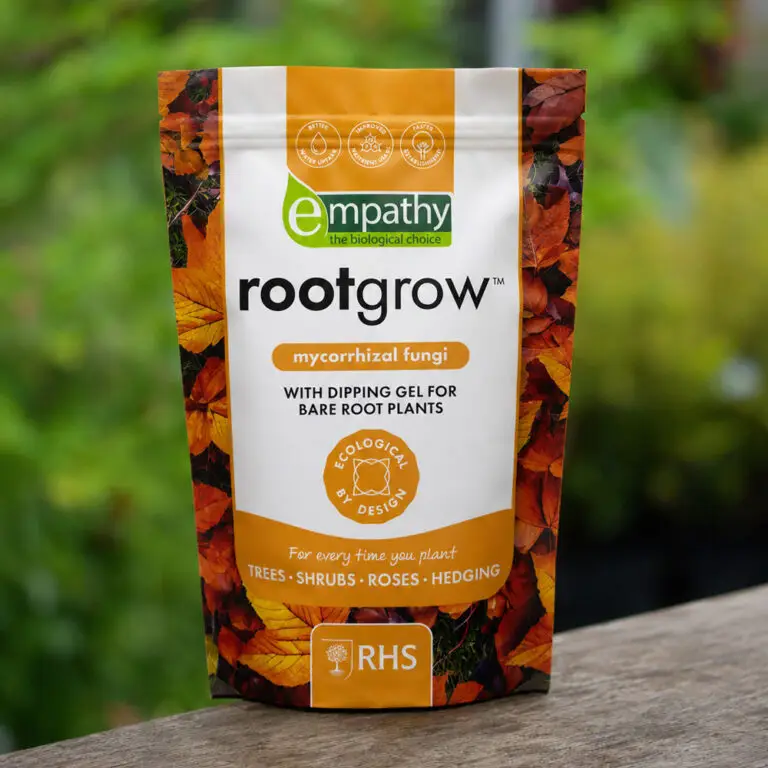
Rootgrow can be applied at planting so the product is in direct contact with the roots, where appropriate for the plant and planting method.
View product
Hedge Feed
Hedge Feed provides balanced nutrition where established hedging would benefit from feeding as part of normal care.
View product
Hedge Irrigation
A hedge irrigation system can make it easier to water a new hedge consistently, particularly on longer runs and during dry weather.
View product
Hedge Compost & Mulch
Compost and mulch can support soil preparation, moisture retention and weed suppression when used appropriately around new hedging.
View product
How Can I Make a Privet Hedge Grow Faster?
A Privet hedge can grow quickly once its roots are established, but dry soil, weed competition, deep shade and unsuitable pruning can…
Read answer
What Are the Different Hedging Root Types?
Bare root, root ball, pot-grown and instant hedging suit different budgets, planting times and levels of initial coverage. Understanding how each is…
Read answer
What Is Eating My Privet Hedge?
Chewed, notched or stripped Privet leaves can have several causes, and the shape of the damage is often more useful than the…
Read answer
Why Is My Privet Hedge Dying?
A Privet hedge can lose leaves, turn brown or die back for several different reasons. The position and pattern of the damage…
Read answer
Euonymus Green Spire vs Jean Hugues: Which Hedge to Buy?
Green Spire and Jean Hugues are both dark green Euonymus japonicus varieties and both make excellent Box alternatives. The real difference is…
Read answer
Are Euonymus Green Spire and Green Rocket the Same Plant?
The names Green Spire and Green Rocket are often used interchangeably by nurseries, which makes buying confusing. Current authoritative plant databases do…
Read answer
Is Hornbeam Evergreen? What Does It Look Like in Winter?
Hornbeam is valued for its fresh green summer foliage, warm autumn colour and strong winter structure. Understanding how its leaves behave after…
Read answer
What Do Hornbeam Leaves Look Like?
Hornbeam has distinctive textured foliage that changes noticeably through the seasons. Learning to recognise the leaf shape, veins and toothed edges can…
Read answer