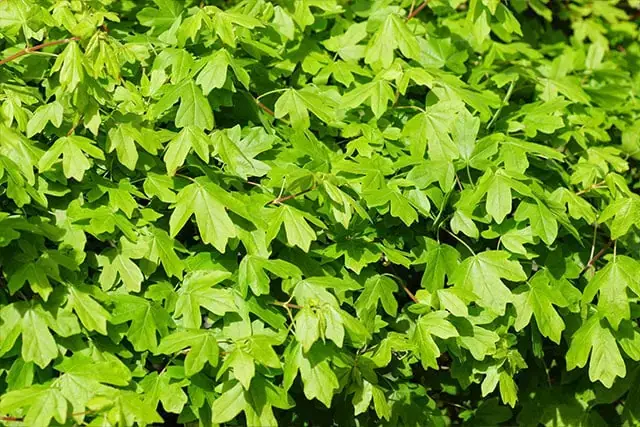
How to plant Field Maple Hedging
Planting Field Maple hedging is straightforward and, if done correctly, can ensure your hedge thrives for years to come.
The ideal time to plant Field Maple hedgings is during the dormant season from late autumn to early spring, when the plants are less likely to suffer from transplant shock.
- Site Preparation: Choose a site that receives full to partial sunlight and has well-drained soil. The area should be cleared of weeds and debris. Consider the mature size of the Field Maple to determine spacing – typically, planting 3-4 plants per metre in a single row will create a dense hedge.
- Planting Process: Dig a trench that is twice as wide and the same depth as the root ball of your hedging plants. Incorporate a generous amount of organic matter such as compost or well-rotted manure into the dug soil to improve its fertility and structure.
- Positioning Plants: Place the plants in the trench, ensuring the top of the root ball is level with the soil surface. If planting bare-root specimens, spread the roots out evenly and ensure that the planting depth is such that the previous soil level marks on the plants align with the surface.
- Backfilling: Gently backfill the trench with the enriched soil, firming it down around the roots to remove air pockets. Water thoroughly after planting to settle the soil around the roots and to provide moisture necessary for the plants to establish.
- Aftercare: Mulch around the base of the plants with a layer of organic material to retain moisture, suppress weeds, and provide nutrients. In the first few growing seasons, water the hedging regularly, especially during dry spells, to ensure they establish well.
By following these simple steps, your Field Maple hedging will grow to be robust, providing beauty, privacy, and ecological benefits for many years to come.
Best time to plant Field Maple
The best time to plant Field Maple hedging is in the dormant season, which spans from late autumn through to early spring. This timing is critical as it allows the plants to establish their root systems in the cooler months before the growth spurt in spring.
Planting during this period minimises the stress on the plants, enhancing their survival and growth rates. For those in colder climates, it’s advisable to plant in early autumn to give the plants ample time to root before the ground freezes. Conversely, in milder climates, planting can be done later, even into early spring, to avoid winter frosts.
It’s important to avoid planting in extreme weather conditions such as during heavy frost or when the ground is waterlogged, as this can adversely affect plant survival.
Field Maple hedge spacing chart
For those looking to create a solid barrier or screen quickly, planting Field Maple closer together may accelerate the process of forming a dense hedge, albeit this may require more frequent initial pruning to encourage bushy growth.
Please refer to our spacing chart below for specific planting distances for each root type.
| Plant size | No. Plants per metre | Plant spacing |
|---|
| Bare Root 40-60cm | 6 per metre | 17 cm apart |
| Bare Root 60-90cm | 5 per metre | 20 cm apart |
| Bare Root 90-120cm | 5 per metre | 20 cm apart |
| Pot Grown 120-150cm | 3 per metre | 33 cm apart |
| Pot Grown 40-60cm | 4 per metre | 25 cm apart |
| Pot Grown 60-90cm | 4 per metre | 25 cm apart |
| Pot Grown 90-120cm | 4 per metre | 25 cm apart |
| Pot Grown 120-150cm | 3 per metre | 33 cm apart |
Growth Rates
Field Maple hedges exhibit a moderate growth rate, typically achieving 30-40 cm per year under optimal conditions. This rate allows for the relatively quick establishment of a dense hedge, without the need for constant trimming and maintenance. When planning for a hedge, it’s essential to consider this growth pace to ensure your garden space can accommodate the mature size of the plants.
Preferred Soil Types & Positions
Field Maple thrives best in well-drained, fertile soil, though it’s quite adaptable to various soil types, including clay, sandy, and chalky soils. It prefers a position in full sun to partial shade, with the latter helping to accentuate the autumn leaf colour. When planting Field Maple, ensuring the site meets these conditions will contribute to the overall health and growth of the hedge.
- Well-Drained Soil: Essential for preventing root rot and other waterlogged conditions.
- Fertile Soil: Enhances growth and foliage density. Amendments with compost can improve poor soil.
- Full Sun to Partial Shade: Adaptable to various light conditions, with partial shade enhancing autumn colours.
- Tolerant of Various Soil pH: Can grow in slightly acidic to alkaline soils, making it versatile for different garden settings.
As the only native maple species in the UK, Field Maple, or ‘native maple’, is highly valued not only for its adaptability to a range of soil types but also for its historical and ornamental significance.
This resilience and native status underscore its suitability for various garden settings across the UK, enhancing both the ecological value and aesthetic appeal of gardens.
Field Maple’s tolerance to different growing conditions, combined with its environmental benefits and visual appeal, makes it an exceptional choice for gardeners aiming to create a green, serene, and wildlife-friendly space.