
Which Native UK Hedging Plants Suit an Informal Country Garden?
An informal country garden suits hedging with varied foliage, flowers, berries and a softer outline than a tightly clipped formal boundary. The right combination depends on the available space, soil, exposure and whether thorns or winter screening matter.
Quick Answer
A mixed native hedge is usually the best choice for an informal country garden. Hawthorn can provide the main structure, with Blackthorn, Hazel, Field Maple, Dog Rose, Guelder Rose and Holly adding seasonal colour and variety. Choose a Garden Wildlife mix for a decorative garden boundary, a Field Wildlife mix for a simpler rural hedge, or a Thornless mix beside paths and frequently used areas. Always match the mixture to the soil, space and level of screening required.
Quick Facts
| Best overall style | A mixed native hedge with a relaxed, varied outline |
|---|---|
| Useful main species | Hawthorn |
| Seasonal interest | Flowers, autumn colour, berries, hips and coloured stems |
| Thorny species | Hawthorn, Blackthorn and Dog Rose |
| Thornless alternatives | Field Maple, Hazel, Guelder Rose and Dogwood |
| Winter screening | Usually partial; Holly adds some evergreen foliage |
| Space required | Mixed hedging is normally wider than a tightly clipped formal hedge |
What makes a native hedge suitable for a country garden?
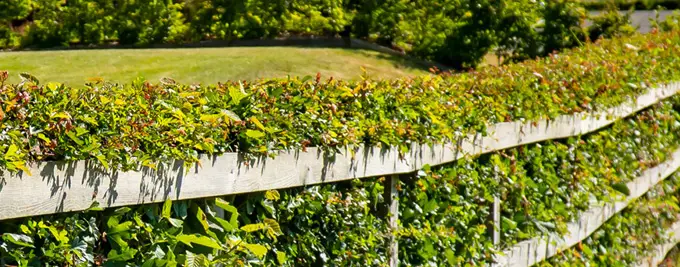
An informal country garden normally benefits from a hedge that looks connected to the surrounding landscape rather than forming a perfectly uniform green wall.
Mixed native hedging achieves this through differences in leaf shape, stem colour, flowers, fruit and growth habit. Hawthorn or Blackthorn may provide the main framework, while plants such as Hazel, Field Maple, Dogwood, Dog Rose, Guelder Rose and Holly create variation through the seasons.
Informal does not have to mean overgrown. The hedge can still be maintained at a practical height and width, but it is usually allowed a softer outline than Beech, Yew or Hornbeam clipped into a formal shape.
Which native plants work well in an informal hedge?
The best combination depends on the garden, but the following plants are useful starting points.
| Native hedge plant | What it contributes | Points to consider |
| Hawthorn, Crataegus monogyna | Dense branching, spring blossom and red autumn haws | Thorny, so allow space beside paths and entrances |
| Blackthorn, Prunus spinosa | Early white flowers, sloes and strong countryside character | Thorny and capable of producing suckers |
| Hazel, Corylus avellana | Catkins, broad leaves, nuts and vigorous informal growth | Requires sufficient width and occasional control |
| Field Maple, Acer campestre | Small leaves and attractive yellow autumn colour | Deciduous, so winter screening is limited |
| Dog Rose, Rosa canina | Summer flowers, rose hips and arching growth | Thorny stems can extend beyond the hedge line |
| Guelder Rose, Viburnum opulus | Flowers, berries and strong autumn colour | Best where the soil does not become excessively dry |
| Holly, Ilex aquifolium | Evergreen foliage, berries on suitable plants and winter structure | Slower-growing than most deciduous components |
| Dogwood, Cornus species | Dense growth and coloured winter stems | Vigorous varieties need room and regular management |
A good mixture uses plants that suit the same site. Adding more species does not automatically create a better hedge if some of them are poorly suited to the soil, exposure or available space.
Is a mixed hedge better than a single-species hedge?
For a relaxed country-garden appearance, a mixed hedge is usually the most natural choice. Its varied foliage, flowers and fruit give it a less uniform appearance and can provide different sources of shelter and food for garden wildlife.
A single-species Hawthorn hedge is still a good option where a simple, traditional boundary is wanted. It can be kept relatively neat or allowed to develop a broader rural appearance.
Beech and Hornbeam are better choices where the garden needs a more even, architectural boundary. They can look appropriate in a country garden, but their appearance is generally more uniform than a species-rich mixed hedge.
Which prepared native hedge mix should you choose?
Garden Wildlife Hedging Mix
The Garden Wildlife Hedging Mix is the strongest all-round choice for many informal domestic country gardens.
Its current species list includes Hawthorn, Blackthorn, Field Maple, Hazel, Holly, Dog Rose and Guelder Rose. This provides a mixture of spring blossom, summer flowers, varied foliage, autumn fruit and a small amount of evergreen structure.
It is particularly suitable where the hedge will be seen as part of the garden rather than simply used as a field boundary. The exact proportion of each plant can vary according to stock availability.
Field Wildlife Hedging Mix
The Field Wildlife Hedging Mix is a simpler, traditional combination of Hawthorn, Blackthorn, Field Maple and Hazel.
It suits longer rural boundaries, gardens adjoining fields and situations where a strong countryside character is more important than having the greatest possible range of flowers and foliage. Hawthorn and Blackthorn make this a thorny mixture, so it needs careful positioning beside paths, drives and play areas.
Thornless Hedging Mix
A Thornless Hedging Mix is worth considering where the hedge will be close to a path, seating area, entrance or part of the garden used by children.
The HPD mixture uses Field Maple, Hazel, Guelder Rose and several Dogwoods. The Dogwoods provide additional winter interest through their coloured stems, while the absence of Hawthorn and Blackthorn makes routine access and maintenance easier.
Thornless does not mean that every part of the hedge is edible or completely risk-free, but it removes the principal thorny plants found in traditional wildlife mixtures.
Instant CountryHedge
Instant CountryHedge is suitable where an established mixed hedge appearance is required from the beginning.
It is grown as connected, pre-clipped sections containing a random selection of native species. This gives more immediate structure than young individual plants, but the units are heavier, require thorough ground preparation and need dependable watering while the roots establish.
Consider thorns, width and winter privacy
Traditional country hedges are often thorny. Hawthorn, Blackthorn and Dog Rose can create a dense boundary, but their branches should not be allowed to obstruct a narrow path or regular access route.
Mixed native hedging also needs enough width to develop naturally. Hazel, Dog Rose, Dogwood and Blackthorn can become broad or vigorous if they are repeatedly allowed to extend beyond the intended hedge line.
Most mixed native hedging is predominantly deciduous. It can still provide useful winter structure through dense branches, retained fruit and coloured stems, but it will not normally create the same solid year-round screen as an evergreen hedge.
Holly adds evergreen foliage, although it grows more slowly and may make up only a small part of a prepared mixture. Where complete winter privacy is the main priority, a mixed native hedge may need to be combined with strategic evergreen planting elsewhere in the garden.
How should an informal native hedge be maintained?
During establishment, concentrate on developing a dense base rather than allowing a few shoots to grow tall and thin. Formative pruning encourages low branching and helps the individual plants knit together.
Once established, the hedge can be trimmed less tightly than a formal boundary. Leaving some young flowering growth allows more flowers, hips and berries to develop, although the amount produced will vary with the species, pruning time, weather and growing conditions.
Keep the hedge within its available space and check carefully for active bird nests before cutting. If a nest is occupied, delay work in that section until it is no longer in use.
Detailed planting densities, watering advice, formative pruning and establishment guidance are covered in the Native Mixed Hedging Care Guide.
Choosing the best hedge for your garden
For most informal country gardens, start by deciding whether thorns are acceptable and how much winter screening is genuinely needed.
Choose the Garden Wildlife Hedging Mix for the greatest variety of garden interest, the Field Wildlife Hedging Mix for a simpler traditional rural boundary, or the Thornless Hedging Mix where people regularly pass close to the hedge.
The complete Native Mixed Hedge Plants range also includes options for paddocks, countryside schemes and projects requiring more immediate coverage.
Gwynne's Grower's Tip
For an informal country hedge, allow enough width from the beginning. Hazel, Dog Rose, Dogwood and Blackthorn can all become broader than customers expect, particularly when the planting line is squeezed between a fence and a path. I would rather give a mixed hedge sufficient room and prune it selectively than force it into a very narrow strip with repeated hard cutting. During the first two growing seasons, keep grass and weeds away from the base, watch the moisture below the surface and use formative pruning to encourage branches close to ground level.
More Native Hedging Advice
For more detailed growing advice or to view the plants available from our nursery, use the links below.
Related Products
Products from our nursery that are relevant to this advice.


Useful Planting Essentials
Selected products that may help with planting, establishment and ongoing hedge care.
Rootgrow Mycorrhizal Fungi
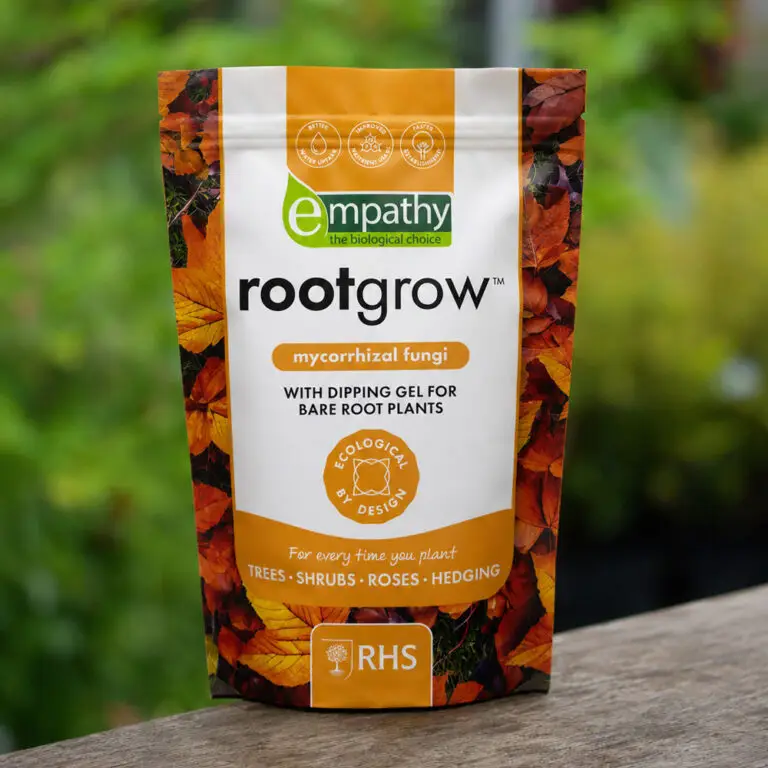
Rootgrow can be applied at planting so the product is in direct contact with the roots, where appropriate for the plant and planting method.
View product
Hedge Feed
Hedge Feed provides balanced nutrition where established hedging would benefit from feeding as part of normal care.
View product
Hedge Irrigation
A hedge irrigation system can make it easier to water a new hedge consistently, particularly on longer runs and during dry weather.
View product
Hedge Compost & Mulch
Compost and mulch can support soil preparation, moisture retention and weed suppression when used appropriately around new hedging.
View product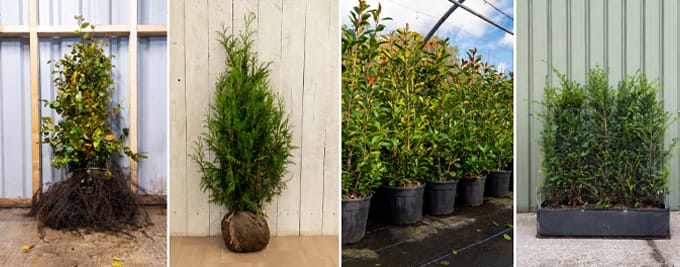
What Are the Different Hedging Root Types?
Bare root, root ball, pot-grown and instant hedging suit different budgets, planting times and levels of initial coverage. Understanding how each is…
Read answer
Euonymus Green Spire vs Jean Hugues: Which Hedge to Buy?
Green Spire and Jean Hugues are both dark green Euonymus japonicus varieties and both make excellent Box alternatives. The real difference is…
Read answer
Are Euonymus Green Spire and Green Rocket the Same Plant?
The names Green Spire and Green Rocket are often used interchangeably by nurseries, which makes buying confusing. Current authoritative plant databases do…
Read answer
Is Hornbeam Evergreen? What Does It Look Like in Winter?
Hornbeam is valued for its fresh green summer foliage, warm autumn colour and strong winter structure. Understanding how its leaves behave after…
Read answer
What Do Hornbeam Leaves Look Like?
Hornbeam has distinctive textured foliage that changes noticeably through the seasons. Learning to recognise the leaf shape, veins and toothed edges can…
Read answer