
How Fast Does Portuguese Laurel Grow as a Hedge?
Portuguese Laurel is a refined evergreen hedge that grows more steadily than vigorous Cherry Laurel. Knowing what to expect from a young hedge makes it easier to choose the right starting size and plan how long privacy screening may take.
Quick Answer
Portuguese Laurel normally grows about 20-40cm per year once established in favourable UK conditions. A newly planted hedge may make less visible top growth during its first season while its roots establish. Soil preparation, moisture, drainage, light, exposure, competition from grass or tree roots and pruning all influence the result, so this figure should be treated as a planning range rather than a guarantee.
Quick Facts
| Botanical name | Prunus lusitanica |
|---|---|
| Typical annual growth | Approximately 20-40cm once established |
| Growth category | Medium |
| First-year growth | Often below the normal range while roots establish |
| Preferred soil | Moist but well-drained |
| Sun Light | Full sun, partial shade or considerable shade |
| Effect of deep shade | Growth may be slower and less dense |
| Typical maintained height | Commonly maintained at approximately 1.2-3m |
| Maximum hedge potential | Can be maintained taller where space allows |
| Compared with Cherry Laurel | Normally slower growing and easier to keep formal |
What is the typical Portuguese Laurel growth rate?
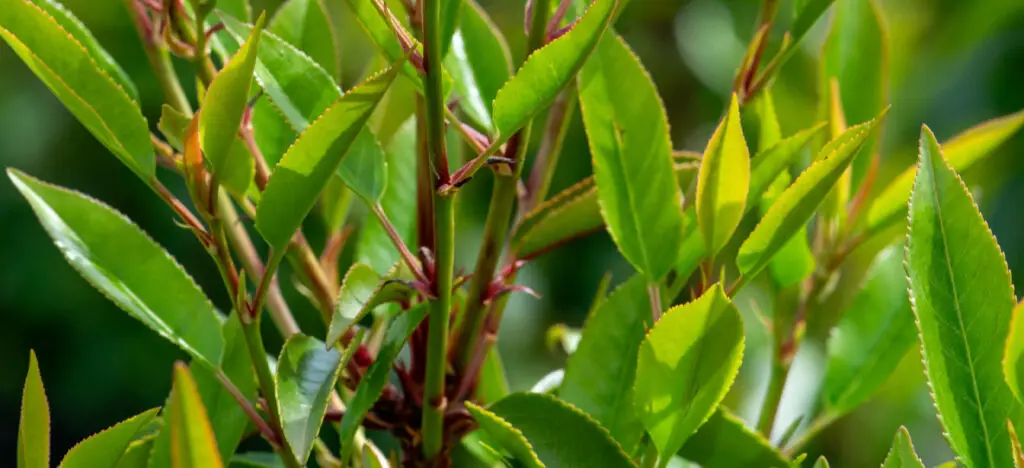
Portuguese Laurel, or Prunus lusitanica, is normally classed as a medium-growing evergreen hedge. Once established, it commonly produces approximately 20-40cm of new growth in a year when soil, moisture and light levels are suitable.
This figure describes the approximate extension of the new shoots. It does not mean that the finished height of the hedge will increase by exactly the same amount every year. Some growth develops sideways, some may be removed during trimming and annual conditions can vary considerably.
Customers choosing Portuguese Laurel hedge plants should therefore use 20-40cm as a sensible planning range rather than a guaranteed annual increase.
Portuguese Laurel generally grows more steadily than Cherry Laurel. This makes it particularly useful for formal hedges where smaller leaves, a neat outline and manageable annual growth are more important than achieving the fastest possible screen.
Why can Portuguese Laurel grow slowly in its first year?
A newly planted Portuguese Laurel hedge may produce less than 20-40cm of visible growth during its first season.
The plant initially relies on the roots contained within its pot, bare-root system or field-grown root ball. Before it can support strong new shoots, it must begin producing roots into the surrounding soil.
This establishment period can be particularly noticeable with larger pot-grown or root-balled plants. A substantial plant may provide useful height immediately but still spend much of its first growing season establishing below ground.
Limited first-year extension does not automatically mean the hedge has failed. Check that:
- the root area is receiving enough water
- the original root ball has not dried out
- the soil is not waterlogged
- the plants have not been buried too deeply
- grass and weeds are not competing around the base
- the hedge is beginning to produce healthy buds or new roots
Correct planting and aftercare are usually more important than trying to force immediate top growth. Our guide explaining how to plant a Laurel hedge covers planting depth, ground preparation, watering and establishment in more detail.
How long does Portuguese Laurel take to form a privacy hedge?
The time required depends on the starting height, the height you want to achieve and how densely the hedge has been planted.
As a rough example, an 80-100cm Portuguese Laurel needs approximately another 80-100cm of height to reach a 1.8m screen. At an annual growth rate of 20-40cm, the mathematical estimate would be approximately two to five growing seasons.
In practice, allowing around three to five years may be more realistic because:
- first-year growth can be limited by establishment
- some extension will be removed when shaping the hedge
- shaded or exposed sites may produce slower growth
- dry soil can interrupt growth during summer
- the hedge also needs to develop width and density, not just height
This is still only a planning example. A well-established hedge on suitable ground may progress more quickly, while one planted under established trees or into poorly prepared soil may take longer.
Starting with taller plants can provide more immediate screening, but larger specimens still need careful watering and establishment. Buying the tallest plant available does not remove the need for good ground preparation and aftercare.
What helps Portuguese Laurel grow well?
Prepare the whole planting strip
Prepare a continuous strip rather than digging a series of small holes in compacted ground. Loosening the wider area allows new roots to spread beyond the original pot or root ball.
Suitable organic matter can be incorporated where the soil needs improvement, but avoid planting directly into a pocket of pure compost. The surrounding soil must remain sufficiently open and well drained.
Portuguese Laurel is particularly useful on chalky or alkaline soil, although it will not thrive in ground that remains permanently waterlogged.
Keep the original root area watered
New Portuguese Laurel plants cannot immediately draw water from the entire planting strip. Water must reach the original pot compost or root ball until new roots have grown into the surrounding soil.
Check moisture below the surface rather than judging the soil only by its appearance. Loose backfill can sometimes become damp while the centre of the original root ball remains dry.
Water thoroughly when required, then allow excess water to drain. Constantly saturated ground can be just as damaging as drought.
A hedge irrigation system can be especially useful for longer planting runs, large specimens and sites where hand watering every root area would be difficult.
Remove competition from grass and weeds
Grass and established weeds compete with a new hedge for moisture and nutrients. Keep a weed-free strip around the plants, particularly during the establishment period.
An organic mulch can help retain moisture, reduce weed growth and moderate changes in soil temperature. Keep the mulch slightly away from the main stems rather than piling it directly against them.
Consider light and existing tree roots
Portuguese Laurel grows in full sun, partial shade and considerable shade. However, very low light will usually result in slower and less dense growth.
The most difficult positions are often beneath established trees. In these areas, the Laurel must cope with shade, root competition and a possible rain shadow where little rainfall reaches the soil.
Improving the planting strip, watering deeply and controlling competition are particularly important in these conditions.
Should Portuguese Laurel be fed to make it grow faster?
Feeding can support healthy growth where the soil is poor or an established hedge is producing weak annual extension. However, extra fertiliser does not automatically create a faster or healthier hedge.
For newly planted Portuguese Laurel, correct watering, drainage, planting depth and weed control should come first. Concentrated fertiliser should not be placed directly against new roots.
Where feeding is appropriate, a balanced granular hedge fertiliser can be applied as a spring top dressing over moist, weed-free soil. Follow the stated application rate rather than increasing the quantity in an attempt to force growth.
A hedge that remains weak after feeding may have a moisture, drainage or root problem that needs correcting. The separate guide to feeding Laurel hedging explains when fertiliser is useful and when other growing conditions should be investigated first.
Does pruning make Portuguese Laurel grow more quickly?
Pruning mainly controls the shape and density of the hedge rather than increasing its overall rate of growth.
Lightly shortening vigorous side shoots can encourage branching and help the plants develop a dense face. However, repeatedly removing the strongest upright shoots will slow progress towards the intended height.
While the hedge is still growing upwards:
- lightly shape the sides where necessary
- encourage branching near the base
- allow healthy upright leaders to continue
- avoid repeatedly cutting the top
Once the hedge approaches the required height, begin trimming the top as well as the sides. This redirects more growth into branching and helps create a solid finished screen.
For most established Portuguese Laurel hedges, one main trim in late spring or early summer is often sufficient. A formal hedge may receive a second light trim later in summer to maintain a crisp outline.
Is Portuguese Laurel fast enough for a privacy hedge?
Portuguese Laurel is fast enough for many privacy hedges, particularly where appearance and ease of maintenance matter as much as speed.
It will not normally form a tall screen as quickly as vigorous Cherry Laurel, but its smaller leaves, reddish young stems and measured growth make it easier to maintain as a neat formal boundary.
Customers who need immediate coverage can begin with taller pot-grown, root-balled or instant hedging. Those working to a lower budget can plant smaller specimens and allow more time for the hedge to develop.
Whichever starting size is selected, reliable establishment will have more influence on long-term growth than attempting to force rapid extension during the first season.
Gwynne's Grower's Tip
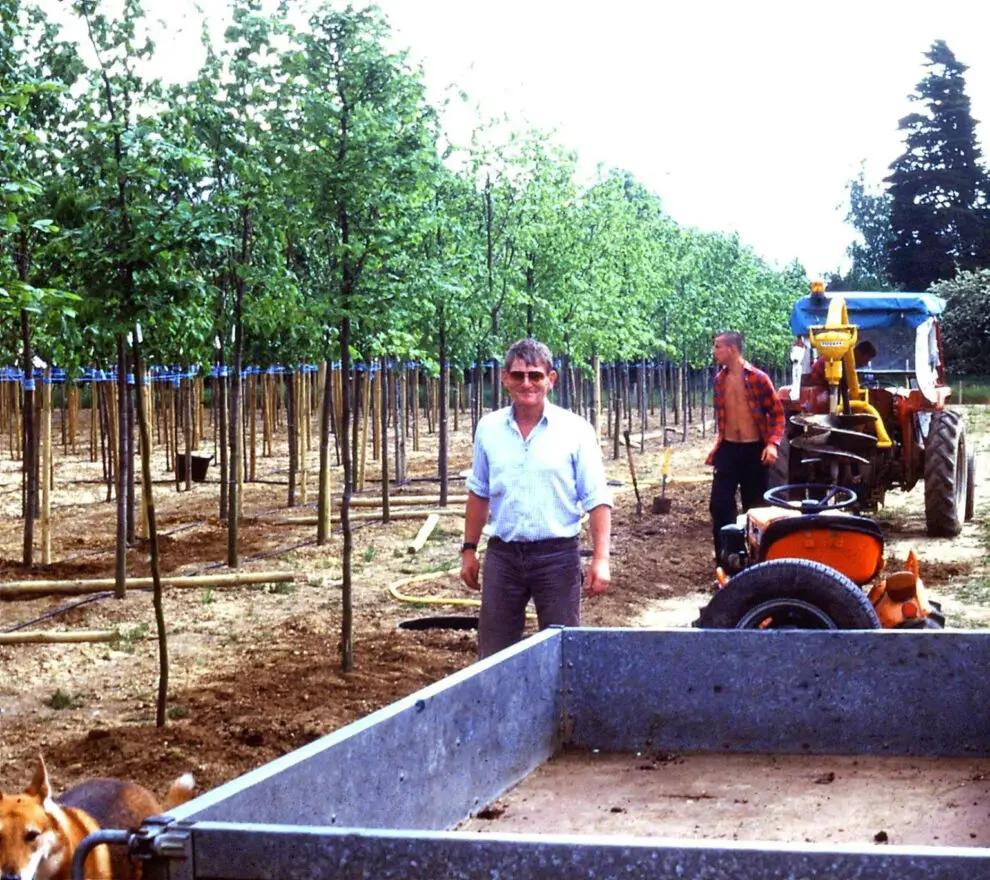
When customers ask how quickly Portuguese Laurel will grow, I look at the planting strip before I look at the fertiliser bag. A plant with an evenly moist but well-drained root area, no grass growing around its base and reliable watering through its first growing seasons will normally make steadier progress than one repeatedly given extra feed.
Do not judge a newly planted root-balled hedge too quickly. It may spend much of its first season rebuilding and extending its root system before the top begins moving strongly. Lightly shorten the side growth to encourage a dense face, but allow the healthiest upright leaders to continue until the hedge is close to the height you want.
More Laurel Advice
For more detailed growing advice or to view the plants available from our nursery, use the links below.
Useful Planting Essentials
Selected products that may help with planting, establishment and ongoing hedge care.

Rootgrow Mycorrhizal Fungi
Rootgrow can be applied at planting so the product is in direct contact with the roots, where appropriate for the plant and planting method.
View product
Hedge Feed
Hedge Feed provides balanced nutrition where established hedging would benefit from feeding as part of normal care.
View product
Hedge Irrigation
A hedge irrigation system can make it easier to water a new hedge consistently, particularly on longer runs and during dry weather.
View product
Hedge Compost & Mulch
Compost and mulch can support soil preparation, moisture retention and weed suppression when used appropriately around new hedging.
View product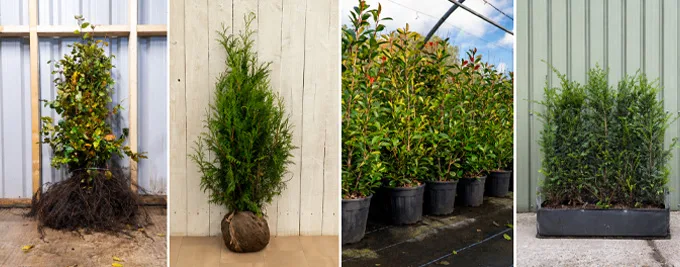
What Are the Different Hedging Root Types?
Bare root, root ball, pot-grown and instant hedging suit different budgets, planting times and levels of initial coverage. Understanding how each is…
Read answer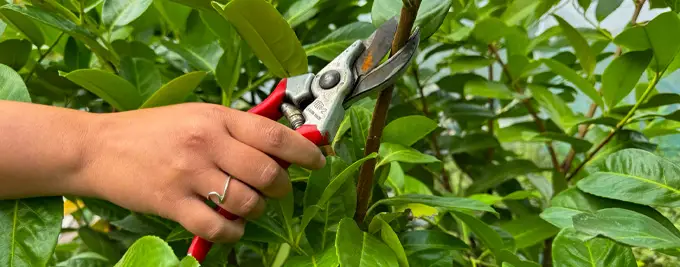
When Should I Prune a Laurel Hedge?
Laurel hedges are forgiving plants, but choosing the right time to prune helps them recover cleanly and keeps the hedge dense and…
Read answer
Are Laurel Berries Poisonous?
Laurel hedges can produce attractive dark berries after flowering, but the name "Laurel" covers several different plants. Their fruit is not identical,…
Read answer
Is Laurel Hedging Poisonous?
Laurel is one of the UK's most popular evergreen hedges, but not every plant called Laurel has the same safety profile. This…
Read answer
Can Euonymus Green Spire Be Grown in Pots?
Green Spire's naturally upright, compact habit makes it well suited to container growing. Pots do, however, need more regular watering and root…
Read answer
How Can I Make a Privet Hedge Grow Faster?
A Privet hedge can grow quickly once its roots are established, but dry soil, weed competition, deep shade and unsuitable pruning can…
Read answer
How Fast Does a Hornbeam Hedge Grow?
Hornbeam is a dependable native hedging plant, but the time it takes to form a useful screen depends on more than the…
Read answer
Is Holly Fast or Slow Growing?
English Holly is valued for dense evergreen foliage rather than rapid growth. Understanding its natural growth rate helps you choose the right…
Read answer