
What Should I Feed a Laurel Hedge?
Laurel hedging is generally easy to maintain, but the right feed can help young, weak or recently pruned plants make healthy new growth. The important part is knowing when feeding will help and when watering, drainage or soil condition needs attention instead.
Quick Answer
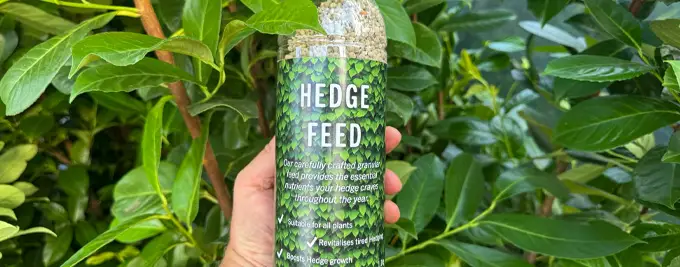
A balanced granular hedge fertiliser is the best general feed for Laurel hedging, normally applied as a spring top dressing as new growth begins. Hedging Plants Direct Hedge Feed is a balanced NPK 7-7-7 fertiliser suitable for hedging. Apply feed to moist, weed-free soil around the root area, follow the stated application rate and water it in if necessary. Do not use extra fertiliser to compensate for drought, waterlogging or damaged roots.
Quick Facts
| Best type of feed | Balanced granular hedge fertiliser |
|---|---|
| Main feeding time | Early spring as active growth begins |
| HPD Hedge Feed | Balanced NPK 7-7-7 granular fertiliser |
| Established Laurel | Feed where growth is weak, plants are young or extra support is needed |
| Newly planted Laurel | Concentrate on watering and establishment first; apply a spring top dressing later if required |
| Application | Spread over moist soil around the root area and follow the product rate |
| Avoid | Feeding severely dry, waterlogged or root-damaged plants |
| Late-season feeding | Avoid heavy high-nitrogen feeding late in summer |
What type of fertiliser is best for Laurel hedging?
For most Laurel hedges, a balanced general-purpose hedge fertiliser is the most useful choice. This supplies the main nutrients needed for root development, foliage and healthy growth without concentrating too heavily on one particular nutrient.
Hedging Plants Direct’s Hedge Feed is a granular 7-7-7 NPK fertiliser, providing equal proportions of nitrogen, phosphorus and potassium. It is suitable for established hedging as well as younger plants where feeding is appropriate. Does not normally need a specialist ericaceous or high-nitrogen fertiliser for Laurel. Cherry Laurel (Prunus laurocerasus), Portuguese Laurel (Prunus lusitanica) and the other commonly grown Laurel hedges generally respond well to balanced nutrition provided their soil, drainage and watering are suitable.
A fertiliser that is excessively high in nitrogen can encourage very soft leafy growth. This is particularly undesirable later in the growing season because tender growth has less time to mature before colder weather.
When should I feed a Laurel hedge?
Early spring is normally the best time to feed Laurel hedging. Apply the fertiliser as the plants are beginning active growth and the soil is moist.
Healthy, established Laurel growing strongly in reasonable soil does not need constant feeding throughout the year. Feeding is most useful where:
- the hedge is young and becoming established
- annual growth has become noticeably weak
- the soil is relatively poor
- the hedge has recently undergone substantial pruning or renovation
- foliage is generally pale and other causes have been ruled out
Repeated applications of fertiliser are not a substitute for good soil moisture, drainage and root health. If a Laurel remains weak after feeding, investigate the growing conditions rather than automatically increasing the amount of fertiliser. HPD’s current Laurel care guidance likewise treats spring as the main feeding period. Should I apply feed to a Laurel hedge?
Feeding an established Laurel hedge is straightforward.
- Remove weeds and grass from around the hedge. These compete with the Laurel for both nutrients and moisture.
- Check that the soil is moist. Do not apply fertiliser to severely dry or waterlogged ground.
- Spread the fertiliser across the root area. Avoid tipping it into a small pile around the trunk or stems.
- Follow the application rate on the product. More fertiliser does not automatically produce faster or healthier growth.
- Water after feeding if required. This helps move soluble nutrients into the upper soil where the roots can access them.
Avoid disturbing the roots by aggressively digging fertiliser into the ground. A light surface application followed by watering is normally sufficient for a granular hedge feed.
Should I feed a newly planted Laurel hedge?
A newly planted Laurel hedge does not automatically need fertiliser immediately after planting.
During establishment, correct planting depth, reliable watering, good drainage and keeping the planting strip free from weeds are generally more important than trying to force rapid top growth.
Do not place concentrated fertiliser directly against newly planted roots. This can damage them rather than helping establishment.
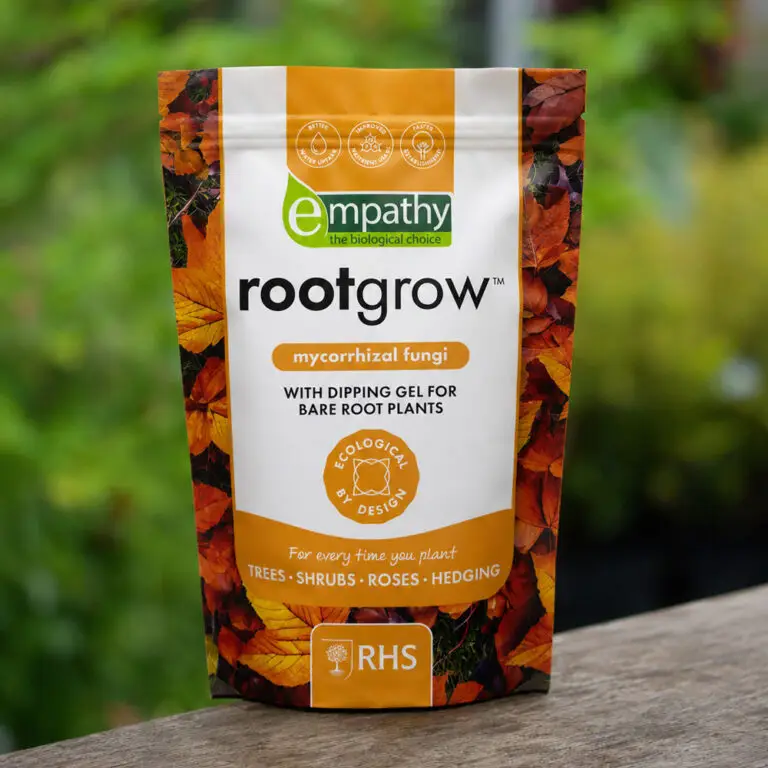
If Laurel is planted during autumn or winter, it is usually better to allow the plants to settle and apply a balanced top dressing once active growth begins in spring if feeding is required. mycorrhizal fungi can be used at planting where appropriate, but it should not be confused with routine hedge fertiliser. It is a one-time root treatment intended to make contact with the roots during planting.
Does a yellow Laurel hedge need feeding?
Not necessarily.
Yellow Laurel leaves are sometimes blamed immediately on a lack of nutrients, but several other problems can produce very similar symptoms.
Before applying fertiliser, check for:
- soil that is excessively dry
- waterlogged or poorly drained ground
- a dry original root ball on recently planted Laurel
- planting that is too deep
- root damage
- competition from nearby trees, grass or weeds
- unusually high soil pH causing nutrient availability problems
- pest or disease problems
A newly planted Laurel that is yellowing because its root ball has dried out will not be corrected simply by adding more fertiliser. Likewise, feeding a plant whose roots are sitting in saturated soil can make no meaningful improvement until the drainage problem is resolved.
If moisture, drainage and root condition appear satisfactory but the hedge is producing pale foliage and weak growth, a balanced spring feed may then be worthwhile. Hedging Plants Direct’s Laurel hedge care guide specifically recommends diagnosing moisture and root problems before assuming yellow foliage means the plant needs fertiliser.
Can I feed Laurel after hard pruning?
An established Cherry or Portuguese Laurel that has been cut back substantially can benefit from sensible aftercare as new growth begins.
If pruning has been carried out during the appropriate season, a balanced spring feed can support the plant as it produces replacement shoots. Keep the root area adequately watered during dry weather and maintain a weed-free area around the hedge.
Do not compensate for severe pruning by dramatically increasing the fertiliser rate. Use the normal recommended quantity and allow the plant time to regenerate.
Is compost or mulch useful around Laurel hedging?
Yes, but compost and mulch perform a slightly different job from concentrated fertiliser.
A layer of suitable organic mulch around the root area can help:
- reduce moisture loss
- suppress competing weeds
- moderate changes in soil temperature
- gradually improve soil structure as the material breaks down
Mulching is particularly useful after a spring feed because maintaining even soil moisture helps the hedge make effective use of the available nutrients.
Keep mulch slightly away from the main stems rather than piling it directly against them.
For an established Laurel hedge, the most effective approach is often quite simple: balanced spring feeding where required, sensible mulching and reliable watering during dry periods.
Gwynne's Grower's Tip
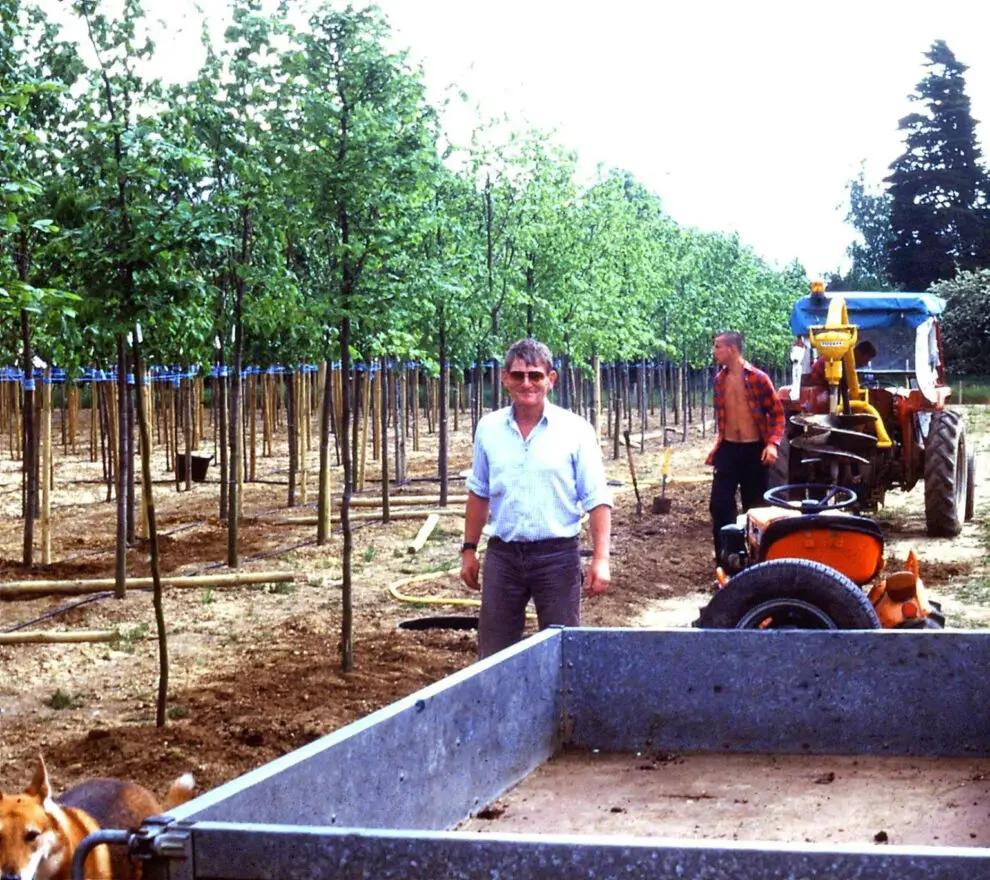
With Laurel, I would rather see one sensible application of balanced feed in spring than repeated applications throughout the season. Before feeding, look at the hedge first. If it is dark green and growing strongly, it probably does not need much help. If it looks weak, check the soil moisture and drainage before assuming it is hungry. We regularly see newly planted Laurels that need better watering rather than more fertiliser. Once the root conditions are right, a balanced feed applied over moist soil can then support healthy new growth.
More Laurel Advice
For more detailed growing advice or to view the plants available from our nursery, use the links below.
Useful Planting Essentials
Selected products that may help with planting, establishment and ongoing hedge care.
Rootgrow Mycorrhizal Fungi
Rootgrow can be applied at planting so the product is in direct contact with the roots, where appropriate for the plant and planting method.
View product
Hedge Feed
Hedge Feed provides balanced nutrition where established hedging would benefit from feeding as part of normal care.
View product
Hedge Irrigation
A hedge irrigation system can make it easier to water a new hedge consistently, particularly on longer runs and during dry weather.
View product
Hedge Compost & Mulch
Compost and mulch can support soil preparation, moisture retention and weed suppression when used appropriately around new hedging.
View product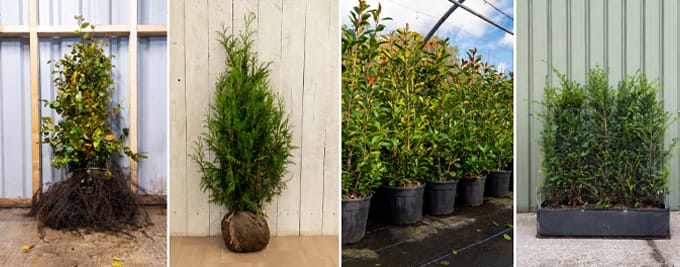
What Are the Different Hedging Root Types?
Bare root, root ball, pot-grown and instant hedging suit different budgets, planting times and levels of initial coverage. Understanding how each is…
Read answer
When Should I Prune a Laurel Hedge?
Laurel hedges are forgiving plants, but choosing the right time to prune helps them recover cleanly and keeps the hedge dense and…
Read answer
Are Laurel Berries Poisonous?
Laurel hedges can produce attractive dark berries after flowering, but the name "Laurel" covers several different plants. Their fruit is not identical,…
Read answer
Is Laurel Hedging Poisonous?
Laurel is one of the UK's most popular evergreen hedges, but not every plant called Laurel has the same safety profile. This…
Read answer
How Do I Make a Beech Hedge Thicker?
A thin Beech hedge is often caused by weak formative pruning, shade at the base, dry roots, weed competition or gaps between…
Read answer