
Is Holly Fast or Slow Growing?
English Holly is valued for dense evergreen foliage rather than rapid growth. Understanding its natural growth rate helps you choose the right starting plant size and set realistic expectations for how quickly a new Holly hedge will develop.
Quick Answer
English Holly (Ilex aquifolium) is a slow-growing hedge, typically adding around 10–20cm of new growth per year once established. Growth can be slower during the first season after planting while roots establish, or where plants face drought, heavy competition, deep shade or poor soil conditions. Holly's slower growth does mean it generally needs less frequent trimming than more vigorous hedge species.
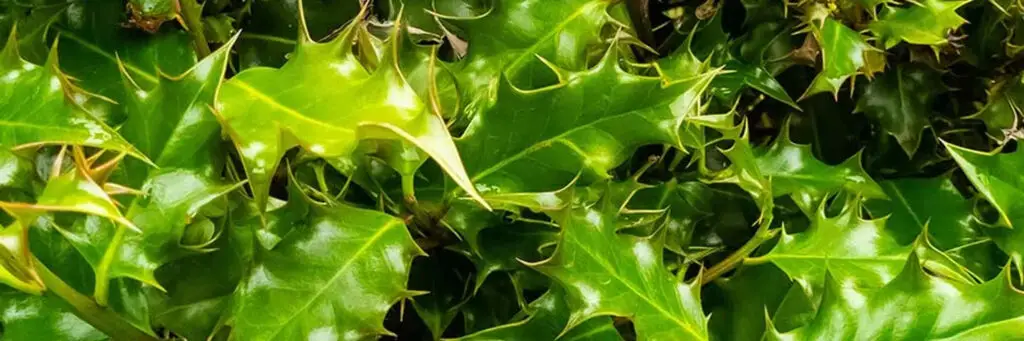
Quick Facts
| Typical growth rate | Around 10–20cm per year once established |
|---|---|
| Growth classification | Slow growing |
| Botanical name | Ilex aquifolium |
| First-year growth | May be limited while roots establish |
| Faster growth favoured by | Consistent moisture, workable soil and low competition |
| Growth may be reduced by | Drought, waterlogging, deep shade and root competition |
| Evergreen | Yes |
Why is Holly classed as a slow-growing hedge?
English Holly, or Ilex aquifolium, normally produces around 10–20cm of extension growth in a typical year once it is established. That places it firmly among the slower-growing hedging plants.
This is an important distinction if the main reason for planting a hedge is to gain height very quickly. Holly can eventually form a substantial, dense evergreen boundary, but it should not be treated as a rapid screening plant.
Its slower pace is not necessarily a disadvantage. Holly develops into a dense, long-lived hedge and generally requires less frequent trimming than vigorous species that can produce several times as much annual extension.
If Holly is the right plant for the site but greater initial height is important, choosing a larger starting plant is usually more effective than trying to force rapid growth from a small plant.
Does a newly planted Holly hedge grow more slowly?
It can.
During the first growing season, a newly planted Holly may produce relatively little visible shoot growth because the plant is also establishing roots into the surrounding soil.
A plant that has only made a small amount of top growth is therefore not automatically failing.
Good establishment is particularly important with Holly because its naturally slow growth means that setbacks caused by drought, poor planting or severe competition can take time to recover from.
Water newly planted Holly thoroughly and continue checking moisture during dry weather. Keep grass and weeds away from the root area so they are not competing with the hedge for available water and nutrients.
What affects how quickly Holly grows?
The 10–20cm annual figure is a useful guide rather than a guaranteed amount of growth. Several factors affect how much new growth an individual Holly plant produces.
Soil moisture
Holly prefers moisture while still having enough drainage around the roots.
Plants allowed to become repeatedly dry during establishment are unlikely to produce their best growth. Equally, permanently saturated soil can stress roots rather than make the plant grow faster.
Consistent moisture is particularly important during the first couple of growing seasons.
Soil condition
Holly grows in a wide range of garden soils, but heavily compacted ground can restrict new root development.
Preparing a broad workable planting area and improving poor soil with suitable organic matter where necessary gives new roots a better opportunity to spread.
A mulch over the root area can also help retain moisture and reduce competition from weeds.
Sun and shade
One of Holly’s strengths is its tolerance of shade.
It will grow in sunny and shaded positions, but very deep shade can reduce its growth rate. This is particularly noticeable beneath established trees, where the Holly is competing for water and nutrients as well as receiving less light.
A Holly hedge in reasonable light with adequate soil moisture will usually develop more strongly than one struggling beneath a dense canopy of mature trees.
Water after planting
A dry root system cannot support strong new shoots.
New Holly hedging should be watered thoroughly when planted and monitored carefully during dry periods. Long hedge runs can dry unevenly, so check the soil rather than assuming rainfall has reached the entire root area.
Can you make Holly grow faster?
Good care can help Holly achieve its natural potential, but it will not turn Ilex aquifolium into a fast-growing hedge.
Concentrate on the basics:
- prepare the soil properly before planting
- keep newly planted roots consistently moist without waterlogging them
- control grass and weeds around the hedge
- mulch where appropriate to conserve soil moisture
- correct obvious soil or nutritional problems rather than feeding automatically
- avoid repeated severe pruning while the hedge is establishing
Fertiliser should not be used simply to try to force rapid growth. Where feeding is justified, a suitable balanced hedge feed can support healthy growth, but more fertiliser does not automatically mean a faster or better hedge.
For complete advice on establishing, watering, feeding and pruning Holly, see our Holly Hedging Care Guide.
Should I buy larger Holly plants if I want privacy sooner?
This is often the most practical approach.
Because Holly grows comparatively slowly, the height of the plants at the time of planting has a noticeable effect on how quickly the finished hedge provides useful screening.
Smaller pot-grown plants can be economical for long hedge runs and are relatively easy to handle. Larger pot-grown or root-balled Holly can provide much more immediate height and structure.
Starting with a larger plant does not change Holly’s natural annual growth rate, but it reduces the amount of additional height the hedge needs to produce before reaching the size you want.
The current English Holly Hedge product options show available plant heights, root types and recommended planting densities.
Is slow growth an advantage with Holly?
For many gardens, yes.
Once a Holly hedge reaches the required size, its moderate annual growth makes it easier to keep under control than a very vigorous hedge.
The slower growth rate is particularly useful where customers want a formal evergreen boundary but do not want to remove large amounts of new growth several times each year.
Holly also combines that manageable growth with dense evergreen foliage, a naturally prickly structure and good tolerance of many UK garden conditions.
The important thing is to choose Holly for those characteristics rather than expecting it to provide rapid height from small plants.
Gwynne's Grower's Tip
With newly planted Holly, I would not judge the plant purely by how many centimetres it puts on in the first season. I am more interested in seeing healthy foliage, firm plants and good new buds while the root system settles into the surrounding ground. Keep the hedge watered and free from heavy weed competition rather than trying to push it with extra fertiliser. If a customer needs a tall screen quickly, I would normally recommend starting with larger Holly plants rather than trying to make small plants grow unnaturally fast.
More Holly Advice
For more detailed growing advice or to view the plants available from our nursery, use the links below.
Related Products
Products from our nursery that are relevant to this advice.

Useful Planting Essentials
Selected products that may help with planting, establishment and ongoing hedge care.

Hedge Irrigation
A hedge irrigation system can make it easier to water a new hedge consistently, particularly on longer runs and during dry weather.
View product
Hedge Compost & Mulch
Compost and mulch can support soil preparation, moisture retention and weed suppression when used appropriately around new hedging.
View product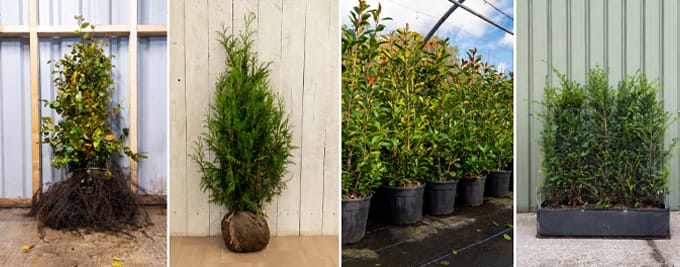
What Are the Different Hedging Root Types?
Bare root, root ball, pot-grown and instant hedging suit different budgets, planting times and levels of initial coverage. Understanding how each is…
Read answer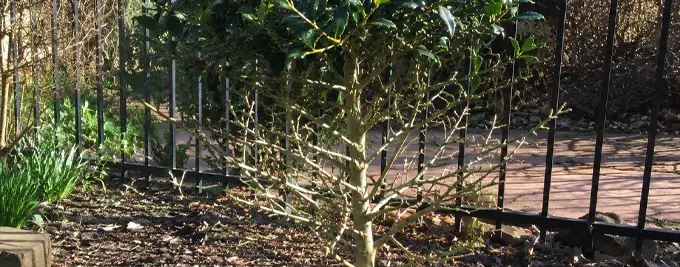
Do Deer and Rabbits Eat Holly Hedging?
Holly's tough, spiny leaves can give the impression that deer and rabbits will leave it alone. In practice, young English Holly can…
Read answer
What Is Holly Transplant Shock and How Long Does It Last?
A newly planted or moved Holly can temporarily lose its glossy appearance, drop leaves or make little new growth while its roots…
Read answer
Can Holly Be Grown as a Hedge in Pots or Containers?
A row of English Holly can create evergreen structure and screening on patios, courtyards and other places where planting directly into the…
Read answer
Can Euonymus Green Spire Be Grown in Pots?
Green Spire's naturally upright, compact habit makes it well suited to container growing. Pots do, however, need more regular watering and root…
Read answer
How Can I Make a Privet Hedge Grow Faster?
A Privet hedge can grow quickly once its roots are established, but dry soil, weed competition, deep shade and unsuitable pruning can…
Read answer
How Fast Does a Hornbeam Hedge Grow?
Hornbeam is a dependable native hedging plant, but the time it takes to form a useful screen depends on more than the…
Read answer
How Fast Does a Yew Hedge Grow Annually?
English Yew is often described as slow growing, but a healthy, established hedge can still make useful progress each year. Its actual…
Read answer