
Can Holly Be Grown as a Hedge in Pots or Containers?
A row of English Holly can create evergreen structure and screening on patios, courtyards and other places where planting directly into the ground is not possible. The main challenge is managing the restricted root space, water and nutrients available to Holly kept permanently in containers.
Quick Answer
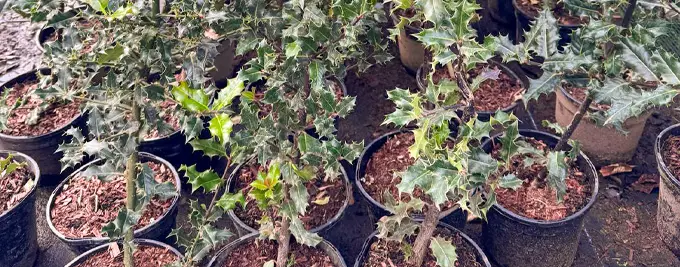
Yes. English Holly (Ilex aquifolium) can be grown as a small hedge or evergreen screen in large outdoor pots or containers. It is best suited to a modest, regularly maintained screen rather than a tall permanent boundary, because the roots have less room and the compost dries out more quickly than garden soil. Good drainage, regular watering, suitable container compost and periodic repotting are particularly important.
Quick Facts
| Suitable for containers? | Yes, with regular care |
|---|---|
| Botanical name | Ilex aquifolium |
| Best use | Small evergreen hedge or screening in planters |
| Position | Sun or partial shade; plain green Holly tolerates shade |
| Compost | Peat-free compost with added loam, such as Hedge Planting Compost |
| Initial container size | About 5cm larger all round than the existing pot |
| Repotting | Typically every 2–3 years while the plant is growing strongly |
| Watering | Check regularly because container compost can dry quickly |
| Typical growth rate | Around 10–20cm a year in suitable ground conditions; container growth may be slower |
| Long-term limitation | More watering, feeding and root management than a ground-planted hedge |
Can English Holly make a hedge in containers?
English Holly can be clipped and trained into an effective evergreen screen when growing in pots. Its dense foliage, natural tolerance of pruning and relatively slow growth make it more manageable in a container than many vigorous screening plants.
There is, however, an important difference between pot-grown Holly and Holly grown permanently in pots.
Pot-grown are nursery plants supplied with their roots established in a pot, normally ready to be planted into the ground. Keeping Holly permanently in a container is a different growing method and requires more ongoing management. Hedging Plants Direct’s product information specifically describes pot-grown plants as stock that can be kept watered until the customer is ready to plant them out.
For this reason, a container Holly hedge is best regarded as a practical option where there is no suitable soil to plant into, rather than a direct substitute for a conventional ground-planted hedge.
What size pot does a Holly plant need?
Do not move a small Holly straight into a vastly oversized container. The RHS recommends starting with a pot around 5cm larger all round than the existing container, then moving the plant into progressively larger pots as its root system develops.
For a hedge effect, several individual containers can be positioned closely together so that the foliage eventually joins visually. Large troughs can also work, provided there is sufficient volume for the roots and the plants are not crammed together simply to copy normal in-ground hedge spacing.
Choose containers that are:
- suitable for permanent outdoor use
- stable enough to support an evergreen shrub in windy weather
- large enough for continued root development
- fitted with effective drainage
- positioned where excess water can escape freely
A substantial container also dries out more slowly than a small nursery pot, which makes watering easier to manage.
What compost should be used for Holly in pots?
Holly benefits from a stable, moisture-retentive but well-drained container compost rather than a very light mixture that dries rapidly.
For container-grown Holly, the RHS recommends using a nutrient-rich, peat-free compost.
The aim is to provide enough structure to support a woody evergreen plant while still allowing excess water to drain.
Avoid allowing the bottom of the container to sit permanently saturated. English Holly tolerates a wide range of soil conditions, but poor drainage and prolonged waterlogging can damage its roots. Hedging Plants Direct’s complete Holly Hedging Care Guide covers its general soil, drainage and growing requirements in more detail.
How often should a Holly hedge in pots be watered?
Watering is one of the biggest differences between Holly in containers and Holly planted in the ground.
A mature plant in open soil can spread its roots into a much larger volume of ground. A potted Holly is completely dependent on the moisture held within its container.
The RHS notes that the relatively small amount of compost in a container can run short of both water and nutrients quickly.
Check the compost regularly rather than watering to a fixed calendar. During warm, dry or windy periods, containers may need checking very frequently. Water thoroughly enough to moisten the root area, then allow excess water to drain away.
Do not assume that yellowing foliage automatically means the plant needs more water. Persistently saturated compost can also cause poor growth and root problems.
Does container-grown Holly need feeding?
Container-grown Holly usually needs more attention to nutrition than an established Holly planted in good garden soil because its roots cannot search beyond the pot.
Feed moderately rather than trying to force rapid growth. A balanced fertiliser suitable for woody plants can be applied during the growing season according to its instructions.
Hedging Plants Direct’s general Holly advice recommends a balanced spring feed where growth or growing conditions justify it, rather than repeatedly applying high levels of fertiliser.
For a container hedge, strong, balanced growth is more useful than producing long soft shoots that constantly need cutting back.
How should a Holly hedge in pots be pruned?
The principle is the same as a normal Holly hedge: shape young plants gradually so that they branch and become dense rather than allowing a few shoots to dominate.
Because the plants are root-restricted, it is sensible to keep the finished screen proportionate to the size of the containers. Do not continually encourage extra height if the root system cannot support an increasingly large plant.
Hedging Plants Direct’s current Holly care guide recommends a main trim in early spring, with only light later tidying where required and after checking carefully for active bird nests. Holly is naturally slow growing, so frequent cutting is rarely necessary.
Will a Holly hedge stay permanently in the same pots?
Usually not.
As the roots fill the available compost, the plant will eventually need more space. The RHS advises that Holly grown in containers will commonly benefit from repotting after around two to three years, moving into another container roughly 5cm larger all round.
As plants become larger, continually increasing the container size may eventually become impractical. At that point the options include maintaining the plant more tightly, carrying out appropriate root management when repotting, or moving the Holly into the ground if space is available.
This is one reason a container Holly hedge normally requires more long-term attention than a hedge planted directly into suitable soil.
When is planting Holly in the ground the better choice?
If the aim is a tall, permanent privacy hedge along a long boundary, planting into suitable ground is normally the better option.
Ground-planted Holly has considerably more soil volume available for root development, water and nutrients. It can therefore mature into a larger and more permanent hedge with less dependence on container watering and repotting.
Containers make most sense for situations such as:
- paved patios and courtyards
- areas where the underlying soil cannot be planted
- shorter decorative evergreen screens
- temporary or semi-permanent screening
- dividing different areas of a garden
For a conventional boundary hedge, use the normal planting densities and size guidance shown for the selected English Holly plant rather than applying container-growing advice.
Gwynne's Grower's Tip
If I were making a Holly screen in containers, I would give each plant plenty of usable root space rather than squeezing several plants into a narrow trough just to make it look dense immediately. You can bring the containers together so the tops form one continuous hedge while still giving each root system room to develop. The other thing I would watch closely is watering. A Holly in the ground can eventually search out moisture, but a plant in a pot only has what is available inside that container. Check the compost itself rather than judging from the surface.
More Holly Advice
For more detailed growing advice or to view the plants available from our nursery, use the links below.
Related Products
Products from our nursery that are relevant to this advice.

Useful Planting Essentials
Selected products that may help with planting, establishment and ongoing hedge care.
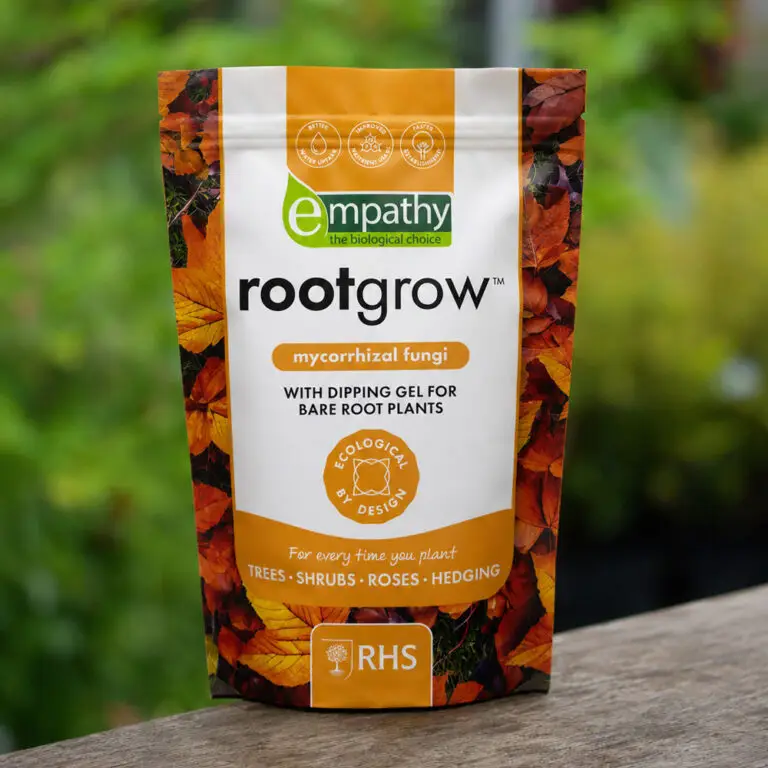
Rootgrow Mycorrhizal Fungi
Rootgrow can be applied at planting so the product is in direct contact with the roots, where appropriate for the plant and planting method.
View product
Hedge Feed
Hedge Feed provides balanced nutrition where established hedging would benefit from feeding as part of normal care.
View product
Hedge Irrigation
A hedge irrigation system can make it easier to water a new hedge consistently, particularly on longer runs and during dry weather.
View product
Hedge Compost & Mulch
Compost and mulch can support soil preparation, moisture retention and weed suppression when used appropriately around new hedging.
View product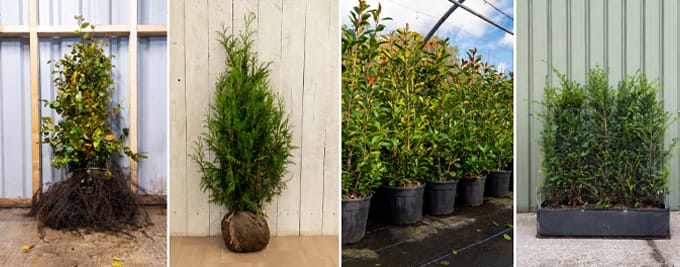
What Are the Different Hedging Root Types?
Bare root, root ball, pot-grown and instant hedging suit different budgets, planting times and levels of initial coverage. Understanding how each is…
Read answer
Do Deer and Rabbits Eat Holly Hedging?
Holly's tough, spiny leaves can give the impression that deer and rabbits will leave it alone. In practice, young English Holly can…
Read answer
What Is Holly Transplant Shock and How Long Does It Last?
A newly planted or moved Holly can temporarily lose its glossy appearance, drop leaves or make little new growth while its roots…
Read answer
How Can I Identify English Holly (Ilex aquifolium)?
English Holly is familiar in British hedgerows, gardens and woodland, but mature plants do not always have the sharply spined leaves people…
Read answer
Euonymus Green Spire vs Jean Hugues: Which Hedge to Buy?
Green Spire and Jean Hugues are both dark green Euonymus japonicus varieties and both make excellent Box alternatives. The real difference is…
Read answer
Are Euonymus Green Spire and Green Rocket the Same Plant?
The names Green Spire and Green Rocket are often used interchangeably by nurseries, which makes buying confusing. Current authoritative plant databases do…
Read answer
Is Hornbeam Evergreen? What Does It Look Like in Winter?
Hornbeam is valued for its fresh green summer foliage, warm autumn colour and strong winter structure. Understanding how its leaves behave after…
Read answer
What Do Hornbeam Leaves Look Like?
Hornbeam has distinctive textured foliage that changes noticeably through the seasons. Learning to recognise the leaf shape, veins and toothed edges can…
Read answer