
What Is Holly Transplant Shock and How Long Does It Last?
A newly planted or moved Holly can temporarily lose its glossy appearance, drop leaves or make little new growth while its roots establish. Recognising normal transplant stress helps you avoid making the problem worse through excessive watering, feeding or unnecessary pruning.
Quick Answer
Holly transplant shock is stress caused when the root system cannot initially supply the foliage as efficiently after planting or moving. Visible symptoms may improve within a few weeks, but more noticeable stress can take several months to grow out. Full root establishment is slower and commonly takes one to two growing seasons, with larger root-balled or transplanted mature Hollies potentially taking longer. Consistent moisture, good drainage and minimal further disturbance are more important than trying to force new growth with fertiliser.
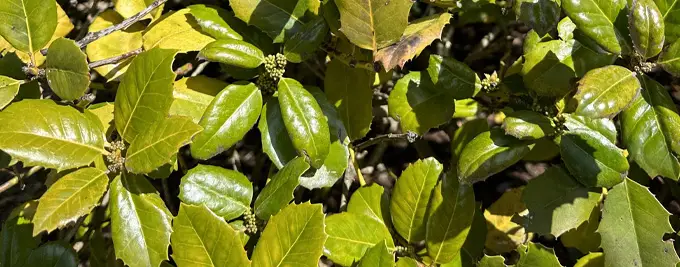
Quick Facts
| Common signs | Dull, wilting, yellowing or browning leaves, leaf drop and reduced new growth |
|---|---|
| Visible shock period | Often a few weeks to several months |
| Full establishment | Commonly one to two growing seasons; larger plants can take longer |
| Higher-risk plants | Large root-balled plants and established Hollies that have been moved |
| Main aftercare | Correct watering, good drainage, weed control and mulch |
| Warning signs | Progressive dieback, persistently waterlogged soil, dying stems or continued decline |
What causes transplant shock in Holly?
Transplant shock happens because planting changes the balance between a Holly’s roots and its evergreen foliage.
A root-balled Holly has been lifted from the field with soil around its main root system, but some fine roots will inevitably have been lost during lifting. An established Holly moved from one part of a garden to another may lose an even greater proportion of its active roots.
Pot-grown plants generally suffer less physical root loss, but they still have to adjust from the conditions in their container to the surrounding garden soil.
At the same time, the leaves continue to lose moisture. Until new roots begin growing into the surrounding soil, the plant may temporarily struggle to replace that moisture quickly enough.
This is why newly planted evergreens can sometimes show stress even though they looked perfectly healthy before planting. The effect can be greater during warm, dry or windy weather.
What does Holly transplant shock look like?
Typical symptoms can include:
- Leaves losing their normal glossy appearance
- Drooping or wilting foliage
- Yellowing leaves
- Bronze or brown patches
- Leaf drop
- Little or no obvious new growth
- New shoots temporarily stopping or growing slowly
Because English Holly, Ilex aquifolium, is evergreen, leaf loss after planting can look particularly alarming.
Some leaf loss does not automatically mean the plant has died. Evergreen hedging plants can shed foliage while their roots are establishing, particularly where water loss through the leaves temporarily exceeds the amount the roots can replace.
Look at the whole plant rather than individual damaged leaves. Healthy buds, flexible stems and fresh growth developing later are much better signs of recovery than expecting every existing leaf to remain perfect.
How long does Holly transplant shock last?
There is no fixed recovery period.
A mildly stressed Holly may begin to look better within several weeks once new roots become active. More significant stress can take several months to grow out, particularly if the plant was large when planted or experienced dry, windy or unusually warm conditions.
It is also useful to distinguish visible transplant shock from full establishment.
The foliage may start looking better quite quickly while the root system is still developing into the surrounding soil. Newly planted Hollies should normally be regarded as establishing plants for their first couple of years, and larger specimens may take longer to become fully self-supporting.
A Holly that grows very little during its first season is therefore not necessarily failing. Establishing roots can take priority over producing large amounts of visible top growth.
How can you help a Holly recover from transplant shock?
Check the soil moisture at root depth
Water is usually the first thing to investigate, but more water is not automatically better.
Check the soil beside the original root ball several centimetres below the surface. The surface can look damp while the root ball beneath is surprisingly dry, particularly after planting a large container-grown or root-balled plant.
Equally, Holly dislikes prolonged waterlogging. The aim is moist, well-drained soil rather than constantly saturated ground. English Holly grows well in a range of soils, but good drainage is important.
Water thoroughly when needed so moisture reaches the complete root area rather than repeatedly applying small amounts to the surface.
Keep grass and weeds away from the roots
Grass and weeds compete with a newly planted hedge for moisture.
Keep the planting strip around your Holly clear while it establishes. This is particularly important during dry spring and summer weather when both the hedge and surrounding vegetation are competing for the same water.
Apply mulch to conserve moisture
A layer of organic mulch around the root area can reduce evaporation and suppress competing weeds.
Keep mulch away from direct contact with the stems and avoid creating a thick mound around the base of the plant.
Mulching is useful because it helps create more even soil-moisture conditions rather than allowing the root area to alternate rapidly between wet and dry. HPD’s Hedge Bio Mulch is intended for moisture retention around newly planted hedging.
Do not try to feed a stressed Holly out of the problem
Transplant shock is primarily an establishment and root-water balance problem, not automatically a nutrient deficiency.
Applying extra fertiliser will not correct dry roots, waterlogging, poor planting depth or root damage.
If Rootgrow is being used, it is best applied at planting where it can make direct contact with the roots. Hedging Plants Direct’s current Rootgrow guidance specifically states that it does not replace correct planting, soil preparation or regular watering.
Avoid unnecessary pruning while the plant is stressed
Remove genuinely dead, broken or badly damaged growth, but there is normally little benefit in repeatedly cutting back a newly planted Holly simply because it looks stressed.
Allow it time to establish and judge the plant once it begins producing fresh growth.
Larger plants on windy sites should also be checked for movement. Wind rock can disturb newly developing roots and create gaps around the root ball, slowing establishment.
When is it more than transplant shock?
Not every declining newly planted Holly should be diagnosed as transplant shock.
Investigate further if the plant continues deteriorating rather than stabilising, particularly if you notice:
- Persistently wet or foul-smelling soil around the roots
- Water remaining in the planting hole after surrounding ground has drained
- Progressive dieback spreading through stems
- Blackened or damaged roots
- A plant that has been buried significantly deeper than its previous soil level
- Severe drying of the original root ball
- Plants moving noticeably in the ground during windy weather
- No viable buds or new growth during suitable growing conditions
Poor drainage deserves particular attention. Holly prefers moist but well-drained conditions and can suffer from root problems where soil remains saturated. The RHS lists Phytophthora root rot among the diseases that may affect Ilex aquifolium.
If several Hollies in the same hedge begin declining in the same low-lying area, investigate the site and drainage before assuming that every plant is simply experiencing normal transplant shock.
Can a Holly recover after losing leaves?
Yes. A Holly can lose a noticeable amount of foliage following planting and still recover if the stems and roots remain healthy.
New foliage may emerge once root activity improves and the plant is able to maintain a better balance between water uptake and water loss.
Recovery should be judged over time. Fresh buds and new shoots are encouraging signs, whereas continuing stem dieback and deterioration of the root area warrant further investigation.
Patience is particularly important with larger Holly plants. A mature root-balled specimen has far more foliage to support than a small plant and may therefore take longer to settle into its new position.
Gwynne's Grower's Tip
With newly planted Holly, I would check the root area before worrying too much about individual leaves. Evergreens can still look reasonably green while the original root ball is getting too dry, and by the time the foliage starts looking dull or bronzed the plant may already be under stress. Push a trowel carefully down beside the root ball and check the moisture below the surface. Water deeply when needed, but make sure excess water can drain away. I would not try to feed a stressed Holly out of the problem. Get the moisture, drainage and stability right first.
More Holly Advice
For more detailed growing advice or to view the plants available from our nursery, use the links below.
Related Products
Products from our nursery that are relevant to this advice.

Useful Planting Essentials
Selected products that may help with planting, establishment and ongoing hedge care.
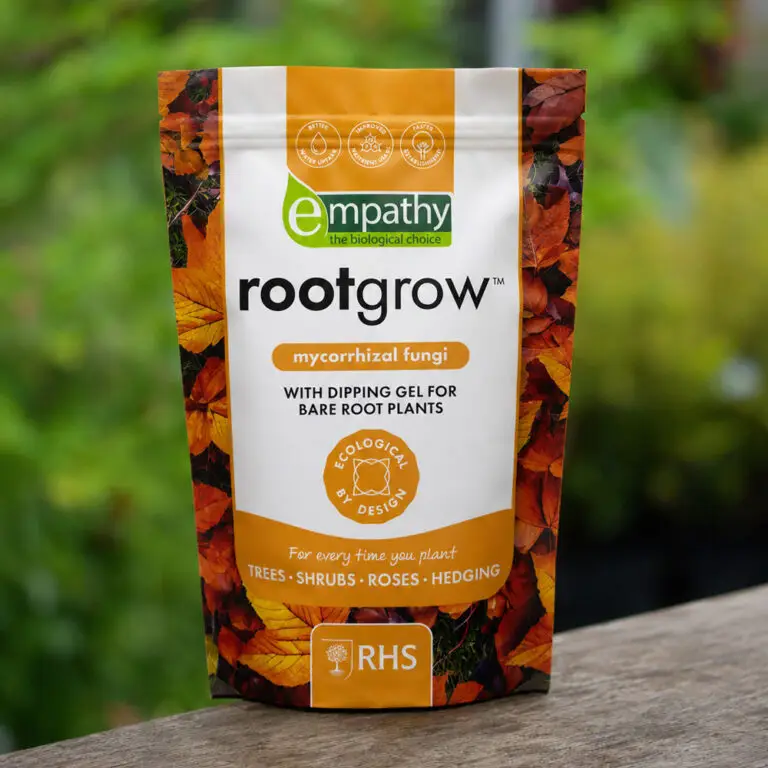
Rootgrow Mycorrhizal Fungi
Rootgrow can be applied at planting so the product is in direct contact with the roots, where appropriate for the plant and planting method.
View product
Hedge Feed
Hedge Feed provides balanced nutrition where established hedging would benefit from feeding as part of normal care.
View product
Hedge Irrigation
A hedge irrigation system can make it easier to water a new hedge consistently, particularly on longer runs and during dry weather.
View product
Hedge Compost & Mulch
Compost and mulch can support soil preparation, moisture retention and weed suppression when used appropriately around new hedging.
View product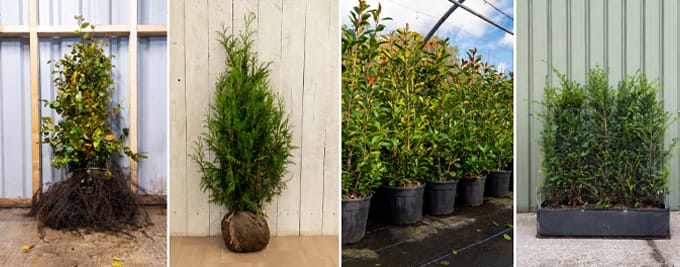
What Are the Different Hedging Root Types?
Bare root, root ball, pot-grown and instant hedging suit different budgets, planting times and levels of initial coverage. Understanding how each is…
Read answer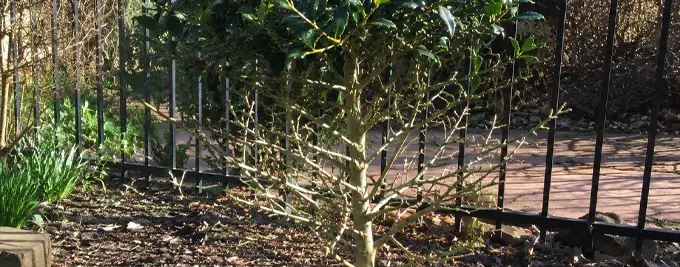
Do Deer and Rabbits Eat Holly Hedging?
Holly's tough, spiny leaves can give the impression that deer and rabbits will leave it alone. In practice, young English Holly can…
Read answer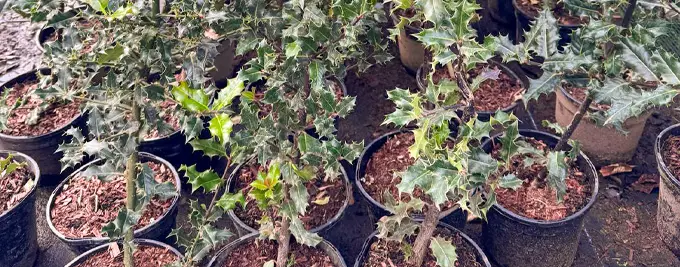
Can Holly Be Grown as a Hedge in Pots or Containers?
A row of English Holly can create evergreen structure and screening on patios, courtyards and other places where planting directly into the…
Read answer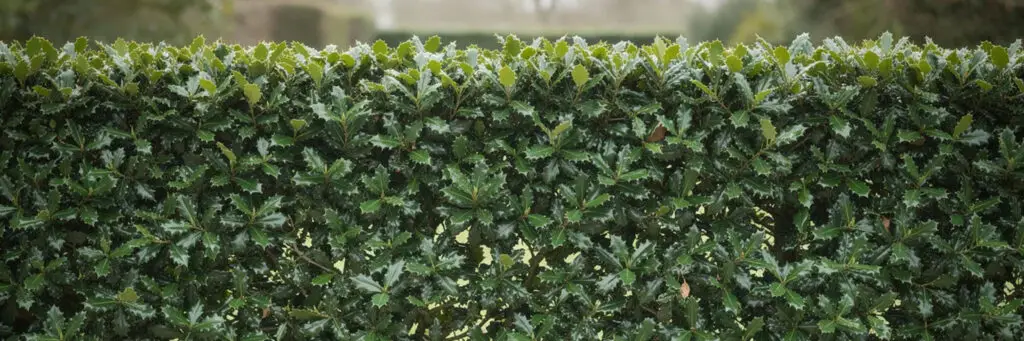
How Can I Identify English Holly (Ilex aquifolium)?
English Holly is familiar in British hedgerows, gardens and woodland, but mature plants do not always have the sharply spined leaves people…
Read answer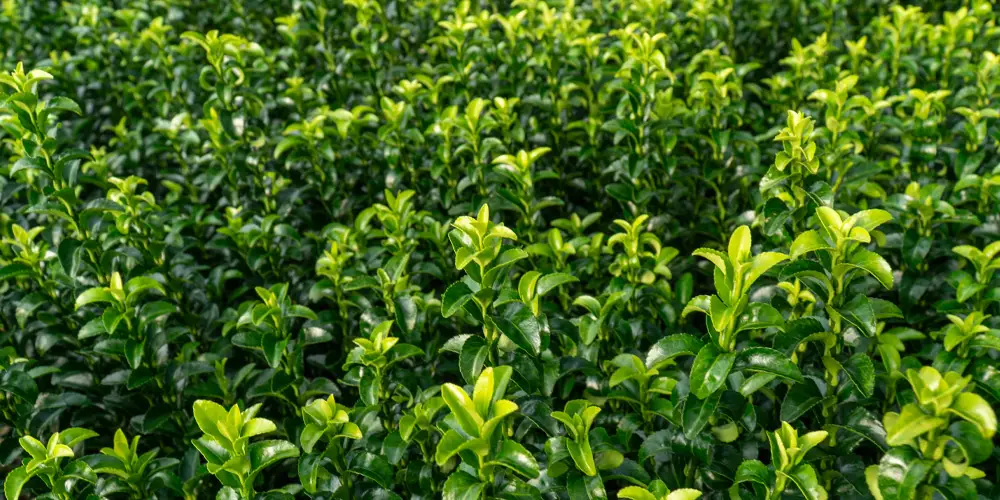
Euonymus Green Spire Problems: Causes and Fixes
Green Spire is a tough, reliable hedge, but a few problems turn up regularly. Here is how to recognise each one quickly,…
Read answer
Do Deer or Rabbits Eat Euonymus Green Spire?
Green Spire should not be regarded as reliably browse-proof. The amount of damage depends heavily on local animal pressure, alternative food and…
Read answer
Can Frost or Wind-Damaged Green Spire Recover?
Evergreen Green Spire can show brown leaf edges, scorched foliage or leaf drop after cold drying winds. The visible damage can look…
Read answer
What Problems Can Photinia Red Robin Have in Pots?
Photinia Red Robin can grow well in containers, but a pot makes the roots more dependent on careful watering, drainage and regular…
Read answer