
What Problems Can Photinia Red Robin Have in Pots?
Photinia Red Robin can grow well in containers, but a pot makes the roots more dependent on careful watering, drainage and regular maintenance. Knowing which container-specific problems to check first can prevent a minor stress issue becoming serious.
Quick Answer
The main problems for Photinia Red Robin in pots are compost drying too quickly, waterlogging, restricted roots, depleted nutrients, vine weevil and extra exposure to winter cold. Leaf spot and powdery mildew can also occur, but the pot itself is not usually the direct cause. If a potted Red Robin is yellowing, wilting or losing leaves, check root-zone moisture and drainage first before adding feed or treatment.
Quick Facts
| Botanical name | Photinia 'Red Robin' |
|---|---|
| Most common container issue | Moisture becoming either too dry or too wet |
| Signs of drought stress | Drooping shoots, dull or curling leaves, crisp edges and leaf fall |
| Signs of wet-root stress | Yellowing, weak growth or wilting while the compost remains wet |
| Container pest to check | Vine weevil, especially root-feeding larvae in the compost |
| Signs the plant may be root-bound | Circling roots, rapid drying, water running through quickly or reduced growth |
| Winter container risk | Roots are less insulated from frost than roots growing in open ground |
| Repotting | Typically every 1-2 years while the plant is growing strongly |
Why can Photinia Red Robin struggle in a pot?
Photinia Red Robin can grow successfully in a container, but the roots have much less room and a much smaller reserve of moisture and nutrients than they would have in open ground. This makes a potted plant more sensitive to watering mistakes, blocked drainage, root congestion and exhausted compost.
The first check should usually be the condition of the compost and roots rather than the leaves alone. Yellowing, wilting and leaf drop can be caused by both drought and waterlogging, so adding more water or fertiliser without checking first can make the problem worse.
What are the most common Photinia Red Robin problems in pots?
The compost dries out too quickly
Containers can dry rapidly during warm, sunny or windy weather. A thirsty Red Robin may develop drooping shoots, dull foliage, curling or crisp leaf edges and increased leaf fall. Small pots and root-bound plants can dry especially quickly.
Check the compost below the surface rather than judging it by appearance alone. Water thoroughly when the root zone is beginning to dry, allowing surplus water to drain freely from the bottom of the container.
The roots stay too wet
Photinia prefers moist but well-drained conditions and can decline if its roots remain saturated. Warning signs include yellowing leaves, weak growth or wilting even though the compost is still wet.
Make sure the container has clear drainage holes and is not left standing in water for long periods. Avoid moving a small root ball straight into an excessively large volume of wet compost, as this can remain damp for too long around the roots.
The plant has become root-bound
As Red Robin grows, its roots can eventually fill the available container. You may notice roots circling the inside of the pot, water passing through unusually quickly, the plant drying soon after watering or growth becoming weaker despite otherwise reasonable care.
Repot into the next suitable container size before the root system becomes severely congested. When repotting, inspect the roots and gently loosen tightly circling outer roots where necessary.
The compost has run short of nutrients
Container compost has a limited nutrient reserve. A Red Robin that has occupied the same pot for some time may produce weaker growth or paler foliage if nutrients have become depleted.
Feed container-grown plants during the growing season with a suitable balanced fertiliser according to the product instructions. Do not automatically feed a plant simply because its leaves are yellow. Check moisture, drainage and root condition first.
Vine weevil damages the roots
Vine weevil can be especially troublesome in container-grown plants. Adult weevils leave characteristic notches around leaf edges, while the creamy-white, C-shaped larvae live in the compost and feed on roots.
A badly affected plant may wilt, become loose in the pot or decline even when watering appears adequate. If these symptoms occur, inspect the root ball and compost for larvae before assuming the problem is drought or disease.
Winter cold damages the roots or new growth
Although Photinia Red Robin is hardy in much of the UK, roots in a container are less insulated than roots in the ground. Cold winds and late frost can also scorch or blacken soft new shoots.
Keep container plants in a reasonably sheltered position, particularly in colder or exposed gardens. In severe winter weather, protecting the sides of the pot can reduce the risk of the root ball freezing. Avoid leaving the compost permanently sodden through winter.
Can leaf spot or powdery mildew affect Red Robin in pots?
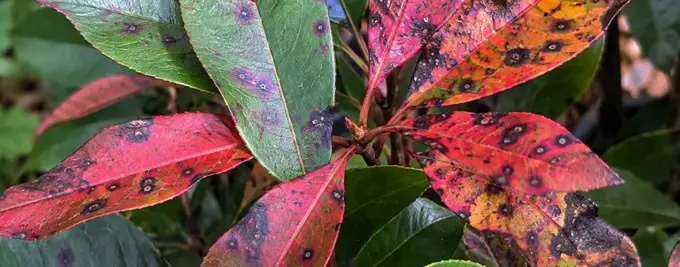
Yes. A potted Red Robin can still develop the same diseases as a plant growing in the ground. Purple-brown spotting may indicate Photinia leaf spot, while a white powdery coating can indicate powdery mildew. Stress, poor airflow and repeatedly wet foliage can make disease problems more noticeable.
If spotting, mildew or spreading shoot dieback is the main symptom, use our Photinia Red Robin problems, pests and diseases guide for a fuller diagnosis rather than treating the container itself as the cause.
What should I check first if my potted Red Robin looks unhealthy?
- Check that all drainage holes are open and that the pot is not standing in water.
- Feel the compost several centimetres below the surface to determine whether the root zone is dry, evenly moist or saturated.
- Look for signs that the plant is root-bound or that water is running straight through the pot.
- Inspect notched leaf edges and the root ball for signs of vine weevil.
- Consider recent frost, cold wind, heat or a sudden change in exposure.
- Only consider feeding once moisture, drainage and root problems have been ruled out.
Can Photinia Red Robin stay in a pot long term?
Yes, Red Robin can be maintained in a container if it is given enough root space, free drainage, regular watering and feeding, and pruning to keep the top growth in proportion to the pot. It will need more attention than the same shrub planted in open ground.
Full-sized Photinia × fraseri ‘Red Robin’ can become a large shrub, so long-term container plants need periodic repotting and size control. If you are choosing a plant specifically for a patio or courtyard, consider how large both the plant and its eventual container can realistically become before buying.
Gwynne's Grower's Tip
With a Red Robin in a pot, I would always check the compost before reaching for fertiliser. Push a finger or small trowel below the surface and find out what is happening around the roots. If water runs straight through and the pot dries again very quickly, the plant may be root-bound. If the compost stays wet for days, look at drainage before watering again. Getting the root environment right usually gives you a much clearer diagnosis than looking at leaf colour on its own.
More Photinia Red Robin Advice
For more detailed growing advice or to view the plants available from our nursery, use the links below.
Related Products
Products from our nursery that are relevant to this advice.


Useful Planting Essentials
Selected products that may help with planting, establishment and ongoing hedge care.

Hedge Feed
Hedge Feed provides balanced nutrition where established hedging would benefit from feeding as part of normal care.
View product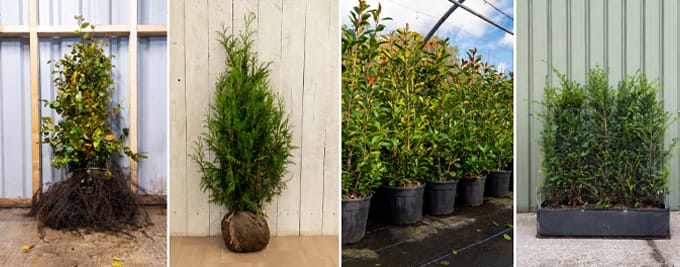
What Are the Different Hedging Root Types?
Bare root, root ball, pot-grown and instant hedging suit different budgets, planting times and levels of initial coverage. Understanding how each is…
Read answer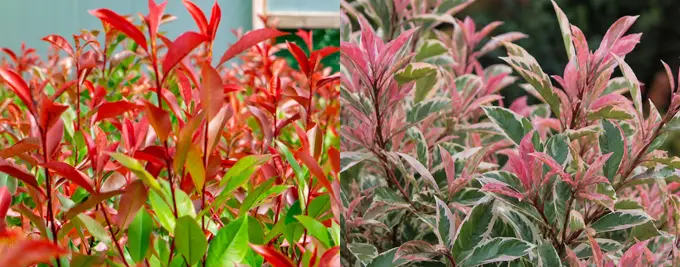
Photinia Pink Marble vs Red Robin: Which Is Better for Hedging?
Photinia Pink Marble and Red Robin are both evergreen Photinia cultivars, but they create very different hedges. Red Robin is the more…
Read answer
Photinia Carré Rouge vs Red Robin: Which Is Better for a Hedge?
Photinia Carré Rouge and Red Robin both provide evergreen foliage and colourful red new growth, but they differ noticeably in eventual size…
Read answer
Is Photinia Red Robin Poisonous to Dogs?
There is conflicting gardening advice about Photinia Red Robin and pet safety. Veterinary toxicology sources support a cautious approach because Photinia foliage…
Read answer
Euonymus Green Spire Problems: Causes and Fixes
Green Spire is a tough, reliable hedge, but a few problems turn up regularly. Here is how to recognise each one quickly,…
Read answer
Do Deer or Rabbits Eat Euonymus Green Spire?
Green Spire should not be regarded as reliably browse-proof. The amount of damage depends heavily on local animal pressure, alternative food and…
Read answer
Can Frost or Wind-Damaged Green Spire Recover?
Evergreen Green Spire can show brown leaf edges, scorched foliage or leaf drop after cold drying winds. The visible damage can look…
Read answer
Why Doesn’t My Blackthorn Hedge Produce Many Sloes?
A healthy Blackthorn hedge does not produce the same crop of sloes every year. The first question is whether the hedge flowered…
Read answer