
Photinia Carré Rouge vs Red Robin: Which Is Better for a Hedge?
Photinia Carré Rouge and Red Robin both provide evergreen foliage and colourful red new growth, but they differ noticeably in eventual size and growth habit. The better choice depends mainly on how tall and compact you want the finished hedge to be.
Quick Answer
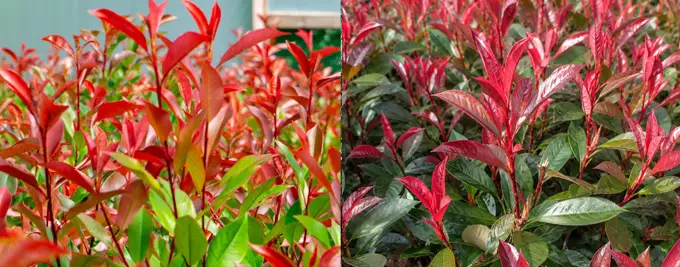
Carré Rouge is usually the better choice for a compact, neat Photinia hedge, while Red Robin is generally better for taller privacy screening. Carré Rouge has a denser, more upright habit and an ultimate size of about 1.5–2.5m. Red Robin is much larger naturally and can reach 4–8m if left unclipped. Both are evergreen, H5 hardy and produce red young foliage, so the deciding factor is mainly the size and style of hedge you want.
Quick Facts
| Best for compact hedges | Carré Rouge |
|---|---|
| Best for taller screening | Red Robin |
| Carré Rouge natural size | About 1.5–2.5m high and wide |
| Red Robin natural size | About 4–8m high and 2.5–4m wide |
| Foliage | Both evergreen with red young growth maturing to dark green |
| RHS hardiness | Both H5 |
What is the main difference between Carré Rouge and Red Robin?
Both are evergreen cultivars of Photinia × fraseri grown for red young foliage, but they develop differently. Carré Rouge has a more compact, erect habit and is usually chosen where a neater, smaller Photinia is wanted. Red Robin is the larger and more vigorous choice, making it better suited to taller screening or a hedge where more eventual height is useful.
The RHS lists Carré Rouge at an ultimate height and spread of about 1.5–2.5m, while Red Robin can eventually reach about 4–8m high and 2.5–4m wide if allowed to grow as a large shrub or small tree. A clipped hedge will normally be maintained much smaller than either plant’s natural maximum size.
Which Photinia makes the neater hedge?
Carré Rouge generally has the advantage where the aim is a compact, tidy hedge. Its naturally denser, more upright habit means there is less vigorous growth to control, particularly in a smaller garden or where the hedge needs to stay around low to medium height.
Red Robin can also make an attractive formal hedge, but it naturally has more size and a somewhat looser structure. Early formative pruning is therefore important if you want dense growth near the base rather than a row of tall, open shrubs. Our Photinia Red Robin care guide explains how to establish and prune Red Robin as a hedge.
Which has the best red foliage?
Both cultivars produce red young leaves that mature to dark green. Carré Rouge is commonly selected for its smaller leaves and a deeper, more intense red flush, while Red Robin produces the familiar bright red new growth seen in many established UK hedges.
Whichever cultivar you choose, good light usually gives the strongest foliage colour. Light trimming during the growing season can encourage another flush of red shoots, but avoid pruning late in summer when soft new growth may be more vulnerable to autumn frost.
Which is better for a tall privacy hedge?
Red Robin is usually the better choice where the main objective is a taller evergreen screen. Its greater natural size gives more scope for maintaining a hedge well above typical boundary height, provided there is enough width and access for regular pruning.
Carré Rouge is better suited to a more controlled hedge where compact growth is an advantage. Its smaller ultimate size does not mean it cannot provide privacy, but it is less appropriate if the long-term aim is a very tall Photinia screen.
Which is easier to keep under control?
For a small or medium garden, Carré Rouge is normally easier to contain because it starts with a more compact growth habit. Red Robin is still straightforward to manage if it is clipped from a young age, but neglected plants can become much larger and broader.
The most important point with either cultivar is not to wait until the hedge has become oversized before pruning. Regular light trimming encourages branching, helps maintain an even outline and produces fresh red foliage.
Do Carré Rouge and Red Robin need different growing conditions?
Their basic requirements are very similar. Both prefer fertile, humus-rich soil that is moist but well drained, and both can grow in full sun or partial shade. They are also both rated H5 by the RHS, so there is no major hardiness advantage between them for most UK gardens.
Young Photinia growth can still be damaged by severe frost or cold, drying winds. A reasonably sheltered site is therefore helpful, particularly where strong spring colour is important.
Which Photinia should I choose?
Choose Carré Rouge if you want a more compact Photinia, a neater low to medium hedge, smaller foliage and an intense red flush without having to control as much eventual size.
Choose Red Robin if you want the classic Photinia hedge, need more height for privacy, have room for a larger evergreen screen or want a cultivar that can also be trained into larger shrub and tree forms.
For most customers choosing specifically for a taller privacy hedge, Red Robin remains the more flexible option. For a smaller garden where keeping the hedge compact is the priority, Carré Rouge has a clear advantage.
Gwynne's Grower's Tip
I would choose between these two by deciding on the finished hedge before buying the plants. If the hedge needs to stay fairly compact, Carré Rouge's naturally tighter habit can save pruning later. If you need a taller screen, Red Robin gives you more height to work with. Whichever one you plant, start light formative trimming while the plants are young. It is much easier to build a dense Photinia hedge from the bottom upwards than to correct tall, open growth several years later.
More Photinia Red Robin Advice
For more detailed growing advice or to view the plants available from our nursery, use the links below.
Related Products
Products from our nursery that are relevant to this advice.

What Are the Different Hedging Root Types?
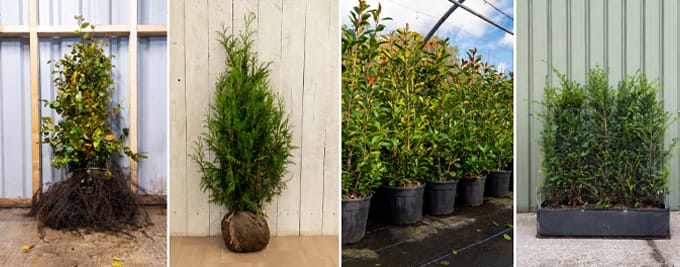
Bare root, root ball, pot-grown and instant hedging suit different budgets, planting times and levels of initial coverage. Understanding how each is…
Read answer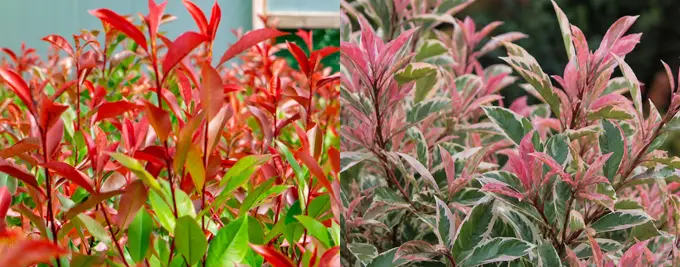
Photinia Pink Marble vs Red Robin: Which Is Better for Hedging?
Photinia Pink Marble and Red Robin are both evergreen Photinia cultivars, but they create very different hedges. Red Robin is the more…
Read answer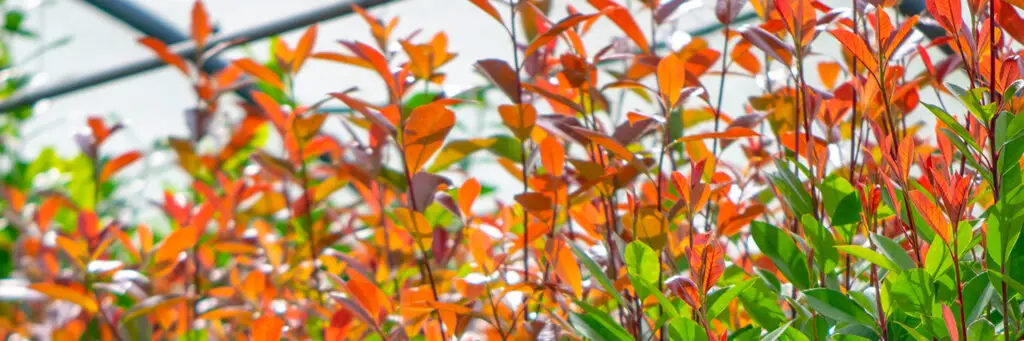
Is Photinia Red Robin Poisonous to Dogs?
There is conflicting gardening advice about Photinia Red Robin and pet safety. Veterinary toxicology sources support a cautious approach because Photinia foliage…
Read answer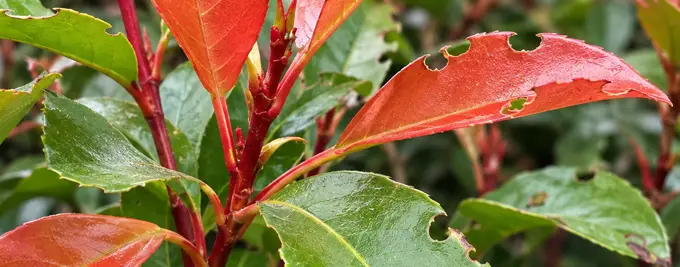
What Is Eating My Photinia Red Robin Leaves?
Missing pieces, holes or notches in Red Robin leaves can look alarming, but the pattern of damage usually gives a useful clue.…
Read answer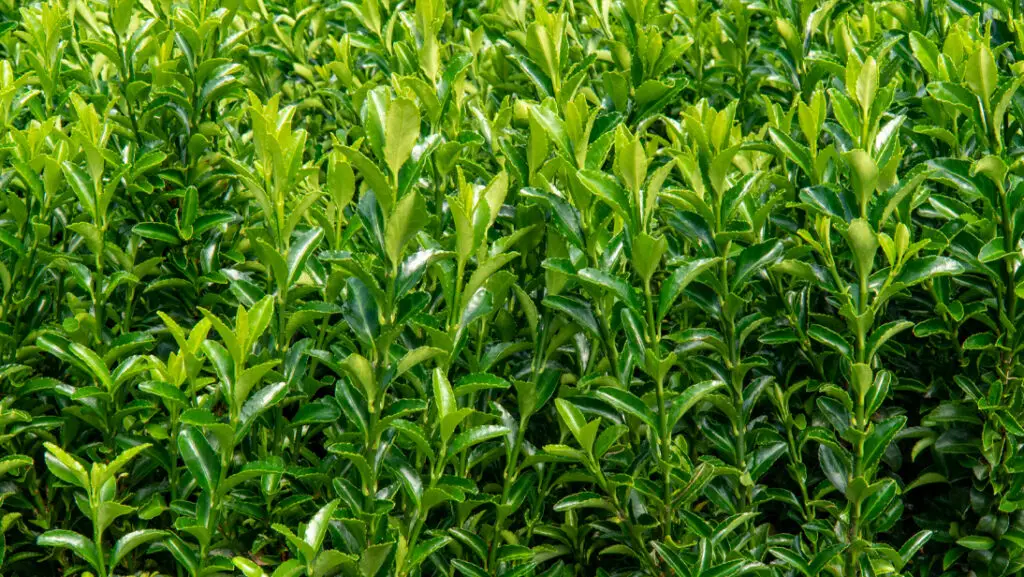
Euonymus Green Spire vs Jean Hugues: Which Hedge to Buy?
Green Spire and Jean Hugues are both dark green Euonymus japonicus varieties and both make excellent Box alternatives. The real difference is…
Read answer
Are Euonymus Green Spire and Green Rocket the Same Plant?
The names Green Spire and Green Rocket are often used interchangeably by nurseries, which makes buying confusing. Current authoritative plant databases do…
Read answer
Is Hornbeam Evergreen? What Does It Look Like in Winter?
Hornbeam is valued for its fresh green summer foliage, warm autumn colour and strong winter structure. Understanding how its leaves behave after…
Read answer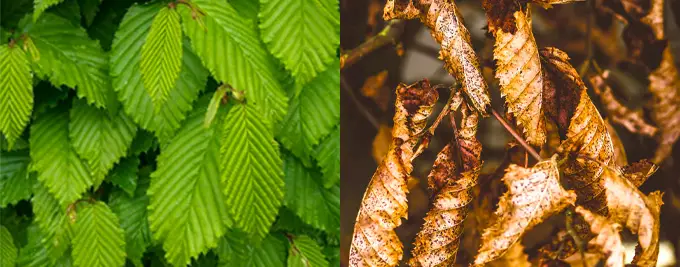
What Do Hornbeam Leaves Look Like?
Hornbeam has distinctive textured foliage that changes noticeably through the seasons. Learning to recognise the leaf shape, veins and toothed edges can…
Read answer