
What Is Eating My Photinia Red Robin Leaves?
Missing pieces, holes or notches in Red Robin leaves can look alarming, but the pattern of damage usually gives a useful clue. Checking the leaf edges, rolled foliage and the plant after dark can often identify the culprit without treating the hedge unnecessarily.
Quick Answer
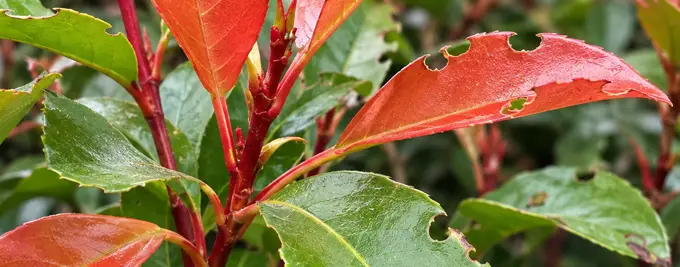
U-shaped or irregular notches around Photinia Red Robin leaf edges are most commonly associated with adult vine weevil. Neat semicircular cut-outs can be caused by leaf-cutting bees, while rolled or webbed leaves with chewing inside may indicate tortrix moth caterpillars. Ragged holes on tender low growth can occasionally be caused by slugs or snails. Identify the feeding pattern before treating, because minor leaf damage often does little harm to an established hedge.
Quick Facts
| U-shaped edge notches | Most suggestive of adult vine weevil |
|---|---|
| Neat semicircular cut-outs | Often leaf-cutting bees |
| Rolled or webbed leaves | Check for tortrix moth caterpillars |
| Ragged holes with slime | Slugs or snails may be responsible |
| Greatest vine-weevil risk | Root-feeding larvae, especially in container-grown plants |
| Minor chewing on established plants | Usually more cosmetic than damaging |
What does the leaf damage look like?
The shape of the missing leaf tissue is usually the best first clue. Photinia Red Robin is not commonly troubled by many serious leaf-eating pests, but different insects leave different feeding patterns.
If the edges have repeated U-shaped or irregular notches, adult vine weevil is the main suspect. If the cuts are unusually neat and almost semicircular, leaf-cutting bees may be taking pieces for their nests. If leaves are folded or bound together with fine silk and chewed inside, look for tortrix moth caterpillars.
U-shaped notches around the leaf edge: check for vine weevil
Vine weevil is the most characteristic chewing pest associated with Photinia. Adult weevils feed around the margins of the leaves, leaving irregular rounded notches. They are mainly active at night, so you may see the damage without seeing the beetles during the day.
A small amount of adult feeding is usually cosmetic rather than a serious threat to an established hedge. The greater concern is the larval stage, because creamy-white, C-shaped grubs live around the roots and can cause much more serious damage, particularly in container-grown plants.
If you suspect vine weevil, inspect the plants after dark with a torch or gently shake branches over a light-coloured sheet or upturned umbrella. With potted Photinia, also inspect the root ball if the plant is wilting, becoming loose in the pot or declining despite reasonable watering.
Neat semicircular pieces missing from leaves: leaf-cutting bees
Very neat, smooth-edged semicircular or rounded cut-outs are more likely to be made by leaf-cutting bees than by vine weevil. Female leaf-cutting bees remove sections of foliage and carry them away to construct nest cells.
This damage is usually cosmetic and does not normally affect the vigour of the plant. Leaf-cutting bees are useful pollinators, so there is normally no reason to control them simply because a few Photinia leaves have been cut.
Rolled or webbed leaves: look for tortrix moth caterpillars
Small caterpillars can also chew Photinia foliage. Tortrix moth caterpillars typically bind or roll leaves together with fine silken threads and feed from inside the shelter. The damaged areas may then dry and turn brown.
Open a rolled or joined leaf carefully and look for a small green caterpillar or pupa. Light infestations are often limited and can be tolerated or removed by hand. Garden birds and other predators also feed on many caterpillars.
Could slugs or snails be eating Red Robin leaves?
Slugs and snails can make ragged, irregular holes in many garden plants, particularly soft young growth. Their feeding is usually at night, and a silvery slime trail on leaves, stems or nearby surfaces is a useful clue.
They are not the first pest we would suspect on the tougher mature foliage of an established Red Robin hedge. If damage is concentrated on tender low growth and slime is present, however, inspect the hedge after dark or during damp weather before assuming vine weevil is responsible.
Are aphids responsible for holes in Photinia leaves?
Usually not. Aphids are sap-feeding insects rather than chewing insects, so they tend to cause distorted, curled or weakened young growth rather than chunks missing from the leaf edges. Ant activity and sticky honeydew can also accompany an aphid infestation.
If the leaf tissue is physically missing, concentrate first on chewing pests and the shape of the damage.
What should I do if the leaves are being eaten?
- Look closely at the shape of the damage before treating anything.
- Check the hedge at night, when vine weevils, slugs and some other feeders are easier to find.
- Inspect folded or webbed leaves for caterpillars.
- Leave neat leaf-cutter bee damage alone unless there is another problem with the plant.
- For container-grown Photinia with vine-weevil notching, inspect the roots for larvae as well as the foliage.
- Avoid applying a pesticide until the pest has been identified.
Minor chewing on a healthy established Photinia usually affects appearance more than plant health. If the hedge is also wilting, losing vigour, becoming loose at the roots or suffering widespread dieback, investigate the root system and growing conditions rather than treating the foliage alone.
Could the holes be caused by disease instead of a pest?
Most Photinia diseases cause spotting, discolouration, shrivelling or dieback rather than fresh chunks being chewed from leaf margins. Photinia leaf spot, for example, usually produces dark red, purple or brown spots rather than the repeated edge notches associated with vine weevil.
If the foliage is spotted, scorched, powdery or dying rather than visibly eaten, use our Photinia Red Robin problems, pests and diseases guide for a broader diagnosis.
Gwynne's Grower's Tip
Before reaching for a spray, look at three or four damaged leaves side by side. Vine-weevil damage usually repeats the same rounded notches around the edges, while a leaf-cutting bee leaves a much cleaner cut. I would also look at the hedge after dark, because that is when several chewing pests are easiest to find. If a potted Red Robin has notched leaves and is also wilting, do not stop at the foliage. Check the root ball as well, because vine-weevil larvae can do far more harm below ground than the adults do to the leaves.
More Photinia Red Robin Advice
For more detailed growing advice or to view the plants available from our nursery, use the links below.
Related Products
Products from our nursery that are relevant to this advice.

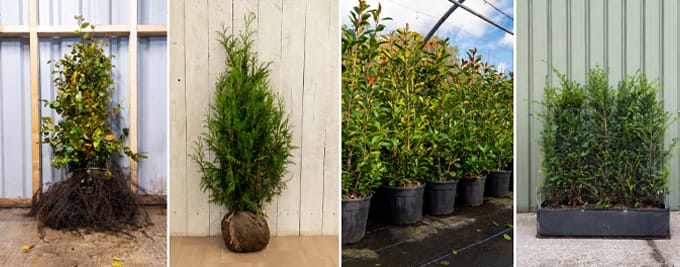
What Are the Different Hedging Root Types?
Bare root, root ball, pot-grown and instant hedging suit different budgets, planting times and levels of initial coverage. Understanding how each is…
Read answer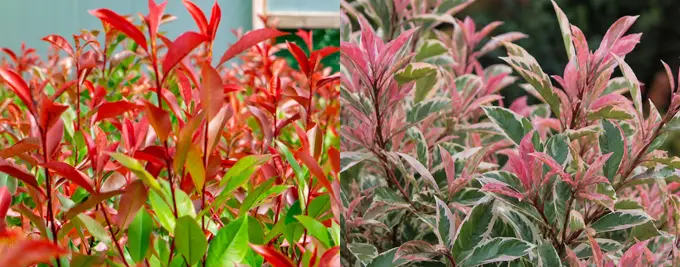
Photinia Pink Marble vs Red Robin: Which Is Better for Hedging?
Photinia Pink Marble and Red Robin are both evergreen Photinia cultivars, but they create very different hedges. Red Robin is the more…
Read answer
Photinia Carré Rouge vs Red Robin: Which Is Better for a Hedge?
Photinia Carré Rouge and Red Robin both provide evergreen foliage and colourful red new growth, but they differ noticeably in eventual size…
Read answer
Is Photinia Red Robin Poisonous to Dogs?
There is conflicting gardening advice about Photinia Red Robin and pet safety. Veterinary toxicology sources support a cautious approach because Photinia foliage…
Read answer
What Causes Notches Around Green Spire Leaves?
Neat-looking bites or irregular U-shaped notches around the edges of Green Spire leaves are a useful diagnostic clue. The visible leaf damage…
Read answer
How Do I Identify and Deal With Euonymus Scale on Green Spire?
Euonymus scale is one of the more important pests to check for on Green Spire. Early infestations can be easy to miss…
Read answer
Why Are the Sloes on My Blackthorn Shrivelled or Distorted?
Not every shrivelled sloe has the same cause. Strong distortion, elongation and hollow fruit are characteristic signs of pocket plum, while simple…
Read answer
Why Are My Blackthorn Leaves Turning Silver?
Silvery foliage on Blackthorn deserves a closer look because true silver leaf is a recognised Prunus disease. Similar-looking silvering can also follow…
Read answer