
How Can I Identify English Holly (Ilex aquifolium)?
English Holly is familiar in British hedgerows, gardens and woodland, but mature plants do not always have the sharply spined leaves people expect. A few reliable features make Ilex aquifolium much easier to identify throughout the year.
Quick Answer
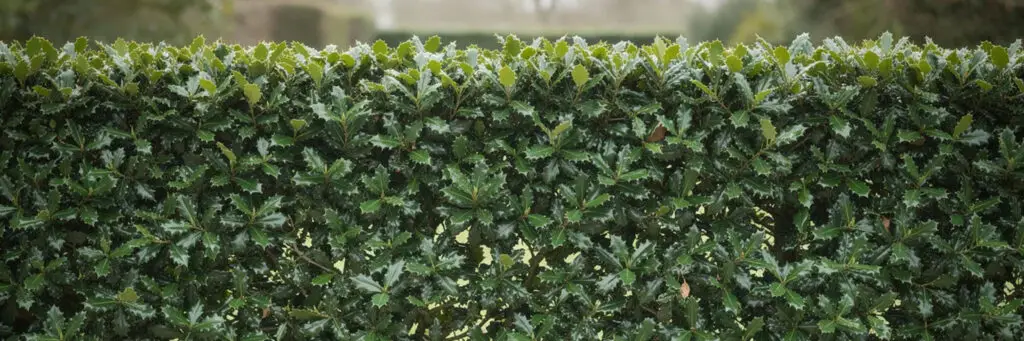
English Holly (Ilex aquifolium) is best identified by a combination of dark, glossy, leathery evergreen leaves, small white spring flowers and, on pollinated female plants, bright red autumn and winter berries. Young and lower leaves are often sharply spined, but mature leaves higher on the plant can be almost smooth. Older plants also develop thin, generally smooth grey or silvery-grey bark.
Quick Facts
| Botanical name | Ilex aquifolium |
|---|---|
| Common names | English Holly, Common Holly, Holly |
| Foliage | Evergreen |
| Leaf appearance | Dark green, glossy, stiff and leathery |
| Leaf arrangement | Alternate |
| Leaf edges | Often sharply spined on young and lower growth; mature upper leaves may be smooth |
| Flowers | Small white flowers, usually with four petals |
| Flowering period | Usually spring to early summer |
| Fruit | Round bright red fruit on pollinated female plants |
| Bark | Thin, generally smooth grey or silvery-grey on mature plants |
| Native to UK | Yes |
| Key identification point | Do not rule out Holly simply because some leaves have no spines |
What do English Holly leaves look like?
The leaves are normally the best place to start when identifying English Holly. Ilex aquifolium has individual, alternately arranged leaves that are oval to elliptic in shape. They feel stiff and leathery rather than soft, with a deep glossy green upper surface and a noticeably paler underside.
The familiar sharp points around the edge of a Holly leaf are particularly common on young plants and on foliage growing lower down the plant. This creates the classic prickly appearance associated with English Holly hedges.
One of the most useful identification details, however, is that not every English Holly leaf is spiny.
Why do some English Holly leaves have smooth edges?
Older Holly trees frequently produce leaves with far fewer spines, particularly higher in the canopy. Some upper leaves can have almost completely smooth margins.
This means a large Holly tree can appear to have two different types of foliage on the same plant. Lower branches may carry strongly prickled leaves while branches several metres higher have smoother, more oval foliage. Woodland Trust and TCV both highlight this change in leaf form with plant age and height.
For identification, therefore, examine several shoots from different parts of the plant rather than relying on a single leaf.
Can English Holly be identified by its flowers?
English Holly produces small white flowers during spring and into early summer. The flowers normally have four petals and appear around the leaf axils rather than forming large showy flower heads.
Holly is dioecious, which means individual plants are normally either male or female.
Male flowers produce pollen, while female flowers can develop into the familiar red fruit after successful pollination. This is useful when identifying a plant in spring because both male and female Holly plants flower even though only females subsequently carry berries.
Do all English Holly plants have red berries?
No. The absence of berries does not mean the plant is not English Holly.
Only female Holly plants produce fruit, and those female flowers must first be successfully pollinated. A perfectly healthy male Ilex aquifolium will therefore never develop the familiar red berries.
On a pollinated female plant, the developing fruit is initially green before ripening to bright or scarlet red. Ripe fruit can remain on the branches well into winter, making female Holly particularly easy to recognise at that time of year.
The combination of red fruit and glossy evergreen foliage is a very strong identification clue, but berries should never be used as the only test.
What does English Holly bark look like?
Young Holly stems may initially be green, while older plants develop thin, generally smooth bark that is grey, silvery-grey or darker grey.
Mature bark can also develop small brownish corky markings. It remains much smoother than the deeply fissured bark found on many mature woodland trees.
Bark becomes particularly useful when identifying a larger specimen where many of the leaves above head height have lost their characteristic spines.
What plants can be mistaken for English Holly?
Several evergreen shrubs have glossy or prickly foliage, so it is worth checking the structure of the plant rather than identifying it from colour alone.
| Plant | How it differs from English Holly |
|---|---|
| Mahonia | Mahonia has pinnate leaves made from several spine-toothed leaflets along one central leaf stalk. It commonly produces yellow flower clusters followed by dark purple or black fruit. English Holly has individual simple leaves. |
| Pyracantha | Pyracantha has genuinely thorny woody branches and produces dense clusters of red, orange or yellow fruit. Holly’s familiar sharp points are primarily part of the leaf margin rather than long thorns growing from the branches. |
| Variegated Holly cultivars | Cultivated forms of Holly may have cream, yellow or differently shaped foliage. Standard English Holly is recognised by its plain dark green leaves, although leaf shape and spininess can still vary considerably. |
The distinction from Mahonia is particularly useful because both plants can have glossy, prickly-looking evergreen foliage. RHS describes Mahonia as having leathery pinnate leaves, while Pyracantha has distinctly spiny branches.
How can I identify English Holly at different times of year?
Winter: Look for evergreen dark green foliage while surrounding deciduous hedges are bare. Female plants may also carry bright red fruit.
Spring: Look for glossy established foliage followed by small white flowers.
Summer: New foliage is often particularly glossy and prickly. Developing fruit on female plants may still be green.
Autumn: Fruit begins to provide one of the clearest clues as it develops its familiar red colour against the dark foliage.
English Holly is especially easy to recognise in winter because its evergreen leaves remain dark and glossy throughout the year.
How can I confirm that a hedge is English Holly?
Do not base the identification on one feature alone. A good match for English Holly should normally show several of the following characteristics together:
- evergreen foliage
- individual alternate leaves
- stiff, leathery leaf texture
- glossy dark green upper leaf surfaces
- spines on at least some young or lower foliage
- small white spring flowers
- red fruit on pollinated female plants
- relatively smooth grey bark on older growth
If several of these characteristics match, particularly the leaf texture and changing level of spininess across the plant, Ilex aquifolium is a strong identification.
You can compare an established plant with the foliage and growth habit shown on our English Holly Hedge page. That page covers the plants available to buy, while this Q&A remains focused specifically on identification.
Gwynne's Grower's Tip
Do not dismiss an older plant as Holly simply because the leaves near the top are smooth. Look at several branches, especially lower down, where you are more likely to find the familiar prickled foliage. I would use the texture and shine of the leaf, its position on the stem, the bark and any flowers or berries together rather than relying on one characteristic. On regularly clipped hedges you often see plenty of young, prickly foliage, while an older specimen allowed to grow into a tree can look surprisingly different higher up.
More Holly Advice
For more detailed growing advice or to view the plants available from our nursery, use the links below.
Related Products
Products from our nursery that are relevant to this advice.

What Are the Different Hedging Root Types?
Bare root, root ball, pot-grown and instant hedging suit different budgets, planting times and levels of initial coverage. Understanding how each is…
Read answer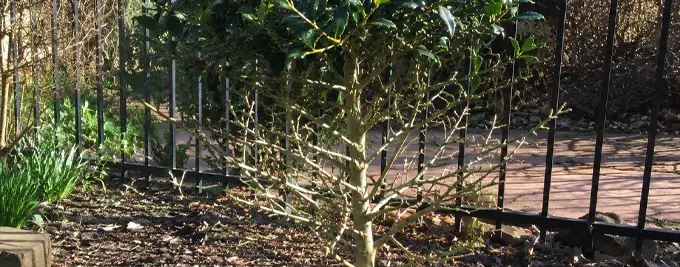
Do Deer and Rabbits Eat Holly Hedging?
Holly's tough, spiny leaves can give the impression that deer and rabbits will leave it alone. In practice, young English Holly can…
Read answer
What Is Holly Transplant Shock and How Long Does It Last?
A newly planted or moved Holly can temporarily lose its glossy appearance, drop leaves or make little new growth while its roots…
Read answer
Can Holly Be Grown as a Hedge in Pots or Containers?
A row of English Holly can create evergreen structure and screening on patios, courtyards and other places where planting directly into the…
Read answer
Euonymus Green Spire vs Jean Hugues: Which Hedge to Buy?
Green Spire and Jean Hugues are both dark green Euonymus japonicus varieties and both make excellent Box alternatives. The real difference is…
Read answer
Are Euonymus Green Spire and Green Rocket the Same Plant?
The names Green Spire and Green Rocket are often used interchangeably by nurseries, which makes buying confusing. Current authoritative plant databases do…
Read answer
Is Hornbeam Evergreen? What Does It Look Like in Winter?
Hornbeam is valued for its fresh green summer foliage, warm autumn colour and strong winter structure. Understanding how its leaves behave after…
Read answer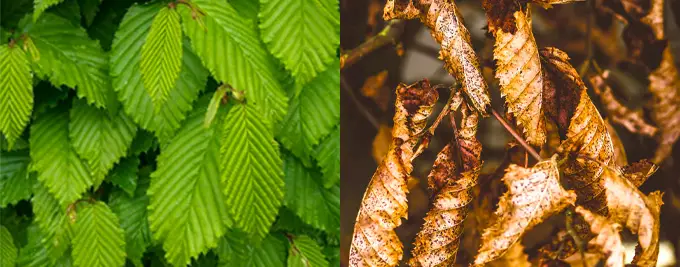
What Do Hornbeam Leaves Look Like?
Hornbeam has distinctive textured foliage that changes noticeably through the seasons. Learning to recognise the leaf shape, veins and toothed edges can…
Read answer