
Is Taxus baccata Poisonous to Dogs and Livestock?
Yew is a familiar evergreen hedge, but its foliage, bark and seeds require particular care around animals. This guide explains the practical risks for dog owners and livestock keepers, including how to manage berries and hedge trimmings safely.
Quick Answer
Yes. Taxus baccata is highly poisonous to dogs, horses, cattle, sheep, goats and other livestock if eaten. The foliage, bark, wood and seeds contain toxic taxine compounds. The fleshy red aril itself is generally regarded as non-toxic, but it surrounds a highly poisonous seed and should not be treated as pet-safe. Keep animals away from Yew and its clippings. If ingestion is suspected, contact a vet immediately and do not wait for symptoms to appear.
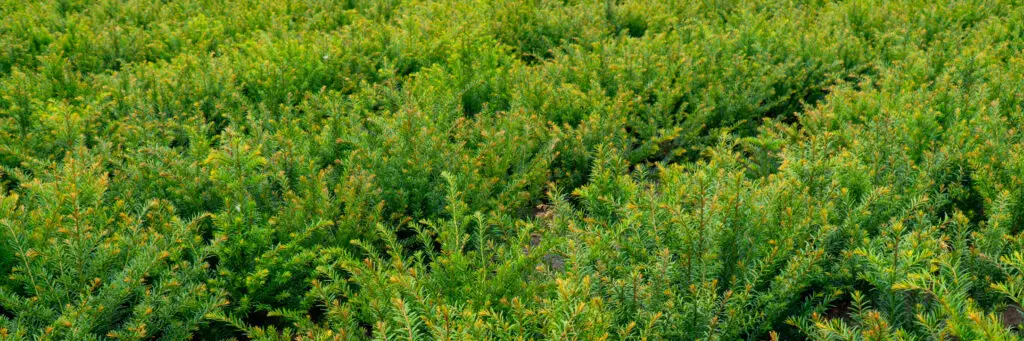
Quick Facts
| Botanical name | Taxus baccata |
|---|---|
| Common name | English Yew or Common Yew |
| Toxic parts | Foliage, bark, twigs, wood and seeds |
| Red “berries” | The fleshy red aril is generally regarded as non-toxic, but the seed inside is highly poisonous |
| Main toxins | Taxine alkaloids, which can disrupt normal heart function |
| Risk to dogs | Potentially life-threatening if any poisonous material is eaten |
| Risk to livestock | Highly dangerous and unsuitable within browsing reach of grazing animals |
| Hedge clippings | Collect immediately and never place them in a paddock or livestock area |
Which parts of Taxus baccata are poisonous?
Most parts of a Yew plant should be treated as poisonous. This includes the dark green foliage, bark, twigs, branches, wood and seeds. These parts contain taxine alkaloids, which can interfere with the normal electrical activity of the heart.
The red berry-like structure seen on female Yew plants is technically an aril rather than a true berry. Its fleshy outer covering is generally regarded as non-toxic, but it surrounds a highly poisonous seed. A dog or grazing animal may chew or swallow the entire fruit, so fallen arils should still be cleared from areas accessible to pets or livestock.
There is no reliably safe amount of Yew for an animal to eat. The seriousness of poisoning can be affected by the animal’s size, the part of the plant consumed, the quantity eaten and how quickly veterinary treatment begins.
How dangerous is Yew to dogs?
Yew poisoning in dogs can be extremely serious. Dogs do not normally graze hedges in the same way as horses, cattle or sheep, but exposure can occur when a dog chews branches, scavenges beneath a hedge, plays with freshly cut material or eats fallen arils containing seeds.
Possible signs of poisoning can include:
- Vomiting or diarrhoea
- Excessive drooling
- Weakness or unsteadiness
- Trembling
- Difficulty breathing
- An unusually slow, fast or irregular heartbeat
- Collapse
- Seizures
An affected dog may deteriorate quickly, and severe poisoning can cause sudden collapse before obvious warning signs have developed. Do not wait for symptoms if you know or suspect that your dog has eaten Yew.
Why is Yew especially dangerous to horses and livestock?
Yew presents a particularly high risk to horses, ponies, cattle, sheep, goats and other grazing animals because they may browse vegetation growing through or beside a boundary.
Poisoning can happen when an animal reaches over a fence, when branches are brought down by weather, or when hedge trimmings are dumped into a field. Discarded Yew clippings are a recognised source of serious livestock poisoning and should never be left where animals can reach them.
Yew should not be planted as a paddock hedge or anywhere that grazing animals can browse through, beneath or over the boundary. A light wire or temporary guard should not be relied upon as the only protection, particularly where horses or cattle may stretch through it.
If Yew already grows near livestock, use a secure barrier that keeps the animals well beyond browsing distance. Regularly inspect the boundary for fallen branches, storm damage and vegetation growing through the fence.
What should I do if my dog may have eaten Yew?
Treat suspected Yew ingestion as an emergency, even when your dog appears well.
- Prevent the dog from eating any more plant material.
- Contact your veterinary practice immediately.
- Tell the vet approximately when the plant was eaten and how much may be missing.
- Take a clear photograph or a small plant sample for identification, provided this can be done safely.
- Do not try to make your dog vomit unless a vet specifically instructs you to do so.
Do not wait until your normal veterinary practice reopens. Use its emergency number or contact an out-of-hours veterinary service.
What should I do if livestock may have eaten Yew?
Call your vet urgently and remove the animals from the suspected source without putting yourself at risk. Check the field, boundary and any recently deposited garden waste for Yew branches, hedge trimmings or fallen foliage.
Keep a sample of the plant for identification and explain whether one animal or several animals may have had access. Other animals in the same group should be prevented from reaching the area, even if they are not showing signs.
A livestock keeper should not assume that an animal is unaffected simply because it is still standing or behaving normally. Taxus poisoning can progress rapidly and may initially produce few visible warning signs.
Can I keep a Yew hedge if I have a dog?
The presence of a Yew hedge does not cause poisoning through normal contact. The danger arises when poisonous material is chewed or swallowed. However, Yew should not be described as a pet-safe hedge.
The practical level of risk will depend on the dog and the position of the hedge. Extra caution is needed with puppies, dogs that chew plants, dogs that scavenge, and dogs that spend time unsupervised beside the hedge.
Where Yew is retained in a garden with dogs:
- Prevent access to the base of the hedge where practical.
- Clear fallen arils, broken twigs and pruned material promptly.
- Do not allow a dog to play with Yew branches.
- Supervise puppies and known plant-chewers closely.
- Consider a different hedging species where reliable separation is not possible.
The advice is stricter for livestock. Yew should not be planted within browsing reach of grazing animals, even where it would otherwise make an attractive or long-lived boundary hedge.
How should Yew hedge clippings be handled?
Plan how the trimmings will be contained before pruning begins. A sheet or tarpaulin placed beneath the hedge can make it easier to collect small pieces of foliage and twig.
Remove all cut material before dogs or livestock are allowed back into the area. Store or dispose of the waste somewhere animals cannot reach, following the rules of your local green-waste service. Never throw Yew trimmings over a boundary, leave them in a paddock or place them on an accessible compost heap.
Do not assume that wilted, dry or previously cut Yew is safe. Cut plant material can still present a poisoning risk.
Choosing Yew for the right location
Yew remains an excellent evergreen hedge for formal gardens, screening and long-lived boundaries where people and animals can be kept from eating the plant. Its suitability changes when the proposed planting position is beside a paddock, livestock field or garden used by a dog that habitually chews vegetation.
For advice on planting, spacing, watering and pruning garden Yew, see the complete Yew hedging care guide.
Where animals will be able to reach the boundary, choose a hedge specifically suited to that setting rather than relying on regular pruning to control access. Hedging Plants Direct also supplies native mixed hedging for a range of countryside and boundary planting requirements.

Gwynne's Grower's Tip
The standing hedge is only part of the risk. After trimming, small pieces of Yew can be scattered beneath the hedge or carried into a nearby field on boots, tools or machinery. I recommend putting a sheet or tarpaulin beneath the cutting face before you begin and collecting every sprig before dogs or livestock return. Never tip Yew clippings over a fence or onto a compost heap that animals can reach. For a paddock boundary, I would choose a different hedging species rather than depend on repeated pruning or a light guard to prevent browsing.
More Yew Advice
For more detailed growing advice or to view the plants available from our nursery, use the links below.
Related Products
Products from our nursery that are relevant to this advice.


Useful Planting Essentials
Selected products that may help with planting, establishment and ongoing hedge care.
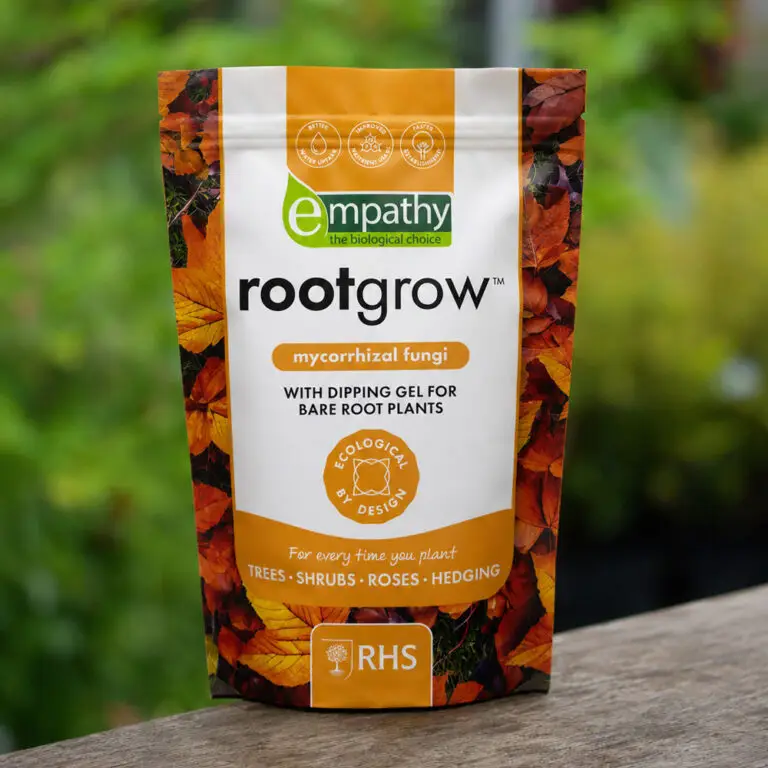
Rootgrow Mycorrhizal Fungi
Rootgrow can be applied at planting so the product is in direct contact with the roots, where appropriate for the plant and planting method.
View product
Hedge Feed
Hedge Feed provides balanced nutrition where established hedging would benefit from feeding as part of normal care.
View product
Hedge Irrigation
A hedge irrigation system can make it easier to water a new hedge consistently, particularly on longer runs and during dry weather.
View product
Hedge Compost & Mulch
Compost and mulch can support soil preparation, moisture retention and weed suppression when used appropriately around new hedging.
View product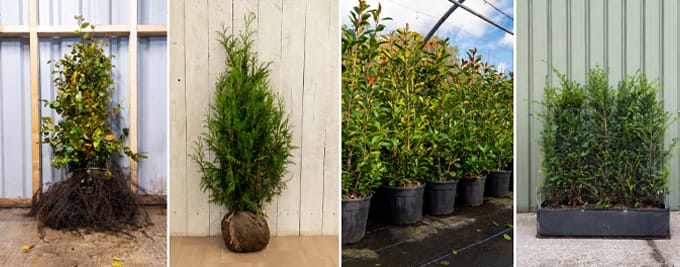
What Are the Different Hedging Root Types?
Bare root, root ball, pot-grown and instant hedging suit different budgets, planting times and levels of initial coverage. Understanding how each is…
Read answerWhat Size Yew Plants Should I Choose for a Mature Hedge?
Choosing taller Yew plants can give a new garden hedge immediate structure and privacy, but plant height is only part of the…
Read answer
What Is the Best Time of Year to Plant a Yew Hedge?
Planting Yew at the right time reduces stress and makes first-season watering easier. The most suitable planting window depends on whether you…
Read answer
How Fast Does a Yew Hedge Grow Annually?
English Yew is often described as slow growing, but a healthy, established hedge can still make useful progress each year. Its actual…
Read answer
Is Euonymus Green Spire Poisonous to Dogs and Cats?
Green Spire is an attractive evergreen hedge, but it is not a plant to treat as edible. Pet owners should prevent dogs…
Read answer
Are Laurel Berries Poisonous?
Laurel hedges can produce attractive dark berries after flowering, but the name "Laurel" covers several different plants. Their fruit is not identical,…
Read answer
Is Laurel Hedging Poisonous?
Laurel is one of the UK's most popular evergreen hedges, but not every plant called Laurel has the same safety profile. This…
Read answer
Is Photinia Red Robin Poisonous to Dogs?
There is conflicting gardening advice about Photinia Red Robin and pet safety. Veterinary toxicology sources support a cautious approach because Photinia foliage…
Read answer