
What Size Yew Plants Should I Choose for a Mature Hedge?
Choosing taller Yew plants can give a new garden hedge immediate structure and privacy, but plant height is only part of the decision. Root type, bushiness, spacing, site access and the amount of establishment care available should all influence the size you order.
Quick Answer
For a mature-looking garden hedge, root-balled Yew plants between approximately 125cm and 200cm are usually the most practical tall sizes. Current Hedging Plants Direct planting densities use two plants per metre for many root-balled Yew sizes within this range. Plants over 200cm provide greater immediate height but become substantially heavier and require more careful handling, planting and watering. The tallest plant is not automatically the quickest or easiest plant to establish.
Quick Facts
| Best practical tall starting size | Approximately 125–200cm |
|---|---|
| Root type normally used | Root-balled |
| Typical spacing at 125–200cm | 2 plants per metre, approximately 50cm apart |
| Very large Yew option | 400-450cm high wire root-balled Yew |
| Instant Yew option | Established one-metre-wide hedge units |
| Typical growth once established | Approximately 20–30cm a year, with up to 40cm possible in favourable conditions |
| Most important site requirement | Moist but well-drained soil |
| Establishment period | Close watering and weed control for at least the first two growing seasons |
| Important safety point | Yew is highly poisonous if eaten and must not be planted within reach of grazing animals |
What counts as a tall Yew hedge plant?
For a domestic garden hedge, Yew plants from approximately 125cm upwards can reasonably be described as tall starting plants. They provide noticeably more height and structure than young bare-root or small pot-grown plants, while remaining more manageable than very large specimen Yew.
It is important to distinguish between a plant that is tall at delivery and a hedge that is fully mature. A 175cm root-balled plant may provide immediate vertical screening, but its root system still has to establish in the garden and its side growth needs time to join with neighbouring plants.
The current English Yew hedge plant range includes root-balled plants from smaller starting sizes through to substantial specimens over 2.5 metres tall. Availability varies with the lifting season and current nursery stock.
Which Yew starting height should you choose?
The right size depends on how much immediate coverage you need, the available budget and whether the site can accommodate the weight and watering requirements of larger plants.
| Starting size | Best suited to | Current planting guidance | Main consideration |
| 100–125cm root-balled | A taller starting hedge without using very heavy specimens | 3 plants per metre | More plants are needed to create a continuous line |
| 125–150cm root-balled | Domestic boundaries needing useful initial height | 2 plants per metre | Requires reliable establishment watering |
| 150–175cm root-balled | A mature-looking formal hedge from planting | 2 plants per metre | Plants and root balls are heavier to handle |
| 175–200cm root-balled | Strong immediate structure and screening | 2 plants per metre | Access, unloading and planting should be planned before delivery |
| 200–225cm root-balled | Large gardens and specimen planting projects | Confirm the current product recommendation | May require lifting equipment and staking assessment |
| 250–275cm root-balled | Maximum immediate height from individual plants | 1 plant per metre | Specialist handling, substantial soil preparation and intensive watering are required |
Always use the live plants-per-metre figure displayed for the exact product variation you order. Planting densities can change according to the height, bushiness and root format of the plants.
Are the tallest Yew plants always the best choice?
Not necessarily. A taller Yew gives more immediate height, but it does not automatically grow faster after planting.
Young Yew plants generally have less top growth for their roots to support and can settle into a new planting site quickly. The RHS advises that 45–60cm Yew plants often establish more successfully than larger plants, while the HPD Yew care guide notes that 40–60cm plants are economical, straightforward to handle and often establish strongly.
Larger Yew plants are worthwhile where initial appearance matters, such as a finished garden, formal landscape, overlooked boundary or commercial project. Their advantage is immediate structure rather than a guaranteed increase in annual growth.
For many domestic gardens, plants between 125cm and 200cm provide a sensible balance between visible height and manageable establishment. Specimens above 200cm are better treated as a planned landscaping operation rather than an ordinary hedge-planting job.
Should you choose root-balled or instant Yew?
Tall individual Yew plants are normally supplied root-balled. They are field-grown and lifted with soil retained around their roots during the cooler dormant season.
Root-balled Yew
Root-balled Yew is the main choice where the priority is starting height. Individual plants can be positioned along the boundary at the recommended density and trained together into a formal hedge.
Root-balled plants are seasonal, heavy and must be handled by the root ball rather than lifted by the stem. The root ball should remain intact until the plant is safely positioned in the trench.
Instant Yew hedging
Instant Yew is grown as an established, connected section of hedge, normally supplied in a one-metre-wide unit. It provides a more continuous face from the day it is planted, although the available starting height may be lower than the tallest individual root-balled plants.
Instant hedging can therefore be the better choice when density and continuity are more important than maximum height. Tall root-balled Yew is often more suitable when the main aim is to establish a higher boundary.
Both formats still require time to establish new roots in the surrounding garden soil. Neither should be treated as maintenance-free.
What should you check before ordering tall Yew plants?
Access to the planting area
Check the entire route from the delivery vehicle to the hedge line. Include gateways, narrow paths, steps, changes in level, soft lawns and overhead restrictions.
Large root-balled Yew plants may require a loader, excavator, lifting trolley or several people to move safely. The trench and access route should be ready before the plants arrive.
Drainage
Yew grows in a wide range of soil types, but it does not tolerate roots remaining in stagnant, waterlogged ground. Check the hedge line after heavy rain and correct low areas before planting.
Do not simply dig individual compost-filled holes in heavy soil. These can collect water and behave like sumps. Prepare the full planting strip or form a broad raised planting ridge where drainage cannot otherwise be improved.
Finished hedge width
Allow enough room for the planned width of the hedge and access to both faces for future trimming. A Yew hedge can be maintained relatively narrowly, but planting it tightly against a wall or fence can make trimming and watering difficult.
Water supply
A tall Yew hedge represents a considerable investment and requires dependable watering. For long hedge runs, an irrigation system is generally more reliable than carrying water to each plant by hand.
Check that water reaches the far end of the irrigation line and adjust watering according to rainfall, soil type and season rather than relying on one timer setting throughout the year.
How should tall Yew plants be established?
Prepare a broad, weed-free planting strip and relieve any soil compaction before delivery. Set each plant at the same depth at which it was previously growing, keeping the old soil mark or root flare close to the finished ground level.
Keep root balls intact and do not lift the plants by their stems. Once positioned, backfill carefully around the root ball, firm the soil sufficiently to hold the plant upright and water through the complete root depth.
Apply an organic mulch over the planting strip to conserve moisture and suppress weeds, but leave a clear space around the stems. Rootgrow mycorrhizal fungi may be applied directly against the roots at planting in accordance with its instructions.
Tall plants on exposed sites should be checked for wind movement. Staking may be necessary where the root ball is moving in the soil, but supports should not rub against or constrict the stems.
Avoid placing strong fertiliser directly into the planting trench. Correct watering, drainage, planting depth and weed control are more important during the initial establishment period.
How quickly will tall Yew form a mature hedge?
Tall plants provide immediate height, but the length of time required for a fully joined hedge depends on their starting width, spacing, soil, light, watering and formative pruning.
English Yew commonly produces approximately 20–30cm of annual extension once established, with growth of up to about 40cm possible in favourable conditions. The first season may be slower because the plant is concentrating on replacing and extending its root system.
Allow the leading shoots to grow until the hedge approaches its intended height. Lightly shorten long side shoots to encourage branching and help neighbouring plants join together. Keep the base of the hedge slightly wider than the top so that light can reach the lower foliage.
A line of 150–200cm plants can look substantial immediately, but it should still be regarded as a newly planted hedge until the roots have spread into the surrounding soil.
Is tall Yew suitable for every garden?
Tall Yew is particularly suitable for formal evergreen boundaries, shaded gardens and sites where the hedge may need to be reduced or reshaped in future. Unlike most conifers, established Yew can regenerate from cuts made into old wood.
It should not be planted in permanently waterlogged soil or anywhere horses and grazing livestock could reach it. Yew foliage, bark and seeds are highly poisonous if eaten, and all clippings must be collected and kept away from children, pets and animals.
For complete planting, watering, feeding, pruning and problem-solving advice, read the Yew Hedging Care Guide.
Gwynne's Grower's Tip
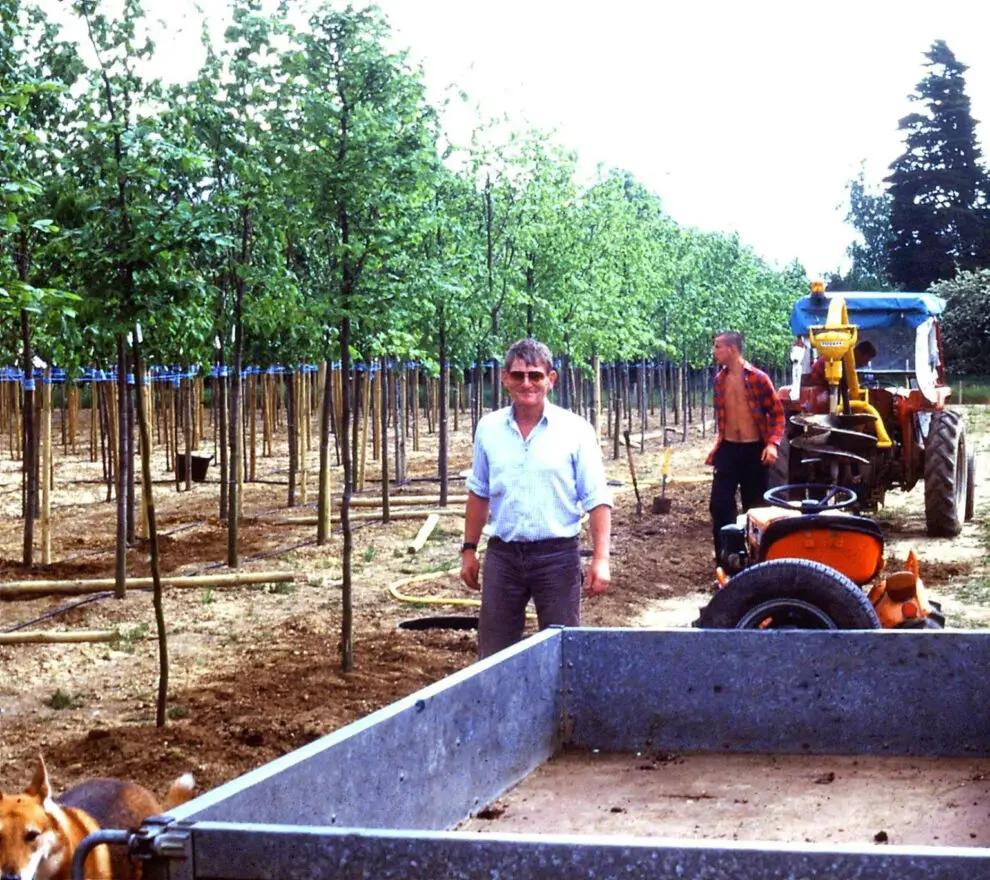
When choosing large Yew, look at more than the height written on the label. A bushy 150–175cm plant with strong lower growth can produce a better hedge than a taller but narrow specimen. For most gardens, I would normally look first at the 150–200cm root-balled sizes because they provide useful immediate structure without becoming unnecessarily difficult to handle. Have the trench, unloading route and watering system ready before delivery. With tall Yew, careful watering through the first summer is far more important than applying extra feed.
More Yew Advice
For more detailed growing advice or to view the plants available from our nursery, use the links below.
Related Products
Products from our nursery that are relevant to this advice.

Useful Planting Essentials
Selected products that may help with planting, establishment and ongoing hedge care.
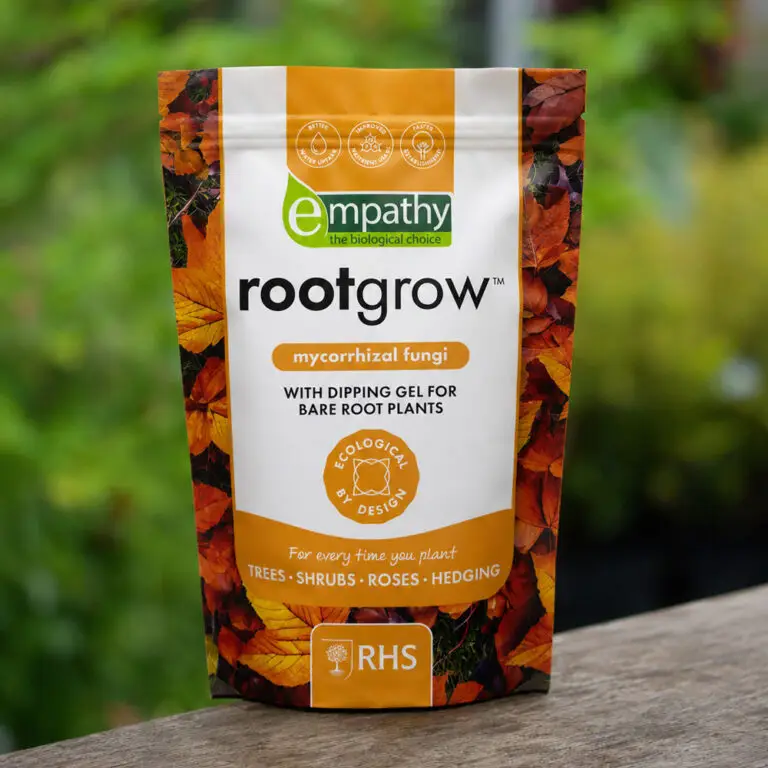
Rootgrow Mycorrhizal Fungi
Rootgrow can be applied at planting so the product is in direct contact with the roots, where appropriate for the plant and planting method.
View product
Hedge Feed
Hedge Feed provides balanced nutrition where established hedging would benefit from feeding as part of normal care.
View product
Hedge Irrigation
A hedge irrigation system can make it easier to water a new hedge consistently, particularly on longer runs and during dry weather.
View product
Hedge Compost & Mulch
Compost and mulch can support soil preparation, moisture retention and weed suppression when used appropriately around new hedging.
View product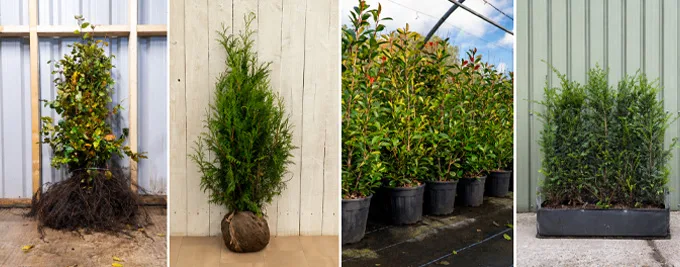
What Are the Different Hedging Root Types?
Bare root, root ball, pot-grown and instant hedging suit different budgets, planting times and levels of initial coverage. Understanding how each is…
Read answerIs Taxus baccata Poisonous to Dogs and Livestock?
Yew is a familiar evergreen hedge, but its foliage, bark and seeds require particular care around animals. This guide explains the practical…
Read answer
What Is the Best Time of Year to Plant a Yew Hedge?
Planting Yew at the right time reduces stress and makes first-season watering easier. The most suitable planting window depends on whether you…
Read answer
How Fast Does a Yew Hedge Grow Annually?
English Yew is often described as slow growing, but a healthy, established hedge can still make useful progress each year. Its actual…
Read answer
Euonymus Green Spire vs Jean Hugues: Which Hedge to Buy?
Green Spire and Jean Hugues are both dark green Euonymus japonicus varieties and both make excellent Box alternatives. The real difference is…
Read answer
Are Euonymus Green Spire and Green Rocket the Same Plant?
The names Green Spire and Green Rocket are often used interchangeably by nurseries, which makes buying confusing. Current authoritative plant databases do…
Read answer
Is Hornbeam Evergreen? What Does It Look Like in Winter?
Hornbeam is valued for its fresh green summer foliage, warm autumn colour and strong winter structure. Understanding how its leaves behave after…
Read answer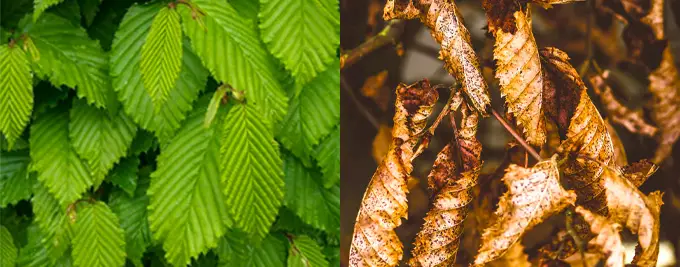

What Do Hornbeam Leaves Look Like?
Hornbeam has distinctive textured foliage that changes noticeably through the seasons. Learning to recognise the leaf shape, veins and toothed edges can…
Read answer