
When Should Hedges Be Cut to Avoid Nesting Birds?
Hedges provide valuable nesting cover for many British garden birds. Planning routine trimming around the breeding season reduces the risk of damaging an active nest while allowing the hedge to be maintained responsibly.
Quick Answer
Plan routine hedge cutting for late autumn and winter, usually between October and February, and inspect the hedge immediately before starting. The main UK nesting period is generally March to September, but birds can nest outside these months. An active nest remains protected while it is being built or used, so stop and postpone work if you find one. Separate cutting restrictions apply to qualifying agricultural hedgerows.
Quick Facts
| Safest routine cutting period | Usually October to February |
|---|---|
| Main nesting period | Generally March to September |
| Before every cut | Inspect the whole hedge for active nests |
| If a nest is active | Stop work and wait until it is no longer in use |
| Agricultural hedgerows in England | Qualifying hedgerows must not normally be cut from 1 March to 31 August |
Why are autumn and winter usually the safest times to cut a hedge?
Late autumn and winter are normally the safest periods for routine hedge cutting because most birds have finished breeding. For many garden hedges, scheduling the main work between October and February substantially reduces the likelihood of encountering an active nest.
The RSPB describes March to September as the main nesting season. However, weather, location and bird species can all affect the timing. Some birds may begin building earlier or continue raising young later, so October does not automatically make every hedge safe to cut.
The hedge itself must also be considered. Different plants have different preferred pruning periods, and some established hedges are traditionally trimmed during summer. Our complete guide to how and when to trim a hedge explains how pruning times vary between deciduous, evergreen and conifer hedges.
Whatever the species or recommended pruning month, an active nest takes priority. Always check the hedge before starting.
Is it illegal to cut a garden hedge during bird nesting season?
There is no universal date-based ban that prevents every private gardener from trimming a domestic hedge during spring or summer. However, the Wildlife and Countryside Act 1981 makes it an offence to intentionally take, damage or destroy the nest of a wild bird while it is being used or built, or to intentionally take or destroy its eggs.
Some specially protected birds receive additional protection from disturbance while nesting. The safest approach is therefore to avoid routine hedge cutting during the main breeding period wherever practical.
Cutting a hedge without first checking it creates a greater risk of damaging a concealed nest. Dense evergreen hedges can appear quiet from the outside even when birds are nesting well inside the foliage.
Do different rules apply to agricultural hedgerows?
In England, qualifying hedgerows growing on or next to agricultural land must not normally be cut or trimmed between 1 March and 31 August. The rules can cover hedgerows beside farmland, grazing land, market gardens, horticultural land and nursery grounds, provided the hedge meets the relevant length and location criteria.
There are specific exemptions, including certain safety, access and plant-health situations. Boundaries within or marking the edge of a private domestic garden are exempt from these particular agricultural hedgerow management restrictions.
The exemption from the agricultural rules does not remove the separate legal protection given to wild birds, their eggs and active nests.
Commercial clearance, development work and substantial landscape projects carried out during the breeding period may require a check by a suitably experienced ecologist where there is a significant risk of nesting birds being affected.
How should you check a hedge for nesting birds?
Inspect the hedge immediately before cutting, even when it was checked earlier in the week. Nest building can begin quickly, particularly during settled spring weather.
Start by standing back quietly and watching the hedge from both sides. Look and listen for:
- Birds repeatedly entering and leaving the same section.
- Adult birds carrying twigs, grass, moss, insects or other food.
- Persistent alarm calls when you approach.
- Cheeping or movement from within dense foliage.
- A visible nest, eggs or young birds.
Walk slowly around the front, back and ends of the hedge. Check the top and lower growth as well as the obvious outer surface. Some nests are positioned close to the ground, while others may be hidden deep inside evergreen foliage.
A quick glance along the outside is not sufficient for a thick Privet, Laurel, Yew, conifer or mixed native hedge. HPD’s existing pruning guidance similarly recommends checking the complete hedge and postponing work where an active nest is found.
Do not push powered tools into an area that cannot be inspected properly. Observe from a sensible distance first, as adult birds returning to one particular spot can reveal a nest that cannot be seen directly.
What should you do if you find an active nest?
Stop cutting immediately and switch off any powered equipment. Leave the nest, surrounding branches and protective foliage undisturbed.
Do not move the nest or attempt to finish the hedge by trimming closely around it. Removing nearby cover can expose the eggs or chicks to weather and predators, while noise and vibration may interfere with the adults returning.
Postpone work until the young have fledged and the nest is no longer being used. The length of time will depend on the bird species and the stage of nesting, so a fixed waiting period should not be assumed. Continue observing from a distance rather than repeatedly approaching the nest.
Where urgent work is required because a hedge or branch presents an immediate safety risk, obtain appropriate professional or ecological advice before proceeding.
Can part of the hedge be cut if the nest is at the other end?
A small, clearly separated section may sometimes appear unaffected, but the safest decision depends on the hedge, the position of the nest and the equipment being used.
Powered hedge trimmers can create noise and vibration along a much wider section than the cutting blade itself. Removing foliage can also alter the shelter surrounding a nest. For a short domestic hedge, postponing the complete job is usually the most cautious option.
On a very long hedge, leave a generous undisturbed area around the nesting activity and avoid work that could cause the birds to abandon the nest. Larger commercial or landscaping operations should use an appropriate ecological assessment rather than relying on an estimated distance.
Does the recommended pruning month override the nesting bird check?
No. The horticulturally preferred pruning time for a particular hedge does not make it acceptable to damage an active nest.
Beech, Laurel, Privet, Yew, conifers and flowering native hedges all have different growth habits and pruning requirements. Some may normally receive a summer trim, but that work must be postponed or adjusted if birds are nesting.
Dead, broken or dangerous branches can require attention outside the usual maintenance period. Even then, inspect carefully and remove only what is genuinely necessary.
How can a hedge be kept tidy while supporting birds?
Plan the substantial trimming for a lower-risk period and avoid cutting every section of an informal wildlife hedge heavily at the same time. Selective or rotational pruning can preserve more flowers, berries, shelter and nesting cover.
Where space allows:
- Leave some sections slightly less formal.
- Avoid unnecessary repeated trimming.
- Retain berry-bearing growth into winter where practical.
- Carry out major reductions gradually.
- Keep the hedge broad and dense near its base.
- Remove only the growth needed to maintain access, safety and the required size.
A slightly less formal hedge can provide considerably more shelter than one repeatedly cut into a very narrow outline. It also reduces the amount of growth that must be removed during the main breeding period.
Gwynne's Grower's Tip
With a dense hedge, I would not begin by pushing my hands or tools straight into the centre. Stand back quietly and watch both sides for a few minutes first. Adult birds will often reveal a hidden nest by repeatedly returning with food or nesting material, even when the nest itself cannot be seen. If there is regular activity in one section, leave it completely alone rather than trying to trim neatly around it. A slightly untidy hedge for a few extra weeks can easily be corrected later.
More General Advice
For more detailed growing advice or to view the plants available from our nursery, use the links below.
What Are the Different Hedging Root Types?
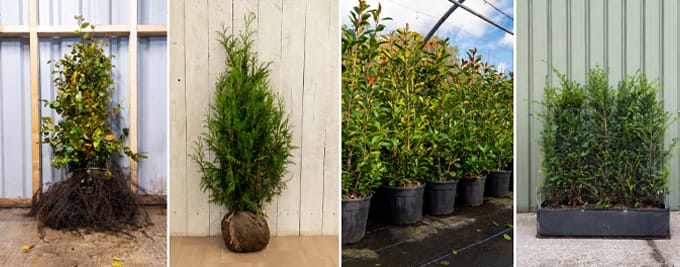
Bare root, root ball, pot-grown and instant hedging suit different budgets, planting times and levels of initial coverage. Understanding how each is…
Read answer
What Is the Best Soaker Hose for Hedges?
A well-chosen soaker hose makes it easier to water a hedge evenly without wetting the foliage or carrying a watering can along…
Read answer
What Is the Best Watering System for a Hedge?
A good hedge watering system should deliver moisture slowly and evenly along the whole planting line. The most suitable setup depends on…
Read answer
Why Is My Hedge Turning Brown?
A hedge can turn brown for several very different reasons, including dry roots, waterlogged soil, frost, wind, trimming damage or disease. The…
Read answer
When Should I Prune a Hornbeam Hedge?
Hornbeam responds well to regular clipping, but routine trimming, formative pruning and major renovation are best carried out at different times. Choosing…
Read answer
Is Hornbeam Good for Wildlife?
Hornbeam is a native deciduous hedge with a dense structure that can support birds, insects and small mammals. Its wildlife value depends…
Read answer
When Should I Prune a Laurel Hedge?
Laurel hedges are forgiving plants, but choosing the right time to prune helps them recover cleanly and keeps the hedge dense and…
Read answer
Do Deer and Rabbits Eat Holly Hedging?
Holly's tough, spiny leaves can give the impression that deer and rabbits will leave it alone. In practice, young English Holly can…
Read answer