
What Is the Best Watering System for a Hedge?
A good hedge watering system should deliver moisture slowly and evenly along the whole planting line. The most suitable setup depends on the hedge length, plant size, soil, slope and whether the plants are newly planted or established.
Quick Answer
For most garden hedges, the best watering system is a porous pipe or pressure-controlled drip line positioned directly over the root zone. It delivers water slowly at soil level and makes it easier to water every plant evenly than using a sprinkler or quickly passing a hose along the hedge. A tap timer is useful for longer runs, but the soil must still be checked and the watering time adjusted for rainfall, soil type, slope and plant size.
Quick Facts
| Best general system | Porous pipe or pressure-controlled drip line |
|---|---|
| Best for short, level hedges | Porous or leaky hose |
| Best for long runs or slopes | Pressure-regulated drip irrigation |
| Recommended position | Directly across the root zone |
| Useful optional control | Tap timer or irrigation controller |
| Usually unsuitable | Overhead sprinkler |
| Main check | Moisture around each original root ball |
| Most important period | The first two growing seasons |
Which watering system is best for a hedge?
A hedge is a continuous row of plants, so its watering system must distribute water along the full length rather than soaking one end and leaving the other dry. The best system should release water slowly, keep most of the moisture around the roots and allow you to adjust the supply as conditions change.
For a short or medium-length hedge on reasonably level ground, a porous pipe is usually the simplest option. For a long hedge, a sloping site or a project where even output from beginning to end is especially important, a pressure-controlled drip or internal-nozzle irrigation system is generally more suitable.
Hedging Plants Direct supplies both porous pipe for hedge watering and a complete hedge irrigation system. The complete system uses internal nozzles to control the water flow and can be configured with irrigation pipe, non-drip connecting pipe, regulators and connectors.
Porous pipe or leaky hose
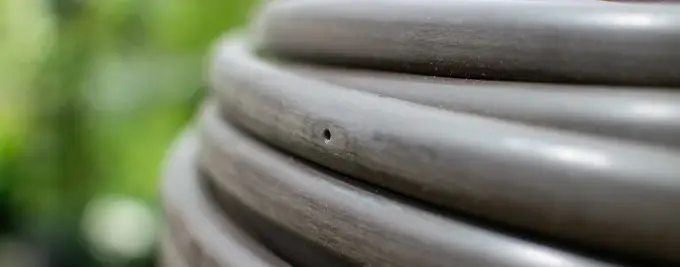
Porous pipe releases water gradually along its length. It can be laid on the soil surface or beneath a suitable layer of mulch and is particularly useful for straight, level hedge runs.
Its main advantages are simplicity, relatively low setup cost and slow application at root level. However, output can become less even on steep slopes, very long runs or where water pressure varies significantly.
Porous hose should pass directly across the plants’ root zones. Water does not travel sideways through soil as far as many people expect, particularly in light or sandy ground, so a pipe placed too far from the stems may leave the original root balls dry.
Pressure-controlled drip irrigation
Drip irrigation pipe contains outlets or internal nozzles that regulate the water supply along the line. It is normally the better choice for long hedges, trade and commercial planting, sloping ground or layouts containing gates, paths and separate hedge sections.
Non-drip connecting pipe can carry water past an area that does not need irrigation, while elbows and tee connectors allow the system to follow the planting layout. A suitable regulator may also be needed between a domestic hose connection and the irrigation line.
Hedging Plants Direct’s current hedge irrigation system is designed to provide controlled output from one end of a run to the other and can supply runs of up to approximately 100 metres from a suitable domestic water supply. Actual performance will still depend on pressure, layout, connectors and the available water source.
Watering can or ordinary garden hose
A watering can is perfectly adequate for a very short hedge or for giving individual plants additional attention. It also makes it easier to see how much water is being applied.
An ordinary hose is more practical for a longer hedge, but it should be used slowly at the base of each plant. Quickly spraying the foliage and soil surface can make the planting area appear wet without soaking the full root depth.
Manual watering also makes it easier to miss plants, particularly where the hedge contains many individual root balls. A permanent irrigation line reduces this risk, although it must still be tested and inspected.
Overhead sprinklers
Sprinklers are generally a poor main watering method for a hedge. Much of the water can land on leaves, paths, fencing and unplanted ground rather than entering the root zone. Water may also be lost through evaporation or surface run-off.
A drip line or porous pipe is more targeted and normally allows the surrounding soil surface to remain drier, which may also reduce unnecessary weed growth.
How should irrigation pipe be positioned along a hedge?
Lay the watering pipe close enough to pass over or immediately beside the original root systems. Do not automatically position it halfway between widely spaced plants, as this may water the empty soil more thoroughly than the root balls.
A narrow, single-row hedge will normally need one correctly positioned irrigation line. A wide hedge, staggered double row or line of particularly large root balls may need two lines so that both sides of the root area are reached.
The pipe can usually remain visible on the soil surface, where it is easy to inspect. It may also be covered with a suitable mulch to reduce evaporation, but avoid burying it so deeply that blockages, leaks or displacement cannot be detected.
Where the hedge is interrupted by a gate, path or building, use non-irrigating connecting pipe to carry the supply across the gap rather than allowing watering pipe to run unnecessarily through the unplanted section.
How long should a hedge watering system run?
There is no single runtime that is correct for every hedge. Water pressure, pipe type, plant size, soil, temperature, rainfall and hedge length can all change the amount of water reaching the roots.
The safest approach is to calibrate the system after installation:
- Check that the soil is not already saturated.
- Run the system for a measured period.
- Inspect the soil near the beginning, middle and far end of the hedge.
- Check beneath the surface and within the original root area rather than judging by surface colour alone.
- Increase the runtime if only the surface is damp.
- Reduce the runtime or frequency if water is pooling or the soil remains saturated.
- Repeat the test during hotter, windier or wetter conditions.
The aim is to wet the full root area slowly and thoroughly, then allow air to return to the soil. Constantly saturated ground can be as damaging as allowing a newly planted hedge to dry out.
Hedging Plants Direct’s general care guidance recommends checking both the original root ball and the surrounding soil rather than following a fixed timetable. Hot, windy weather and free-draining soil increase water demand, while heavy or poorly drained soil requires greater caution.
Is an automatic timer worth using?
A tap timer is useful for long hedges, larger planting projects and periods when regular manual watering would be difficult. It can help prevent missed watering sessions and allows irrigation to operate slowly for a controlled period.
A timer does not measure what is happening around the roots unless it is connected to suitable moisture or rainfall sensors. It can continue watering after heavy rain or apply too little during unusually hot, dry weather.
Treat the timer as a control device rather than a replacement for checking the plants. Adjust or pause the programme after significant rainfall and inspect the soil regularly. Automated drip and porous-pipe systems can also be combined with rain sensors where a more advanced setup is justified.
Does soil type change the best system?
Light or sandy soil
Light soil drains quickly and water may not spread far sideways. Position the irrigation line accurately over the roots and check the soil more frequently during dry weather.
Several controlled applications may sometimes be more effective than applying a large volume so quickly that it passes below the active root zone.
Heavy or clay soil
Heavy soil holds moisture for longer and water spreads further sideways. Apply water slowly to reduce surface run-off, then allow sufficient time between watering sessions for the soil to drain.
Do not continue running an automatic system simply because the surface has dried. Check below the surface before watering again.
Sloping ground
A basic porous hose may release more water at the lower end of a slope. A pressure-regulated drip line is normally more reliable where height changes could cause uneven output.
Test the upper, middle and lower sections separately after installation.
Do new and established hedges need the same system?
Newly planted hedges require the closest monitoring because their roots are still concentrated within the planting trench or original root balls. Pot-grown, root-balled and instant hedging can contain a substantial root mass that must be kept evenly moist while roots grow into the surrounding soil.
Larger plants normally require a greater watering commitment than small young plants. A hedge may also appear established above ground while much of its active root system remains close to the original planting area.
Established hedges growing in suitable soil should need less routine watering. Irrigation may still be useful during prolonged dry weather, after substantial pruning or where the hedge competes with nearby trees, lawns or other established planting.
How can you make a hedge watering system more effective?
Keep grass and weeds away from the planting strip because they compete with the hedge for moisture. Apply a suitable organic mulch over moist soil to reduce evaporation and weed growth, but leave a small clear area around the stems.
Check filters, connectors and the far end of the irrigation line regularly. Damage from tools, blocked outlets, kinks and changes in water pressure can cause one section of the hedge to receive less water than another.
Continue to assess the individual plants. One wilting or yellowing plant in an otherwise healthy line may have a dry root ball, damaged pipe or local drainage problem that will not be corrected simply by increasing the watering time for the entire hedge.
Further planting and establishment guidance is available in HPD’s guide to planting a hedge and the hedging care and growing guide directory.
Gwynne's Grower's Tip
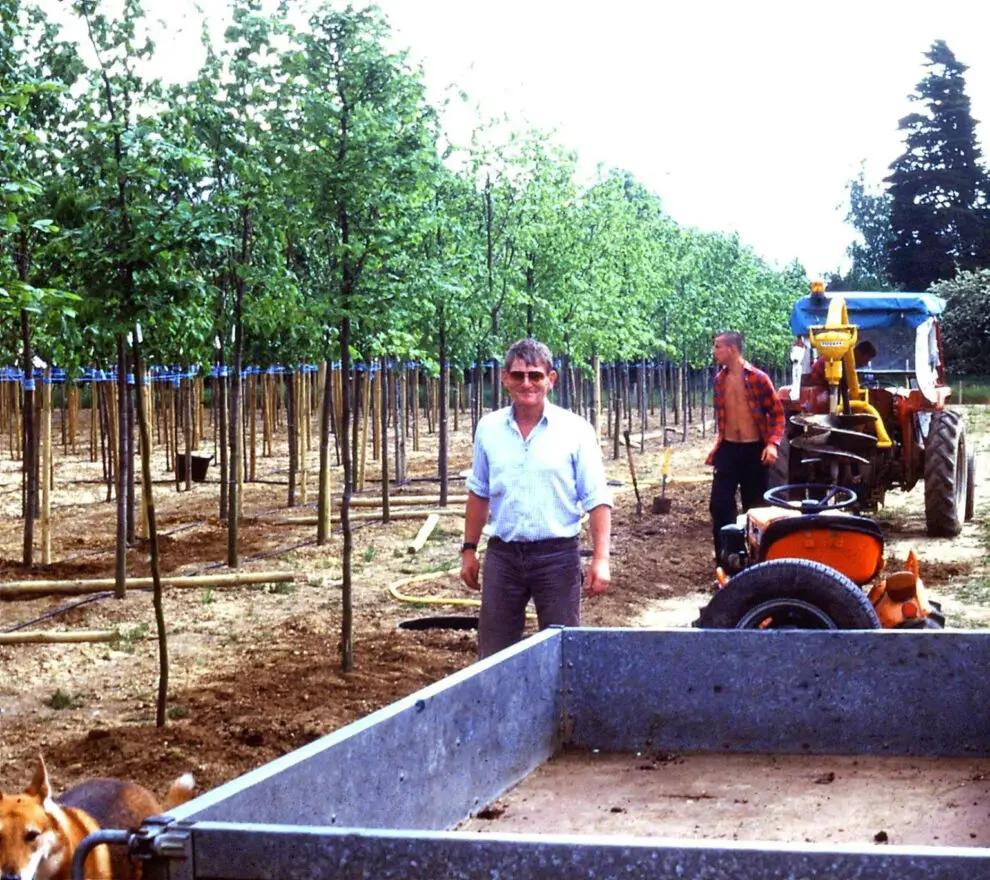
After installing irrigation, check the soil beside a plant near the tap, one in the middle and one at the far end. Do not assume the whole hedge is being watered because the first few metres look damp. This simple test often reveals a kink, pressure problem or blocked section before the plants begin to suffer. We would rather see the full root area soaked slowly and then allowed to drain than the surface sprinkled every day. Be especially cautious with automatic timers on heavy soil, where moisture can remain below the surface for much longer than expected.
Related Products
Products from our nursery that are relevant to this advice.


Useful Planting Essentials
Selected products that may help with planting, establishment and ongoing hedge care.
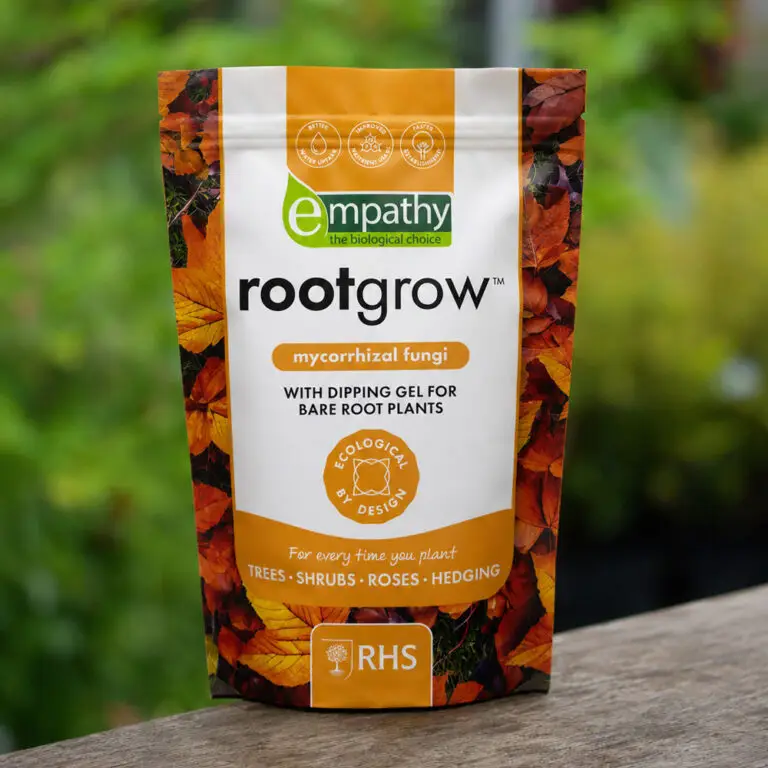
Rootgrow Mycorrhizal Fungi
Rootgrow can be applied at planting so the product is in direct contact with the roots, where appropriate for the plant and planting method.
View product
Hedge Feed
Hedge Feed provides balanced nutrition where established hedging would benefit from feeding as part of normal care.
View product
Hedge Irrigation
A hedge irrigation system can make it easier to water a new hedge consistently, particularly on longer runs and during dry weather.
View product
Hedge Compost & Mulch
Compost and mulch can support soil preparation, moisture retention and weed suppression when used appropriately around new hedging.
View product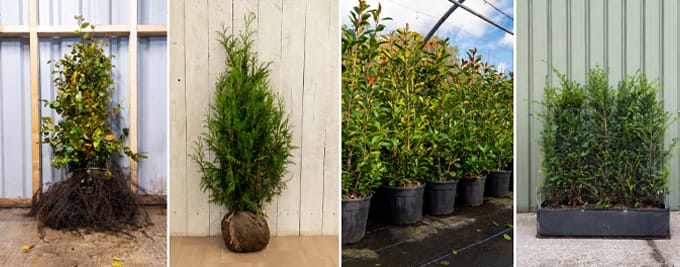
What Are the Different Hedging Root Types?
Bare root, root ball, pot-grown and instant hedging suit different budgets, planting times and levels of initial coverage. Understanding how each is…
Read answer
What Is the Best Soaker Hose for Hedges?
A well-chosen soaker hose makes it easier to water a hedge evenly without wetting the foliage or carrying a watering can along…
Read answer
Why Is My Hedge Turning Brown?
A hedge can turn brown for several very different reasons, including dry roots, waterlogged soil, frost, wind, trimming damage or disease. The…
Read answer
How Much Mycorrhizal Fungi Should I Use?
The correct amount of mycorrhizal fungi depends on the size and root type of the plants being treated. Calculating the quantity before…
Read answerWhat Is the Best Soaker Hose for Hedges?
A well-chosen soaker hose makes it easier to water a hedge evenly without wetting the foliage or carrying a watering can along…
Read answer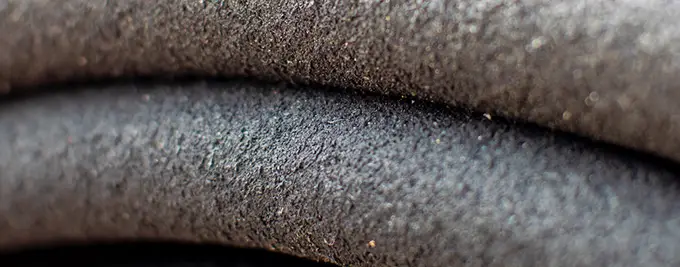
How Long Should Drip Irrigation Run for Hedges?
Drip irrigation makes it easier to water a hedge evenly, but the timer setting must suit the pipe output, soil and size…
Read answer