
How Much Mycorrhizal Fungi Should I Use?
The correct amount of mycorrhizal fungi depends on the size and root type of the plants being treated. Calculating the quantity before planting helps ensure every plant receives adequate root contact without unnecessarily overusing the product.
Quick Answer
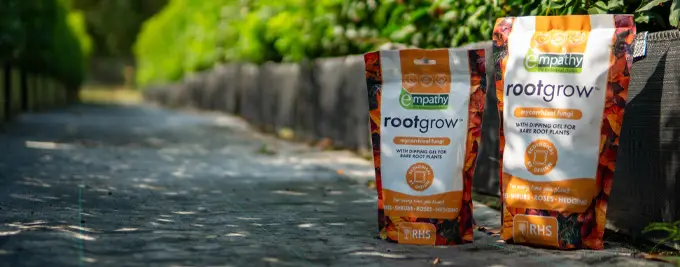
Use the application rate printed on the pack because the amount varies with root size and planting method. As a practical guide, a 360g Rootgrow gel pack typically treats around 90–120 bare-root plants measuring 30–60cm, 70–100 plants measuring 60–90cm, or up to 19 plants in 2-litre pots. Apply it once at planting and ensure the fungi make direct contact with the roots.
Quick Facts
| When to apply | Once, at the time of planting |
|---|---|
| Where to apply | Directly against the plant roots |
| Bare-root application | Mix with the supplied gel where included and dip the roots |
| Pot-grown application | Sprinkle the measured granules into the planting hole beneath and around the root ball |
| Typical 360g coverage | About 90–120 bare-root plants at 30–60cm or up to 19 plants in 2-litre pots |
| Most important guidance | Follow the current instructions on the product pack because root sizes vary |
Why does the amount of mycorrhizal fungi vary?
Mycorrhizal fungi products are applied to the root system rather than measured simply by the length of the hedge. A small bare-root whip requires much less product than a large root-balled plant, tree or mature section of instant hedging.
The quantity you need will therefore depend on:
- The number of plants being installed
- The height and size of each root system
- Whether the plants are bare root, cell grown, pot grown or root balled
- The application rate printed on the particular pack
- Whether the granules are being used dry or mixed with the supplied dipping gel
A pack should be treated as covering an approximate number of plants rather than an exact length of hedge. Two varieties sold at the same height can have noticeably different root systems.
Rootgrow quantities for bare-root hedging
For bare-root plants, Rootgrow can be mixed with the supplied gel to create a dipping solution. The manufacturer’s current guidance gives the following approximate coverage rates.
| Approximate plant height | Plants treated by a 360g gel pack | Plants treated by a 1kg gel pack |
| Up to 30cm | 125–150 | 350–420 |
| 30–60cm | 90–120 | 270–340 |
| 60–90cm | 70–100 | 210–280 |
| 90–120cm | 50–75 | 150–200 |
| 120–150cm | 40–60 | 115–170 |
| 150–180cm | 35–50 | 100–150 |
These figures are useful for planning, but they remain approximate. Species with broad, fibrous or unusually large root systems can use more dipping solution than plants with smaller roots.
How to apply it to bare-root plants
Prepare the dipping gel according to the instructions supplied with the pack. Stir the granules through the prepared gel so they remain distributed throughout the mixture.
Open one bundle of plants at a time and keep the remaining roots covered. Dip the root system into the mixture, allow excess gel to drain back into the bucket and plant immediately. The roots should receive an even coating without being left exposed to wind or sun while other work is completed.
How much should I use for pot-grown hedging?
The amount required for pot-grown plants is normally based on the volume of the container or root ball.
As a broad guide, the manufacturer states that a 360g pack can treat up to 19 plants in 2-litre pots or one root system of approximately 100 litres. A smaller 60g pack is described as treating up to six 2-litre pots or one 10-litre pot.
Larger pot-grown hedging may therefore use considerably more product per plant than small 2-litre stock. Check the plant’s actual pot size rather than estimating the quantity from its height alone.
How to apply it to pot-grown plants
Measure the recommended amount and sprinkle the granules evenly into the planting hole where the outer roots will touch them.
Position the root ball directly over the product and backfill the hole normally. Do not scatter all the granules over the soil surface or mix them through a large volume of backfill where only a small proportion will contact the roots.
How much should I use for root-balled or instant hedging?
Root-balled plants and instant hedging can have much larger root systems than ordinary pot-grown plants. The amount needed should be based on the approximate root-ball volume and the instructions provided with the pack.
Apply the granules beneath and around the sides of the root ball so that newly developing roots can contact the fungi. Do not place the entire quantity at the bottom of an unnecessarily deep hole.
For a large planting scheme, calculate the number and sizes of the plants before ordering. The current Rootgrow Mycorrhizal Fungi with Gel range includes 360g, 1kg and 2.5kg options for different project sizes.
Is using more mycorrhizal fungi better?
Applying more than the recommended amount is not a substitute for placing it correctly. Direct root contact is more important than scattering a large quantity around the planting area.
Mycorrhizal fungi also do not compensate for:
- Dry or damaged roots
- Poorly prepared or compacted soil
- Incorrect planting depth
- Waterlogging
- Insufficient watering after planting
- Heavy weed or grass competition
HPD advises that Rootgrow should be placed directly against the roots and that it does not replace good soil preparation, correct planting depth or regular watering.
Can mycorrhizal fungi be applied after planting?
The best opportunity to apply Rootgrow is while the roots are exposed during planting. This makes it possible to place the product directly against the root system.
Simply scattering granules over the surface of an established hedge is unlikely to provide the same level of root contact. If a hedge has already been planted, concentrate first on appropriate watering, weed control, mulching and correcting any planting or drainage problems.
Is standard Rootgrow suitable for every plant?
Standard Rootgrow is suitable for most hedging plants, trees, shrubs and roses. However, the manufacturer states that the standard product is not suitable for rhododendrons, azaleas, heathers, cranberries or blueberries. A specialist ericoid formulation is recommended for relevant acid-loving plants. It is also unsuitable for brassicas.
Always check the current pack instructions where the planting includes an unusual species or a mixture of hedging and ornamental plants.
Which pack size should I choose?
Choose the pack by counting the plants and recording their sizes or pot volumes.
A 360g pack is generally suitable for a modest domestic hedge or a smaller planting project. A 1kg pack is more economical for a long run of bare-root hedging, while the larger 2.5kg option is intended for substantial garden, landscaping, trade or commercial planting schemes. Hedging Plants Direct currently supplies all three sizes.
Allow a sensible margin where the plants have particularly large roots, but avoid buying purely on hedge length without checking the root type and size.
Gwynne's Grower's Tip
On a long bare-root hedge, mix only the amount of dipping gel you can use while the roots remain fresh. Open one bundle at a time, coat the roots, let the excess drain back into the bucket and plant immediately. A common mistake is preparing every plant at once and then leaving the coated roots exposed while the trench is finished. Rootgrow can support establishment, but keeping the roots damp, planting at the previous soil mark and watering the full trench properly will make a greater difference than simply adding extra product.
Related Products
Products from our nursery that are relevant to this advice.
Useful Planting Essentials
Selected products that may help with planting, establishment and ongoing hedge care.
Rootgrow Mycorrhizal Fungi
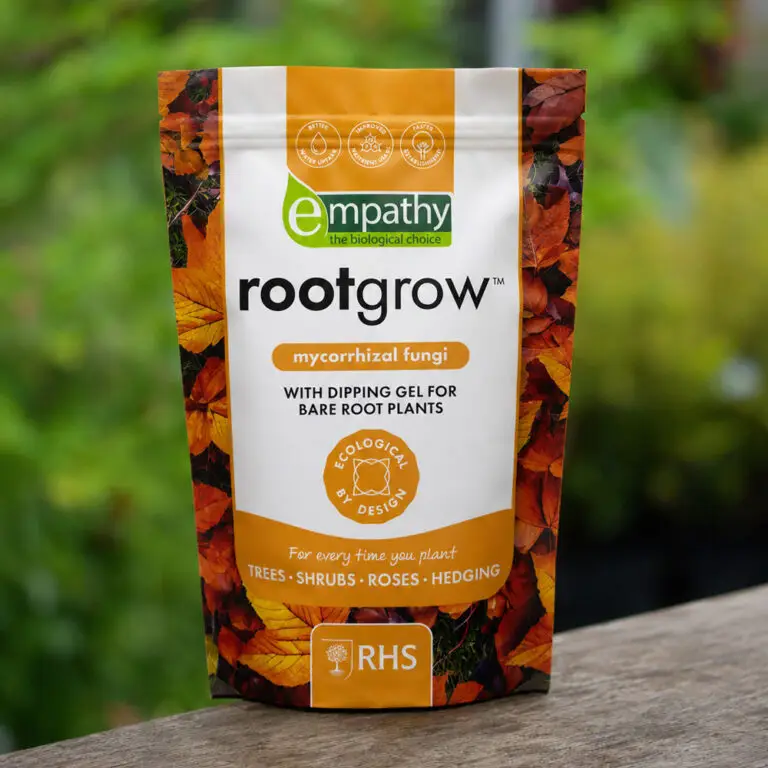
Rootgrow can be applied at planting so the product is in direct contact with the roots, where appropriate for the plant and planting method.
View product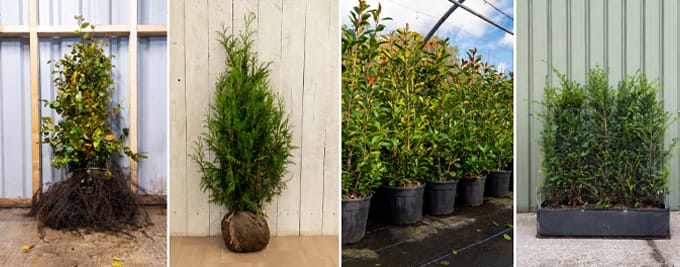
What Are the Different Hedging Root Types?
Bare root, root ball, pot-grown and instant hedging suit different budgets, planting times and levels of initial coverage. Understanding how each is…
Read answer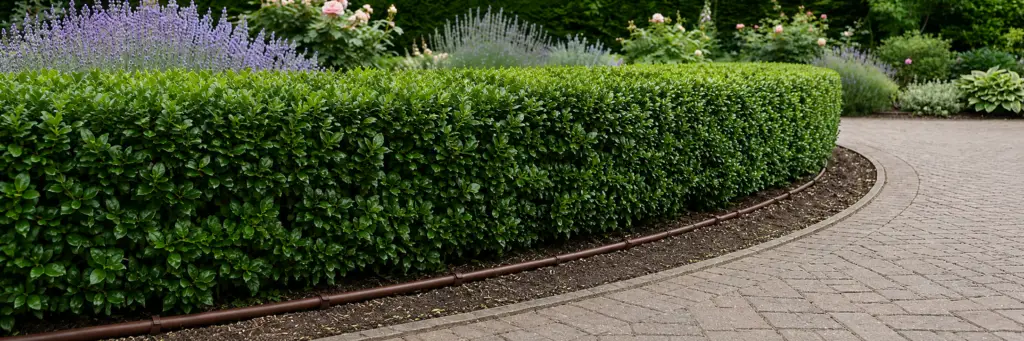
What Is the Best Soaker Hose for Hedges?
A well-chosen soaker hose makes it easier to water a hedge evenly without wetting the foliage or carrying a watering can along…
Read answer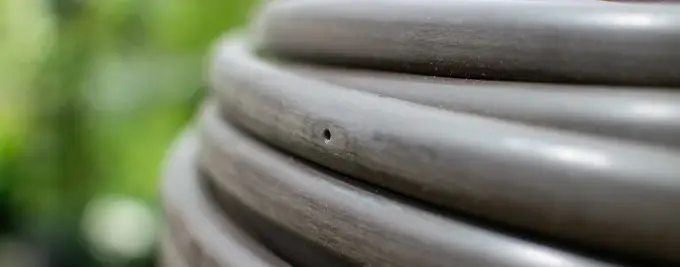
What Is the Best Watering System for a Hedge?
A good hedge watering system should deliver moisture slowly and evenly along the whole planting line. The most suitable setup depends on…
Read answer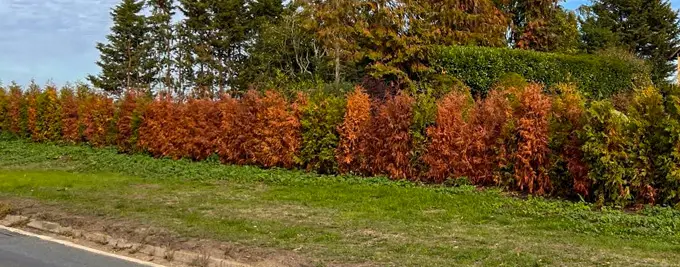
Why Is My Hedge Turning Brown?
A hedge can turn brown for several very different reasons, including dry roots, waterlogged soil, frost, wind, trimming damage or disease. The…
Read answer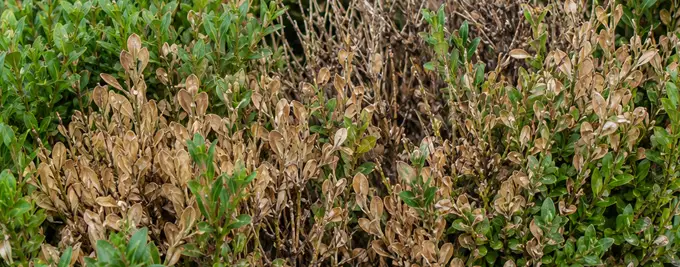
Can I Replace a Box Hedge With Green Spire After Box Blight?
Green Spire is one of the closest Euonymus alternatives to a neat low Box hedge. A previous box-blight outbreak does not infect…
Read answer
When Is the Best Time to Plant Hornbeam Hedging?
Hornbeam can be planted in several different forms, and the best planting time depends mainly on whether the plants are supplied bare…
Read answer
How Long Can Bare-Root Plants Be Stored?
Bare-root plants are vulnerable once they have been lifted because their exposed roots can dry out quickly. Correct temporary storage can protect…
Read answer
How Do I Plant a Staggered Double-Row Hedge?
A staggered double row creates a broader hedge by arranging plants in a zigzag rather than directly opposite one another. Correct spacing…
Read answer