
What Is the Best Soaker Hose for Hedges?
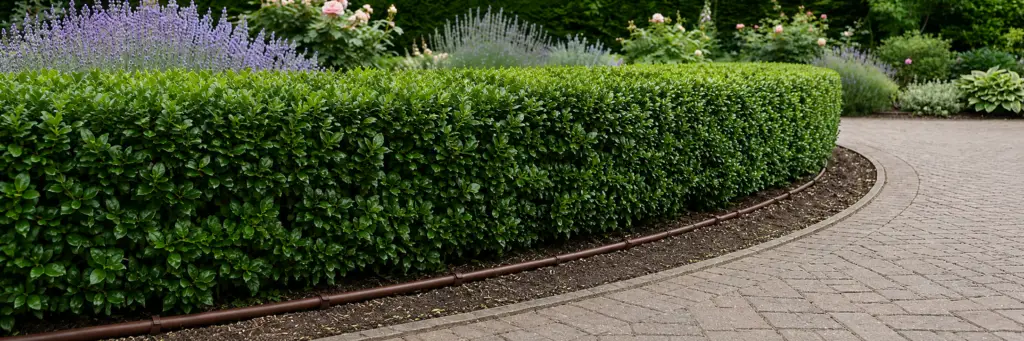
A well-chosen soaker hose makes it easier to water a hedge evenly without wetting the foliage or carrying a watering can along the whole planting line. The right system depends on the hedge length, ground level, water pressure and whether the plants are arranged in a single or double row.
Quick Answer
The best soaker hose for most short, level garden hedges is a round porous pipe designed to operate at low pressure and laid close to the plants’ root zones. For longer hedge runs, slopes, instant hedging or commercial planting, a regulated drip or emitter line is usually better because it delivers water more consistently from the beginning to the end of the system. Whichever type you choose, test the entire line before covering it with mulch.
Quick Facts
| Best for short, level hedges | Low-pressure porous soaker pipe |
|---|---|
| Best for long hedge runs | Regulated drip or emitter irrigation line |
| Correct position | Close to the root balls, not beside the outer foliage |
| Single-row hedge | One line is usually sufficient |
| Wide or staggered hedge | Two irrigation lines may be required |
| Best covering | On the soil beneath a layer of mulch |
| Watering duration | Calibrate according to soil, weather, pressure and plant size |
| Essential check | Test delivery at the beginning, middle and end |
What type of soaker hose is best for a hedge?
For an ordinary domestic hedge on reasonably level ground, a round porous pipe is normally the simplest type of soaker hose to install. Water seeps gradually along the length of the pipe and enters the soil close to the roots rather than being sprayed over the foliage.
A porous hose is particularly useful for a newly planted hedge, where consistent moisture is important while the plants establish. It can be placed on the soil surface and covered with mulch, helping to reduce evaporation and keeping the pipe out of sight.
For a long hedge, sloping ground or a planting where even delivery is especially important, a proper drip or emitter irrigation line is usually a better investment. Drip lines use regularly spaced outlets or internal emitters to control where and how water is delivered. The RHS identifies pressure-regulated drip lines as particularly useful for long runs and varied terrain, while conventional seep hoses can distribute water unevenly on slopes.
Should I choose porous pipe or a drip irrigation line?
The two systems perform a similar job, but they distribute water differently.
Choose porous pipe when:
- The hedge is short or medium in length.
- The planting line is reasonably level.
- You want a simple system that is easy to lay beneath mulch.
- The hedge is planted in a straight or gently curved row.
- You have a low-pressure water supply or water butt that is compatible with the selected pipe.
The Bronte Porous Pipe supplied by Hedging Plants Direct is available in 15m and 25m rolls and is designed to operate at low pressure. It can be installed above or below ground and is intended to deliver gentle trickle irrigation along planting rows.
Choose a drip or emitter line when:
- The hedge is particularly long.
- The ground rises or falls along the planting line.
- The hedge contains large root-balled or instant plants.
- The planting is part of a trade, landscaping or commercial project.
- Consistent delivery from one end of the hedge to the other is a priority.
- The layout includes gates, paths or gaps where water is not required.
The Hedging Plants Direct Hedge and Garden Irrigation system contains internal nozzles designed to control water delivery along the line. The system can be configured with connecting pipe across gates and walkways and can run for up to 100 metres on a suitable domestic water supply. A regulator is required when connecting it to a conventional garden hose.
What should I look for when buying a soaker hose?
The total length of the hedge
Measure the complete planting line before ordering. Include the distance from the outside tap or water source, but do not use porous irrigation pipe to carry water across areas that do not need watering.
Use ordinary non-drip connecting pipe between the water source and the hedge, and across gates, paved areas or other gaps. This prevents water being wasted where there are no roots.
Very long runs are more likely to suffer from reduced delivery at the far end if an unregulated porous pipe is used. Dividing a long hedge into separate watering zones or using an emitter line can produce more consistent results.
The shape and width of the planting row
A single irrigation line positioned close to the centre of the root zone is normally suitable for a narrow, single-row hedge.
A wide hedge, staggered double row or line of large instant hedging may require two parallel irrigation pipes. One line placed on only one side may leave part of the original root balls dry.
Water does not travel sideways equally in every soil. It tends to spread farther through moisture-retentive clay than through light or sandy soil. The RHS advises positioning seep hoses directly across the active root areas and using additional lengths where broader coverage is needed.
Water pressure
More pressure does not necessarily provide better watering. Excessive pressure can cause fittings to leak, create uneven delivery or damage a porous pipe.
Check whether the selected system requires a pressure regulator. Turn the supply on gradually and inspect the complete line rather than immediately opening the tap fully.
Soil type and drainage
Sandy soil loses moisture quickly, so a hedge may need more frequent irrigation. Clay holds water for longer and must be checked carefully to avoid waterlogging.
The aim is to moisten the complete root zone without leaving the planting trench saturated. Newly planted hedges should be watered during dry periods, but the soil should remain moist rather than permanently waterlogged.
The hose material
Check the manufacturer’s stated use, expected lifespan and pressure requirements. For ornamental hedges, purpose-made porous pipe is widely used.
Where irrigation will also water edible crops, fruit or plants eaten raw, check that the pipe material is suitable for that use. Food-grade drip or seep lines may be preferable where material composition is a concern.
How should I install a soaker hose along a hedge?
- Measure and plan the route. Work out the length of irrigation pipe, ordinary connecting pipe and the number of bends, tees, end stops and connectors required.
- Position the pipe close to the roots. Lay it over the original root-ball area or planting line. Do not position it against the stems or beneath the outside edge of the foliage.
- Use two lines where necessary. A wide or staggered row may need a pipe on each side of the plants.
- Fit the correct regulator and filter. Follow the instructions supplied with the irrigation system. A filter can help reduce blockages where the water contains sediment.
- Flush the line before sealing it. Allow water to pass through the open end briefly so that any installation debris is removed.
- Test the complete system. Check the first, middle and last plants. Do not assume that visible water near the tap means the far end is receiving the same amount.
- Cover it lightly with mulch. Once the system has been tested, cover the line with a moisture-retaining mulch. Keep connectors and junctions accessible for inspection. Seep hoses and drip lines can be effective beneath mulch because it reduces surface evaporation.
How long should a soaker hose run?
There is no reliable fixed running time that suits every hedge.
The amount of water delivered will vary with:
- Water pressure.
- Pipe length and design.
- Soil type.
- Plant size and root type.
- Temperature, rainfall and wind.
- Whether the hedge is newly planted or established.
Run the system for a test period, then use a trowel to inspect the soil beneath the surface at the beginning, middle and end of the hedge. Check the original root ball as well as the surrounding soil, particularly with pot-grown and root-balled plants.
The soil should be moist through the active root zone but should not smell stagnant, remain saturated or hold standing water. Adjust the running time and frequency according to what you find rather than relying on the same automatic programme throughout the year.
Newly planted hedges normally require the closest monitoring during their first two growing seasons. Once a hedge is well established, additional watering is usually only required during extended dry weather or where the site is unusually exposed.
What are the most common soaker hose mistakes?
Using too much pressure
A soaker hose should seep gradually rather than spray jets of water. Fit a regulator where required and open the water supply slowly.
Placing the pipe too far from the plants
The pipe must water the root zone, not simply make the surrounding soil look wet. Keep it close to the original planting line.
Covering the system before testing it
Run and inspect the system before adding mulch. Finding a leaking connector beneath a finished mulch layer creates unnecessary work.
Assuming every plant receives the same amount
Check the soil around several plants. The last plant in the line, a high point on a slope or a large root ball may remain dry even when the system appears to be working.
Continuing to irrigate wet soil
Automatic irrigation must still be adjusted for rainfall. Turn it down or off when the soil is already wet, especially on poorly drained clay.
Ignoring blockages and leaks
Inspect connectors, end stops and the far end of the line regularly. Porous pipes can gradually become restricted by sediment or minerals, particularly in hard-water areas.
Can a soaker hose be used during a hosepipe ban?
Do not assume that every soaker hose or irrigation system is automatically permitted during a Temporary Use Ban.
Rules and exemptions can differ between water companies and restriction notices. Some suppliers may allow a non-handheld drip or trickle system when it uses a timer, pressure-reducing valve and delivers water directly to the soil. Other mains-fed arrangements may remain restricted.
Always check the current rules published by your own water supplier before connecting an irrigation system to the mains. Ofwat advises customers to check the restrictions and exemptions applying in their particular water-company area.
Which hedge irrigation system should I choose?
For a short or medium-length ornamental hedge on level ground, a low-pressure porous pipe is normally the simplest choice.
For a long hedge, sloping site, instant hedge, double row or trade and commercial installation, choose a regulated emitter system that can be divided into manageable zones. It will normally provide more predictable delivery and gives greater control over where water is released.
Whichever system you select, correct positioning and regular soil checks are more important than simply leaving the irrigation running for longer.
Gwynne's Grower's Tip
Before you cover an irrigation pipe with mulch, run it and check the first, middle and last plants. We regularly see the soil surface looking wet while the original pot-grown root ball underneath remains dry. Push a trowel into the root area itself rather than judging it by appearance.
For a wide or staggered hedge, use two irrigation lines instead of expecting water from one pipe to travel across the entire trench. Mark the positions of connectors and end stops so you can find and inspect them later, and reduce the watering programme whenever rainfall has already soaked the soil.
Related Products
Products from our nursery that are relevant to this advice.


Useful Planting Essentials
Selected products that may help with planting, establishment and ongoing hedge care.
Hedge Irrigation
A hedge irrigation system can make it easier to water a new hedge consistently, particularly on longer runs and during dry weather.
View product
Hedge Compost & Mulch
Compost and mulch can support soil preparation, moisture retention and weed suppression when used appropriately around new hedging.
View product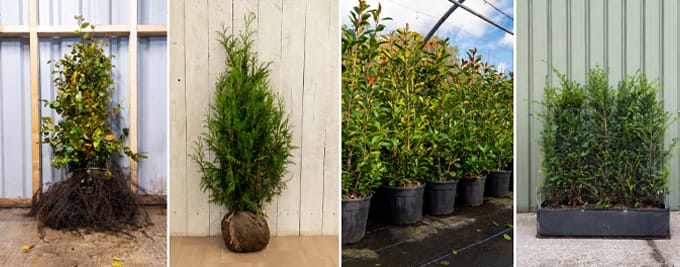
What Are the Different Hedging Root Types?
Bare root, root ball, pot-grown and instant hedging suit different budgets, planting times and levels of initial coverage. Understanding how each is…
Read answer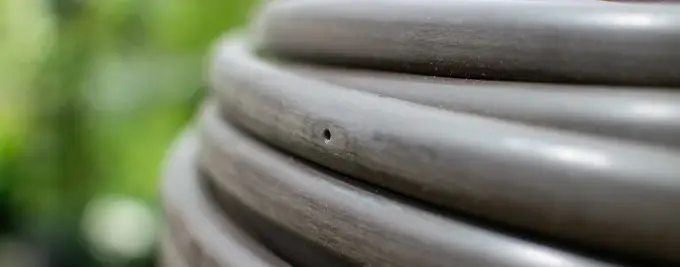
What Is the Best Watering System for a Hedge?
A good hedge watering system should deliver moisture slowly and evenly along the whole planting line. The most suitable setup depends on…
Read answer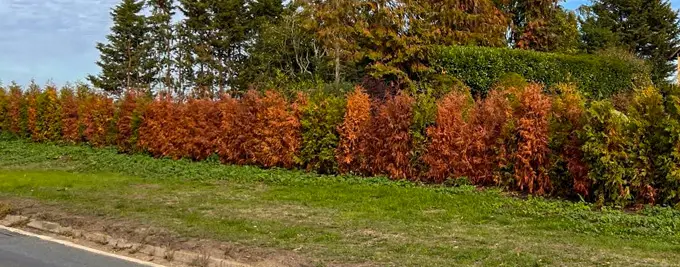
Why Is My Hedge Turning Brown?
A hedge can turn brown for several very different reasons, including dry roots, waterlogged soil, frost, wind, trimming damage or disease. The…
Read answer
How Much Mycorrhizal Fungi Should I Use?
The correct amount of mycorrhizal fungi depends on the size and root type of the plants being treated. Calculating the quantity before…
Read answerWhat Is the Best Watering System for a Hedge?
A good hedge watering system should deliver moisture slowly and evenly along the whole planting line. The most suitable setup depends on…
Read answer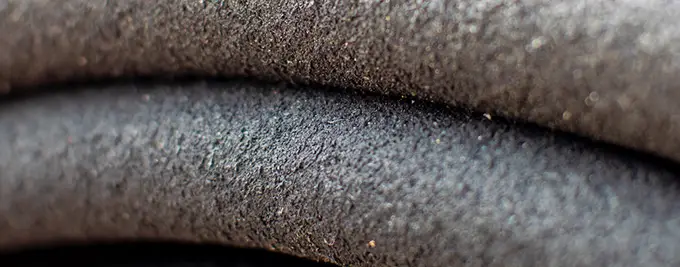
How Long Should Drip Irrigation Run for Hedges?
Drip irrigation makes it easier to water a hedge evenly, but the timer setting must suit the pipe output, soil and size…
Read answer