
Is Holly Good as Part of a Mixed Native Hedge?
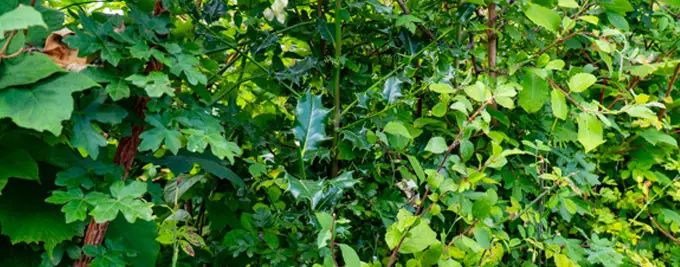
Most mixed native hedges are dominated by deciduous species such as Hawthorn, Blackthorn, Field Maple and Hazel. Adding English Holly introduces a slower-growing evergreen element that changes the appearance and structure of the hedge, particularly during winter.
Quick Answer
Yes. English Holly (Ilex aquifolium) is a good addition to a mixed native hedge, particularly as a supporting species rather than the main framework. It adds evergreen foliage, dense structure, spring flowers and potential winter berries, while faster-growing native plants provide quicker bulk. Holly grows relatively slowly, so neighbouring plants may need managing while it establishes. Adding Holly does not make an otherwise deciduous mixed hedge fully evergreen.
Quick Facts
| Botanical name | Ilex aquifolium |
|---|---|
| Native to Britain | Yes |
| Foliage | Evergreen |
| Typical growth rate | Slow, around 10–20cm per year |
| Best role in a mixed hedge | Evergreen structure, winter cover and wildlife interest |
| Flowers | Small white flowers in spring |
| Berries | Produced by pollinated female plants |
| Main limitation | Slower growing than many deciduous native hedge species |
| Makes the whole hedge evergreen? | No |
Why does Holly work well in a mixed native hedge?
English Holly is one of the relatively few native British evergreen shrubs commonly used for hedging. That makes it particularly useful within a mixture dominated by deciduous species such as Hawthorn, Blackthorn, Hazel and Field Maple.
During spring and summer, Holly becomes part of the overall foliage of the hedge. Its contribution becomes much more noticeable after the deciduous plants lose their leaves, when the dark green foliage remains and adds pockets of winter cover and structure.
This is already reflected in Hedging Plants Direct’s Native Mixed Hedge Plants range. Holly is included in selected mixtures rather than every native hedge pack, because different mixtures are designed for different purposes.
Holly also brings a different growth habit to the hedge. Its dense, often spiny foliage can strengthen the physical structure of a boundary, particularly as the plants mature.
What should Holly’s role be within the hedge?
Holly normally works best as one component of a diverse hedge rather than being expected to provide all of the initial structure.
Species such as Hawthorn, Blackthorn and Hazel generally develop more quickly. English Holly typically grows at around 10–20cm a year, so it may take longer to become visually prominent within a new planting.
That difference in growth rate can actually be useful. The faster species establish the main framework while Holly gradually develops a more permanent evergreen presence between them.
If you are creating your own mixture, keep an eye on vigorous neighbouring plants during the establishment years. Do not allow faster-growing growth to completely smother or heavily shade a young Holly plant simply because the Holly has made less extension growth.
Does Holly make a mixed native hedge evergreen?
No. A few Holly plants add evergreen foliage, but they do not turn a predominantly deciduous native hedge into a fully evergreen screen.
This distinction is important where winter privacy is the main objective. Hedging Plants Direct’s Native Mixed Hedging Care Guide describes most traditional mixed native hedges as predominantly deciduous, even where Holly contributes some evergreen foliage.
If year-round screening is essential, a predominantly evergreen or single-species hedge may be more appropriate. If the aim is a natural-looking boundary with seasonal change, wildlife interest and some winter greenery, Holly is an excellent supporting species.
Is Holly useful for wildlife in a mixed hedge?
Yes. Holly can add several different resources to a wildlife hedge.
Its evergreen foliage provides year-round shelter, while its flowers are visited by insects. Pollinated female plants can later produce red berries that provide winter food for birds. The Woodland Trust also identifies Holly as a food plant for Holly Blue butterfly caterpillars.
A mixed hedge can provide even greater variety because Holly is growing alongside plants that flower and fruit at different times. Hawthorn, Dog Rose, Guelder Rose, Hazel and other species can each contribute different forms of food, shelter and structure.
This is one reason Hedging Plants Direct’s Garden Wildlife Hedging Mix includes Holly alongside Hawthorn, Blackthorn, Field Maple, Hazel, Dog Rose and Guelder Rose.
Will every Holly plant produce berries?
No. This should not be assumed when adding Holly to a mixture.
Most hollies are either male or female. Female plants produce berries after their flowers have been successfully pollinated, normally by a compatible male Holly growing nearby. Seed-grown English Holly within a mixed hedge may therefore contain plants of either sex, and individual plants should not be bought on the assumption that every one will eventually carry berries.
Pruning also affects flowering and fruiting. If wildlife value and winter berries are priorities, avoid repeatedly removing all flowering and fruiting growth simply to create a perfectly uniform surface.
Which Hedging Plants Direct mixed native hedges contain Holly?
Holly is currently used in two particularly relevant Hedging Plants Direct mixtures.
The Garden Wildlife Hedging Mix combines Holly with Hawthorn, Blackthorn, Field Maple, Hazel, Dog Rose and Guelder Rose. It is designed for garden boundaries where flowers, berries, varied foliage and wildlife interest are priorities. The exact proportion of individual species can vary with stock availability.
For customers wanting an established hedge from the outset, Instant CountryHedge also includes English Holly within a broader mixture containing Hawthorn, Blackthorn, Field Maple, Hazel, Dog Rose, Guelder Rose, Hornbeam and Dogwood.
Customers wanting to choose their own combination can also add English Holly separately to a bespoke native planting scheme. The important point is to select the overall mixture according to the soil, exposure, available width and purpose of the hedge rather than adding species simply to increase the number of varieties. Hedging Plants Direct’s Native Mixed Hedging Care Guide explains these wider considerations in detail.
When might you leave Holly out?
Holly is useful, but it is not essential to every native hedge.
You might choose a simpler Hawthorn-based mixture where the priority is economical planting over a very long field boundary, or where faster initial growth is more important than evergreen foliage. Holly can also be less useful where the aim is a completely thornless or soft-edged boundary beside a frequently used path.
For a garden or countryside hedge where winter structure, wildlife value and a traditional native appearance are priorities, however, Holly earns its place particularly well.
Gwynne's Grower's Tip
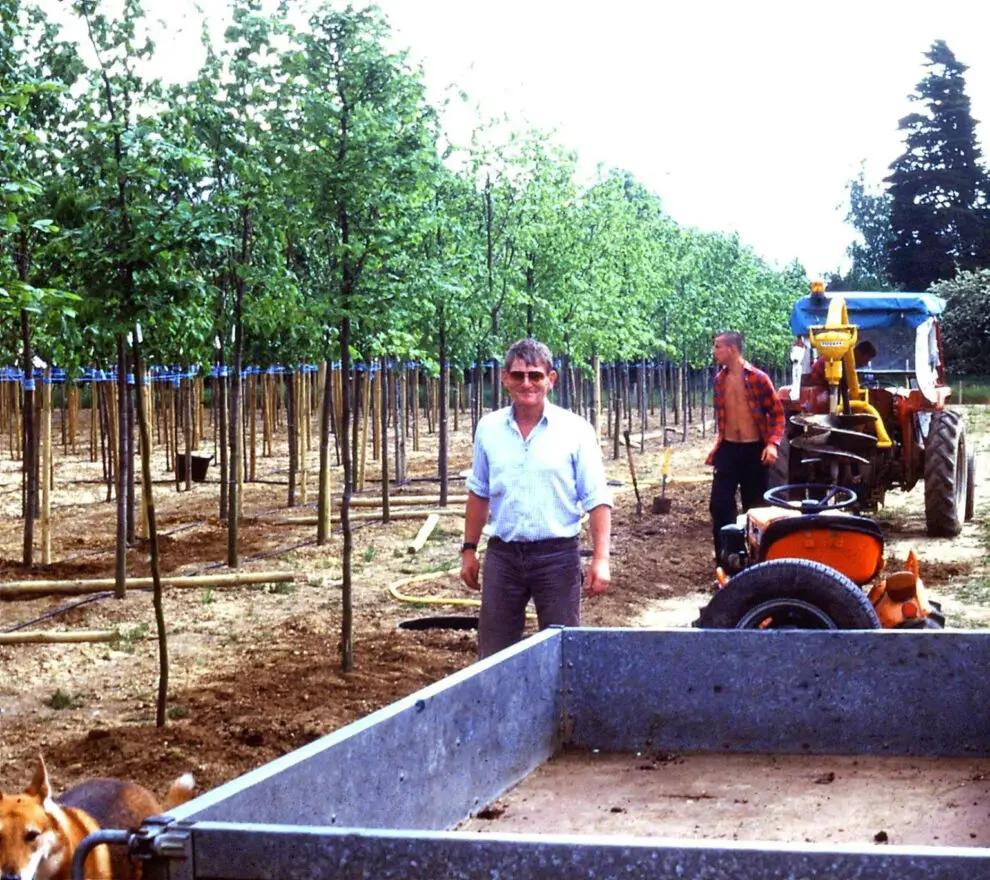
I would not expect Holly to keep pace with Hawthorn or Hazel during the first few years, and that does not mean there is anything wrong with it. In a mixed hedge I like Holly to develop as a long-term evergreen element between the faster plants. Keep an eye on the surrounding growth and give the young Holly enough light and space rather than letting vigorous neighbours completely overtake it. Once established, those patches of dark evergreen foliage become particularly noticeable in winter when most of the rest of the hedge is bare.
More Holly Advice
For more detailed growing advice or to view the plants available from our nursery, use the links below.
Related Products
Products from our nursery that are relevant to this advice.


Useful Planting Essentials
Selected products that may help with planting, establishment and ongoing hedge care.
Rootgrow Mycorrhizal Fungi
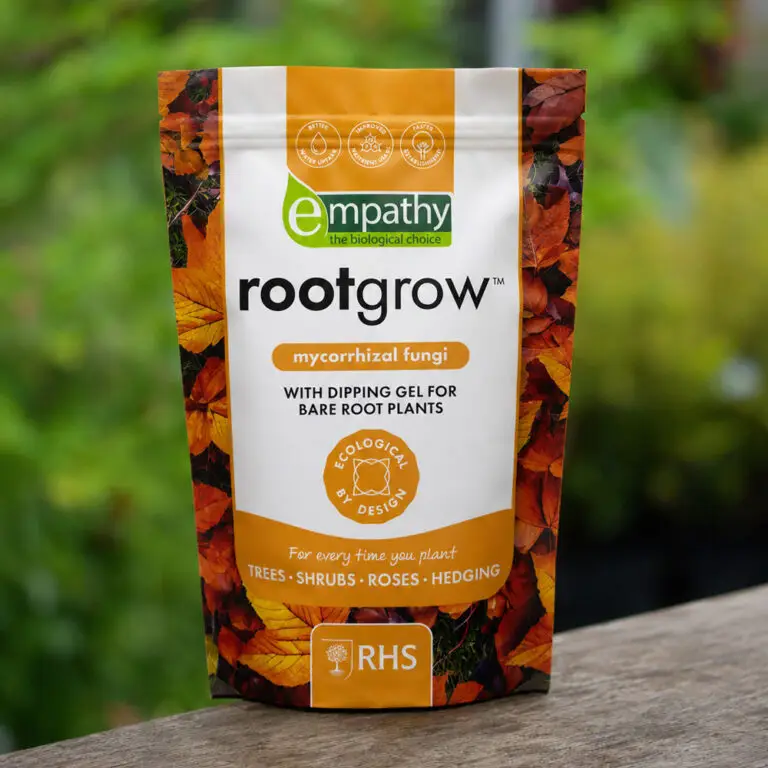
Rootgrow can be applied at planting so the product is in direct contact with the roots, where appropriate for the plant and planting method.
View product
Hedge Feed
Hedge Feed provides balanced nutrition where established hedging would benefit from feeding as part of normal care.
View product
Hedge Irrigation
A hedge irrigation system can make it easier to water a new hedge consistently, particularly on longer runs and during dry weather.
View product
Hedge Compost & Mulch
Compost and mulch can support soil preparation, moisture retention and weed suppression when used appropriately around new hedging.
View product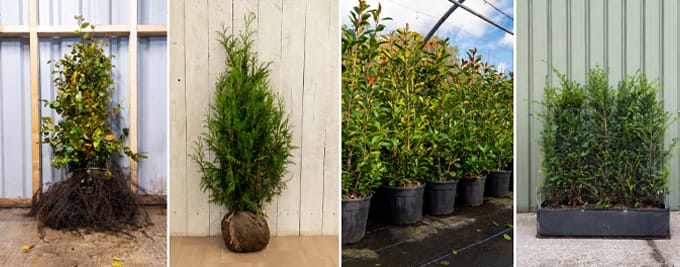
What Are the Different Hedging Root Types?
Bare root, root ball, pot-grown and instant hedging suit different budgets, planting times and levels of initial coverage. Understanding how each is…
Read answer
Do Deer and Rabbits Eat Holly Hedging?
Holly's tough, spiny leaves can give the impression that deer and rabbits will leave it alone. In practice, young English Holly can…
Read answer
What Is Holly Transplant Shock and How Long Does It Last?
A newly planted or moved Holly can temporarily lose its glossy appearance, drop leaves or make little new growth while its roots…
Read answer
Can Holly Be Grown as a Hedge in Pots or Containers?
A row of English Holly can create evergreen structure and screening on patios, courtyards and other places where planting directly into the…
Read answer
Is Hornbeam Evergreen? What Does It Look Like in Winter?
Hornbeam is valued for its fresh green summer foliage, warm autumn colour and strong winter structure. Understanding how its leaves behave after…
Read answer
What Do Hornbeam Leaves Look Like?
Hornbeam has distinctive textured foliage that changes noticeably through the seasons. Learning to recognise the leaf shape, veins and toothed edges can…
Read answerWhat Are the Different Hedging Root Types?
Bare root, root ball, pot-grown and instant hedging suit different budgets, planting times and levels of initial coverage. Understanding how each is…
Read answer
Is Privet Evergreen?
Privet is often chosen for privacy, but its winter appearance is less predictable than that of a fully evergreen hedge. The variety,…
Read answer