
How Should I Store Root-Balled Hedge Plants?
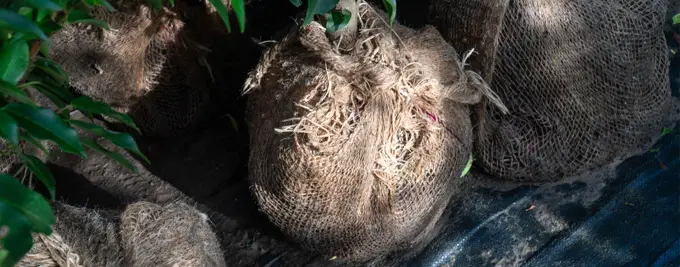
Root-balled hedge plants are field-grown plants supplied with soil retained around their roots. Correct storage between delivery and planting helps protect the root ball from drying, frost and physical damage.
Quick Answer
Plant root-balled hedge plants as soon as practical, preferably on delivery or within a few days. Until then, unpack them and keep them in a cool, sheltered place away from direct sunlight, drying winds, heat and hard frost. Leave the natural hessian and supporting root-ball material intact. Check the root balls regularly and water only as needed to keep them evenly moist, not saturated. If planting will be delayed for longer, temporarily heel the complete root balls into free-draining soil.
Quick Facts
| Best course of action | Plant as soon as practical after delivery |
|---|---|
| Normal short storage period | Overnight or for a few days |
| Best storage position | Cool, sheltered and protected from drying winds |
| Root-ball moisture | Evenly moist but not saturated |
| Natural hessian | Leave intact during storage |
| Avoid | Warm greenhouses, direct sun, strong wind and standing water |
| Longer delays | Heel the complete root balls into free-draining soil |
What should you do when root-balled plants arrive?
Remove the plants from their delivery packaging or pallet as soon as practical. Do not leave tightly packed plants wrapped together for several days, particularly if plastic has been used around the pallet for transport.
Inspect each plant for damage and check that the soil ball is still firm around the roots. Support and move the plant from beneath the root ball rather than pulling or lifting it by the stem. Large root-balled plants can be extremely heavy, so use suitable lifting equipment or enough people to handle them safely.
Keep the natural hessian, netting or wire basket that holds the soil ball together in place. Its purpose is to prevent the soil and fine roots from breaking apart during handling and storage.
Where should root-balled hedge plants be stored?
Choose a cool, sheltered and well-ventilated position. An unheated shed, garage, covered yard or sheltered outdoor area can be suitable for a short delay.
The storage area should protect the plants from:
- direct sunlight
- drying easterly or northerly winds
- hard frost around the exposed root balls
- warm indoor temperatures
- standing water
- being blown over
Do not store root-balled plants in a heated building or warm greenhouse. A greenhouse can become surprisingly hot on a sunny winter day, which may increase moisture loss and encourage the plants to come out of dormancy prematurely.
Tall plants should be kept upright and supported so that they cannot fall or rock in the wind. Make sure the weight rests on the soil ball rather than on the stem or lower branches.
How wet should the root balls be during storage?
The soil within each root ball should remain evenly moist. It should not be allowed to become completely dry, but it should not sit continually saturated either.
Check the root balls at least once a day during storage. Pay particular attention to plants kept in a windy building, under an open-sided shelter or on a dry concrete surface.
If a ball feels dry, apply water slowly across the hessian and allow it to soak into the soil. A slow application is more useful than splashing water over the foliage or wetting only one side of the ball.
Avoid placing root balls permanently in trays or pools of water. Waterlogged soil contains less oxygen and can damage roots, particularly where the plants are being stored for more than a day or two.
Should the hessian be removed during storage?
Natural hessian should normally remain around the root ball during storage. Removing it too early can allow the soil ball to crack or fall apart, damaging the fine roots held within it.
Leave any supporting wire basket in place unless the instructions supplied with the plants state otherwise. Tight string or ties around the stem can usually be loosened once the plant has been positioned in its final planting hole, but not while the plant still needs to be handled.
Remove non-biodegradable outer delivery materials such as plastic wrapping. Do not confuse plastic pallet wrapping with the natural hessian or structural material holding the root ball together.
How should root balls be protected from frost?
Root-balled hedge plants are normally supplied during the cooler planting season, but an exposed soil ball is more vulnerable to hard frost than roots protected beneath the ground.
For a short cold spell, move the plants into a frost-protected shed or garage. If they must remain outside, group them in a sheltered position and insulate around the root balls with straw, horticultural fleece, compost or another suitable material.
Do not tightly wrap the entire plant in plastic. This can restrict ventilation and trap excessive moisture around the foliage.
Once frozen or waterlogged ground becomes workable again, plant the hedge promptly rather than extending the storage period unnecessarily.
How long can root-balled hedge plants be stored?
Root-balled plants should not be purchased with the intention of storing them for a long period. Aim to plant them on arrival or within the next few days.
The safe period varies with the species, plant size, weather, storage conditions and moisture within the root ball. Large evergreen plants can lose moisture through their foliage even during cool weather, so they often need closer monitoring than dormant deciduous plants.
If planting will be delayed for more than a few days, contact the nursery for advice based on the plants supplied. Temporary heeling-in is usually safer than leaving exposed root balls standing above ground for several weeks.
How do you heel in root-balled hedge plants?
Choose a sheltered area of workable, free-draining soil. Dig a trench or temporary planting area deep enough to accommodate the complete root balls.
Place the plants securely in the trench, keeping the hessian intact, and cover the root balls fully with loose soil or suitable planting compost. Firm lightly to remove large air gaps and water as needed to settle the soil around the balls.
The plants can be positioned slightly inclined if this makes them safer and less likely to blow over. Large or top-heavy plants may require temporary support.
Continue checking moisture during the storage period. Heeling in is only a temporary measure, so move the plants to their permanent positions as soon as the site and weather allow.
When should you delay planting?
Delay planting if the ground is:
- frozen too hard to dig properly
- waterlogged or covered by standing water
- so wet that it smears and compacts when worked
- unsafe to work because of severe wind or weather
Planting into badly waterlogged or compacted soil can cause more damage than storing the plants correctly for a short period.
Prepare the planting trench before delivery where possible. This reduces the time the plants spend out of the ground and allows you to identify drainage, access or soil problems in advance.
What should you do before planting stored root balls?
Check that each root ball is moist and intact before moving it. Handle the plant from underneath the ball and avoid dropping, rolling or dragging it.
Plant at approximately the same depth at which the plant was previously growing. Once positioned, backfill carefully, firm without heavily compacting the soil and water the root ball and surrounding ground thoroughly.
The complete hedge planting guide explains soil preparation, planting depth and establishment care in more detail. Available seasonal sizes can also be found in the root ball hedging range.
Gwynne's Grower's Tip
Do not judge a stored root ball only by whether its hessian looks damp on the surface. Larger soil balls can begin to dry unevenly, especially when one side faces an open doorway or cold wind. Check several plants rather than assuming the whole delivery is the same. Apply water slowly over the ball and allow time for it to soak in, then check it again later. Good storage should preserve the plant for a short unavoidable delay, but it is never a substitute for prompt planting into properly prepared ground.
More General Advice
For more detailed growing advice or to view the plants available from our nursery, use the links below.
Related Products
Products from our nursery that are relevant to this advice.


Useful Planting Essentials
Selected products that may help with planting, establishment and ongoing hedge care.
Rootgrow Mycorrhizal Fungi
Rootgrow can be applied at planting so the product is in direct contact with the roots, where appropriate for the plant and planting method.
View product
Hedge Feed
Hedge Feed provides balanced nutrition where established hedging would benefit from feeding as part of normal care.
View product
Hedge Irrigation
A hedge irrigation system can make it easier to water a new hedge consistently, particularly on longer runs and during dry weather.
View product
Hedge Compost & Mulch
Compost and mulch can support soil preparation, moisture retention and weed suppression when used appropriately around new hedging.
View product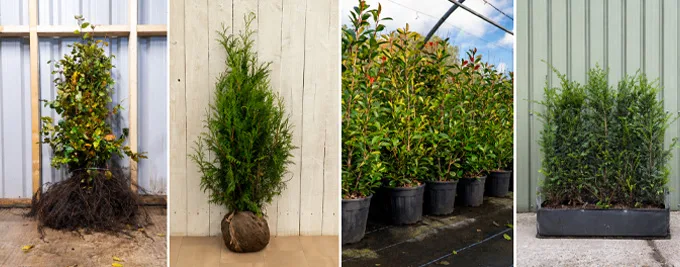
What Are the Different Hedging Root Types?
Bare root, root ball, pot-grown and instant hedging suit different budgets, planting times and levels of initial coverage. Understanding how each is…
Read answer
What Is the Best Soaker Hose for Hedges?
A well-chosen soaker hose makes it easier to water a hedge evenly without wetting the foliage or carrying a watering can along…
Read answer
What Is the Best Watering System for a Hedge?
A good hedge watering system should deliver moisture slowly and evenly along the whole planting line. The most suitable setup depends on…
Read answer
Why Is My Hedge Turning Brown?
A hedge can turn brown for several very different reasons, including dry roots, waterlogged soil, frost, wind, trimming damage or disease. The…
Read answer
Can I Replace a Box Hedge With Green Spire After Box Blight?
Green Spire is one of the closest Euonymus alternatives to a neat low Box hedge. A previous box-blight outbreak does not infect…
Read answer
When Is the Best Time to Plant Hornbeam Hedging?
Hornbeam can be planted in several different forms, and the best planting time depends mainly on whether the plants are supplied bare…
Read answer
How Much Mycorrhizal Fungi Should I Use?
The correct amount of mycorrhizal fungi depends on the size and root type of the plants being treated. Calculating the quantity before…
Read answer
How Long Can Bare-Root Plants Be Stored?
Bare-root plants are vulnerable once they have been lifted because their exposed roots can dry out quickly. Correct temporary storage can protect…
Read answer