
How Should I Store Pot Grown Hedge Plants?
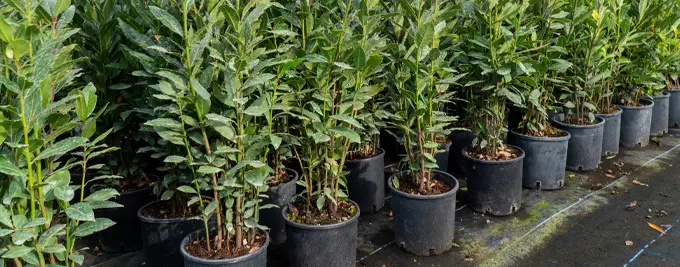
Pot grown hedge plants are easier to hold before planting than bare root or root ball stock, but they still need regular attention. Correct positioning, watering and protection from extreme weather will keep them in good condition while the planting area is prepared.
Quick Answer
Unpack pot grown hedge plants as soon as they arrive and stand them upright in a sheltered outdoor position. Leave them in their nursery pots, keep the foliage exposed to light and air, and check the compost regularly. Water thoroughly whenever the root ball begins to dry, allowing excess water to drain freely. During hot, dry or windy weather, this may mean checking them every day. Avoid leaving the plants wrapped, standing in water or inside a hot greenhouse. Plant them as soon as reasonably practical.
Quick Facts
| Keep plants in their pots? | Yes, until you are ready to plant |
|---|---|
| Best storage position | Sheltered outdoor location with suitable natural light |
| Watering | Check the compost regularly and water thoroughly when it starts to dry |
| Hot or windy weather | Check each pot daily |
| Typical planting delay | A few days or several weeks with proper care |
| Avoid | Sealed packaging, standing water, hot greenhouses and drying winds |
What should you do when pot grown hedge plants arrive?
Remove the plants from their delivery packaging as soon as possible. Take off plastic wrapping, pallet film, netting or any other covering that could restrict airflow around the foliage.
Stand each plant upright and check that the pot, stems and branches have not been damaged during transport. It is also worth checking the moisture level in each pot individually. Plants within the same delivery can dry at different rates, especially where some pots are smaller or have been positioned around the outside of a pallet.
Hedging Plants Direct advises customers to remove plants from their packaging promptly and protect them from strong, drying winds while they are waiting to be planted.
How should pot grown hedge plants be stored?
For most hardy hedging species, the best temporary storage position is outdoors in a sheltered location. Choose somewhere protected from strong wind, harsh reflected heat and prolonged exposure to intense afternoon sun.
The plants still need natural light and fresh air, particularly if they are evergreen and actively growing. A dark shed or garage may be useful for brief protection during exceptionally severe weather, but it is not normally the best place to keep actively growing pot plants for an extended period.
Avoid heated rooms and very warm greenhouses. Temperatures inside a greenhouse can rise quickly on a sunny day, causing the compost and foliage to dry much faster than expected.
Stand the pots on a firm, free-draining surface. Do not leave them sitting permanently in trays, containers or low areas where water can collect around the drainage holes.
Other UK hedge nurseries similarly advise unpacking pot grown plants immediately and standing them in a sheltered position when planting is delayed.
Should you water pot grown hedging before planting?
Check the compost inside the pot rather than judging the plant by the appearance of its leaves alone. Evergreen foliage can continue to look healthy for a while after the root ball has started to dry.
Press a finger into the surface of the compost or carefully lift the pot to judge its weight. If the compost is becoming dry, water the root ball thoroughly until moisture begins to drain from the bottom of the container.
A small splash over the surface may only wet the upper layer of compost. Water slowly enough for moisture to penetrate the complete root ball, then allow the excess to drain away.
During warm, dry or windy weather, check every pot at least once a day. Large plants with substantial foliage can use water quickly, while small pots contain less compost and may dry particularly fast. During cooler or wet conditions, watering will normally be required less often.
Do not follow a fixed watering schedule without checking the compost first. Both prolonged dryness and continuous waterlogging can damage the roots.
Competitor guidance commonly states that pot grown hedge plants can be held for several weeks when kept properly watered, with daily checks recommended during dry spells.
How long can pot grown hedge plants remain in their pots?
Pot grown hedging can usually remain in its nursery pots for a short planting delay. This may be a few days or, with careful watering and suitable conditions, several weeks.
The safe period will depend on:
- The hedge species
- The size of the plant
- The size of the nursery pot
- The time of year
- Temperature and wind
- How densely the roots fill the pot
- The standard of watering and general care
Pot grown plants are more flexible than bare root or root ball hedging because their roots remain protected within compost. Hedging Plants Direct product information also explains that properly watered pot grown plants can be held safely until the customer is ready to plant them. Nursery pots are intended for growing and transporting plants rather than indefinite storage. A plant left too long may become increasingly root-bound, use up available nutrients or become difficult to keep evenly watered.
Plant the hedge as soon as the ground has been prepared and conditions are suitable. If a substantial delay is unavoidable, contact the nursery for advice before automatically feeding or repotting the plants.
How should the plants be protected in hot weather?
Move the pots away from south-facing walls, dark paving and other surfaces that reflect or hold heat.
Keep the plants in a bright but sheltered position and inspect the compost every day. Water thoroughly when required, preferably during the cooler part of the morning or evening so the water has time to soak into the root ball.
Do not cover the plants with plastic to provide shade. Plastic can trap heat and restrict airflow around the foliage.
Larger plants may need temporarily spacing out so every pot can be reached and watered properly.
What should you do during frost or very cold weather?
Hardy pot grown hedge plants can usually tolerate normal winter conditions, but their roots are more exposed in containers than they would be after planting in the ground.
Group the pots in a sheltered position away from cold, drying winds. Avoid standing them where roof water, blocked drainage or melting snow could leave the root balls saturated.
During unusually severe weather, plants can be given temporary protection in an unheated, frost-free building. Return them to a suitable outdoor position once the extreme conditions have passed, unless the particular species requires more specialised protection.
Do not water frozen compost. Wait until the root ball has thawed sufficiently for water to drain through it.
How should tall hedge plants be stored in windy weather?
Tall plants can act like sails and may repeatedly blow over. This can damage branches, loosen the root ball or split the nursery pot.
Store them beside a sheltered wall or fence without pressing the foliage tightly against the surface. Grouping several pots together can provide additional stability, but leave enough space to inspect and water each plant.
If extreme winds are forecast, temporarily lay vulnerable plants carefully on their sides in a protected area. Stand them upright again once conditions improve.
Strong winds also increase moisture loss from both foliage and compost, so the pots may require checking more frequently even when temperatures are not particularly high.
What should you do immediately before planting?
Water any dry root balls thoroughly before removing the pots. Allow excess water to drain so the compost is evenly moist rather than saturated.
Prepare the planting trench or individual holes before taking plants out of their containers. This prevents the exposed root balls from being left in the sun or wind while the ground is prepared.
Plant pot grown hedging at approximately the same depth it was growing in the container. Avoid planting while the soil is frozen, heavily waterlogged or so dry that it cannot be prepared and watered properly.
For full instructions covering ground preparation, planting depth and early aftercare, follow the Hedging Plants Direct guide:
Gwynne's Grower's Tip
The pot that causes trouble is often the one that dries out unnoticed among a larger group. Check every root ball by hand rather than watering only the plants around the outside. When a pot needs water, soak it properly and allow it to drain instead of repeatedly giving the surface a light splash. Keep taller evergreens sheltered from wind because their foliage can draw out a surprising amount of moisture, even on a cool day. If planting is going to be delayed, continue checking the plants just as you would any other container-grown nursery stock.
More General Advice
For more detailed growing advice or to view the plants available from our nursery, use the links below.
Useful Planting Essentials
Selected products that may help with planting, establishment and ongoing hedge care.
Rootgrow Mycorrhizal Fungi
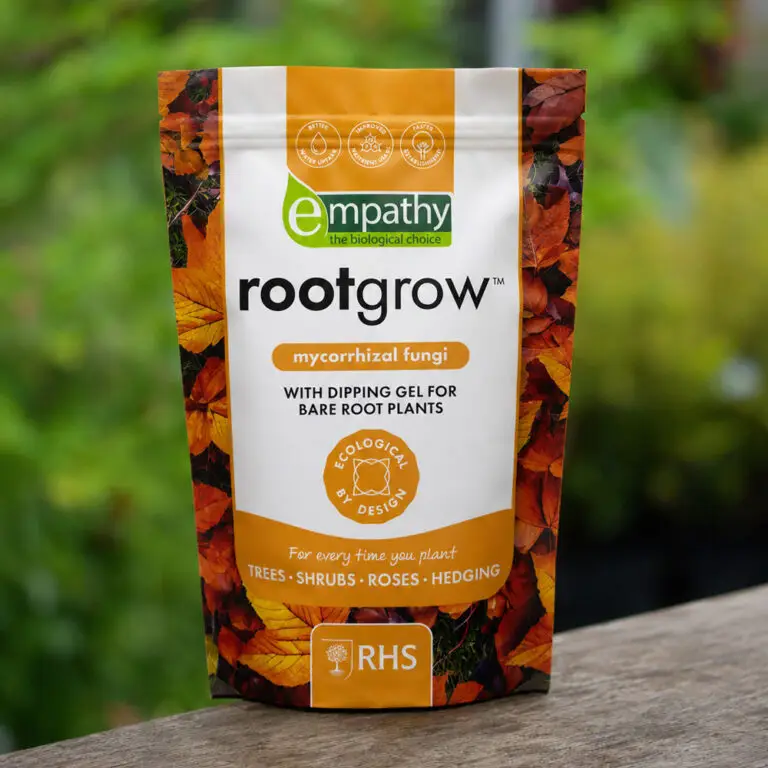
Rootgrow can be applied at planting so the product is in direct contact with the roots, where appropriate for the plant and planting method.
View product
Hedge Feed
Hedge Feed provides balanced nutrition where established hedging would benefit from feeding as part of normal care.
View product
Hedge Irrigation
A hedge irrigation system can make it easier to water a new hedge consistently, particularly on longer runs and during dry weather.
View product
Hedge Compost & Mulch
Compost and mulch can support soil preparation, moisture retention and weed suppression when used appropriately around new hedging.
View product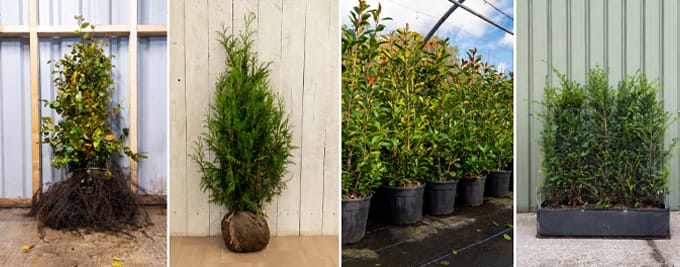
What Are the Different Hedging Root Types?
Bare root, root ball, pot-grown and instant hedging suit different budgets, planting times and levels of initial coverage. Understanding how each is…
Read answer
What Is the Best Soaker Hose for Hedges?
A well-chosen soaker hose makes it easier to water a hedge evenly without wetting the foliage or carrying a watering can along…
Read answer
What Is the Best Watering System for a Hedge?
A good hedge watering system should deliver moisture slowly and evenly along the whole planting line. The most suitable setup depends on…
Read answer
Why Is My Hedge Turning Brown?
A hedge can turn brown for several very different reasons, including dry roots, waterlogged soil, frost, wind, trimming damage or disease. The…
Read answer
When Is the Best Time to Plant Hornbeam Hedging?
Hornbeam can be planted in several different forms, and the best planting time depends mainly on whether the plants are supplied bare…
Read answer
Can I Replace a Box Hedge With Green Spire After Box Blight?
Green Spire is one of the closest Euonymus alternatives to a neat low Box hedge. A previous box-blight outbreak does not infect…
Read answer
How Much Mycorrhizal Fungi Should I Use?
The correct amount of mycorrhizal fungi depends on the size and root type of the plants being treated. Calculating the quantity before…
Read answer
How Long Can Bare-Root Plants Be Stored?
Bare-root plants are vulnerable once they have been lifted because their exposed roots can dry out quickly. Correct temporary storage can protect…
Read answer