
How Much Rootgrow Do I Need?
Rootgrow is used once when planting, but the amount required can vary considerably with the plant height, root type and container size. Calculating from the number and size of your plants is more accurate than estimating from the hedge length alone.
Quick Answer
For 60-90cm bare-root hedging, a 360g Rootgrow gel pack typically treats around 70-100 plants, while a 1kg pack treats around 210-280. For pot-grown plants, 360g treats approximately 19 plants in 2-litre pots, nine in 5-litre pots or five in 10-15-litre pots. Calculate from the actual plant quantity and size, then avoid spreading the product more thinly than the instructions recommend.
Quick Facts
| When to apply | Once, at the time of planting |
|---|---|
| Amount based on | Plant quantity, plant size and root type |
| Bare-root method | Mix with the supplied gel and dip the roots |
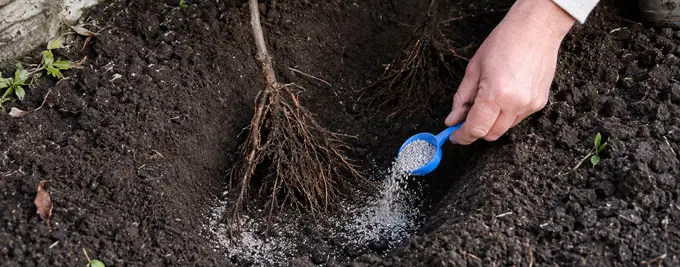
| Pot-grown method | Apply dry granules directly against the roots |
| Root-balled method | Place granules where they contact the root system |
| HPD pack options | 360g, 1kg and 2.5kg |
| Most important requirement | Direct contact between Rootgrow and the roots |
How do you calculate how much Rootgrow you need?
The correct amount of Rootgrow depends on the plants being installed, not simply the length of the hedge.
A 20-metre hedge planted with small bare-root whips at five plants per metre will require a different amount from a 20-metre hedge planted with larger pot-grown plants at two per metre.
Use this calculation:
Hedge length × plants per metre = total number of plants
Once you know the total plant quantity, check the plant height, pot size or root-ball size against the Rootgrow application instructions.
For example:
- A 20-metre hedge planted at five plants per metre requires 100 plants.
- A 20-metre hedge planted at three plants per metre requires 60 plants.
- A 20-metre hedge planted at two plants per metre requires 40 plants.
Use the planting density supplied for the exact hedge plant and size you are ordering. There is no single plants-per-metre figure suitable for every species, height and root type.
Rootgrow is applied once during planting and must make direct contact with the roots. It does not replace correct planting depth, suitable soil preparation or dependable establishment watering. You can read more in our complete hedge planting guide.
How much Rootgrow is needed for bare-root hedging?
The dipping gel supplied with Rootgrow is normally the most efficient way to treat bare-root hedging. The prepared mixture coats the exposed root system before each plant is placed in the trench.
The following figures are manufacturer application estimates. Actual coverage varies because the root systems of two plants of the same height may differ in size and density.
| Bare-root plant height | Plants treated by 360g | Plants treated by 1kg |
| Up to approximately 30cm | 125-150 | 350-420 |
| 30-60cm | 90-120 | 270-340 |
| 60-90cm | 70-100 | 210-280 |
| 90-120cm | 50-75 | 150-200 |
| 120-150cm | 40-60 | 115-170 |
| 150-180cm | 35-50 | 100-150 |
These are treatment ranges rather than guaranteed plant quantities. Larger or more fibrous root systems use more of the prepared mixture. Do not weaken the gel or only coat part of each root system simply to make the pack cover more plants.
Worked bare-root hedge example
A customer planting 100 bare-root plants at 60-90cm high would normally be within the stated coverage of one 360g pack, which treats approximately 70-100 plants of that size.
If the same project used 120-150cm plants, one 360g pack would not normally be enough because the stated coverage falls to approximately 40-60 plants. The larger 1kg option or multiple smaller packs would be more appropriate.
How much Rootgrow is needed for pot-grown plants?
For pot-grown hedge plants, Rootgrow is normally used as dry granules. Sprinkle the measured quantity into the planting hole and position the plant so the root ball sits directly against the granules.
The manufacturer gives the following approximate coverage for a 360g pack:
| Pot size | Approximate plants treated by 360g |
| 2 litres | 19 plants |
| 5 litres | 9 plants |
| 10-15 litres | 5 plants |
| 25 litres | 3 plants |
| 50 litres | 2 plants |
| 100 litres | 1 plant |
For example, 12 hedge plants supplied in 5-litre pots would exceed the approximate nine-plant coverage of one 360g pack. Two 360g packs or a suitable larger pack would therefore be required.
Use the actual container size supplied with your order rather than estimating from the height of the plant. Two plants of a similar height can be grown in very different pot sizes.
How much Rootgrow is needed for root-balled hedging?
Root-balled plants vary considerably, so there is no reliable single amount based only on plant height.
Use the dosage for the size of the root system and follow the instructions supplied with the pack. Apply the granules where they will remain in direct contact with the roots. For larger plants, the manufacturer advises placing the product against the sides of the root zone during backfilling so it reaches the feeder roots rather than remaining beneath the centre of a substantial root ball.
Larger root-balled plants, instant hedging and mature trees can require considerably more Rootgrow per plant than smaller bare-root whips.
Which Rootgrow pack size should you choose?
Hedging Plants Direct currently offers Rootgrow Mycorrhizal Fungi with Gel in 360g, 1kg and 2.5kg options.
360g pack
The 360g option is generally suitable for smaller domestic hedges, modest numbers of pot-grown plants or approximately 70-100 bare-root plants at 60-90cm high.
1kg pack
The 1kg option is better suited to longer bare-root hedge runs and medium-sized planting projects. It treats approximately 210-280 bare-root plants at 60-90cm high.
2.5kg pack
The largest option is intended for substantial garden, landscaping, trade and commercial planting schemes. Manufacturer guidance for the professional tub gives an approximate capacity of 250 plants in 2-litre pots or 275-825 bare-root whips, depending on their size.
For a mixed order, calculate each plant size or root type separately before combining the quantities.
How should Rootgrow be applied?
Bare-root hedging
Prepare the dipping gel according to the instructions supplied with the pack. Dip the roots so the mixture reaches the active root system, allow excess gel to drain back into the container and plant promptly.
Do not leave treated bare roots exposed to drying winds or direct sunlight while the remainder of the hedge is being planted.
Pot-grown hedging
Water dry root balls before planting. Place the measured Rootgrow granules in the planting hole where the outer roots will touch them, then position and backfill the plant normally.
Root-balled hedging
Keep the root ball intact and apply the granules around the root zone according to the product instructions. Do not scatter all the granules below the centre of a large root ball where there may be little active root contact.
Further preparation and aftercare guidance is available from our Hedge Planting Essentials page.
Can Rootgrow be applied after the hedge has been planted?
Rootgrow is designed to contact the roots during planting. Scattering it over the surface of an established hedge bed will not provide the same direct root contact.
If a plant has already been installed without Rootgrow, concentrate on correct watering, weed control, drainage and aftercare rather than disturbing newly planted roots simply to add it afterwards.
Is Rootgrow suitable for every hedge plant?
Rootgrow is suitable for most hedging plants, trees and shrubs, but the standard product is not intended for every plant group.
The manufacturer excludes plants including Rhododendrons, Azaleas and Heathers from the standard product and recommends an appropriate ericoid formulation for these plants. Check the product instructions before treating an unusual or specialist hedge species.
Does using more Rootgrow improve the result?
Apply the recommended quantity so the fungi make suitable contact with the roots. Adding an excessive quantity does not correct compacted ground, waterlogging, deep planting or inadequate watering.
Rootgrow should be treated as an optional establishment aid rather than a replacement for good planting practice. Preparing the soil, setting each plant at the correct depth and keeping the complete root zone suitably moist remain the most important parts of establishing a hedge.
Gwynne's Grower's Tip
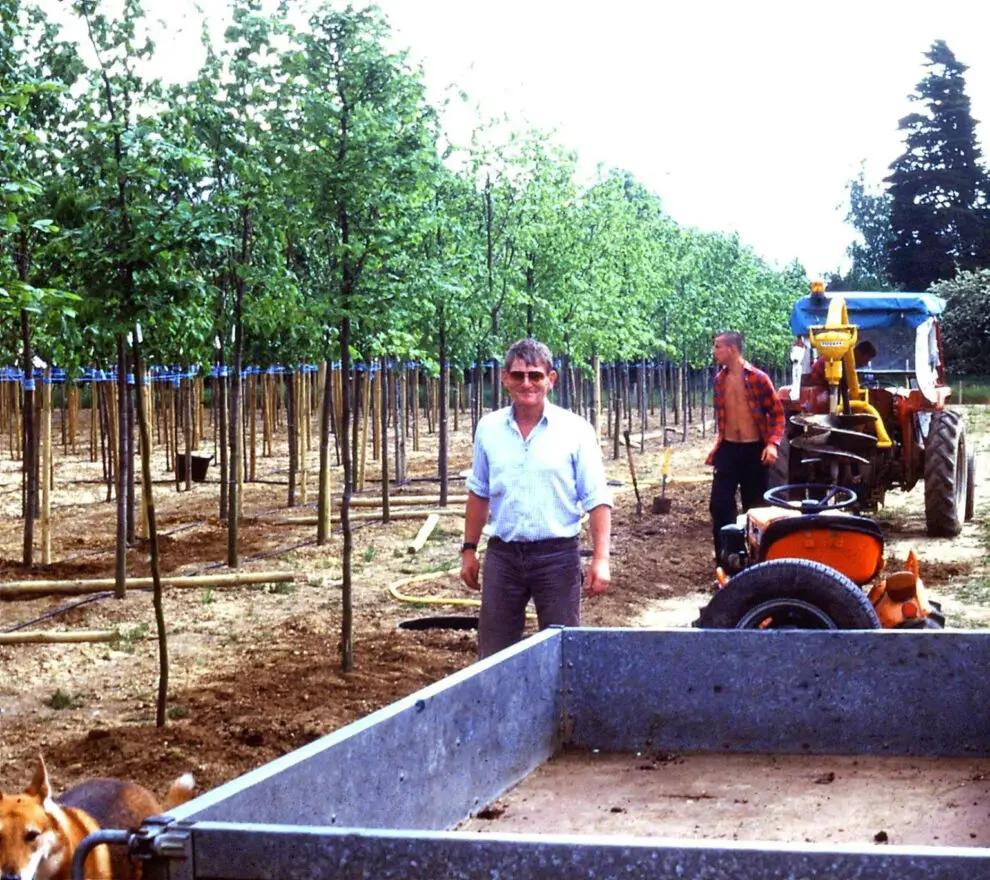
Calculate Rootgrow from the number and size of plants, not from the hedge length on its own. Two hedges of the same length can need very different amounts if one uses small bare-root whips and the other uses large pots or root balls. On longer planting runs, lay the plants out and have all the Rootgrow ready before starting. With bare-root plants, prepare the gel only when the planting team is ready and keep untreated and treated roots protected from wind and sun. Avoid stretching the final mixture too far just to finish the last few plants.
More General Advice
For more detailed growing advice or to view the plants available from our nursery, use the links below.
Useful Planting Essentials
Selected products that may help with planting, establishment and ongoing hedge care.
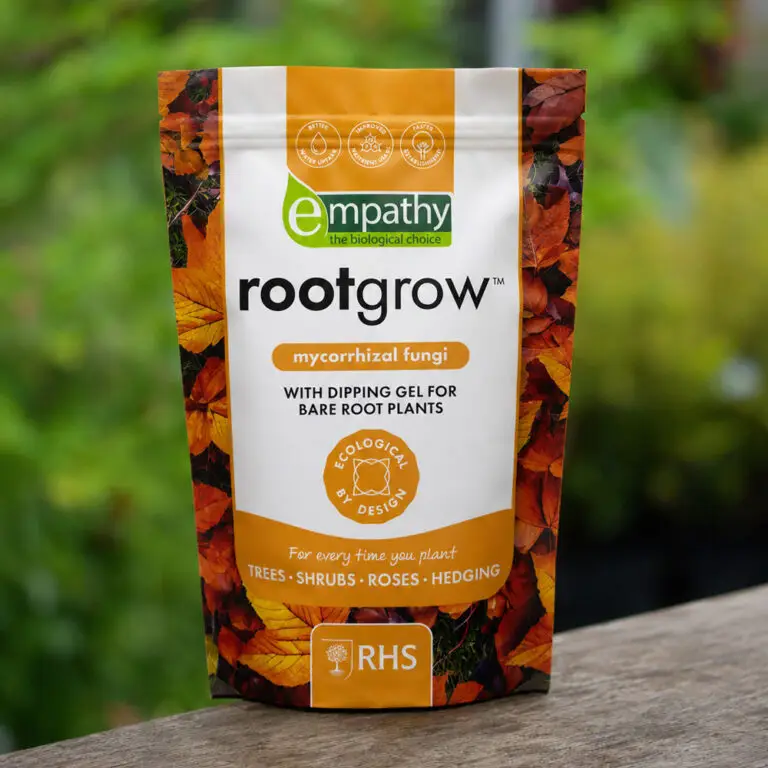
Rootgrow Mycorrhizal Fungi
Rootgrow can be applied at planting so the product is in direct contact with the roots, where appropriate for the plant and planting method.
View product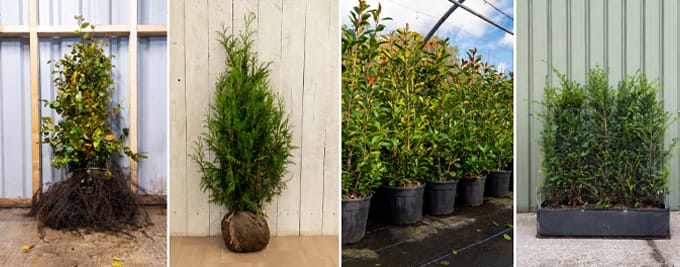
What Are the Different Hedging Root Types?
Bare root, root ball, pot-grown and instant hedging suit different budgets, planting times and levels of initial coverage. Understanding how each is…
Read answer
What Is the Best Soaker Hose for Hedges?
A well-chosen soaker hose makes it easier to water a hedge evenly without wetting the foliage or carrying a watering can along…
Read answer
What Is the Best Watering System for a Hedge?
A good hedge watering system should deliver moisture slowly and evenly along the whole planting line. The most suitable setup depends on…
Read answer
Why Is My Hedge Turning Brown?
A hedge can turn brown for several very different reasons, including dry roots, waterlogged soil, frost, wind, trimming damage or disease. The…
Read answer
When Is the Best Time to Plant Hornbeam Hedging?
Hornbeam can be planted in several different forms, and the best planting time depends mainly on whether the plants are supplied bare…
Read answer
Can I Replace a Box Hedge With Green Spire After Box Blight?
Green Spire is one of the closest Euonymus alternatives to a neat low Box hedge. A previous box-blight outbreak does not infect…
Read answer
How Much Mycorrhizal Fungi Should I Use?
The correct amount of mycorrhizal fungi depends on the size and root type of the plants being treated. Calculating the quantity before…
Read answer
How Long Can Bare-Root Plants Be Stored?
Bare-root plants are vulnerable once they have been lifted because their exposed roots can dry out quickly. Correct temporary storage can protect…
Read answer