
How Many Hedge Plants Do I Need?
The number of hedge plants required depends on the length of the planting area and the recommended number of plants per metre for the exact species, size and root type selected. Measuring carefully before ordering helps prevent shortages, unnecessary surplus plants and uneven spacing.
Quick Answer
Measure the usable hedge line in metres, subtract gates and other openings, then multiply the remaining length by the recommended number of plants per metre for your chosen product.
For example, a 10-metre hedge planted at three plants per metre requires 30 plants. The correct density can vary from approximately one to seven plants per metre depending on the species, starting size, root type and whether you are planting a single or staggered double row. Always use the recommendation shown for the exact product option being ordered.
Quick Facts
| Basic calculation | Hedge length × recommended plants per metre |
|---|---|
| Length to measure | The actual planting line after subtracting gates and openings |
| Final spacing | Use the recommendation for the exact product size and root type |
| Decimal result | Round up to the next whole plant or complete pack |
| Double-row hedge | Use the stated total density for the double-row layout |
| Instant hedging | Calculate from the stated width of each hedge unit |
How do I calculate the number of hedge plants required?
The basic calculation is:
Usable hedge length in metres × recommended plants per metre = number of plants required
Start by measuring the complete route of the proposed hedge. Measure along curves, slopes and changes of direction rather than relying only on a straight-line measurement from a garden plan.
Subtract any sections that will not be planted, including gates, paths, driveways, access points and existing structures.
Next, find the plants-per-metre recommendation for the exact plant option you intend to order. Hedging Plants Direct displays size-specific planting information because the same species may require a different density when supplied as a small bare-root plant, a larger pot-grown plant or an established root-balled specimen.
Worked example for a 10-metre hedge
A 10-metre planting line using a hedge supplied at three plants per metre requires:
10 metres × 3 plants = 30 plants
If the same 10-metre line uses smaller plants recommended at five per metre, it requires:
10 metres × 5 plants = 50 plants
This is why the plant size and root type should be selected before the final quantity is calculated.
What should I do if the calculation produces a decimal?
Always round up to the next whole plant.
For example:
12.5 metres × 5 plants per metre = 62.5 plants
You would require at least 63 plants. If the plants are sold in fixed packs, round the order up to the next available complete pack.
For a project containing different species, sizes or planting densities, calculate each section separately and then add the totals together.
Why do different hedges need different numbers of plants?
There is no single planting distance that is correct for every hedge. The recommended density is affected by several factors.
Species and natural growth habit
Some hedge plants develop broad, spreading crowns, while others have a narrower or more upright habit. Their natural shape affects how quickly neighbouring plants meet and form a continuous hedge.
For example, current Hedging Plants Direct guidance ranges from two to six plants per metre for different Box sizes, one to four for Yew and approximately two to six for different Privet options. Small bare-root Beech can require as many as seven plants per metre. These are examples rather than universal spacing rules.
Starting height and plant width
Smaller young plants are normally positioned closer together because each plant has less immediate width. Larger, bushier plants may require fewer plants along the same length.
Do not calculate the quantity from height alone. Two plants of a similar height may have different root types, widths and recommended planting densities.
Root type
Hedge plants can be supplied as bare root, pot grown, root balled or instant hedging.
Small bare-root hedge plants are often used in greater numbers along longer planting runs. Larger pot-grown and root-balled plants may be positioned farther apart, although the correct distance still depends on the species and selected size. Hedging Plants Direct advises customers to use the density shown for the individual product rather than applying one general rule to every bare-root or pot-grown hedge.
How quickly you want the hedge to fill
Closer planting can produce a fuller initial line, but planting more densely than recommended is not always beneficial. Plants still need suitable root space, light, moisture and airflow.
The recommended plants-per-metre figure is intended to balance the initial appearance of the hedge with its future development. Increasing the quantity without considering the plant size and species can create unnecessary competition between the plants.
How many hedge plants are normally needed per metre?
The following ranges are useful only as an initial guide. The selected product’s live planting recommendation should be used for the final calculation.
| Hedge format | Broad starting range | Important consideration |
| Small bare-root plants | Approximately 4–7 per metre | Density varies considerably by species and height |
| Medium pot-grown plants | Approximately 2–5 per metre | Check the pot size, plant width and variety |
| Root-balled hedging | Approximately 1–4 per metre | Larger root balls and crowns usually need more space |
| Mixed native double row | Often around 5 per metre in total | Product instructions or project specifications may differ |
| Instant hedging | Based on the width of each unit | Do not assume every unit covers exactly one metre |
Current Hedging Plants Direct mixed native products commonly use five plants per metre in a staggered double row, while instant hedging is calculated by dividing the hedge length by the stated width of each supplied unit.
Do I need more plants for a double-row hedge?
A staggered double row normally uses more plants than a single row and creates a broader planting belt. The plants are positioned alternately so that those in the second row sit behind the gaps in the first.
Do not automatically double a single-row recommendation. Some product instructions give a total number of plants per metre across both rows, while others may describe the spacing within each row.
Use the density supplied for the chosen double-row layout. For mixed native planting, also check whether a landscaping specification, grant scheme or ecological plan requires a particular density that differs from normal garden planting.
How do I measure curves, slopes and separate hedge sections?
For a curved hedge, run a flexible tape measure or marked rope along the intended centre line of the planting trench.
On sloping ground, measure along the surface where the plants will actually be positioned rather than measuring only the horizontal distance on a plan.
If the hedge is divided by a gate or path, measure each plantable section separately. Add the usable lengths together only when every section will use the same plant and planting density.
Where different plant sizes or species will be used, keep the calculations separate. This prevents a general average from leaving one section short of plants and another with too many.
Common mistakes when calculating hedge quantities
Using one spacing figure for every hedge
A recommendation such as three plants per metre may be suitable for one product but incorrect for another. Planting density can change within the same species as the starting size and root type change.
Forgetting gates and permanent openings
Calculate only the sections where plants will actually be installed. A 20-metre boundary containing a three-metre gate provides 17 metres of plantable hedge line.
Rounding the quantity down
A partial calculation still requires a complete plant. Rounding down can leave a visible gap at the end of the hedge.
Applying a single-row figure to a double row
Check whether the stated density is per row or the total across both rows. This distinction can significantly change the number ordered.
Assuming every instant hedge unit is one metre wide
Many instant hedging products are supplied in substantial sections, but the stated width should always be checked. Divide the planting length by the actual unit width and allow for any spacing specified on the product page.
Where can I find the correct plants-per-metre figure?
Use the planting density or quantity calculator displayed for the exact product variation you are considering. Species care guides also provide useful size-specific examples, but the live product option should remain the final reference before ordering.
Customers planning a long hedge, mixed planting scheme or commercial project should calculate each section separately. The nursery team can then check the species, sizes, planting layout and total quantities before the order is finalised.
Gwynne's Grower's Tip
Measure the planting line twice, but do not finalise the number of plants until you have chosen the exact size and root type. A 10-metre hedge made from small bare-root plants can require a very different quantity from the same length planted with substantial root-balled hedging.
For longer runs, mark every metre with a cane and lay the plants beside the trench before planting. This makes it much easier to keep the spacing even and prevents the final few plants from being crowded together or spread too far apart.
More General Advice
For more detailed growing advice or to view the plants available from our nursery, use the links below.
Useful Planting Essentials
Selected products that may help with planting, establishment and ongoing hedge care.
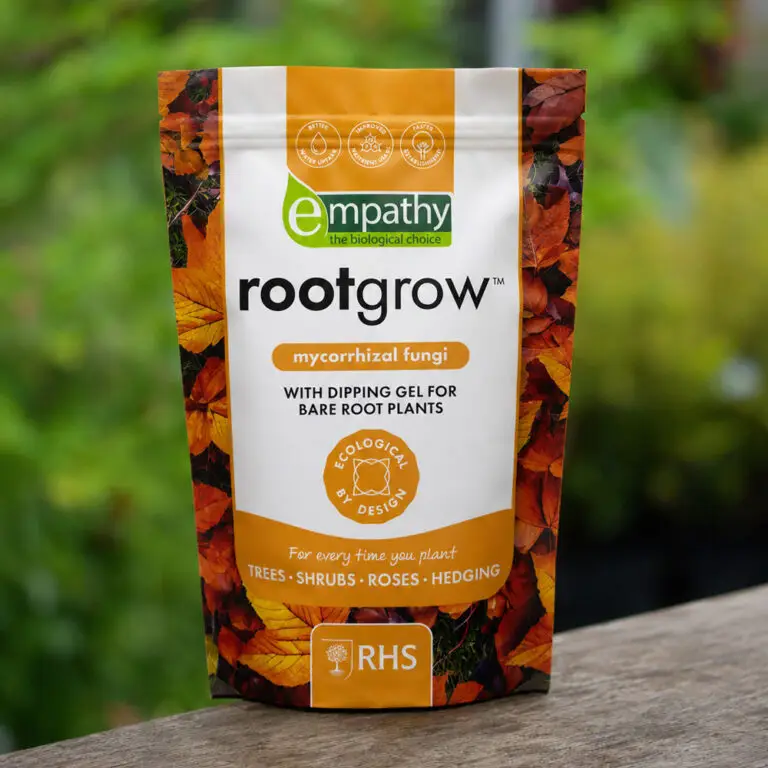
Rootgrow Mycorrhizal Fungi
Rootgrow can be applied at planting so the product is in direct contact with the roots, where appropriate for the plant and planting method.
View product
Hedge Feed
Hedge Feed provides balanced nutrition where established hedging would benefit from feeding as part of normal care.
View product
Hedge Irrigation
A hedge irrigation system can make it easier to water a new hedge consistently, particularly on longer runs and during dry weather.
View product
Hedge Compost & Mulch
Compost and mulch can support soil preparation, moisture retention and weed suppression when used appropriately around new hedging.
View product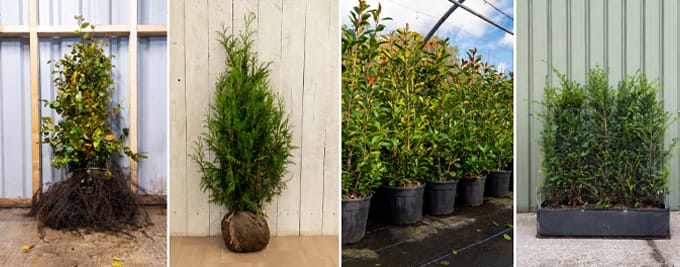
What Are the Different Hedging Root Types?
Bare root, root ball, pot-grown and instant hedging suit different budgets, planting times and levels of initial coverage. Understanding how each is…
Read answer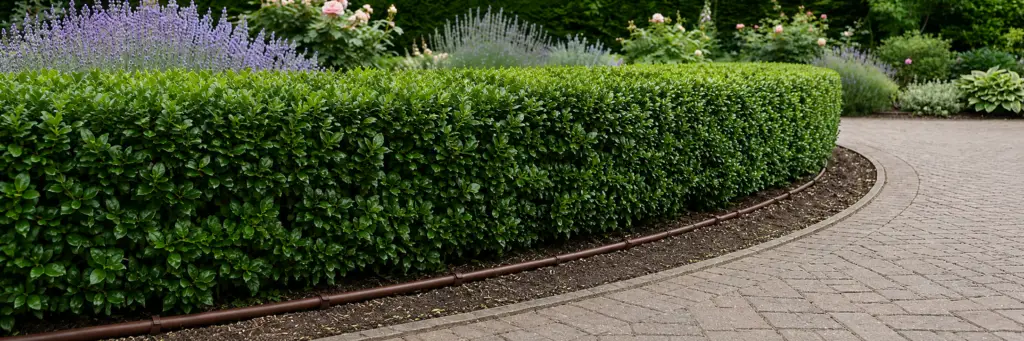
What Is the Best Soaker Hose for Hedges?
A well-chosen soaker hose makes it easier to water a hedge evenly without wetting the foliage or carrying a watering can along…
Read answer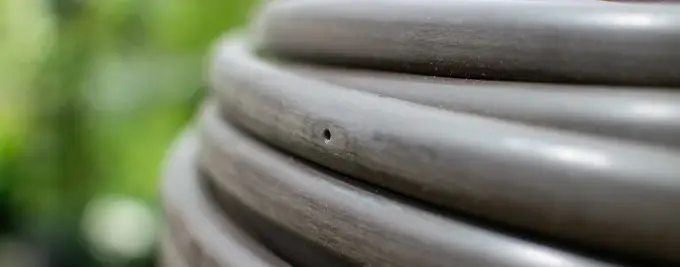
What Is the Best Watering System for a Hedge?
A good hedge watering system should deliver moisture slowly and evenly along the whole planting line. The most suitable setup depends on…
Read answer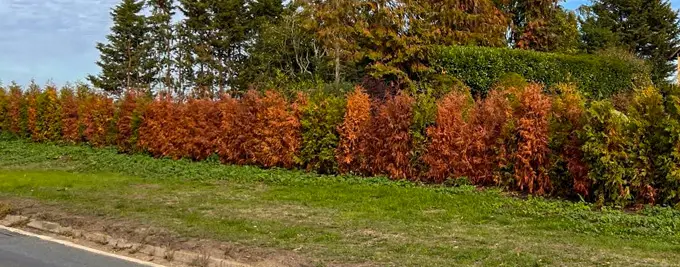
Why Is My Hedge Turning Brown?
A hedge can turn brown for several very different reasons, including dry roots, waterlogged soil, frost, wind, trimming damage or disease. The…
Read answer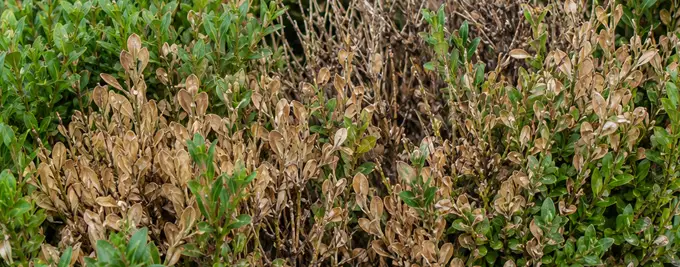
Can I Replace a Box Hedge With Green Spire After Box Blight?
Green Spire is one of the closest Euonymus alternatives to a neat low Box hedge. A previous box-blight outbreak does not infect…
Read answer
When Is the Best Time to Plant Hornbeam Hedging?
Hornbeam can be planted in several different forms, and the best planting time depends mainly on whether the plants are supplied bare…
Read answer
How Much Mycorrhizal Fungi Should I Use?
The correct amount of mycorrhizal fungi depends on the size and root type of the plants being treated. Calculating the quantity before…
Read answer
How Long Can Bare-Root Plants Be Stored?
Bare-root plants are vulnerable once they have been lifted because their exposed roots can dry out quickly. Correct temporary storage can protect…
Read answer