
How Far Apart Should Hedge Plants Be?
The correct distance between hedge plants depends on the species, supplied size, root type and whether they are being planted in a single or staggered double row. This guide explains how to turn plants-per-metre recommendations into accurate centre-to-centre spacing.
Quick Answer
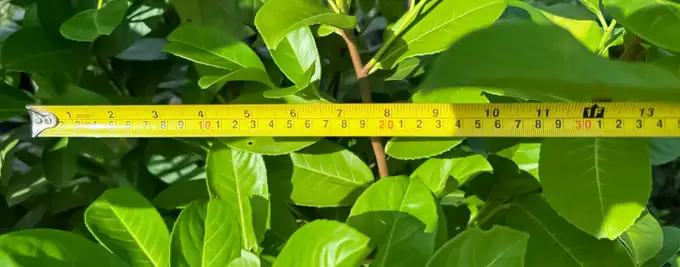
Hedge plants are commonly positioned between about 20cm and 50cm apart, but smaller bare-root plants may be as close as 14–25cm, while large root-balled plants and instant hedge units may be 50cm to 1m apart. Always follow the plants-per-metre figure shown for the exact species, plant size and root type being ordered. Measure from the centre of one plant to the centre of the next.
Quick Facts
| Correct measurement | Centre of one plant to the centre of the next |
|---|---|
| Single-row calculation | 100 ÷ plants per metre = spacing in centimetres |
| Smaller plants | Usually planted at a higher density |
| Larger plants | Usually planted farther apart |
| Double-row planting | The total density is divided between two staggered rows |
| Final specification | Use the plants-per-metre figure for the exact product size |
Why does hedge plant spacing vary?
There is no single planting distance that works for every hedge. The correct spacing depends on four main factors:
- The hedge species and its natural growth habit.
- The height and bushiness of the plants being supplied.
- Whether the plants are bare-root, pot-grown, root-balled or supplied as instant hedging.
- Whether the hedge is being planted in a single row or a staggered double row.
Small young plants are normally positioned more closely because each plant has less immediate width. Larger plants have broader root systems and more developed branches, so fewer are usually needed for each metre of hedge.
The most reliable figure is therefore the recommended number of plants per metre shown against the exact product option being purchased. Customers can compare species, sizes and root types in the complete hedge plant catalogue.
How do you convert plants per metre into spacing?
For a single-row hedge, divide 100 by the recommended number of plants per metre.
For example:
100 ÷ 4 plants per metre = 25cm between plant centres
The following table provides useful approximate conversions.
| Plants per metre | Approximate centre-to-centre spacing |
| 1 | 100cm |
| 1.25 | 80cm |
| 1.5 | 67cm |
| 2 | 50cm |
| 2.5 | 40cm |
| 3 | 33cm |
| 4 | 25cm |
| 5 | 20cm |
| 6 | 17cm |
| 7 | 14cm |
These calculations work well for a straight single row. A staggered double row needs to be calculated differently because the total number of plants is shared between two lines.
What is the typical spacing for different hedge plant sizes?
The following ranges are useful for initial planning, but they must not replace the recommendation shown on the individual product page.
| Plant type | Typical planning range | Practical consideration |
| Small bare-root plants and whips | Around 4–7 plants per metre | Used for economical planting and longer hedge runs |
| Small or medium pot-grown plants | Around 2–5 plants per metre | Density varies considerably with plant height and bushiness |
| Large pot-grown or root-balled plants | Around 1.25–3 plants per metre | Larger plants normally provide more immediate coverage |
| One-metre instant hedge units | One unit per metre | Units are normally positioned end to end |
Bare-root plants are often supplied at a higher planting density because they are young, narrow plants intended to grow together over time. See the current range of bare-root hedging plants for size-specific recommendations.
The number needed for pot-grown hedging varies widely. A small plant in a compact pot may need to be positioned much closer than a large, bushy specimen of the same species.
Root-balled plants are generally larger and are normally planted farther apart. The root balls must fit into the prepared planting trench without being forced together or damaged.
Instant hedging is commonly supplied in established one-metre sections. These are planted as complete hedge units rather than spaced as individual young plants.
Should hedge plants be planted in a single or double row?
A single row is suitable for most garden hedges. It occupies less space, uses fewer plants and is generally easier to plant and maintain.
A staggered double row creates a wider planting belt and is often used for native hedging, wildlife boundaries, screening projects and specifications where greater depth is required.
The plants are positioned in a zigzag pattern so that each plant in one row sits opposite a gap in the other row.
The plants-per-metre figure for a double row normally refers to the total number used across both rows, not the number required in each row.
For example, a ten-metre hedge planted at five plants per metre requires:
10 metres × 5 plants = 50 plants in total
When divided equally between two rows, each row contains approximately 25 plants. This gives an average spacing of about 40cm along each row, with the plants staggered between the rows.
The distance between the two rows depends on the species and planting specification. Native mixed hedging, for example, may use two rows around 30cm apart, but customers should follow the instructions supplied for their particular mix or scheme. More detailed information is available in the Native Mixed Hedging Care Guide.
How do you calculate how many hedge plants are needed?
Measure the complete hedge line in metres, excluding gateways, entrances and any other sections that will not be planted.
Multiply the planting length by the recommended number of plants per metre:
Hedge length × plants per metre = total number of plants
A 12-metre hedge requiring four plants per metre would therefore need:
12 × 4 = 48 plants
For measurements that do not produce a whole number, round up where necessary. It is also worth checking the proposed positions at corners and at each end of the hedge before confirming the quantity.
Some products are sold as metre packs rather than as individual plants. In this case, a quantity of one may represent one complete pack containing enough plants for one metre of hedge. Check the product description carefully before calculating the order.
How should the plants be set out before planting?
Mark the planting line with a string so that the finished hedge remains straight.
Position the first and last plants, then distribute the remaining plants evenly between them. Measure between the centre of each stem or root ball rather than measuring the empty gap between the foliage.
Set out all the plants before digging individual holes or completing the planting trench. This allows small adjustments to be made across the full length of the hedge and prevents an unusually large or small gap appearing at the end.
For a double row, use two parallel string lines and offset the plants to create a consistent zigzag pattern.
Is it better to plant hedge plants closer together?
Planting more closely can produce continuous coverage sooner, but adding extra plants is not always beneficial.
Plants placed unnecessarily close together may compete more strongly for water, light and root space. Dense planting can also restrict airflow and make it harder to inspect, prune and maintain the centre of the hedge.
Spacing plants too widely creates the opposite problem. The hedge may take longer to join together and could retain visible gaps, particularly if individual plants establish unevenly.
The aim is not to fit as many plants as possible into the available space. It is to use the correct density for the supplied size so that each plant has room to establish while the hedge develops into a continuous boundary.
Does hedge spacing affect establishment?
Correct spacing is only one part of successful hedge establishment. The complete planting strip should be cleared of perennial weeds, loosened where compacted and prepared so that roots can spread into the surrounding soil.
After planting, water the full root area thoroughly. Continue checking the moisture below the surface during dry, warm or windy conditions. Grass and weeds should be controlled because they compete with new hedge plants for moisture and nutrients.
For full instructions covering soil preparation, planting depth and early care, read the general hedge planting guide.
Gwynne's Grower's Tip
Set out every plant along the hedge line before you start planting. Small measuring differences can build up considerably over a ten or twenty-metre run, leaving a large gap at one end. Mark the first and last positions, measure from the centre of each plant and spread any adjustment across the whole line. Do not squeeze an extra plant into the final section simply because one is left over. Keeping the spacing consistent will usually produce a much more even hedge as the plants establish and grow together.
More General Advice
For more detailed growing advice or to view the plants available from our nursery, use the links below.
Useful Planting Essentials
Selected products that may help with planting, establishment and ongoing hedge care.
Rootgrow Mycorrhizal Fungi
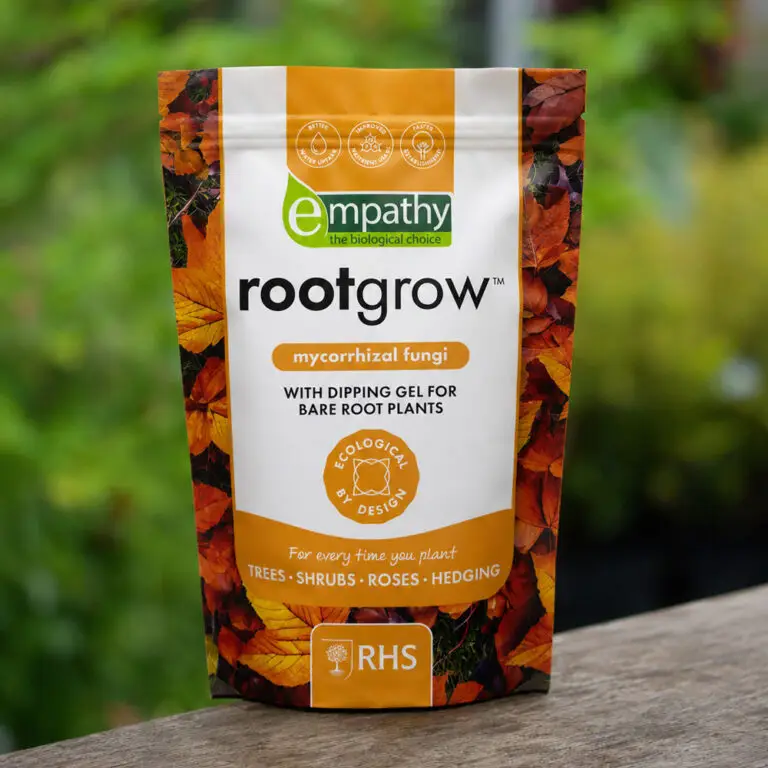
Rootgrow can be applied at planting so the product is in direct contact with the roots, where appropriate for the plant and planting method.
View product
Hedge Irrigation
A hedge irrigation system can make it easier to water a new hedge consistently, particularly on longer runs and during dry weather.
View product
Hedge Compost & Mulch
Compost and mulch can support soil preparation, moisture retention and weed suppression when used appropriately around new hedging.
View product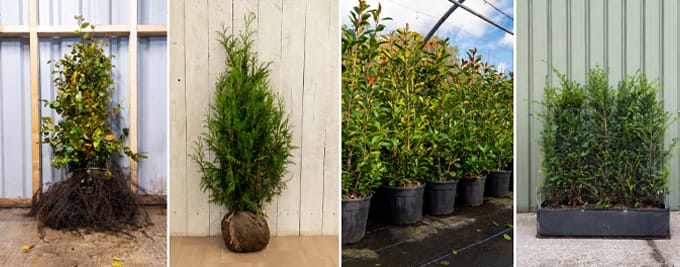
What Are the Different Hedging Root Types?
Bare root, root ball, pot-grown and instant hedging suit different budgets, planting times and levels of initial coverage. Understanding how each is…
Read answer
What Is the Best Soaker Hose for Hedges?
A well-chosen soaker hose makes it easier to water a hedge evenly without wetting the foliage or carrying a watering can along…
Read answer
What Is the Best Watering System for a Hedge?
A good hedge watering system should deliver moisture slowly and evenly along the whole planting line. The most suitable setup depends on…
Read answer
Why Is My Hedge Turning Brown?
A hedge can turn brown for several very different reasons, including dry roots, waterlogged soil, frost, wind, trimming damage or disease. The…
Read answer
When Is the Best Time to Plant Hornbeam Hedging?
Hornbeam can be planted in several different forms, and the best planting time depends mainly on whether the plants are supplied bare…
Read answer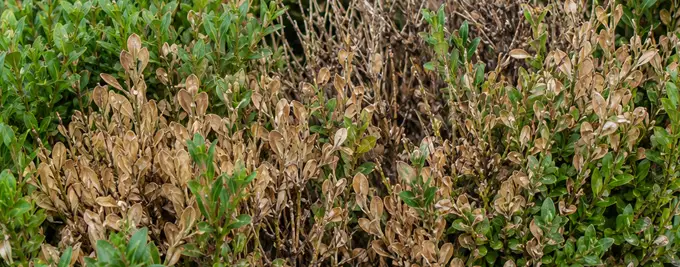
Can I Replace a Box Hedge With Green Spire After Box Blight?
Green Spire is one of the closest Euonymus alternatives to a neat low Box hedge. A previous box-blight outbreak does not infect…
Read answer
How Much Mycorrhizal Fungi Should I Use?
The correct amount of mycorrhizal fungi depends on the size and root type of the plants being treated. Calculating the quantity before…
Read answer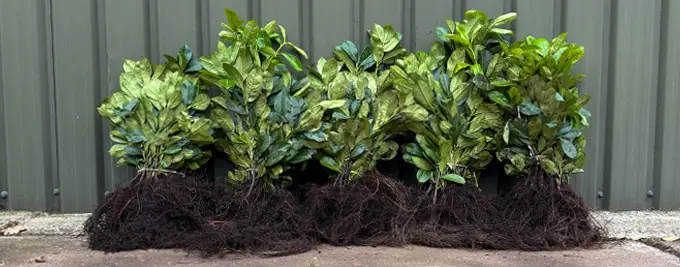
How Long Can Bare-Root Plants Be Stored?
Bare-root plants are vulnerable once they have been lifted because their exposed roots can dry out quickly. Correct temporary storage can protect…
Read answer