
How Do I Use Mycorrhizal Fungi for Hedge Plants?
Mycorrhizal fungi can be used as a one-off treatment when planting many types of hedge plant. The correct application method depends on whether the plants are supplied bare-root, pot-grown, root-balled or as instant hedging.
Quick Answer
Apply mycorrhizal fungi at planting so the product is in direct contact with the hedge plant’s roots. Use the supplied dipping gel for bare-root plants and place dry granules beneath or against the roots of pot-grown, root-balled and instant hedging. Follow the rate shown on the exact product pack. Do not scatter it over the soil after planting or treat it as routine fertiliser. Correct planting depth, soil preparation and watering remain essential.
Quick Facts
| Best time to apply | Once, at the time of planting |
|---|---|
| Essential requirement | The fungi must make direct contact with the roots |
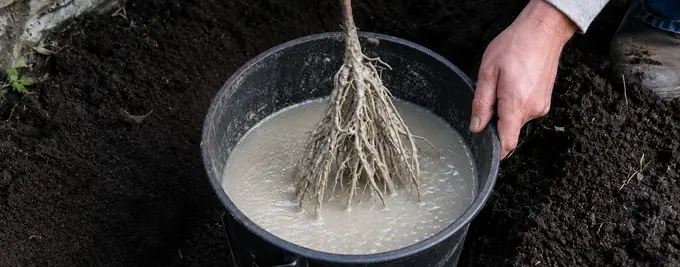
| Bare-root plants | Dip the roots in the prepared gel mixture |
| Pot-grown plants | Place granules in the hole directly beneath and against the roots |
| Root-balled plants | Position granules where the outer roots and root ball will contact them |
| Routine reapplication | Normally not required |
| Is it a fertiliser? | No, it is a root treatment rather than a routine hedge feed |
| Main limitation | It cannot correct poor drainage, deep planting, dry roots or inadequate watering |
What are mycorrhizal fungi?
Mycorrhizal fungi are beneficial fungi that form an association with plant roots. The plant supplies sugars to the fungi, while the fungal strands extend into the surrounding soil and help the plant access moisture and nutrients from a wider area than its roots could reach alone.
A product such as Rootgrow Mycorrhizal Fungi introduces suitable fungi directly to the root system when a hedge is planted.
It is best regarded as an optional establishment aid. It does not replace preparing the soil, planting at the correct depth, keeping roots moist before planting or watering the hedge properly afterwards.
How should mycorrhizal fungi be applied to different hedge root types?
The fungi need physical contact with living roots. The application method therefore changes according to how the hedge plants have been supplied.
Bare-root hedge plants
Bare-root plants are supplied without a pot or surrounding root ball. A dipping gel is the most effective way to distribute the fungi across the exposed roots.
- Prepare the planting trench before mixing the gel.
- Add the quantity of water stated on the gel sachet to a clean bucket.
- Stir in the gel powder and allow it to thicken for the time stated in the instructions.
- Add the mycorrhizal granules and mix until they are evenly suspended.
- Dip the roots so they receive an even coating.
- Allow excess mixture to drain back into the bucket.
- Plant the hedge immediately.
The amount of water and product varies between pack sizes, so follow the instructions supplied with the exact pack rather than using a general recipe. Manufacturer instructions for the gel products normally require the prepared roots to be planted immediately after dipping.
Only dip a manageable number of plants at a time. Bare roots should not be left exposed to wind or sun while the remainder of the trench is prepared.
Pot-grown and cell-grown hedge plants
Water dry pot-grown root balls thoroughly before planting.
Remove the pot and inspect the root system.
Measure the recommended quantity of granules and distribute them across the part of the planting hole where the roots will sit. Place the root ball directly onto the granules so the outer roots make contact with the product, then backfill and water thoroughly.
Do not mix the granules through a large volume of loose soil. This can leave much of the product beyond the reach of the roots.
Root-balled hedge plants
Prepare a hole or trench that is wide enough to accommodate the root ball without forcing it into a confined space.
Apply the granules beneath and around the outer root area, following the rate for the size of plant being installed. The objective is to place the product where new roots will emerge from the root ball into the surrounding soil.
Do not put the granules in a deep layer at the bottom of an oversized hole. If the roots cannot reach the product, the fungi cannot form the intended association.
Instant hedging
Instant hedge units have a larger continuous root system. Apply the measured product along the prepared trench where the base and sides of the root mass will make contact with it.
Large instant units also require careful soil preparation and reliable watering. Plan the irrigation before installing the hedge where possible, as reaching the full root area becomes more difficult once the units are in position.
For the complete planting sequence, see our guide to planting a hedge.
When should mycorrhizal fungi be applied?
Apply the product during planting, immediately before the roots are covered with soil.
Standard planting granules should not simply be spread over the soil surface after the hedge has been planted. Without direct root contact, the application is unlikely to provide the intended treatment.
Mycorrhizal fungi are normally used as a one-off planting treatment rather than something that must be reapplied every spring. They should not be confused with hedge fertiliser, which supplies nutrients and may be applied later where the soil and condition of an established hedge indicate that feeding is useful.
How much mycorrhizal fungi should I use?
There is no reliable single rate for every hedge. The quantity depends on:
- the product and pack size
- whether the plants are bare-root, pot-grown or root-balled
- the height and root size of each plant
- the number of plants being installed
- the length and planting density of the hedge
Use the application table on the exact product packaging. Small cell-grown or 2-litre plants require considerably less product than large pot-grown or root-balled plants.
Hedging Plants Direct supplies Rootgrow in different pack sizes for domestic hedges, longer planting runs and trade or commercial projects. Calculate the number and size of plants before choosing the pack, then check the manufacturer’s rate against the final planting plan.
Can I use mycorrhizal fungi with compost?
Mycorrhizal fungi can be used alongside suitable soil preparation, but the two products perform different jobs.
A soil improver such as Hedge Planting Compost may help improve soil structure and moisture retention where the existing ground needs additional organic matter.
Mix the soil improver through the excavated soil rather than filling the planting trench with pure compost. Position the mycorrhizal fungi separately where they will touch the roots.
Good drainage must be addressed before planting. Neither compost nor mycorrhizal fungi can correct a trench that continually fills with water.
Can I use fertiliser at the same time?
Avoid placing concentrated fertiliser directly against newly planted roots. Strong or phosphorus-rich fertilisers may also interfere with the formation of mycorrhizal associations.
During early establishment, concentrate on:
- correct planting depth
- suitable drainage
- thorough initial watering
- keeping grass and weeds away from the root area
- checking moisture below the soil surface
Feeding can be considered later if the hedge species, soil and plant condition indicate that it is needed. More fertiliser does not automatically produce faster or healthier establishment.
Is standard Rootgrow suitable for every hedge plant?
Standard Rootgrow is suitable for most common hedging plants, trees and shrubs, but it is not the correct formulation for every plant.
The manufacturer states that standard Rootgrow is not suitable for rhododendrons, azaleas, heathers, blueberries or cranberries. These acid-loving plants require an appropriate ericoid mycorrhizal product. Check the product label if you are planting an ericaceous hedge or an unusual species.
What mistakes should I avoid?
The most common application mistakes are:
- scattering the granules over the soil after planting
- placing the product too far beneath the roots
- mixing it throughout a large volume of backfill
- preparing bare-root plants before the trench is ready
- allowing dipped roots to dry before planting
- using an unsuitable formulation for an ericaceous plant
- treating mycorrhizal fungi as a replacement for watering
- adding more than the stated rate in the belief that more will work better
Mycorrhizal fungi can support establishment, but the fundamentals still decide whether a hedge succeeds. Prepare a wide enough planting area, keep the plants at their original growing depth and water the complete root zone thoroughly after planting.
Our Planting Essentials guide explains how Rootgrow, soil improvement, irrigation and plant protection fit into the wider hedge-planting process.
Gwynne's Grower's Tip
When we are planting a long run of bare-root hedging, I prefer to mix the dipping gel beside the prepared trench and treat only a manageable batch at a time. The roots need an even coating and should then go straight into the soil. There is little benefit in dipping hundreds of plants and leaving them exposed while the planting work catches up. With pot-grown and root-balled plants, place the granules where the outer roots will actually touch them, not in a thick layer of compost beneath the plant. Careful planting and watering remain more important than simply adding extra product.
More General Advice
For more detailed growing advice or to view the plants available from our nursery, use the links below.
Useful Planting Essentials
Selected products that may help with planting, establishment and ongoing hedge care.
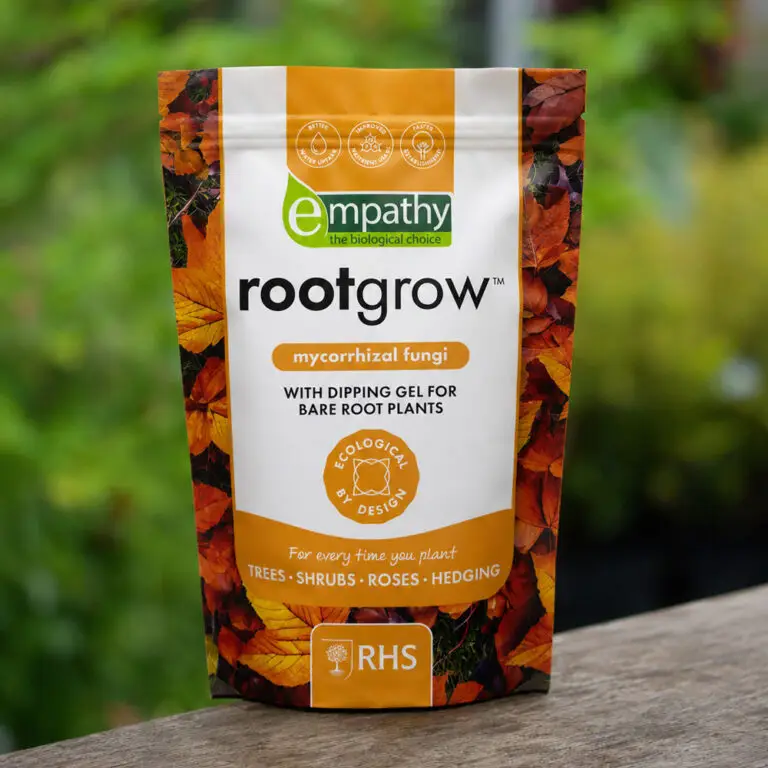
Rootgrow Mycorrhizal Fungi
Rootgrow can be applied at planting so the product is in direct contact with the roots, where appropriate for the plant and planting method.
View product
Hedge Irrigation
A hedge irrigation system can make it easier to water a new hedge consistently, particularly on longer runs and during dry weather.
View product
Hedge Compost & Mulch
Compost and mulch can support soil preparation, moisture retention and weed suppression when used appropriately around new hedging.
View product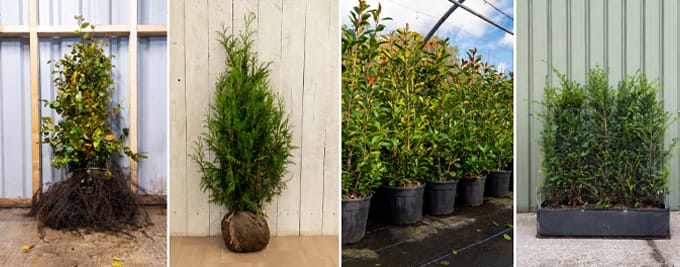
What Are the Different Hedging Root Types?
Bare root, root ball, pot-grown and instant hedging suit different budgets, planting times and levels of initial coverage. Understanding how each is…
Read answer
What Is the Best Soaker Hose for Hedges?
A well-chosen soaker hose makes it easier to water a hedge evenly without wetting the foliage or carrying a watering can along…
Read answer
What Is the Best Watering System for a Hedge?
A good hedge watering system should deliver moisture slowly and evenly along the whole planting line. The most suitable setup depends on…
Read answer
Why Is My Hedge Turning Brown?
A hedge can turn brown for several very different reasons, including dry roots, waterlogged soil, frost, wind, trimming damage or disease. The…
Read answer
When Is the Best Time to Plant Hornbeam Hedging?
Hornbeam can be planted in several different forms, and the best planting time depends mainly on whether the plants are supplied bare…
Read answer
Can I Replace a Box Hedge With Green Spire After Box Blight?
Green Spire is one of the closest Euonymus alternatives to a neat low Box hedge. A previous box-blight outbreak does not infect…
Read answer
How Much Mycorrhizal Fungi Should I Use?
The correct amount of mycorrhizal fungi depends on the size and root type of the plants being treated. Calculating the quantity before…
Read answer
How Long Can Bare-Root Plants Be Stored?
Bare-root plants are vulnerable once they have been lifted because their exposed roots can dry out quickly. Correct temporary storage can protect…
Read answer