
When Should I Prune a Laurel Hedge?
Laurel hedges are forgiving plants, but choosing the right time to prune helps them recover cleanly and keeps the hedge dense and manageable. The ideal timing varies slightly depending on the type of Laurel and whether you are carrying out routine trimming or a harder reduction.
Quick Answer
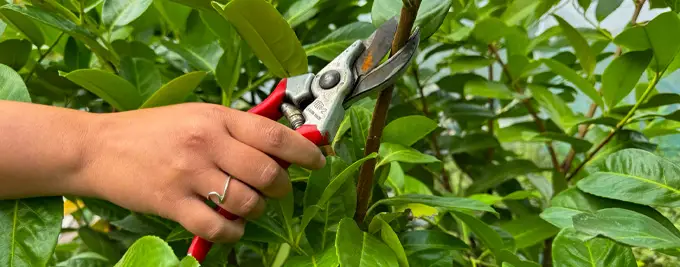
For most Cherry, Portuguese, Upright and Compact Laurel hedges in the UK, prune in late spring or early summer, typically May to June, once the risk of severe frost has passed. A light second trim in late summer can tidy vigorous or formal hedges. Sweet Bay is best trimmed in spring or summer. Always check carefully for active bird nests before cutting and delay work if a nest is in use.
Quick Facts
| Main pruning period | Late spring to early summer |
|---|---|
| Typical main trim | May to June, depending on weather |
| Second trim | Late summer if required |
| Typical frequency | Once a year, or twice for a formal or vigorous hedge |
| Hard reduction | Spring, preferably after severe frost risk |
| Sweet Bay | Trim in spring or summer |
| Avoid | Severe frost, extreme heat and active bird nests |
What is the best time of year to prune a Laurel hedge?
For most established Laurel hedges, the main pruning period is late spring to early summer. In many UK gardens this means approximately May or June, although the weather and your location are more useful guides than choosing one fixed date.
By this stage, the worst risk of severe frost has usually passed and the hedge is actively growing, allowing it to respond well after trimming.
If your Laurel only needs one trim each year, this is normally the best time to do it.
Fast-growing or tightly clipped hedges may also benefit from a second light trim in late summer. This removes untidy new shoots without encouraging the amount of soft new growth that a heavy late-season cut could produce.
For more information on cutting technique, tools and shaping method, visit our how to prune a Laurel hedge guide.
Does pruning time vary between different types of Laurel?
Yes. The plants commonly called Laurel do not all grow in exactly the same way.
Cherry Laurel
Cherry Laurel, Prunus laurocerasus, is vigorous and can produce around 30 to 60cm of growth a year once established in favourable conditions.
Give an established hedge its main trim in late spring or early summer. A second light trim in late summer can be useful where a very tidy outline is required.
Because Cherry Laurel hedge plants has large leaves, selective pruning with secateurs or careful hand shearing usually gives a neater finish than repeatedly cutting straight through the leaves with a powered hedge trimmer.
Portuguese Laurel
Portuguese Laurel hedge, Prunus lusitanica, generally grows more steadily than Cherry Laurel hedging and has smaller leaves.
One main trim in late spring or early summer is often enough for an informal hedge. A formal Portuguese Laurel hedge may be trimmed again lightly in late summer to maintain a crisp outline.
Its smaller foliage also makes it more suitable for trimming with hand shears or a sharp hedge trimmer.
Upright Laurel
Upright Laurel, Prunus laurocerasus ‘Caucasica’, can be treated similarly to Cherry Laurel.
Trim the sides during late spring or early summer to control its width. If the hedge has not yet reached its intended height, avoid repeatedly cutting the strongest leading shoots from the top. Once it reaches the required height, trimming the top will encourage a denser finished hedge.
Compact Laurel
Compact Laurel is naturally lower and slower growing than Cherry or Upright Laurel.
It normally only requires light pruning in late spring or early summer to control its shape and prevent spreading growth from encroaching onto paths or neighbouring plants.
Sweet Bay Laurel
Sweet Bay, Laurus nobilis, is botanically different from Cherry and Portuguese Laurel and is slightly less tolerant of severe winter conditions.
Trim Sweet Bay during spring or summer. If winter frost has damaged the tips, wait until late spring when the extent of the damage is clear before removing affected growth.
Avoid carrying out a heavy late-season cut because there is less time for the plant to recover before cold weather.
Can I prune a Laurel hedge in late summer?
Yes. Late summer is a useful time for a light maintenance trim, particularly on Cherry Laurel, Portuguese Laurel and Upright Laurel that have produced another flush of growth.
This second trim is mainly about keeping the hedge neat rather than dramatically reducing its height or width.
A formal hedge may benefit from two trims each year, while an informal Laurel hedge can often be maintained successfully with just one.
Avoid leaving substantial pruning until very late in autumn. Fresh cuts and any resulting soft growth have less time to mature before winter weather arrives.
When should I avoid pruning Laurel?
There are several occasions when delaying the work is sensible.
During severe frost
Avoid major pruning while the hedge is frozen or immediately before a period of severe frost.
Freshly cut stems and tender new growth can be more vulnerable to cold damage, particularly on Sweet Bay.
During very hot or dry weather
If possible, avoid heavy pruning during a prolonged hot, dry spell.
Removing a large amount of foliage while a hedge is already under moisture stress can put additional pressure on the plant. Wait for cooler conditions and make sure the root area is adequately watered during prolonged dry weather.
When birds are nesting
Laurel makes dense evergreen cover and birds may choose it for nesting.
The main UK nesting season is generally considered to run from March until August, although birds can nest outside these dates.
This does not mean that every hedge is automatically off limits throughout spring and summer. The important point is to inspect the hedge carefully before starting.
If an active nest is present, stop work around that part of the hedge and leave it undisturbed until the nest is no longer in use.
When should I hard prune an overgrown Laurel hedge?
A healthy Cherry or Portuguese Laurel can usually recover from much harder pruning than many evergreen conifers.
If a hedge has become excessively tall or wide, spring is generally the safest period for major renovation, once the worst risk of severe frost has passed.
Very large, old or stressed hedges are often better reduced gradually rather than taking a huge amount away in one operation. For example, one side or part of the height can be reduced first, allowing new growth to develop before completing the renovation.
Keep the root area watered during dry weather while the hedge is recovering.
Should I prune a newly planted Laurel hedge?
Newly planted Laurel normally needs formative trimming rather than heavy pruning.
Lightly shortening vigorous side shoots helps encourage branching and a dense base. However, if the hedge has not reached the required height, allow the strongest upright shoots to continue growing.
Once the desired height is approached, begin trimming the top as well as the sides.
Keeping the hedge slightly wider at the bottom than at the top also allows more light to reach the lower foliage and helps prevent the base becoming thin.
Gwynne's Grower's Tip
With Laurel, I would rather give the hedge one well-timed main trim once the spring growth is underway than keep cutting it hard late into the year. On Cherry Laurel, use secateurs on the visible face of the hedge where appearance matters because cutting through the large leaves can leave temporary brown edges. If an old Laurel needs a major reduction, take a little more time and reduce it in stages rather than trying to completely reshape it in one cut.
More Laurel Advice
For more detailed growing advice or to view the plants available from our nursery, use the links below.
Related Products
Products from our nursery that are relevant to this advice.


Useful Planting Essentials
Selected products that may help with planting, establishment and ongoing hedge care.

Rootgrow Mycorrhizal Fungi
Rootgrow can be applied at planting so the product is in direct contact with the roots, where appropriate for the plant and planting method.
View product
Hedge Feed
Hedge Feed provides balanced nutrition where established hedging would benefit from feeding as part of normal care.
View product
Hedge Irrigation
A hedge irrigation system can make it easier to water a new hedge consistently, particularly on longer runs and during dry weather.
View product
Hedge Compost & Mulch
Compost and mulch can support soil preparation, moisture retention and weed suppression when used appropriately around new hedging.
View product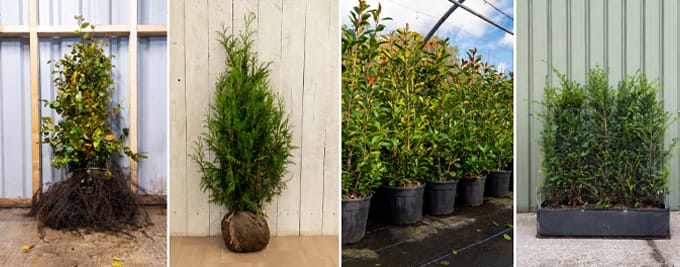
What Are the Different Hedging Root Types?
Bare root, root ball, pot-grown and instant hedging suit different budgets, planting times and levels of initial coverage. Understanding how each is…
Read answer
Are Laurel Berries Poisonous?
Laurel hedges can produce attractive dark berries after flowering, but the name "Laurel" covers several different plants. Their fruit is not identical,…
Read answer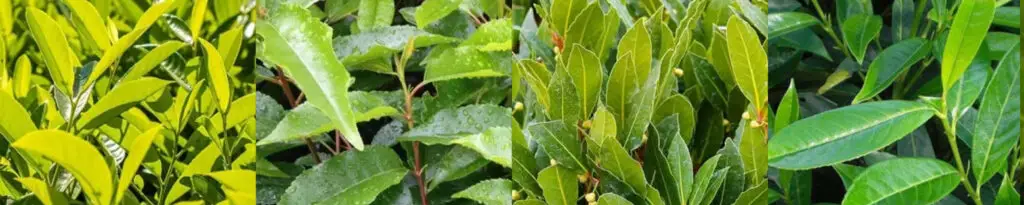
Is Laurel Hedging Poisonous?
Laurel is one of the UK's most popular evergreen hedges, but not every plant called Laurel has the same safety profile. This…
Read answer
What Should I Feed a Laurel Hedge?
Laurel hedging is generally easy to maintain, but the right feed can help young, weak or recently pruned plants make healthy new…
Read answer
When Should I Prune a Hornbeam Hedge?
Hornbeam responds well to regular clipping, but routine trimming, formative pruning and major renovation are best carried out at different times. Choosing…
Read answer
When Should Hedges Be Cut to Avoid Nesting Birds?
Hedges provide valuable nesting cover for many British garden birds. Planning routine trimming around the breeding season reduces the risk of damaging…
Read answer
When Should a Box Hedge Be Trimmed?
Box responds well to clipping, but the age of the hedge and the weather conditions both matter. Choosing the right time helps…
Read answer
How Do I Make a Beech Hedge Thicker?
A thin Beech hedge is often caused by weak formative pruning, shade at the base, dry roots, weed competition or gaps between…
Read answer