
Types of Hedge Plants
Compare more than 50 types of hedge plants to find the right variety for your garden or project. Explore evergreen, deciduous, native, flowering, fast-growing and low-growing hedges, with options to suit different soils, positions, heights and levels of maintenance.
Once you have found the right species, follow the links to view available plants, sizes, prices and planting options.
Already know the species you are looking for? Browse our hedging species A-Z to compare each type of hedge and view the available ranges.
Browse our complete range of hedge plants and buy direct from our established family-run nursery. We supply retail, trade and commercial customers with hedging plants for domestic gardens, landscaping schemes and larger planting projects. Use the filters to compare plants by growth rate, eventual height, soil type, planting position and key features, then choose the size and root type that suit your site.
 Price From £14.95 Shop Now This product has multiple variants. The options may be chosen on the product page
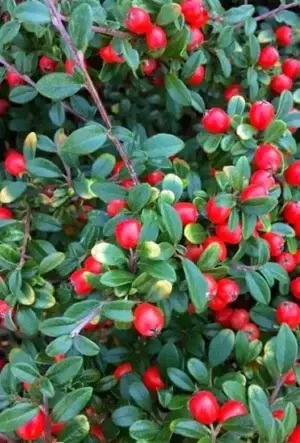
Bearberry Cotoneaster is a vigorous, flat growing, evergreen shrub that will spread to around 2m, with small, rounded ovate leaves and small white flowers in early summer, followed by bright...
- Price From £2.20 Shop Now This product has multiple variants. The options may be chosen on the product page
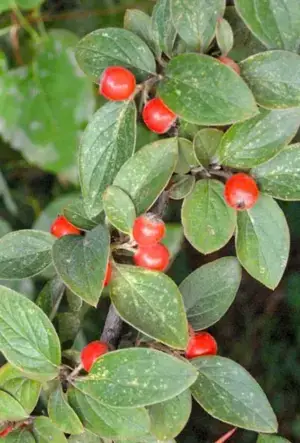
Cotoneaster franchetii is a fast growing dense evergreen hedging plant with grey-green ornate foliage. It produces blush white flowers in the spring which are followed by attractive orange berries.
- Price From £10.95 Shop Now This product has multiple variants. The options may be chosen on the product page
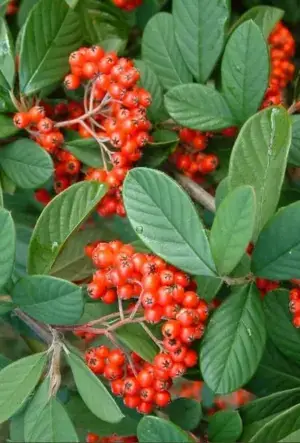
Cotoneaster lacteus is a fast growing large evergreen hedging plant with glossy dark green leaves. It produces large clusters of white flowers in the spring, which are followed by attractive...
- Price From £1.25 Shop Now This product has multiple variants. The options may be chosen on the product page
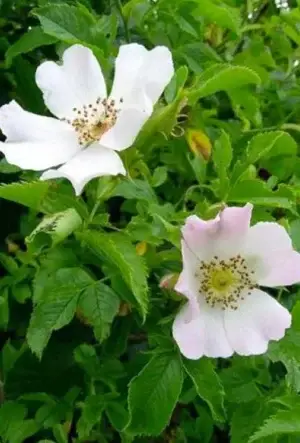
Dog Rose or Wild Rose is a thorny, rambling deciduous plant with green leaves that produces beautiful pink-white flowers in the spring followed by attractive orange hips.
- Price From £3.50 Shop Now This product has multiple variants. The options may be chosen on the product page
English Holly is an attractive, native evergreen hedging plant with spiky glossy green foliage and produces white flowers in the spring.
- Price From £3.75 Shop Now This product has multiple variants. The options may be chosen on the product page
English Yew (Taxus baccata) is a dense, native evergreen hedging plant with fine, dark green foliage. It clips beautifully into formal hedges, grows in sun or shade and provides dependable...
- Price From £1.20 Shop Now This product has multiple variants. The options may be chosen on the product page
Field Maple is a native, fast growing deciduous hedging plant that has green foliage that turn shades of yellow in the autumn.
- Price From £6.60 Shop Now This product has multiple variants. The options may be chosen on the product page
Field Wildlife Mix is a traditional British mixed hedge that's suitable for most conditions including coastal and windy sites. This mix not only adapts well to various environments but also...


Choose the Right Hedge Plants for Your Site
The best hedge plants for your project will depend on what you want the hedge to do, the conditions in which it will grow and how quickly you need it to establish. Some customers want year-round privacy, while others are looking for seasonal colour, wildlife value, security or a low-growing boundary.
Use the catalogue filters to narrow the range by soil type, growth rate, mature height and planting position. You can also browse hedge plants suitable for exposed, coastal, sunny, shaded, dry or moist sites.
Evergreen Hedge Plants for Privacy
Evergreen hedging plants retain their foliage throughout the year, making them a popular choice for privacy, screening and clearly defined boundaries. Options include traditional green hedges as well as plants with colourful or variegated foliage.
Before choosing an evergreen hedge, consider its eventual height, rate of growth and the amount of maintenance required to keep it at the size you want.
Browse related categories:
- Evergreen Hedging Plants
- Laurel Hedging
- Yew Hedging
- Privet Hedging
- Photinia Red Robin Hedging
- Griselinia Hedging
- Holly Hedging
- Euonymus Hedging
Deciduous and Native Hedging Plants
Deciduous hedge plants lose some or all of their foliage during winter but can provide spring growth, autumn colour, flowers, berries and valuable wildlife habitat.
Native and mixed native hedging plants are particularly well suited to informal boundaries, countryside planting and wildlife-friendly gardens. Popular choices include Hawthorn, Blackthorn, Hazel, Field Maple, Beech and Hornbeam.
Browse related categories:
- Native Hedging Plants
- Mixed Native Hedging Packs
- Hawthorn Hedging
- Blackthorn Hedging
- Hazel Hedging
- Field Maple Hedging
- Beech Hedging
- Hornbeam Hedging
Flowering and Wildlife-Friendly Hedging
Flowering hedging plants can add seasonal colour, fragrance and interest to a boundary. Many varieties also produce berries or provide shelter and food for birds, insects and other wildlife.
Use the plant feature filters to compare flowering, fragrant, berry-producing and wildlife-friendly hedge plants without having to search through every product individually.
Browse related categories:
- Flowering Hedging Plants
- Wildlife Friendly Hedging
- Pyracantha Hedging
- Cotoneaster Hedging
- Dog Rose Hedging
- Guelder Rose Hedging
- Mixed Native Hedging Packs
Hedge Plants for Exposed and Coastal Positions
Gardens in exposed or coastal areas need hedging plants that can tolerate stronger winds and more demanding conditions. Soil type, drainage, salt exposure and the amount of shelter available should all be considered before ordering.
The catalogue filters can help identify plants suited to coastal and exposed positions, but it is still important to check the individual product description before making your final choice.
Browse related categories:
Compare Different Types of Hedge Plants
Hedge plants are available in several root types and sizes. The right choice will depend on the planting season, the length of the hedge, your budget and how quickly you want to create an established boundary.
Bare Root Hedge Plants
Bare root hedging is supplied without a pot or surrounding compost during the dormant planting season. It is often a practical option for longer hedge lines, native planting schemes and projects requiring larger quantities of smaller plants.
Bare root plants should be planted promptly after delivery and kept protected from drying out while the ground is being prepared.
Browse related products:
Pot-Grown Hedge Plants
Pot-grown hedging plants are supplied with their roots established in compost. They can be planted across a wider part of the year, provided the ground is suitable and regular watering can be maintained.
They are available in a range of sizes and are a useful choice for garden boundaries, replacement planting and projects that fall outside the traditional bare root season.
Browse related products:
Root Ball and Instant Hedging
Root ball hedge plants are generally larger, field-grown plants lifted with soil around their roots during the dormant season. They can provide greater initial height and impact than smaller bare root plants.
Instant hedging is supplied as established sections of hedge and is intended for projects where immediate coverage is important. Larger and more mature hedging will require thorough ground preparation, careful handling and dependable irrigation during establishment.
Browse related products:
Preparing the Ground for New Hedge Plants
Good preparation has a major effect on how successfully a new hedge establishes. Remove perennial weeds, loosen compacted soil and prepare a planting trench or individual holes wide enough for the roots to spread naturally.
Hedge Planting Compost can be incorporated where the existing soil needs additional organic matter or improvement. Avoid planting into a narrow pocket containing only compost, as the surrounding soil must also be suitable for the roots to grow into.
Apply Rootgrow mycorrhizal fungi at planting where appropriate. Rootgrow must come into direct contact with the plant roots, so follow the application instructions for the type of hedging being planted.
After planting, firm the soil gently around the roots and water the full planting area thoroughly. Once the hedge is planted and beginning to establish, Hedge Feed can be applied according to the product instructions to provide nutrients for continued growth.
Related products:
Rabbit Protection for Young Hedge Plants
Rabbits can damage the stems and bark of young hedge plants, particularly on rural, field-edge and commercial planting sites. Where rabbits are present, fit suitable spiral guards or other rabbit protection at planting.
Guards should be properly supported and checked as the plants grow. Bamboo canes can help keep guards upright and prevent them from pressing against young stems.
Related products:
Watering and Hedge Irrigation
Newly planted hedge plants need consistent watering while their root systems establish. Rainfall should not automatically be assumed to have watered the full depth of the planting trench, particularly during warm, windy or dry weather.
Water slowly and thoroughly so moisture reaches the root zone. For longer hedge lines, porous pipe or another suitable hedge irrigation system can provide more even watering and reduce the time required to water individual plants.
Continue monitoring the soil rather than watering to a fixed timetable. Sandy soils may dry quickly, while heavier soils can hold moisture for longer and should not be allowed to become waterlogged.
Related products:
Buy Hedge Plants Direct from Our Family-Run Nursery
Hedging Plants Direct supplies hedge plants to retail, trade and commercial customers across the UK. Whether you are planting a short garden boundary, replacing an existing hedge or planning a larger landscaping project, you can compare species, sizes and root types in one place.
Browse the hedge plants above or contact our nursery team for help choosing suitable varieties, calculating quantities and selecting the planting products needed for your project.