Holly Hedging Care Guide: Planting, Spacing and Pruning
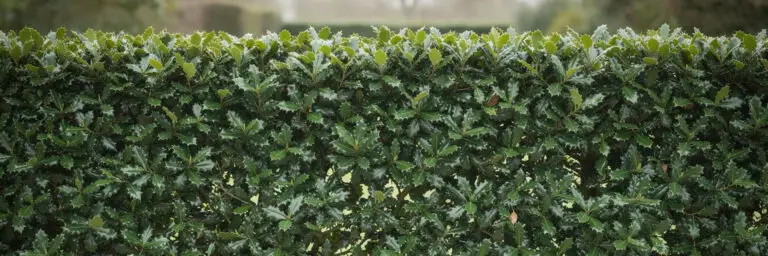
English Holly hedging grows best in moist but well-drained soil, with careful watering while the roots establish and light, well-timed pruning to keep the hedge dense.Ilex aquifolium is a hardy native evergreen that grows in sun or shade and suits formal boundaries, wildlife gardens and security planting. This guide explains how to choose, plant, space, water, feed, prune and troubleshoot plants from our Holly hedging range.
Holly is naturally slow growing, usually adding around 10–20cm a year once established. It should not be treated like a fast privacy hedge. The reward is dense, long-lived evergreen structure, spring flowers for pollinating insects and, on pollinated female plants, red autumn and winter berries.
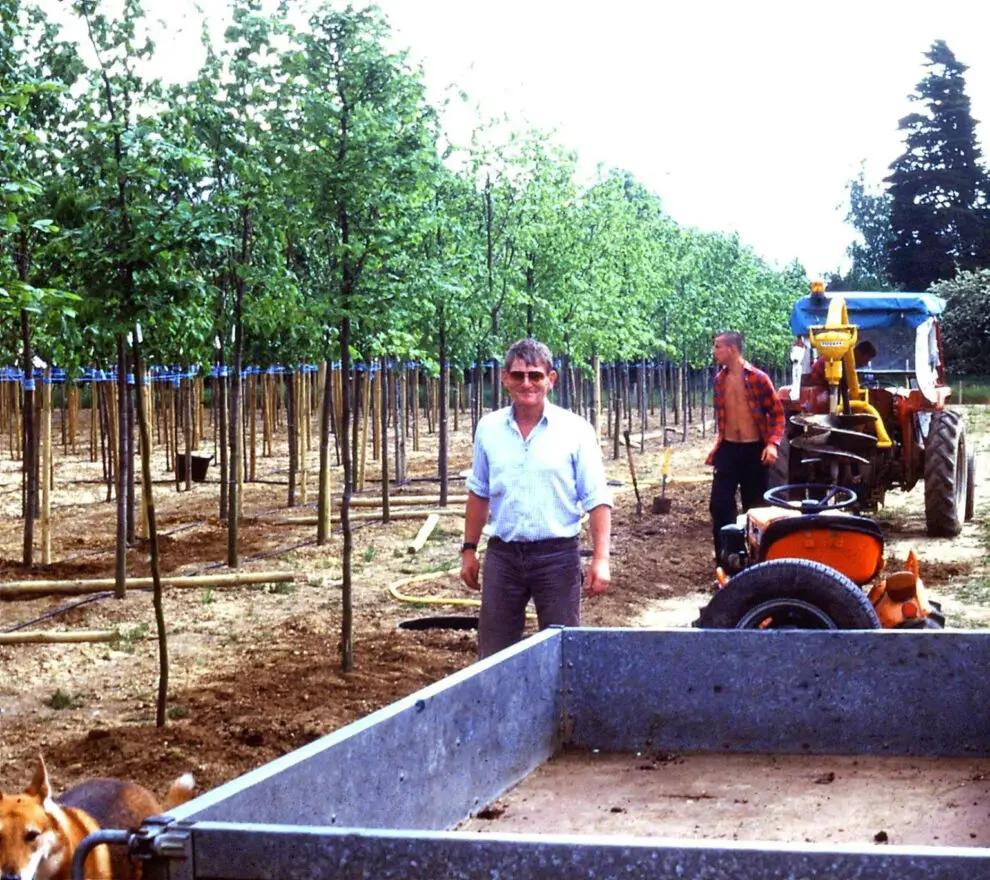
Reviewed by Gwynne Bodsworth, Founder and GrowerLast reviewed 14 August 2026
Expert nursery advice
Gwynne's Grower's Tip
English Holly is a very dependable evergreen hedge when customers want strong winter structure, dense foliage and a traditional native plant. The main thing to remember is that Holly is naturally slow growing, so good ground preparation and choosing the right starting size matter more than trying to force it with fertiliser.
Gwynne Bodsworth• Founder and Grower, Hedging Plants Direct
English Holly is my first choice when someone wants a dense native evergreen hedge with real winter character. The prickly foliage makes a useful boundary and the flowers are valuable to pollinating insects. Berries are a bonus rather than something I would promise on every plant, because common Holly is normally male or female and only pollinated female plants produce fruit.
Native evergreen shrub or tree commonly maintained as a hedge
Evergreen or deciduous
Evergreen
Typical growth rate
About 10–20cm a year once established
Preferred position
Full sun to partial shade; tolerant of deeper shade but usually denser with reasonable light
Soil
Moist but well-drained clay, loam, chalk or sandy soil; avoid prolonged waterlogging and severe drought
Watering
Water thoroughly after planting and during dry periods for at least the first two growing seasons
Pruning period
Main trim in early spring; light later tidying only after checking for active bird nests
Feeding
Usually modest; use a balanced spring feed only where growth or soil condition justifies it
Hardiness
Very hardy; RHS H7
Typical hedge height
About 1.2–4m in most gardens, although taller hedges are possible
Planting season
Pot grown year-round in suitable weather; root-balled Holly during the cooler lifting season
Root types commonly available
Pot grown and root balled
About Holly hedging
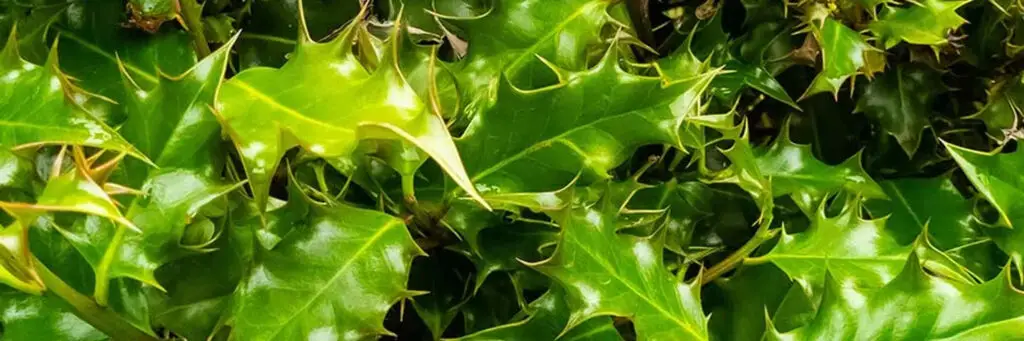
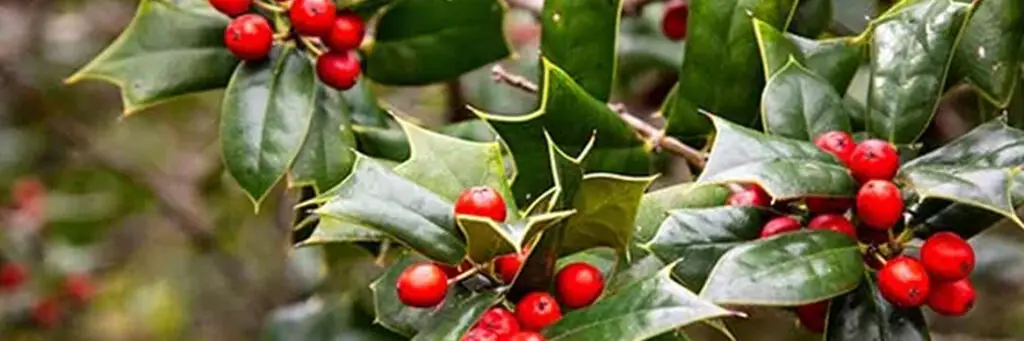
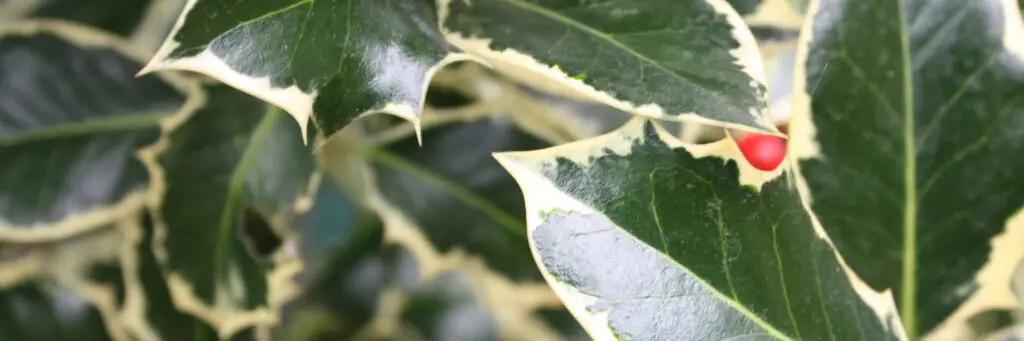
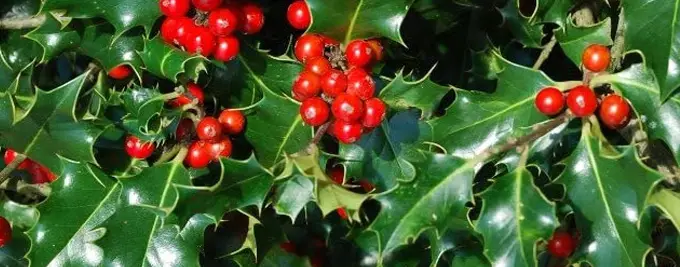
Ilex aquifolium, commonly called English Holly or common Holly, belongs to the Aquifoliaceae family and is native to Britain and Ireland. In the wild it grows as an evergreen shrub or tree in woodland, scrub and hedgerows, particularly beneath oak and Beech. Its dark glossy foliage remains green through winter, making Holly one of the few native plants that can form a genuinely evergreen hedge.Young and lower foliage is often strongly spiny, while older growth higher on a mature tree may carry smoother leaves. Small pale flowers appear in spring. Holly is usually dioecious, meaning male and female flowers occur on separate plants. Only pollinated female plants produce the familiar red berries.
Prickly leaves create a useful defensive boundary.
It is native and supports birds, pollinators and other wildlife.
It grows in sun, partial shade and many shaded positions.
It tolerates a wide range of soil types where drainage is adequate.
Slow growth reduces the amount of annual trimming required.
It is very hardy and suitable for many exposed UK gardens.
It can be maintained formally or allowed to become a broader wildlife hedge.
Does every English Holly hedge produce red berries?
No. Common Holly normally has separate male and female plants. Female plants need pollen from a compatible male Holly flowering nearby before berries can set. A mixed seed-grown hedge may contain both sexes, but the sex of young plants is not always known before flowering, so berries should never be guaranteed on every plant or every hedge.Some named cultivars are self-fertile, but standard English Holly sold as Ilex aquifolium should be described as a native species hedge rather than a guaranteed berrying cultivar. One male plant can pollinate several female plants in the surrounding area, and existing neighbourhood Holly may already provide pollen.
Choosing the right Holly hedge
English Holly suitability for common hedge requirements
Requirement
Suitability
Practical note
Evergreen privacy
Very good
Dense foliage gives year-round cover, but establishment is slower than Laurel or Leylandii
Formal hedge
Very good
Clips well; wear gloves because foliage is spiny
Informal native hedge
Excellent
Allow more flowering and berrying wood by cutting less tightly
Shade
Very good
Deep shade and mature-tree root competition can slow growth
Coastal garden
Good
Common Holly is suitable for many coastal gardens where drainage is adequate
Exposed position
Good
Established plants are hardy, but larger new plants can suffer wind-rock until rooted
Heavy clay
Good if drained
Holly tolerates clay but not stagnant water around the roots
Dry sandy soil
Possible with care
Add organic matter, mulch and irrigate during establishment
Fast privacy
Poor
Holly is naturally slow growing; choose larger starting plants if immediate height matters
Wildlife
Excellent
Flowers support pollinators, foliage gives cover and female plants can provide berries for birds
Pot-grown or root-balled Holly?
Choose smaller pot-grown hedging where planting flexibility, easy handling and cost are priorities. Choose root-balled hedging where greater starting height and more immediate visual structure justify heavier handling and higher watering demand. Because Holly grows slowly, starting size makes a noticeable difference to how quickly a boundary looks established.
When to plant Holly hedging
Pot-grown Holly can be planted throughout the year when the ground is workable and reliable watering is available. Root-balled Holly is lifted and supplied during the cooler period, normally from autumn into spring. Autumn and early spring are usually easiest because temperatures are moderate and natural rainfall reduces establishment stress.
Pot-grown Holly
Plant pot-grown Holly at any time when the ground is not frozen, saturated or excessively dry. Spring and autumn are easiest. Summer planting is possible but creates a much greater irrigation commitment, especially beside walls, paving or established trees.
Root-balled Holly
Root-balled Holly is seasonal. Plant as soon as practical after delivery, keeping the root ball intact. Avoid dragging or lifting the plant by the stem. The larger starting size means water demand can remain high through the first two growing seasons even though the foliage already looks mature.
Weather conditions that should delay planting
Frozen soil that cannot be properly cultivated and firmed
A trench holding standing water after prolonged rain
Extreme heat where irrigation cannot be guaranteed
Very dry soil that cannot be re-wetted properly
Strong drying winds when exposed roots cannot be protected
Where to plant Holly hedging
Sun and shade
English Holly grows in full sun and partial shade and is notably shade tolerant. It can survive in deeper shade, but a hedge planted beneath mature trees may grow slowly because it faces both low light and strong root competition. For the densest formal hedge, aim for reasonable light and consistent soil moisture.
Soil and drainage
Holly grows in clay, loam, chalk and sandy soils and tolerates a broad pH range. The most important requirement is that roots receive both moisture and air. Improve very dry sandy soil with organic matter and mulch, but do not create a highly enriched pocket in heavy clay where water can collect.
Waterlogging
Persistent waterlogging can cause root stress and encourage Phytophthora root rot. If water remains in the planting line long after rain, improve drainage, raise the planting level or choose another position before installing the hedge. Feeding a yellowing Holly in saturated soil will not correct the underlying problem.
Coastal and exposed sites
Common Holly is hardy and suitable for many coastal and exposed gardens. New plants are less resilient than established hedges, so protect the root zone from drying, firm soil after storms and use permeable shelter where wind-rock is severe.
Distance from walls and boundaries
Allow enough room to clip both faces of the hedge without blocking a path or crossing a boundary. Set the centre line far enough from fences and walls for the mature width you intend to maintain. Check underground services before digging and consider visibility, windows and neighbouring light where a hedge may eventually exceed 2m.
How to prepare the planting area
Measure the hedge line accurately. Exclude gates and deliberate gaps before calculating plant numbers.
Clear competing vegetation. Remove turf, perennial weeds and thick grass from a broad strip.
Check drainage. Do not install Holly into a trench that remains full of water.
Relieve compaction. Loosen soil beyond the immediate planting hole so new roots can spread.
Improve poor soil moderately. Mix Hedge Planting Compost with existing soil where extra organic matter will improve structure or moisture retention.
Water pot-grown roots before planting. Dry container compost can repel water after planting.
Keep root balls intact. Support them from underneath rather than lifting by the stem.
Apply optional mycorrhizal fungi correctly. Use Rootgrow in direct contact with roots according to the label.
Avoid strong fertiliser in the hole. Concentrated feed can damage roots and does not compensate for poor soil structure.
Plan protection. Have plant protection ready where machinery, pets, rabbits or deer may damage new plants.
How to plant a Holly hedge
Lay out the plants first. Follow the density for the exact size and root type.
Dig a trench or individual holes. Make them wide enough for the roots but no deeper than necessary.
Set the correct planting depth. The top of the pot root ball or original root-ball soil level should finish level with the surrounding ground.
Remove pots carefully. Loosen tight circling roots without tearing the whole root ball apart.
Position root-balled plants intact. Remove only non-biodegradable wrapping or ties as instructed and avoid breaking the soil ball.
Backfill gradually. Work soil around the roots and eliminate large air pockets.
Firm the soil. Use the heel gently so each plant is stable without compacting the entire strip.
Water deeply. Wet both the original root system and the surrounding prepared soil.
Mulch after watering. Apply Hedge Bio Mulch while keeping material away from direct stem contact.
Protect new plants where required.Spiral guards or other protection may help small plants where browsing pressure is severe.
Check stability after storms. Re-firm larger root balls if they rock before new roots anchor them.
Holly hedge spacing and plants per metre
Holly spacing varies significantly with starting size. The current English Holly product calculator uses six small 20–30cm pot-grown plants per metre, falling to two plants per metre for root-balled stock above 150cm. Do not rely on the old category chart or one universal spacing figure.
Current Hedging Plants Direct planting densities for English Holly
Plant size and format
Plants per metre
Approximate spacing
Practical note
Pot grown 20–30cm
6
About 17cm
Economical small plants for a closely knit hedge
Pot grown 40–60cm
5
20cm
Good balance of starting size and density
Pot grown 60–80cm
4
25cm
Larger pot-grown start with more individual width
Pot grown 80–100cm
3
About 33cm
More immediate evergreen structure
Root ball 80–100cm
3
About 33cm
More immediate evergreen structure
Root ball 100–125cm
3
About 33cm
Current live calculator density
Root ball 125–150cm
3
About 33cm
Current live calculator density
Root ball 150–175cm
2
50cm
Large specimens need substantial watering
Root ball 175–200cm
2
50cm
Allow for greater individual plant width
Root ball 200–225cm
2
50cm
Heavy plants may require lifting equipment and careful access
How to calculate how many Holly plants you need
Multiply the measured hedge length by the density for the selected variation. A 10m hedge using 40–60cm pot-grown Holly at five per metre needs 50 plants. The same length planted with 150–175cm root balls at two per metre needs 20 plants.
Single or double row?
A single row at the product-specific density is normally appropriate for a formal domestic Holly hedge. A staggered double row can create a broader security or wildlife hedge, but it needs more width and should be designed as a separate planting scheme rather than simply doubling the calculator quantity.
Watering and establishment
Holly is evergreen, so its leaves continue losing water through winter whenever conditions are mild and windy. Newly planted roots cannot replace that moisture as effectively as an established root system. This makes careful watering particularly important for the first two growing seasons and for larger root-balled plants.
Immediately after planting
Water slowly until the full root ball and surrounding soil are wet. Revisit the hedge after the water drains and straighten any plants that have sunk or leaned. Large root balls need considerably more water than small pot-grown plants.
First growing season
Check moisture below the mulch throughout dry weather. Do not judge the whole line from the soil surface. The original container compost may be dry while surrounding clay remains moist. Conversely, a low point can be saturated while plants farther along the hedge are dry.
Second growing season
Continue deep watering during prolonged dry spells. The hedge may look established above ground while fine roots are still concentrated close to the planting trench. Reduce irrigation only as the root system spreads into the surrounding soil.
Winter watering
Water only when the ground is dry and unfrozen. A newly planted evergreen hedge beside a wall or in a rain shadow can become dry even in winter. Do not water already saturated soil simply because Holly is evergreen.
Using hedge irrigation
A correctly installed hedge irrigation system is useful for long runs and larger root-balled stock. Test the furthest outlet, inspect soil manually and adjust timing for rainfall.
Signs of drought stress
Leaves become dull, curl or develop dry brown margins.
Young growth wilts or stops extending.
Recently planted plants shed more foliage than established Holly.
The original pot or root-ball soil is dry below the surface.
Signs of excessive water
Soil stays saturated long after rain.
Leaves yellow while the ground remains wet.
Growth becomes sparse and weak.
Roots darken, soften or decay.
Several plants decline in the lowest section of the planting line.
How and when to feed Holly hedging
Healthy Holly in reasonable soil does not need frequent feeding. Prioritise water, drainage and weed control during establishment. Where growth is weak or soil is poor, apply a balanced Hedge Feed as a spring top dressing according to its label.
Do not place concentrated fertiliser in direct contact with newly planted roots. Do not feed plants that are yellowing because the soil is saturated. Avoid high-nitrogen feeding late in summer because soft growth may be more vulnerable to winter damage and excessive vegetative growth can reduce the ornamental value of flowering and berrying shoots.
Organic mulch helps retain moisture, suppress weeds and gradually improve soil structure. For broader nutrient guidance, see our guide to fertilising hedges.
How and when to prune a Holly hedge
Best time for the main trim
The RHS recommends trimming common Holly hedges in early spring. Remove damaged or crossing growth first, then shorten outer shoots to maintain the required height and width. Wear gloves and eye protection because the foliage is spiny.
How often should Holly be trimmed?
Because Holly normally grows only around 10–20cm a year, one main annual trim is enough for many hedges. A highly formal boundary may need a light later tidy once active bird nests have been ruled out, but repeated cutting is unnecessary and can reduce flowers and berries.
How to encourage a dense hedge
Start shaping while plants are young. Shorten long shoots enough to encourage side branching rather than allowing every stem to grow upward unchecked. Keep the hedge slightly wider at the base than the top so light reaches lower foliage.
Can Holly be cut back into old wood?
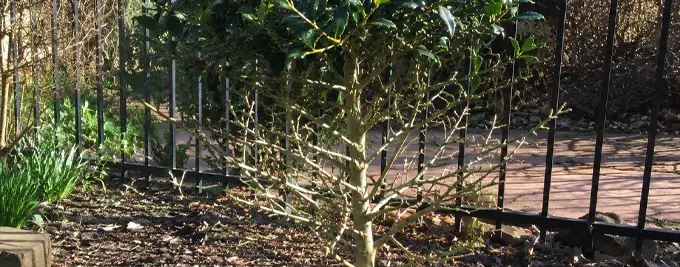
Established Holly can often regenerate from older wood, but recovery is slow because the species itself is slow growing. Renovate a very large hedge during early spring and consider reducing one side or a proportion of the height at a time. Keep roots watered during recovery.
Pruning for berries
Flowers must remain on the hedge before berries can form, so heavy annual clipping can reduce fruiting even when male and female plants are present. If berries are important, prune selectively and leave some flowering shoots uncut. A wildlife hedge managed less tightly will usually flower and fruit more freely than a formal hedge.
Bird nesting
Check carefully for active nests before every cut. Wild birds, nests and eggs are protected by law while a nest is in use or being built. Agricultural hedgerows may also be subject to seasonal cutting restrictions.
Holly hedge growth rate and eventual size
English Holly is slow growing, usually adding approximately 10–20cm of extension each year once established. Woodland and horticultural sources commonly give around 10–15cm as a typical rate, while the current Hedging Plants Direct product uses 10–20cm. Both should be understood as approximate ranges rather than guaranteed annual growth.
Small plants may spend their first year establishing roots and make less shoot growth than expected. Larger root-balled plants provide immediate height but can pause after transplanting. Soil moisture, light, competition, pruning and root health all influence annual extension.
Left unpruned, English Holly can become a tree around 15m tall. As a hedge it is commonly maintained from about 1.2m to 4m. Taller screens are possible, but slow growth makes correcting an oversized hedge a long-term job, so decide the final height early.
Seasonal Holly hedge care calendar
Seasonal care for English Holly hedging in UK gardens
Period
Main tasks
What to check
January–February
Plant root-balled Holly when soil is workable; check wind-rock and winter moisture
Frozen ground, waterlogging, dry rain-shadow positions and storm damage
March–April
Complete seasonal planting; carry out the main trim; mulch and feed weak hedges if required
Active nests before cutting, root-ball moisture and spring aphids
May–June
Water new plants; allow flowers to develop where berries are wanted
Leaf miner activity, aphids, dry roots and normal old-leaf yellowing
July–August
Maintain irrigation and weed control; lightly tidy only where necessary
Drought scorch, active nests, scale insects and irrigation coverage
September–October
Prepare new planting lines; inspect berries and overall hedge density
Leaf blight after cool wet weather, drainage and root-ball ordering requirements
November–December
Plant root-balled stock; protect roots and mulch newly planted hedges
Standing water, drying wind and damage from festive cutting
Holly hedge pests, diseases and common problems
Begin diagnosis with the site. Drought, waterlogging, transplant stress and normal old-leaf shedding are more common than serious disease. Look at which plants are affected, whether symptoms follow a wet or dry area, and whether damage is on old leaves, new growth, stems or roots.
Common Holly hedge symptoms and practical first checks
Symptom
Likely cause
How to distinguish it
First action
Older leaves yellow and drop in early summer
Normal leaf replacement
New growth remains healthy and shedding is mainly older foliage
Usually no treatment is required
Yellow-white or purple blotches inside leaves
Holly leaf miner
Blotches are mines within older leaves, with otherwise healthy growth
Tolerate light damage; remove a few affected leaves only on small plants
Black or purple leaf blotches with twig dieback
Possible Holly leaf blight
Often follows cool wet weather and can produce low arches of defoliation
Remove infected material and obtain reliable diagnosis if spread continues
Yellow sparse foliage and branch dieback on wet soil
Waterlogging or Phytophthora root rot
Roots may be dark, soft and reduced; low areas are often worst
Correct drainage and seek diagnosis before repeatedly replanting
Sticky leaves or black sooty coating
Scale insects or aphids producing honeydew
Look closely at stems and leaf undersides for insects
Encourage predators and remove severe local infestations where practical
Brown dry leaf margins
Drought, drying wind or root damage
Soil or original root ball is dry; exposed plants are affected first
Water deeply and improve establishment conditions
No berries
Plant sex, pollination or pruning
Healthy hedge flowers poorly or lacks a male/female combination
Identify flowering sex where possible and avoid removing all flowering shoots
One plant dies while neighbours remain healthy
Local root damage, dry root ball, waterlogging or planting fault
Compare planting depth and root condition with healthy neighbours
Correct the local cause before replacing
Holly leaf miner
Holly leaf miner is a small fly whose larvae feed inside leaves, creating yellowish or purple blotches. The RHS advises that it normally has little effect on plant health and forms part of the biodiversity supported by Holly. Avoid unnecessary pesticide treatment. Natural enemies and birds help control populations.
Holly leaf blight
Holly leaf blight is caused by Phytophthora ilicis. Black or purple blotches develop on foliage and smaller stems may die back, especially after cool wet weather. Collect and remove infected leaves and prune affected material back to healthy tissue. Persistent or spreading outbreaks justify professional diagnosis because leaf miner damage can look superficially similar.
Scale insects and aphids
Scale insects and aphids may feed on Holly and produce sticky honeydew, sometimes followed by black sooty mould. Light populations can usually be tolerated. Improve plant health, encourage predators and avoid routine broad-spectrum spraying.
Phytophthora root rot
Phytophthora can cause yellowing, sparse foliage, wilting and branch dieback, particularly in heavy or waterlogged soil. Similar symptoms can be caused by simple waterlogging, so inspect roots and drainage before assuming disease. Do not keep replacing plants into the same saturated trench without correcting the site.
Honey fungus
Holly can sometimes be affected by honey fungus. Look for white fungal sheets beneath bark near soil level, black bootlace-like rhizomorphs or honey-coloured mushrooms in autumn. Because symptoms overlap with other root problems, obtain a reliable diagnosis before removing a long-established hedge.
Wildlife and environmental value
English Holly has genuine wildlife value. Its dense evergreen foliage provides year-round shelter and nesting cover for birds. Spring flowers provide nectar and pollen to bees and other insects. Holly leaves are a food plant for holly blue butterfly caterpillars and several moths.On pollinated female plants, winter berries provide food for birds including thrushes and for small mammals. Fallen Holly leaves create a dry litter layer beneath mature plants that can shelter invertebrates and small animals. A slightly broader, less frequently clipped hedge usually provides more habitat than a very narrow formal line.Check for active nests before pruning and leave some flower-bearing shoots where wildlife and winter berries are a priority.
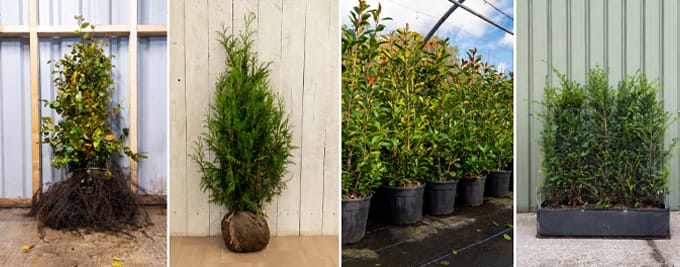
Holly care by root type
Pot-grown Holly
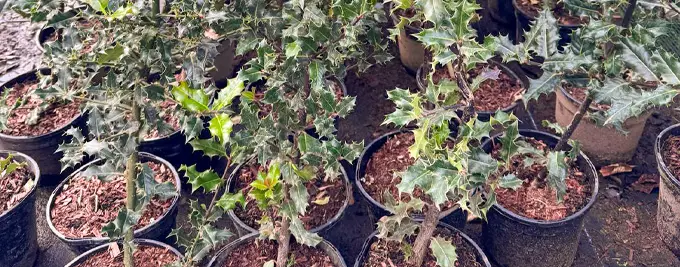
Pot-grown Holly can be planted year-round and is easy to handle. Water the pot before planting, loosen circling roots and keep checking the original compost after planting. It can dry independently of the surrounding soil.
Root-balled Holly
Root-balled Holly provides more immediate height but needs careful handling and greater water volumes. Keep the soil ball intact, plant during the seasonal lifting period and check stability after storms. Larger plants may need temporary support depending on exposure and root-ball size.
Bare-root Holly
The current main English Holly product does not show a bare-root variation. Bare-root Holly exists in the wider nursery trade, so if a bespoke supply is offered, plant while dormant, keep roots covered and follow the size-specific instructions supplied rather than applying the pot-grown spacing table.
Instant Holly
The live category contains older copy referring to Instant Holly, but the current English Holly product selector does not display an instant variation. Do not publish a fixed instant density unless a live product is restored. When trough-grown Holly is supplied, follow the exact unit width and product-specific irrigation instructions.
More Holly questions
Useful answers from our Holly hedging knowledge base.
Bare root, root ball, pot-grown and instant hedging suit different budgets, planting times and levels of initial coverage. Understanding how each is supplied makes it easier to choose the right format for your project.
A newly planted or moved Holly can temporarily lose its glossy appearance, drop leaves or make little new growth while its roots establish. Recognising normal transplant stress helps you avoid making the problem worse…
Holly's tough, spiny leaves can give the impression that deer and rabbits will leave it alone. In practice, young English Holly can still be browsed, particularly on rural sites and field boundaries where animal…
A row of English Holly can create evergreen structure and screening on patios, courtyards and other places where planting directly into the ground is not possible. The main challenge is managing the restricted root…
English Holly is familiar in British hedgerows, gardens and woodland, but mature plants do not always have the sharply spined leaves people expect. A few reliable features make Ilex aquifolium much easier to identify…
English Holly (Ilex aquifolium) is valued for its evergreen foliage and bright winter berries, but those berries are ornamental rather than edible. Gardeners with young children, dogs or cats should know the practical risks…
Explore the complete Holly hedge plant range and the current English Holly hedge sizes to compare pot-grown and root-balled options. Each live variation shows current pricing, availability and recommended density where the calculator is present.
Hedging Plants Direct is a family-run nursery business established in 1982 and supplies homeowners, landscapers, developers, trade buyers and commercial customers across the UK. Pot-grown Holly provides year-round planting flexibility, while larger root-balled stock is seasonal and useful where more immediate evergreen structure is required.