
What Is the Best Low-Maintenance Evergreen Hedge for Front Garden Privacy?
A well-chosen evergreen hedge can provide useful front garden privacy without becoming difficult to control. The best species will depend on the height required, available width, exposure and how quickly the hedge needs to establish.
Quick Answer
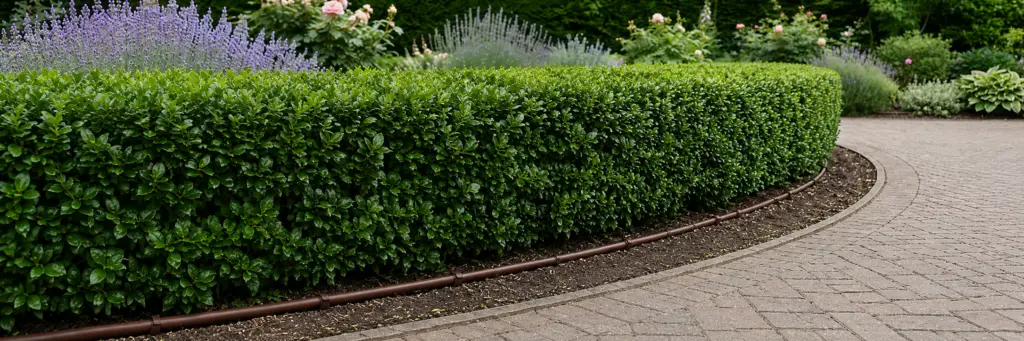
Portuguese Laurel is usually the best all-round low-maintenance evergreen hedge for front garden privacy. It forms a dense, attractive screen, grows at a manageable rate and an informal hedge will often need only one main trim each year. English Yew is another excellent choice where a narrower, more formal hedge is wanted, although it normally takes longer to provide full screening. For lower boundaries, consider Euonymus Green Spire, while Griselinia suits many mild or coastal gardens.
Quick Facts
| Best all-round choice | Portuguese Laurel |
|---|---|
| Best formal option | English Yew |
| Best for a low front boundary | Euonymus Green Spire |
| Best for mild coastal gardens | Griselinia |
| Typical maintenance | One main annual trim for many medium or slower-growing options |
| Privacy throughout winter | Choose a genuinely evergreen species |
| New hedge care | Regular watering, weed control and mulching during establishment |
| Most important consideration | Match the eventual height and width to the available space |
Which evergreen hedge is the best all-round choice?
For most front gardens, Portuguese Laurel, Prunus lusitanica, is the strongest all-round recommendation. It produces dense evergreen foliage, responds well to clipping and has smaller leaves than Cherry Laurel, giving it a tidier appearance beside entrances, driveways and formal garden boundaries.
Hedging Plants Direct lists Portuguese Laurel with a typical growth rate of approximately 20–40cm a year. This is usually quick enough to form useful screening without creating the same pruning commitment as the most vigorous conifers or broad-leaved hedges. One main trim in late spring or early summer is often sufficient for an informal hedge, although a second light trim may be needed where a very precise outline is required.
Portuguese Laurel still needs sufficient room to develop. It is a better choice where a substantial eye-level privacy hedge is required than where only a very narrow strip of soil is available.
Customers comparing a wider range can browse evergreen hedging plants and privacy hedge plants.
Which low-maintenance evergreen hedge suits your front garden?
Portuguese Laurel for dependable privacy
Portuguese Laurel is suitable for medium-height and taller front garden hedges where year-round coverage is required. Its dark green pointed leaves and reddish young stems create a more refined appearance than the larger foliage of Cherry Laurel.
It tolerates sun and partial shade, but the soil must drain properly. Allow enough width for the hedge to develop without repeatedly encroaching over a pavement, driveway or neighbouring boundary.
English Yew for a neat formal hedge
English Yew, Taxus baccata, is an excellent choice where a traditional, dark green and precisely clipped hedge is wanted. Its small foliage makes it easier to form a clean outline, and established Yew can be maintained as a relatively narrow screen.
Yew is particularly useful in front gardens where appearance and long-term control are more important than obtaining the quickest possible privacy. It can tolerate sun, shade and exposed positions, but it dislikes soil that remains waterlogged.
The main disadvantage is patience. A young Yew hedge will generally take longer to create complete eye-level screening than Portuguese Laurel. Starting with larger plants can reduce the waiting time, but the planting cost will be higher.
Euonymus Green Spire for a lower boundary
Euonymus Green Spire is most suitable where the hedge is intended to define the front garden rather than completely conceal the house. Its small evergreen leaves and naturally upright growth make it useful beside paths, lawns and low walls.
It typically grows more slowly than Portuguese Laurel, helping it remain compact with light pruning. However, it should not be selected where a tall privacy screen is needed quickly. HPD primarily recommends Green Spire for low formal hedging, path edging and as an alternative to traditional Box.
Osmanthus for slower, scented screening
Osmanthus × burkwoodii is a slower-growing evergreen shrub with leathery dark green leaves and fragrant white flowers. It can create an attractive medium-height screen while requiring less frequent control than a very vigorous hedge.
It is best suited to a sheltered position with reasonably well-drained soil. Its slower growth makes it manageable, but it also means that small plants will take time to provide substantial privacy.
Griselinia for mild and coastal gardens
Griselinia littoralis, commonly sold as New Zealand Privet, has fresh apple-green foliage and forms a dense evergreen hedge. It is particularly useful in coastal areas because its foliage tolerates salt-laden winds better than many other broad-leaved evergreen plants.
Griselinia can also work in sheltered inland front gardens, but it is less dependable in very cold or frost-prone positions. Its suitability should therefore be judged by local exposure rather than appearance alone.
What makes an evergreen hedge low maintenance?
No hedge is completely maintenance-free. Even a slow-growing evergreen hedge will need watering while establishing, occasional pruning, weed control and checks for damage or disease.
A genuinely low-maintenance hedge normally has three characteristics:
- Its natural growth rate is appropriate for the required height.
- Its eventual width fits the available planting space.
- It can be kept tidy with one main annual trim rather than repeated cutting throughout the growing season.
Choosing a very fast-growing hedge may provide earlier privacy, but the extra growth must eventually be removed. HPD’s privacy hedging guidance therefore recommends considering maintenance, finished height and available width rather than choosing by growth rate alone.
What should you check before planting a front garden hedge?
Required privacy height
Decide what you actually need to screen. A lower hedge may be enough to separate the garden from the pavement while retaining light and an open outlook. Eye-level privacy around windows or a seating area will require a taller and denser species.
Starting with a larger plant gives more initial coverage. It does not remove the need for watering and careful establishment.
Available width
Measure the planting strip rather than assuming every evergreen can be kept narrow. Broad plants repeatedly cut into too small a space will require more maintenance and may become bare or uneven.
Remember to leave practical access to paths, bins, meters, gates and the house entrance. The hedge should not continually obstruct pedestrians or make it difficult to trim the outer face safely.
Driveway and road visibility
Do not allow a hedge near a driveway, junction or entrance to obstruct the view of approaching vehicles, cyclists or pedestrians. The appropriate maintained height may be lower near the entrance than along the rest of the boundary.
Check any local planning, highway or property restrictions that apply before establishing a tall front boundary.
Sun, shade and exposure
Portuguese Laurel and Yew tolerate a useful range of light conditions. Griselinia is better reserved for mild or coastal situations, while Osmanthus normally benefits from a sheltered position.
A species that suits the actual conditions will normally require less corrective pruning, watering and replacement than one selected only for appearance.
Soil drainage
Most evergreen hedging plants need soil that drains adequately. If water remains in the planting trench following rain, deal with the drainage problem or choose a species and position that can cope with the conditions.
Likewise, narrow strips beside walls and paving can dry surprisingly quickly. Newly planted hedges in these positions may need particularly careful watering.
Are fast-growing hedges low maintenance?
Fast-growing and low-maintenance are not usually the same thing. Vigorous species can provide privacy sooner, but they produce more growth that must be cut back.
Cherry Laurel can be an excellent privacy hedge where there is adequate room, but its broad growth may be inconvenient in a narrow front garden. Leylandii can create very rapid screening, but it requires reliable trimming to prevent it becoming too tall or wide.
For the lowest ongoing workload, it is usually better to choose a moderately growing species that naturally suits the required dimensions rather than planting the fastest available hedge. HPD’s existing privacy guide similarly notes that vigorous hedges normally require more frequent control.
How can you reduce future hedge maintenance?
Prepare a continuous, weed-free planting line and loosen compacted soil before planting. Position each plant at the appropriate depth and follow the spacing stated for the exact species, supplied height and root type.
Water thoroughly after planting and continue checking the soil throughout dry periods. A mulch around the root area can reduce weed growth and slow moisture loss, but it should not be piled against the stems.
Begin light formative pruning while the hedge is young. Encouraging side growth from an early stage helps create a dense screen near the base and reduces the temptation to let the plants become excessively tall before shaping them.
For more detailed planting instructions, read our Hedge planting and aftercare guide
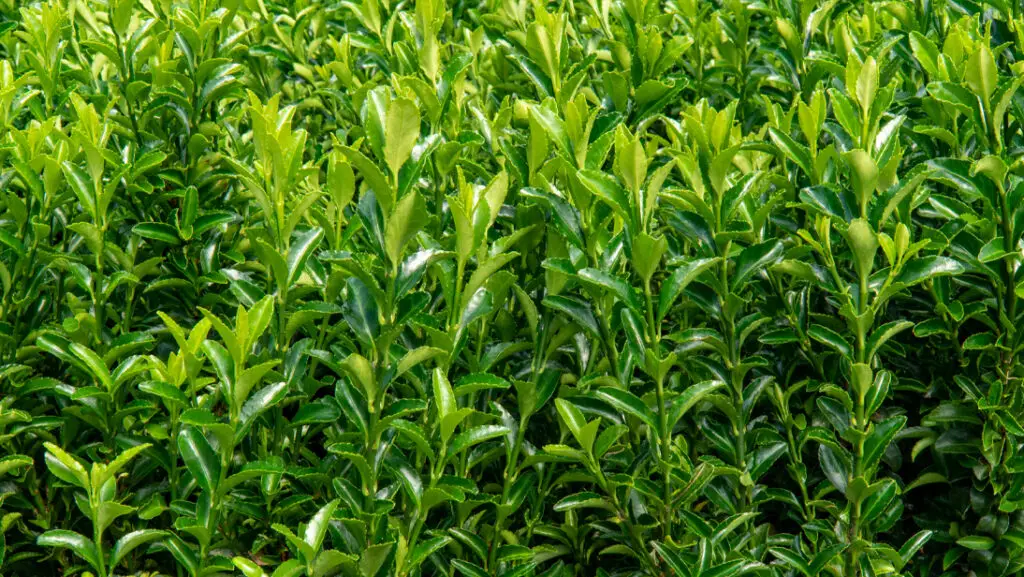
Euonymus Green Spire vs Jean Hugues: Which Hedge to Buy?
Green Spire and Jean Hugues are both dark green Euonymus japonicus varieties and both make excellent Box alternatives. The real difference is…
Read answer
Are Euonymus Green Spire and Green Rocket the Same Plant?
The names Green Spire and Green Rocket are often used interchangeably by nurseries, which makes buying confusing. Current authoritative plant databases do…
Read answer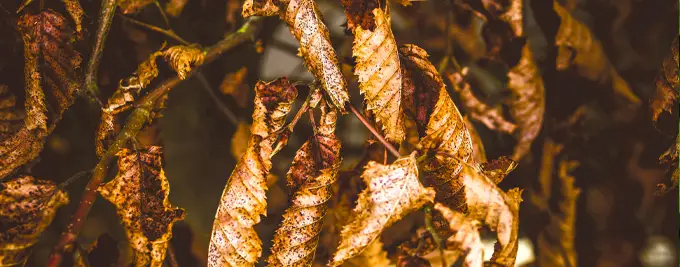
Is Hornbeam Evergreen? What Does It Look Like in Winter?
Hornbeam is valued for its fresh green summer foliage, warm autumn colour and strong winter structure. Understanding how its leaves behave after…
Read answer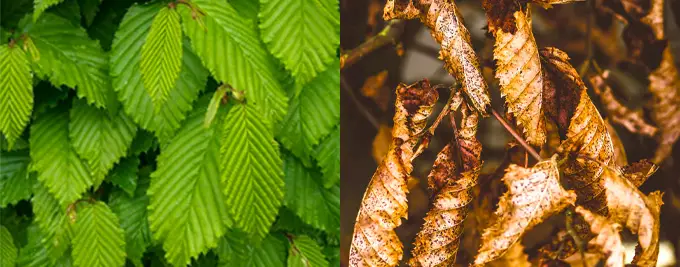
What Do Hornbeam Leaves Look Like?
Hornbeam has distinctive textured foliage that changes noticeably through the seasons. Learning to recognise the leaf shape, veins and toothed edges can…
Read answer