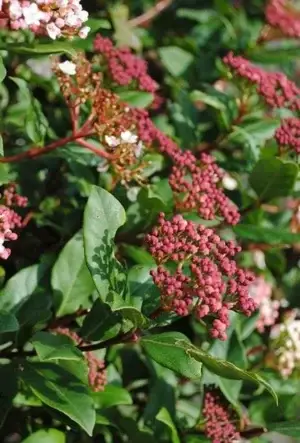
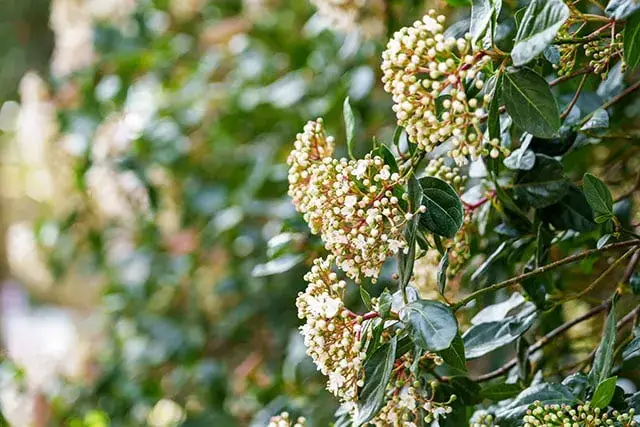
Viburnum hedges can be planted at various times of the year, but the optimal period is during the cooler months of autumn or early spring. Planting during these seasons allows the roots to establish themselves before the heat of summer or the cold of winter sets in.
Viburnum hedge spacing is an important factor to consider when planting your new hedge. Please see our table below for the correct plant spacing for different sizes of pot grown Viburnum.
| Plant size | No. Plants per metre | Plant spacing |
|---|
| Pot Grown 30-40cm | 4 per metre | 25 cm apart |
Growth Rates
Understanding the growth rates of different Viburnum species helps you plan the development of your hedge. While growth rates can vary based on growing conditions, soil quality, and care techniques, Viburnum plants generally have moderate to fast growth rates.
For instance, Viburnum tinus can grow approximately 30-60 cm (1-2 feet) per year under optimal conditions. Meanwhile, Viburnum opulus (also known as the guelder-rose) typically grows at a similar rate, reaching its mature height in a few years with proper care and favourable conditions.
Certain Viburnum varieties have even received the Award of Garden Merit, highlighting their excellence and suitability for garden cultivation.
Preferred Soil types
Viburnums are remarkably adaptable to a range of soil types, making them suitable for various garden environments. However, for optimal growth, they prefer well-drained soils that are rich in organic matter.
Loamy soils are ideal as they retain moisture without becoming waterlogged. It is possible to grow Viburnum in clay soils if improved with organic matter to enhance drainage and aeration.
Sandy soils, while facilitating good drainage, may need additional compost or organic mulch to retain adequate moisture for the plants.
Preferred Positions
When choosing a location for planting your Viburnum hedge, consider the following factors to ensure the best possible growth:
- Sunlight: Most Viburnum species thrive in full sun to partial shade. While they are quite tolerant of shade, they tend to produce better flowers and fruit in sunnier locations.
- Wind Exposure: Heavy winds can damage Viburnum plants or cause them to dry out quickly. Choose a sheltered spot or provide windbreaks for more exposed sites.
- Frost Protection: Some evergreen varieties may need frost protection during harsh winters, so consider this when selecting the position for your hedge.

 Price From £12.95 Shop Now This product has multiple variants. The options may be chosen on the product page