
Hedging care & growing guide
Viburnum Hedge Care Guide: Planting, Spacing & Pruning
Viburnum hedging is straightforward to care for when it is planted into well-drained soil, kept consistently moist while establishing and pruned at the right time. Our current Viburnum hedging range centres on evergreen Viburnum tinus, also known as Laurustinus, which combines dense year-round foliage with winter and spring flowers.
This guide explains how to plant pot-grown Viburnum, the correct spacing for our current plants, establishment watering, feeding, pruning, growth and seasonal care. It also covers common concerns such as yellow or brown leaves, poor growth and Viburnum beetle, helping you distinguish temporary establishment stress from problems that need attention.
Expert nursery advice
Gwynne's Grower's Tip
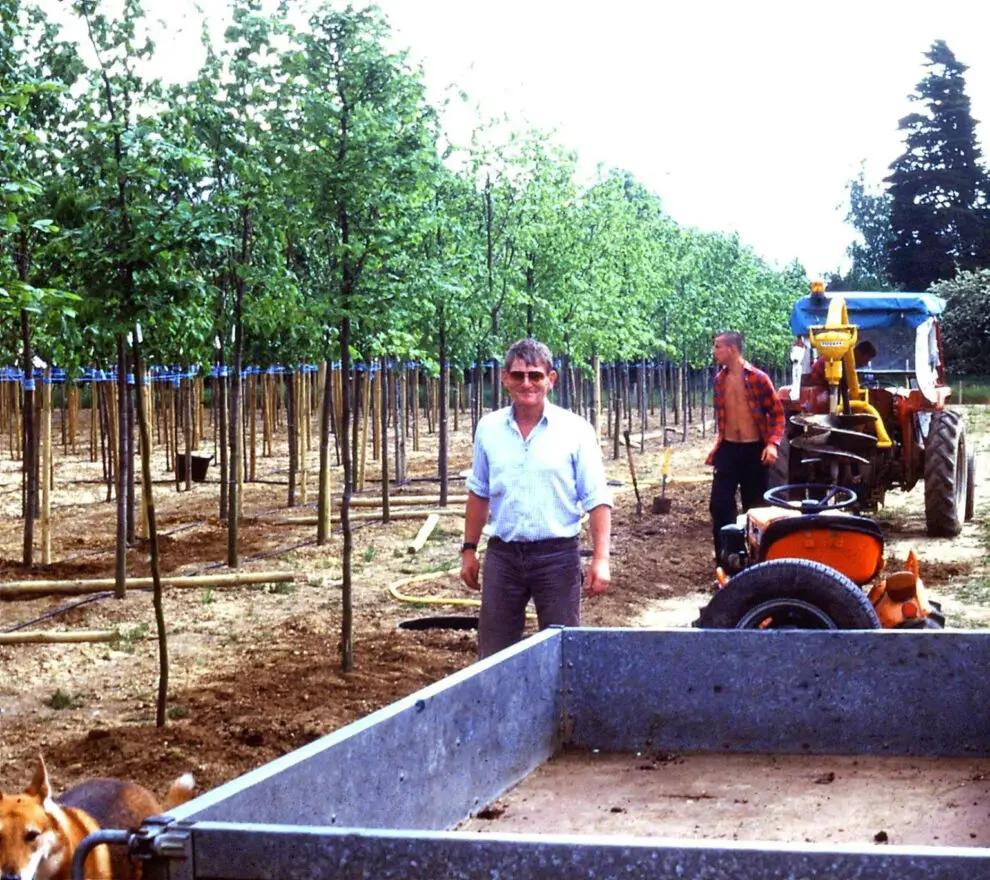
With Viburnum tinus, the first year is mainly about getting the roots established rather than chasing lots of top growth. Plant it at the same depth it was growing in the pot, keep the original root ball and surrounding soil evenly moist, and stop grass and weeds competing around the base. Once established it is a fairly straightforward evergreen hedge. I would keep routine pruning light and do it after flowering so you retain as much of the following season's flower display as possible.
From our nursery
Visit our Viburnum hedges

Viburnum tinus Hedge
Viburnum tinus is the one I would choose where year-round foliage and seasonal flower interest are both important. It makes a dense evergreen boundary without needing constant clipping, and its winter flower buds give it more interest than a plain foliage hedge. Give it reasonably well-drained soil and some protection from very cold, drying winds, then concentrate on consistent watering while the plants establish.
Not sure which Viburnum hedge to choose?
Compare the available plants, formats and starting sizes in the complete range.
Explore our complete Viburnum hedging rangeViburnum hedge quick-care summary
| Botanical name | Viburnum tinus |
|---|---|
| Plant type | Evergreen flowering shrub / hedge |
| Evergreen or deciduous | Evergreen |
| Typical growth rate | Medium, around 20–40cm per year |
| Preferred position | Sun or partial shade; sheltered is best |
| Soil | Most well-drained soils |
| Watering | Regularly while establishing; thereafter in dry periods |
| Pruning period | After flowering, usually late spring |
| Feeding | Spring if needed; mulch annually |
| Hardiness | RHS H4 |
| Typical hedge height | Commonly maintained around 1–1.5m |
| Planting season | Year-round when ground conditions allow |
| Root types commonly available | Pot grown |
About Viburnum hedging
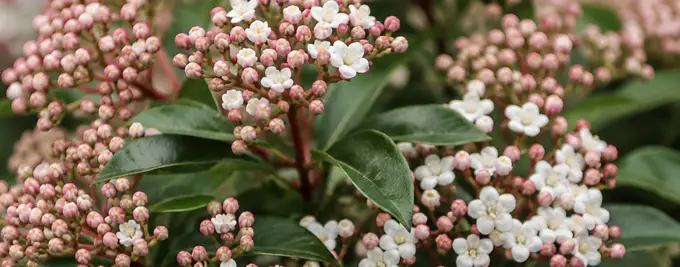
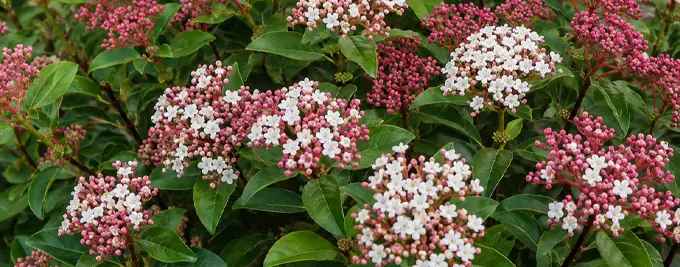
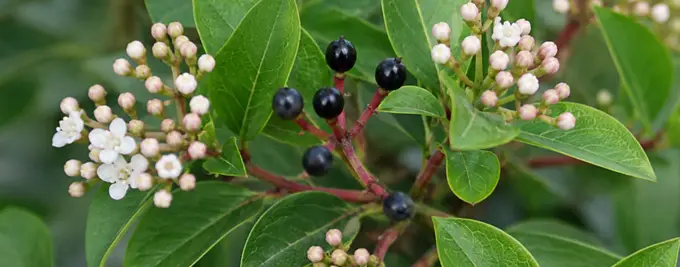
The Viburnum sold in our main Viburnum hedging range is evergreen Viburnum tinus, or Laurustinus. It forms a dense leafy hedge with pink-tinged buds, pale flowers through the colder part of the year and dark blue-black fruit later in the season. It is particularly useful where evergreen screening and seasonal interest are both wanted.
Viburnum is a large genus containing both evergreen and deciduous shrubs, so care advice varies considerably between species. Our main Viburnum hedging range currently centres on Viburnum tinus, commonly known as Laurustinus.
What does Viburnum tinus look like?
Viburnum tinus has dense, dark green evergreen foliage and clusters of flower buds that develop into pale flowers during winter and spring. These are followed by dark ornamental fruits. This combination gives the hedge more seasonal interest than an evergreen grown purely for foliage.
What is Viburnum tinus used for?
- Evergreen garden boundaries
- Low to medium-height privacy hedges
- Informal flowering hedges
- Lightly clipped formal boundaries
- Mixed shrub borders and screening
- Gardens where winter interest is important
Our current Viburnum tinus hedge plants are supplied pot grown.
What about Guelder Rose?
Guelder Rose is also a Viburnum, but Viburnum opulus is deciduous and has different growth, root-type and maintenance characteristics. We therefore treat Guelder Rose hedging as a separate choice rather than applying Viburnum tinus care instructions to both plants.
Choosing the right Viburnum hedge
Viburnum tinus is best suited to gardeners wanting an evergreen, flowering hedge that can be maintained at a moderate height. It performs in sun or partial shade and across a wide range of soil types provided drainage is satisfactory, although protection from very cold drying winds is beneficial.
Choose Viburnum tinus if you want
- evergreen foliage throughout the year
- a hedge that provides winter and spring flower interest
- a medium-height boundary rather than a very tall screening hedge
- a hedge suitable for either informal growth or light regular clipping
- a plant that can cope with sun or partial shade
- a relatively moderate growth rate that is easy to manage
Sun or shade
Viburnum tinus can grow in full sun, partial shade and more shaded positions. Flowering is generally best where the plant receives reasonable light, while plants in deeper shade may produce a looser habit or fewer flowers.
Exposed positions
The plant is hardy across much of the UK, but cold drying winds can scorch evergreen foliage. In colder or particularly exposed gardens, choose a position with some shelter rather than an open wind tunnel.
Small and medium gardens
Viburnum tinus is especially useful where a dense evergreen hedge is wanted without the growth rate of some larger screening species. Routine trimming can keep it around 1–1.5 metres, although the species can grow considerably larger if allowed to develop as an unrestricted shrub.
When another Viburnum may be more suitable
If your priority is a deciduous native-style hedge with autumn colour, flowers and conspicuous red fruit rather than evergreen cover, consider Guelder Rose. It should be treated as a separate hedging option rather than simply another form of Viburnum tinus.
When to plant Viburnum hedging
Pot-grown Viburnum tinus can be planted throughout the year whenever the soil is workable, but autumn and spring usually provide the easiest establishment conditions. Avoid planting into frozen or waterlogged ground and take extra care with watering if planting during warm, dry summer weather.
Our current Viburnum tinus hedge plants are supplied pot grown, so you are not restricted to a short bare-root planting season.
Best planting periods
Autumn and spring are particularly convenient because soils are usually moist and temperatures are moderate. Plants put in during these periods generally require less intensive watering than those planted during hot summer weather.
Planting in summer
Summer planting is possible with pot-grown Viburnum, but the root ball can dry much faster than established surrounding soil. Water the plant thoroughly before planting and monitor moisture closely afterwards.
When to postpone planting
- when the soil is frozen solid
- when the planting area is waterlogged
- during exceptionally hot or drying weather where irrigation cannot be maintained
- when the soil is so wet that working it would cause severe compaction
Where to plant Viburnum hedging
Plant Viburnum tinus in sun or partial shade in soil that drains freely while retaining reasonable moisture. It tolerates a broad range of soil types and pH levels, but prolonged waterlogging and very cold drying exposure are more important limitations than the precise soil type.
Light
Viburnum tinus grows in sun or partial shade and can tolerate considerable shade. For a dense flowering hedge, a position receiving at least some useful daylight is preferable to a deeply shaded corner.
Soil
Laurustinus is adaptable to chalk, clay, loam and sandy soils and can grow across acid, neutral and alkaline conditions. Drainage is more important than achieving a particular pH.
If heavy soil remains saturated for long periods, improve the site before planting rather than trying to compensate with extra compost around individual root balls.
Shelter and exposure
An established hedge is reasonably robust, but the evergreen leaves can be marked by very cold, drying winds. Shelter is therefore useful in exposed inland sites and frost pockets.
Walls, fences and competing plants
Allow sufficient space between the planting line and a wall or fence for the hedge to develop and for you to maintain both sides where access is required. Avoid planting root balls hard against foundations, fence posts or the established roots of large trees.
Where grass runs up to the planting line, create a weed-free strip rather than making young Viburnum compete immediately with turf for water and nutrients.
Prepare the planting area
Prepare the whole hedge line before planting by removing perennial weeds, relieving compaction and correcting drainage problems. Water dry pots thoroughly before planting. Organic soil improver can help poor soil, while mycorrhizal fungi should be placed in direct contact with the roots if you choose to use it.
Clear weeds first
Remove perennial weeds, grass and thick turf from the planting strip. Keeping the hedge line clear after planting is just as important because young Viburnum roots should not have to compete with established grass.
Trench or individual planting holes?
Either method can work. A trench is convenient when planting a straight line of closely spaced hedge plants because the soil can be prepared consistently along the entire row. Individual holes are suitable where the existing soil structure is already good.
Do not dig a series of deep, compost-filled pits into heavy clay. This can create pockets that collect water around the root balls.
Improve poor soil sensibly
On low-organic-matter or very poor soil, incorporate a moderate amount of Hedge Planting Compost through the excavated soil rather than replacing the native soil completely.
Water plants before they go into the ground
If the compost inside the pots is dry, water thoroughly and allow it to soak through before removing the containers. A dry root ball can remain surprisingly difficult to re-wet after planting.
Using RootGrow
If using Rootgrow Mycorrhizal Fungi, follow the product instructions and ensure the fungi make direct contact with the roots. It is an establishment aid, not a substitute for correct soil preparation or watering.
Avoid strong fertiliser in the planting hole
Do not place concentrated fertiliser directly against new roots. Establish the hedge first and use supplementary feeding later only where soil conditions or plant performance justify it.
How to plant a Viburnum hedge
Plant Viburnum tinus so the top of the root ball remains level with the surrounding soil. Water plants before planting, space them evenly, backfill with the excavated soil, firm gently and water thoroughly afterwards. Finish with mulch while leaving the stems themselves clear.
- Mark the hedge line. Use a string line so the finished row remains straight and mark the correct plant spacing before digging.
- Water each pot. Make sure the compost inside the root ball is evenly moist before planting.
- Dig the planting holes or trench. Make them wide enough for the roots and root ball to fit comfortably without forcing them into a narrow hole.
- Remove the pot. Slide the container off carefully. If roots are tightly circling the outside of the root ball, tease the outer roots apart gently.
- Apply mycorrhizal fungi if required. Where RootGrow is being used, apply it according to its instructions so it contacts the roots.
- Set the planting depth. Position the plant so the top of the existing root ball is approximately level with the surrounding finished soil. Avoid burying the stem more deeply than it was growing in the pot.
- Backfill. Return the excavated soil around the root ball, breaking up large clods as you work.
- Firm gently. Remove large air pockets without heavily compacting the soil.
- Water thoroughly. Give the entire root zone a deep watering immediately after planting so the root ball and surrounding soil are both moist.
- Mulch the surface. Apply an organic mulch over the root zone to reduce weed competition and moisture loss, keeping mulch away from direct contact with the stems.
- Stake only where necessary. Most normal hedge plants should not need elaborate staking, but taller plants in an exposed position may need temporary support while their roots establish.
Viburnum hedge spacing and plants per metre
Our current Viburnum tinus hedge product is planted at 4 plants per metre, equal to approximately 25cm between plant centres in a single row. This is the current Hedging Plants Direct density and should be rechecked against the live product variation before publication if sizes or specifications change.
The current planting density for our Viburnum tinus hedge plants is four plants per linear metre.
| Current Viburnum product | Plants per metre | Approximate spacing | Typical layout |
|---|---|---|---|
| Viburnum tinus Hedge | 4 per metre | 25cm centres | Single row |
To calculate the number required, multiply the hedge length in metres by four. For example, a 5 metre hedge requires approximately 20 plants at the current recommended density.
Measure spacing from the centre of one plant to the centre of the next rather than leaving a 25cm empty gap between the edges of the root balls.
Should I plant more closely for instant cover?
Do not automatically increase the density simply to make the hedge look full on planting day. Overcrowding creates unnecessary root competition and can make future maintenance more difficult. Use the density specified for the current plant size and product.
Watering and establishment
Water newly planted Viburnum thoroughly and keep the original root ball and surrounding soil consistently moist during establishment without leaving them waterlogged. Check conditions rather than following a rigid calendar. New hedges need the closest attention during their first growing season and during prolonged dry periods.
Immediately after planting
Water deeply enough to wet both the original root ball and the soil immediately around it. A small splash on the soil surface is not enough.
The first growing season
Check soil moisture regularly by hand. Water when the root zone is beginning to dry, then water thoroughly rather than applying tiny amounts frequently. The aim is to encourage roots to move into the surrounding soil.
During hot, windy or prolonged dry weather, newly planted hedges can require much more frequent attention. Plants in sandy free-draining soil will usually dry faster than those in moisture-retentive loam or clay.
Avoid waterlogging
More water is not always better. Persistent saturation excludes air from the root zone and can cause yellowing, weak growth and root decline. If the ground remains wet for long periods after rain, investigate drainage before simply adding more irrigation.
Evergreen winter watering
Viburnum tinus retains its foliage in winter and can continue losing moisture through its leaves during dry, windy periods. Recently planted hedges may therefore need occasional watering during an unusually dry winter when the soil is not frozen.
Using irrigation
For a long hedge, a correctly installed hedge irrigation system can make it easier to apply water consistently along the root zone.
Mulching
A layer of Hedge Bio Mulch helps reduce surface evaporation and weed competition. Keep the mulch clear of direct contact with the stems.
How and when to feed Viburnum hedging
Viburnum tinus growing in reasonably fertile garden soil usually needs little routine fertiliser. An annual organic mulch is often enough. If growth is persistently weak or foliage is pale after other causes have been ruled out, a balanced hedge fertiliser can be applied in spring according to the product instructions.
Do Viburnum hedges need feeding every year?
Not necessarily. Established Viburnums generally need little or no regular feeding in decent garden soil. Maintaining soil condition with organic mulch is often more useful than applying fertiliser automatically each year.
When feeding can help
A spring application can be useful where soil fertility is poor, plants have been growing weakly or a mature hedge is recovering after substantial pruning. Always check that poor growth is not being caused by drought, waterlogging, deep shade or root competition first.
Using Hedge Feed
Our Hedge Feed is a balanced granular fertiliser. Apply it at the recommended rate to moist soil around the active root area rather than piling it against the stems.
Avoid late high-nitrogen feeding
Do not push large amounts of soft new growth late in the growing season. Tender growth has less time to mature before colder weather and may be more vulnerable to damage.
How and when to prune Viburnum hedging
Prune Viburnum tinus after flowering, normally in late spring, rather than routinely cutting it in winter before the flowers open. A light annual trim is usually enough for an established hedge. Young plants can be lightly shortened to encourage branching, while overgrown Viburnum tinus can tolerate stronger renovation pruning.
When should Viburnum tinus be pruned?
The best time for routine hedge trimming is immediately after the main flowering period, normally in late spring. This allows you to shape the hedge without unnecessarily removing the flower display before it opens.
Young hedges
During establishment, concentrate on creating branching throughout the hedge rather than allowing a few shoots to race upwards. Lightly shortening vigorous shoots encourages a denser framework.
Established hedges
Most established Viburnum tinus hedges need only one main trim each year. Remove untidy extension growth and shape the sides and top while retaining plenty of healthy foliage.
Keeping the base of the hedge at least as wide as the upper portion helps light reach lower foliage and reduces the risk of a bare base.
Overgrown Viburnum
Viburnum tinus is more tolerant of hard renovation pruning than many evergreen shrubs. Where a hedge has become badly overgrown, stronger cutting can be carried out, although flowering will be reduced while the plant rebuilds its framework.
For a large mature hedge, staged renovation over more than one season is often less visually severe than cutting the whole hedge back at once.
Check for nesting birds
Before trimming any hedge, inspect it carefully for active bird nests. If a nest is in use, postpone work around that part of the hedge until the nesting attempt has finished.
Viburnum growth rate and eventual size
Our current Viburnum tinus product has a quoted medium growth rate of approximately 20–40cm per year under reasonable conditions. Growth is usually slower immediately after planting while roots establish. Regular pruning can maintain a compact hedge around 1–1.5 metres, while unpruned species plants can ultimately become considerably larger shrubs.
How fast does Viburnum tinus grow?
Our current Viburnum tinus hedge product is classed as medium growing at approximately 20–40cm per year. Treat this as a useful guide rather than a guaranteed annual increase.
Growth depends on:
- soil moisture
- soil fertility
- light levels
- exposure
- plant size and age
- competition from grass, weeds or neighbouring trees
- how heavily the hedge is pruned
Why is my newly planted hedge growing slowly?
Limited top growth during the first season is not automatically a problem. A newly planted shrub must first establish roots into the surrounding soil. A healthy plant may therefore make less visible extension growth in its first year than it does once established.
How tall will Viburnum tinus grow?
For hedging, Viburnum tinus can be maintained comfortably as a relatively compact boundary. Our current product is positioned for hedges up to around 1.5 metres. The botanical species itself can eventually become a much larger shrub if left unpruned, so regular trimming determines the finished hedge size.
Seasonal care for Viburnum hedging
Viburnum tinus requires relatively little seasonal intervention once established. Spring is the main time for post-flowering pruning and any necessary feeding; summer care centres on watering and pest checks; autumn is an excellent planting period; and winter attention is mainly directed towards flowers, wind exposure and moisture in recently planted evergreen hedges.
| Season | Main Viburnum care |
|---|---|
| Winter | Enjoy the flower buds and flowers; monitor recently planted hedges during prolonged dry, windy weather; avoid planting into frozen or waterlogged soil. |
| Spring | Plant pot-grown hedges, top up mulch, feed only where needed and trim Viburnum tinus after flowering. Begin checking foliage for Viburnum beetle larvae from late spring. |
| Summer | Water newly planted hedges during dry weather, keep the base weed free and inspect damaged foliage for pests. Avoid unnecessary heavy feeding late in the season. |
| Autumn | A good season for planting because soil is normally warm and moist. Clear weeds, mulch the root zone and avoid heavy pruning that would remove developing winter flower buds. |
Viburnum pests, diseases and common problems
Most Viburnum problems are easier to solve once environmental stress is separated from pests and disease. Yellowing, browning or leaf drop after planting commonly points first towards root-zone moisture, exposure or establishment stress. Distinctive holes and lace-like foliage, particularly in spring, can indicate Viburnum beetle.
Viburnum leaves turning yellow
Check the soil before reaching for fertiliser. Yellowing can occur when roots remain excessively wet, when a recently planted root ball has alternated between very dry and very wet conditions, or when root function has otherwise been impaired.
If the soil is saturated for long periods, reduce irrigation and investigate drainage. If it is dry below the surface, water the whole root zone thoroughly.
Viburnum leaves turning brown
Brown leaf edges and scorched outer foliage can follow drought, cold drying winds or frost exposure. Recently planted evergreens are particularly vulnerable because their root systems have not yet spread far into the surrounding ground.
Do not rush to remove the entire plant after winter damage. Wait until new growth begins, identify which stems remain alive and then remove clearly dead material back to healthy wood.
Leaf drop after planting
Some leaf loss can follow transplanting or abrupt changes in moisture and exposure. Concentrate on keeping the root ball evenly moist and reducing competition around the base. Continuing dieback, persistent saturation or a worsening lack of vigour requires closer investigation.
Holes and lace-like leaves: Viburnum beetle
Viburnum beetle is one of the most characteristic pests of Viburnum. Larvae feed on leaves during spring and can leave foliage heavily perforated or almost lace-like. Adults can cause further feeding damage later in the season.
- Inspect the underside of leaves and damaged shoots.
- Hand-remove larvae where practical on smaller hedges.
- Tolerate limited cosmetic damage where the plant remains healthy.
- Encourage a diverse garden environment with natural predators.
- Keep the hedge vigorous through correct watering and soil care.
Established Viburnums can often recover from considerable beetle feeding without requiring chemical treatment.
Leaf spots and grey fungal growth
Fungal leaf spots and grey mould can occur where foliage remains damp and air circulation is poor. Remove badly affected fallen material, avoid persistently wetting foliage during irrigation and maintain sensible air movement through the hedge.
Root decline and waterlogging
Persistent wet soil accompanied by yellow foliage, poor extension growth or progressive dieback can indicate root problems. Correct drainage issues first. Where several established plants decline without an obvious environmental cause, professional diagnosis may be worthwhile before replacing them.
Hedge not growing
A new Viburnum hedge may spend much of its first season establishing roots. If plants otherwise look healthy, limited extension growth is not necessarily a failure.
Where growth remains poor, check:
- whether the original root ball is drying out
- whether the soil stays waterlogged
- competition from grass or tree roots
- deep shade
- soil compaction
- excessively hard or frequent clipping
Sparse growth at the base
Keep the upper hedge from becoming substantially wider than the bottom, as this shades lower foliage. On young plants, light formative pruning encourages branching rather than allowing a few upright shoots to dominate.
Can a damaged Viburnum recover?
Often, yes. Viburnum tinus can regenerate well if the roots and lower framework remain healthy. Correct the underlying cause first, allow new shoots to appear and remove genuinely dead wood rather than repeatedly cutting a stressed plant simply because the foliage looks untidy.
Wildlife and environmental value
Viburnum tinus adds more wildlife value than an evergreen grown only for foliage. Its winter and spring flowers extend seasonal interest, later fruits can provide a food source for birds, and dense evergreen growth creates shelter and potential nesting cover. Hedge cutting should always be delayed where an active nest is found.
A mature Viburnum tinus hedge provides a combination of evergreen cover, flowers and fruit rather than a single type of habitat.
Flowers
The winter and spring flower clusters provide seasonal forage opportunities for visiting insects at a time when fewer ornamental shrubs are in bloom.
Fruit
Dark fruits develop after flowering and add autumn and winter interest. They can also be used by birds and other garden wildlife.
Shelter and nesting cover
Dense evergreen foliage provides year-round shelter and can create useful nesting cover. Always inspect the hedge carefully before pruning. If an active nest is present, leave that area undisturbed until the nest is no longer in use.
Fruit and people
The fruits should be treated as ornamental rather than as an edible crop. Do not encourage children or pets to eat them.
Viburnum care by root type
The Viburnum tinus plants in our current Viburnum range are pot grown, so there is no need to complicate this guide with bare-root or root-balled planting instructions. The key point is to prevent the container root ball drying before or after planting and encourage roots into the surrounding soil.
Pot-grown Viburnum tinus
Water the plant thoroughly while it is still in its container if the compost feels dry. Remove the pot immediately before planting and inspect the outer roots.
If roots are tightly circling the container, gently loosen the outside of the root system rather than placing a solid congested root ball straight into the ground.
Plant at the same depth as the existing root ball, backfill with the surrounding soil and water thoroughly.
After planting, remember that the compost inside the original root ball can dry differently from the surrounding garden soil. Check moisture around the actual root ball rather than judging conditions only from the surface several centimetres away.
Continue monitoring the hedge through its first growing season until roots have established beyond the original container volume.
Frequently asked questions about Viburnum hedging
How far apart should I plant Viburnum hedge plants?
Our current Viburnum tinus hedge plants are recommended at 4 plants per metre, which is approximately 25cm between plant centres. Measure from the centre of one plant to the centre of the next. Always check the current product specification when ordering because recommended density can change if different sizes or formats are introduced.
When is the best time to plant Viburnum tinus?
Pot-grown Viburnum tinus can be planted throughout the year whenever the ground is workable, but autumn and spring usually give the easiest establishment conditions. Avoid frozen or waterlogged soil and be prepared to water much more closely if planting during warm, dry summer weather.
How fast does a Viburnum tinus hedge grow?
Our current Viburnum tinus product has a medium growth rate of approximately 20–40cm per year under reasonable growing conditions. Newly planted hedges can grow more slowly while their roots establish, and growth varies with moisture, soil, light, exposure and pruning.
When should I prune a Viburnum tinus hedge?
Prune Viburnum tinus after its main flowering period, normally in late spring. A light annual trim is usually sufficient. Pruning before flowering can remove much of the display, while very hard renovation pruning should be reserved for genuinely overgrown hedges.
Can Viburnum tinus grow in shade?
Yes. Viburnum tinus can grow in partial shade and tolerates more shaded positions, although flowering and density are generally better where the hedge receives useful daylight. In a very dark site, expect a less floriferous or potentially looser hedge than one growing in brighter conditions.
How often should I water a new Viburnum hedge?
Water according to soil conditions rather than a fixed timetable. Keep the original root ball and surrounding soil consistently moist during establishment, watering thoroughly when they begin to dry. Check more frequently during warm, windy or dry weather and avoid keeping the soil permanently saturated.
Does Viburnum tinus need feeding?
Usually not very much. Viburnum growing in reasonably fertile garden soil often needs little or no routine fertiliser. An organic mulch may be sufficient. If growth is persistently weak after watering, drainage and other causes have been checked, apply a balanced fertiliser in spring according to its instructions.
Why are my Viburnum leaves turning yellow?
Yellow Viburnum leaves often warrant a moisture check before anything else. Persistent waterlogging can impair the roots, while a recently planted root ball can also dry out even when nearby soil looks damp. Check moisture below the surface, review drainage and only consider feeding after root-zone problems have been ruled out.
Why is my Viburnum hedge turning brown?
Brown Viburnum foliage can result from drought, cold drying winds, frost scorch or root stress. Recently planted evergreens are especially vulnerable. Check soil moisture and exposure first, allow time for spring growth to show which stems remain alive and remove only genuinely dead material.
What is making holes in my Viburnum leaves?
Numerous holes or lace-like Viburnum leaves are characteristic of Viburnum beetle feeding. Larvae are particularly active in spring, with adults feeding later. Inspect damaged leaves closely, remove larvae by hand where practical and keep the hedge healthy. Established plants can usually survive a significant amount of feeding damage.
Is Viburnum tinus evergreen?
Yes. Viburnum tinus, or Laurustinus, is evergreen and retains its foliage throughout the year. This makes it useful for year-round screening, while its winter and spring flowers add seasonal interest that many foliage-only evergreen hedges do not provide.
How tall does Viburnum tinus grow?
As a hedge, Viburnum tinus can be maintained around 1–1.5 metres with regular trimming. The botanical species can become substantially larger if left as an unrestricted shrub, so the eventual size depends greatly on whether the plant is being maintained as a hedge or allowed to grow naturally.
Can a struggling Viburnum hedge recover?
Yes, Viburnum tinus can often recover if the underlying cause is corrected and the roots and main framework remain alive. Check watering, drainage, exposure and competition first. Avoid repeatedly pruning a stressed plant, allow new growth time to emerge and then remove clearly dead wood back to healthy growth.
Are Viburnum tinus berries edible?
No. Treat Viburnum tinus fruits as ornamental rather than edible and do not encourage people or pets to eat them. They add seasonal interest to the hedge and can be useful to garden wildlife.
Is Viburnum tinus good for wildlife?
Viburnum tinus can provide flowers, seasonal fruit and dense evergreen shelter, giving it several forms of wildlife value. Its foliage can also provide nesting cover, so always check carefully for active nests before pruning and postpone cutting wherever a nest is in use.