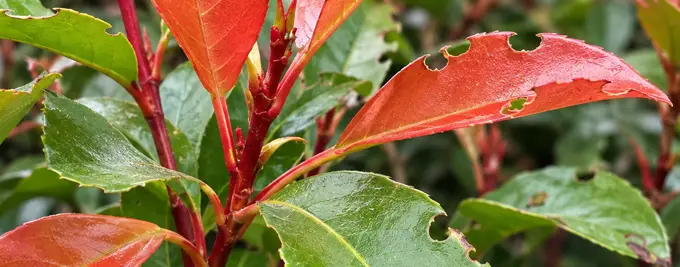
Photinia Red Robin Hedging Care Guide: Planting, Spacing and Pruning
Photinia Red Robin hedging grows best in fertile, humus-rich soil that is moist but well drained, in full sun or partial shade and preferably away from severe cold or drying winds. Water new plants deeply during dry weather, begin light formative trimming while they are young and stop trimming by mid-August so fresh growth can harden before autumn frosts. This guide covers choosing, planting, spacing, watering, feeding, pruning and maintaining the plants in our Photinia Red Robin hedging range.
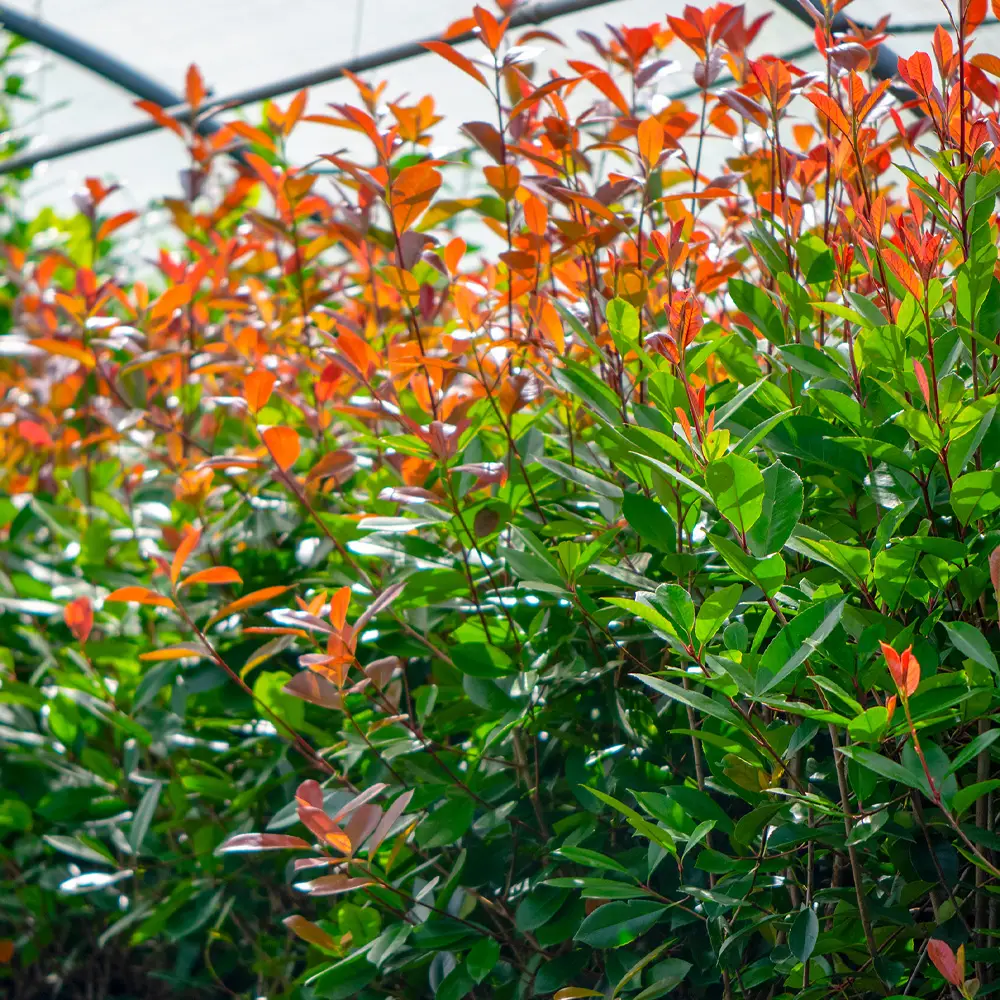
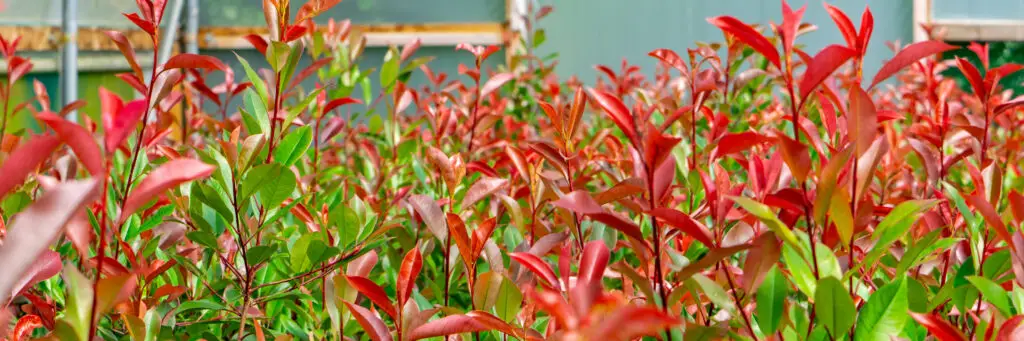
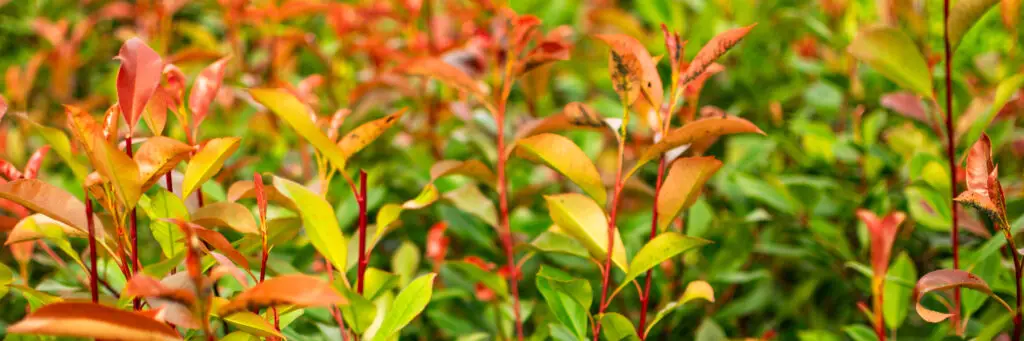
Photinia × fraseri ‘Red Robin’ is an evergreen shrub or small tree grown for glossy mature foliage and vivid red young leaves. It is vigorous enough to make a useful screen but naturally looser than Laurel or Privet, so planting density and early pruning strongly influence the finished hedge. The product currently supplied by Hedging Plants Direct is available pot grown and as instant hedging.
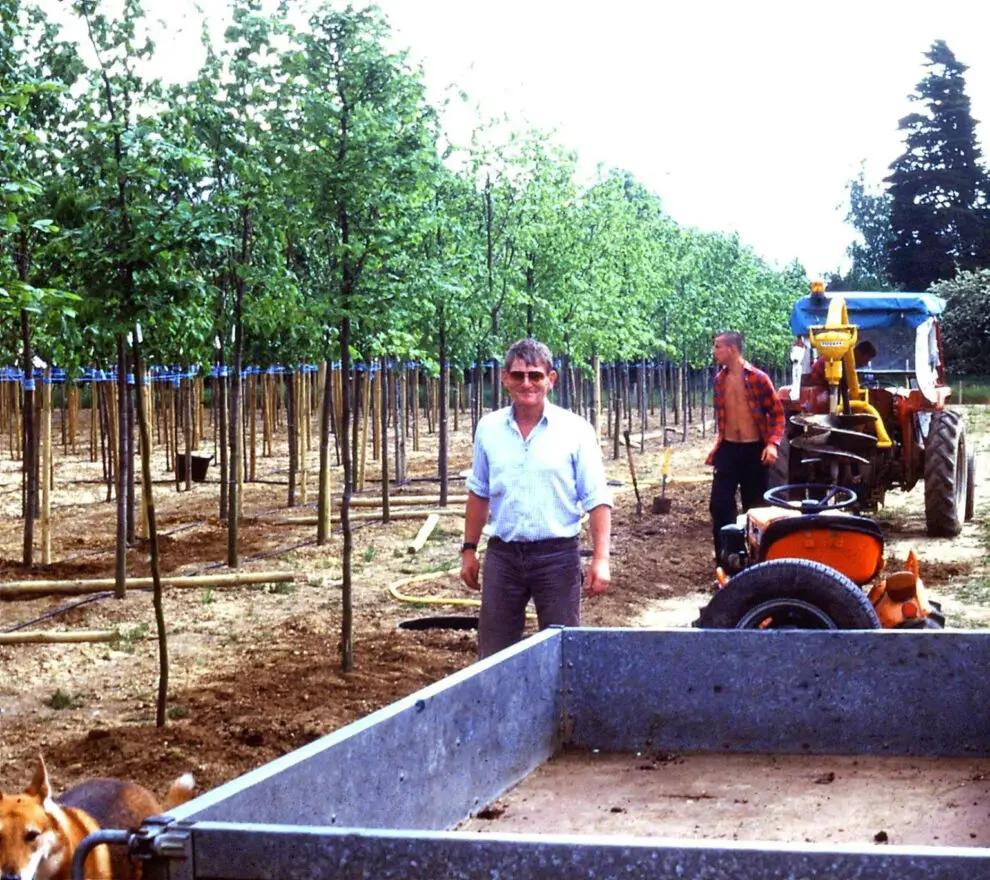
Reviewed by Gwynne Bodsworth, Founder and GrowerLast reviewed 14 August 2026
Expert nursery advice
Gwynne's Grower's Tip
“Photinia Red Robin is popular because it gives customers an evergreen hedge with a flush of brilliant red new foliage. The most important points are to give it free-draining soil, shelter young growth from severe cold winds and begin light formative trimming while the plants are young. A Red Robin hedge that is watered carefully and encouraged to branch near the base will be much more useful than a row of tall, thin plants.”
Gwynne Bodsworth• Founder and Grower, Hedging Plants Direct
Red Robin is usually my suggestion when a customer wants year-round foliage but also wants more seasonal colour than a plain green evergreen hedge. The red shoots are strongest in good light, and a light trim after the first flush encourages another display. Plant it at the density shown for the chosen size, keep the original root ball moist during establishment and avoid a waterlogged or very exposed position.
A Red Robin tree is a good choice when you want evergreen structure and colour at a little more height than a conventional hedge. The fresh red growth is best in a bright position, and a light prune after the spring flush helps keep the head neat and encourages more colour. Keep the root ball evenly moist while it establishes and give it a reasonably sheltered position, particularly while the stem and crown are still young.
I often suggest a Red Robin half standard when someone wants an evergreen feature with colour but does not need the height of a full standard tree. Its raised head works particularly well beside paths, entrances and planted borders, while the new growth gives a strong red flush through the season. Keep the root ball well watered during establishment and trim the crown lightly after new growth has matured to maintain a dense, balanced shape.
Evergreen shrub or small tree in the rose family, Rosaceae
Evergreen or deciduous
Evergreen
Typical growth rate
About 20–40cm a year once established, depending on conditions and pruning
Preferred position
Full sun or partial shade, ideally sheltered from severe cold and drying winds
Soil
Fertile, humus-rich, moist but well-drained soil; adaptable to most pH levels
Watering
Water thoroughly at planting and during dry periods for the first two growing seasons
Pruning period
Lightly trim in spring or early summer; further light trims can be made before mid-August
Feeding
Usually one balanced spring top dressing where needed; avoid routine heavy feeding
Hardiness
RHS H5, but young red shoots can be damaged by late frost and cold winds
Typical hedge height
About 1–3m for most gardens, although established plants can be managed taller
Planting season
Best from autumn to spring; pot-grown plants can be planted year-round in suitable conditions
Root types commonly available
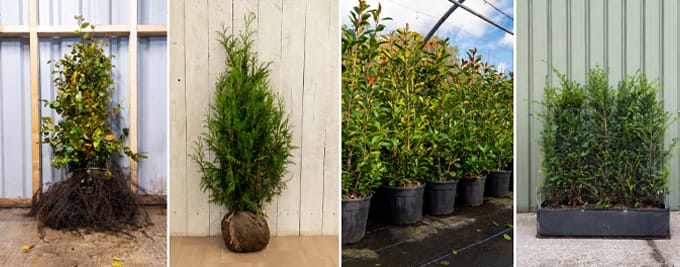
Pot grown and instant hedging
About Photinia Red Robin hedging
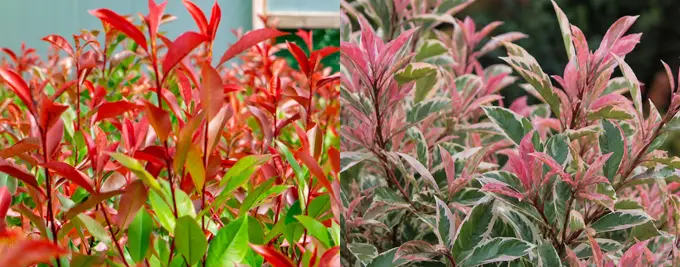
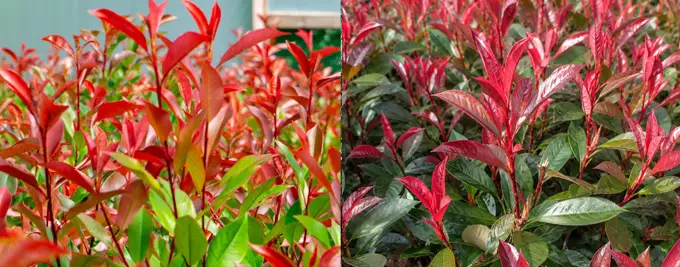
Photinia × fraseri is a hybrid evergreen shrub in the Rosaceae family. ‘Red Robin’ is the best-known cultivar in UK gardens and is valued for the contrast between its scarlet or ruby-red new foliage and older glossy green leaves. Creamy-white flower clusters may appear in late spring or early summer on shoots that have not been clipped, and small red fruits may follow, although regularly trimmed hedges often flower and fruit only lightly.Red Robin can be grown as a free-standing shrub, hedge, wall shrub, screen or small tree. Its foliage is larger and its branch structure looser than dense small-leaved hedges, so it moves naturally in the wind and creates a softer finish. Regular formative pruning is needed where the aim is a compact hedge rather than a row of individual shrubs.
Why customers choose Red Robin
Evergreen foliage provides structure and screening throughout the year.
Fresh red shoots add strong spring and summer colour.
It tolerates full sun and partial shade.
It can be clipped formally or allowed to remain slightly informal.
Pot-grown plants are available in a broad range of starting sizes.
Instant hedging provides connected coverage from planting day.
It suits urban gardens, courtyards, sheltered coastal districts and larger landscaping schemes.
Is Red Robin a dense privacy hedge?
Red Robin can make an effective evergreen screen, but it is not naturally as tightly branched as Cherry Laurel, Privet or Yew. A young hedge becomes denser when planted at the correct size-specific spacing and lightly tip-pruned before it reaches its final height. Customers wanting the fastest solid screen should consider larger pot-grown plants or instant hedging rather than planting small plants widely apart.
Choosing the right Photinia Red Robin hedge
Comparing the main Photinia formats available from Hedging Plants Direct
Screening above a wall or fence while retaining usable space below
Provides elevated evergreen screening on a trained frame
Requires secure support, frame maintenance and a different spacing plan from a ground-level hedge
Best for a formal hedge
Pot-grown Red Robin is suitable for formal hedging where it can be reached easily for regular light trimming. Use a string line during planting and build height gradually. Secateurs give the cleanest leaf finish, although fine-bladed hedge trimmers are practical for longer established hedges.
Best for immediate privacy
Instant Red Robin hedging is the most direct option where connected foliage is required immediately. It should still be treated as newly planted because its roots have not yet spread into the site soil. A mature-looking top can lose leaves quickly if the trough root ball dries.
Best for screening above a fence
Pleached Photinia trees provide a raised panel of evergreen foliage on a clear stem. They are useful where ground-level border width is limited or where screening is needed above an existing wall. They should be purchased and managed as trained trees rather than treated as ordinary hedge plants.
Best for exposed or coastal gardens
The RHS lists Red Robin as suitable for coastal gardens, but also gives it a preference for a sheltered position. These statements are compatible because coastal conditions vary greatly. Red Robin can perform near the coast where soil drains well and the site has some protection, but young shoots may scorch in direct salt-laden wind. Severe inland exposure and frost pockets can also damage fresh red growth
When to plant Photinia Red Robin hedging
Autumn to spring is normally the easiest planting period because temperatures are moderate and the soil contains natural moisture. Pot-grown Red Robin can be planted at other times of year when the ground is workable, but summer planting requires more frequent moisture checks. Never plant into frozen ground, saturated clay or soil baked hard by drought.
Autumn planting
Early autumn planting allows roots to begin moving into warm soil before winter. Water thoroughly at planting and continue checking moisture if the autumn is dry. In very exposed or cold districts, spring may be preferable because soft nursery-grown foliage can be vulnerable to the first winter.
Winter planting
Pot-grown Red Robin can be planted during mild winter weather. Avoid planting when the root ball is frozen or when water stands in the trench. Firm plants carefully to reduce wind-rock and inspect them after storms.
Spring planting
Spring is an excellent time to plant, particularly in colder areas or heavy soils. The plants have a full growing season to establish, but watering must begin as soon as rainfall decreases. Protect tender new shoots from a forecast late frost where practical.
Summer planting
Summer planting is possible because the plants are pot grown, but only where reliable watering is available. Water the pots before planting, plant during cooler weather where possible and use mulch to reduce evaporation. Do not leave newly delivered plants standing in hot sun in dry pots.
Where to plant Photinia Red Robin hedging
Sun and partial shade
Red Robin grows in full sun or partial shade. Full sun normally gives the strongest red foliage and the best chance of flowers, while partial shade can reduce scorch in a warm sheltered garden. Deep shade creates looser growth, weaker colour and slower drying of wet leaves, so it is not the first choice for a dense hedge.
Shelter and exposure
Choose a position protected from the coldest north and east winds where possible. Red Robin is hardy in most UK gardens, but its new red foliage is more tender than mature leaves. A plant can survive winter while the newest shoots are scorched by a late frost or drying wind.
Soil and pH
Red Robin prefers fertile, humus-rich soil that retains some moisture but drains freely. It can grow in loam, sand, improved clay and chalky soil, and the cultivar tolerates acid, neutral and alkaline conditions. Drainage and soil structure matter more than trying to force the soil to a particular pH.
Heavy clay
Do not create a narrow compost-filled hole in compacted clay, as it can hold water like a bucket. Loosen a broad continuous strip, break up compacted sides and mix organic matter with the existing soil. Plant with the top of the root ball level with the finished soil rather than below it.
Sandy and free-draining soil
In sandy ground, mix organic matter through a broad strip to improve water retention, then mulch after planting. Water may need to be applied more frequently during the first two summers, but each application should still wet the full depth of the root ball.
Distance from walls, fences and paths
Allow enough space to trim both sides and for the mature hedge width. A planting line around 60cm from a wall or fence may be suitable for many maintained hedges, but the correct distance depends on plant size, access and final width. Check underground services, boundaries, damp-proof courses and visibility requirements before digging.
How to prepare the planting area
Measure the usable hedge line. Exclude gates and openings before calculating plants.
Mark a straight line. Use string for formal planting and check access to both sides.
Remove weeds and turf. Clear perennial weeds from a broad strip rather than a small circle around each plant.
Check drainage. Resolve standing water and severe compaction before planting.
Dig a continuous trench where practical. This gives roots a consistent prepared zone and reduces isolated wet pockets.
Blend in organic matter. Mix peat-free hedge planting compost with the excavated soil where it will improve structure and moisture retention.
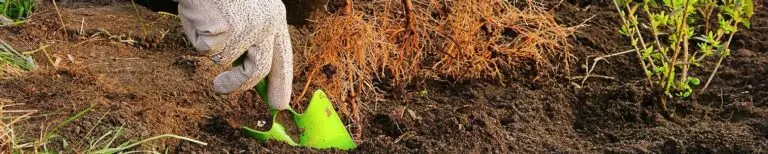
Water every pot. Saturate the root ball before removing the container.
Loosen circling roots. Gently tease the outer roots where they have formed a tight pot shape.
Apply optional mycorrhizal fungi. Use Rootgrow in direct contact with roots and according to the product label.
Do not place concentrated fertiliser against roots. Correct soil contact and water are more important at planting.
How to plant a Photinia Red Robin hedge
Set out the plants first. Use the live density for the exact height and format ordered.
Dig the trench to the correct depth. It should be no deeper than the root balls but wide enough to loosen surrounding soil.
Check the finished soil level. The top of each root ball should remain level with the surrounding ground.
Remove pots carefully. Support the root ball rather than pulling the plant by its stem.
Tease tight outer roots. Open up circling roots without breaking the root ball apart.
Position the best face. Align the plants and rotate them so branches overlap evenly.
Backfill in stages. Work soil around the roots and remove large air pockets.
Firm gently. The plant should be stable without compacting the entire root zone.
Water deeply. Wet the original compost and surrounding soil, not only the surface.
Mulch the strip. Apply Hedge Bio Mulch or another suitable organic mulch, leaving stems clear.
Stake only where necessary. Large plants in exposed sites may need low temporary support to prevent root-rock.
Check again after settling. Straighten plants and correct any root balls that have sunk too deeply.
Planting instant Red Robin hedging
Prepare the complete trench before delivery. Each instant unit covers one metre and should meet the next unit without a large gap. Keep the root mass intact, set the top level with the soil and water each section individually. A hedge irrigation system is useful, but check moisture at both ends and in the centre of the run.
Photinia Red Robin hedge spacing and plants per metre
Red Robin spacing changes with plant height and format. Smaller plants need closer spacing to create a continuous hedge, while larger crowns and instant troughs need fewer units. The live Hedging Plants Direct product variation is the final source of truth because stock specifications can change.
Current visible Hedging Plants Direct planting densities checked against the live Red Robin product page
Plant size or format
Plants or units per metre
Approximate centre spacing
Editorial note
Pot grown 30–50cm
Confirm on live variation
Do not publish a fixed figure yet
The current sold-out variation does not display a visible density
Pot grown 60–80cm
Confirm on live variation
Do not publish a fixed figure yet
The live page currently shows price and stock but no visible calculator density
Pot grown 80–100cm
3 plants
About 33cm
Current live calculator figure
Pot grown 100–125cm
2 plants
50cm
Current live calculator figure
Pot grown 125–150cm
2 plants
50cm
Current live calculator figure
Pot grown above 150cm
Confirm on live variation
Likely size-specific
Current sold-out options do not display a calculator density
Instant hedging 80–100cm
1 unit
One metre-long unit
Current live calculator figure
Instant hedging 160–180cm
1 unit
One metre-long unit
Current live calculator figure
Why general spacing figures differ
General advice often recommends 60–90cm between Red Robin shrubs, but this is not suitable for every starting size or desired timeframe. A hedge planted with young narrow plants may take much longer to join at 90cm, while large bushy plants can be overcrowded if forced into a small gap. Use the current product calculator or ask us where a sold-out variation has no visible density.
How to calculate plant numbers
Multiply the hedge length by the plants per metre. A 7m hedge using 80–100cm plants at three per metre needs 21 plants. The same length using 100–125cm plants at two per metre needs 14 plants. Seven metres of instant hedging needs seven metre-long units.
Watering and establishment
Water Red Robin thoroughly at planting and whenever the root zone begins to dry during the first two growing seasons. The correct frequency depends on soil, plant size, weather and exposure. The aim is to wet the whole root system and then allow excess water to drain.
Check the original root ball
Push a finger, trowel or soil probe into the original pot compost. The surrounding soil may feel damp while the compact root ball remains dry. This is one of the most common reasons a new evergreen hedge wilts or sheds leaves after planting.
First growing season
Check moisture at least weekly during dry weather and more frequently during heat or wind. Apply water slowly at soil level. A light sprinkle that only wets mulch does not reach deeper roots. Keep the planting strip weed free because grass competes strongly with new hedge plants.
Second growing season
Continue watering during prolonged dry periods. Roots should be spreading into the surrounding soil, but larger pot-grown plants and instant troughs can still dry rapidly. Do not stop checking simply because the hedge has produced new foliage.
Hot and windy weather
Evergreen leaves lose moisture in wind even when temperatures are moderate. Water early or late in the day, maintain mulch and consider temporary permeable shelter for a newly planted hedge in a severe position. Avoid wrapping the hedge in solid plastic.
Winter watering
New Red Robin can need water during a dry, mild or windy winter, especially beneath roof overhangs or beside walls. Do not water frozen or saturated soil. Container-grown plants need separate checks because pots dry more quickly than open ground.
Signs of drought stress
Leaves lose gloss, curl or become crisp at the margins.
Fresh shoots droop or fail to extend.
Older leaves yellow and fall after a dry spell.
The original root ball is dry below the surface.
One end of an irrigation run declines before the other.
Signs of waterlogging or overwatering
Soil remains saturated for days after rain.
Leaves yellow while the soil is wet.
Growth becomes weak and roots appear dark or soft.
Plants decline in the lowest part of the trench.
There is a stagnant smell or standing water around roots.
How and when to feed Photinia Red Robin hedging
Red Robin does not need fertiliser every four to six weeks when planted in reasonable garden soil. Where growth is weak or soil is poor, apply a balanced Hedge Feed as a spring top dressing according to its label. Spread it over moist soil around the root zone, keep it away from the stem and water afterwards if rain is not expected.
Do not feed a plant merely because it has yellow leaves. Drought, waterlogging, planting depth, frost and root disease must be checked first. Fertiliser cannot repair suffocated or dry roots and may encourage soft growth on a stressed plant.
A 5–7cm organic mulch improves soil condition, retains moisture and reduces weed competition. Avoid high-nitrogen feeding late in summer, as new soft shoots may be damaged by cold weather. For broader nutrient guidance, see our article on how to fertilise a hedge.
How and when to prune a Photinia Red Robin hedge
Best pruning time
Lightly trim Red Robin in spring or early summer after the risk of severe frost has reduced. Further light trimming can encourage another flush of red growth, but stop by mid-August so new shoots can mature before autumn frost. Avoid routine winter trimming of evergreen Photinia.
Formative pruning for a dense base
Begin while the plants are young. Shorten the longest upright and side shoots lightly to encourage branching. Build height gradually rather than allowing one tall leader to race upwards. Keep the sides slightly wider at the base than at the top so lower leaves receive light.
How much to remove
On an established healthy hedge, shortening current shoots by up to about 15cm is often enough to stimulate red regrowth and restore shape. Make cuts just above a leaf joint or outward-facing bud. Avoid repeatedly cutting back to the same hard line, which creates congested knuckles and bare interior wood.
Secateurs or hedge trimmer?
Secateurs produce the cleanest result because they avoid slicing through broad leaves. A hedge trimmer is practical for a long hedge, but follow it with secateurs to remove badly shredded leaves and thick protruding stems. Keep blades clean and sharp.
Encouraging more red foliage
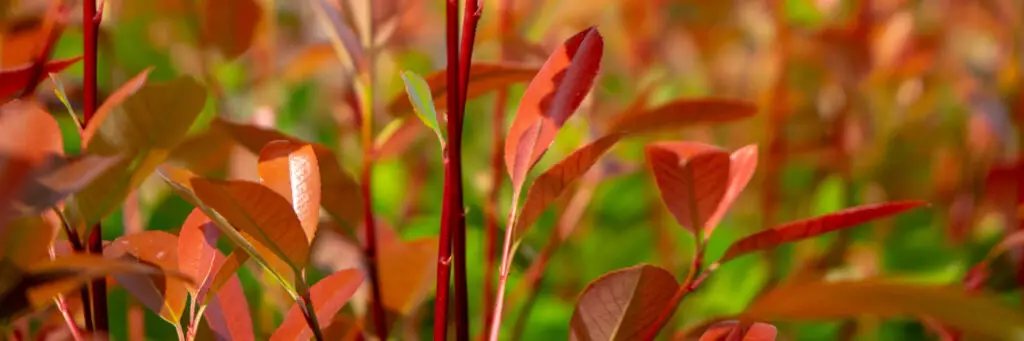
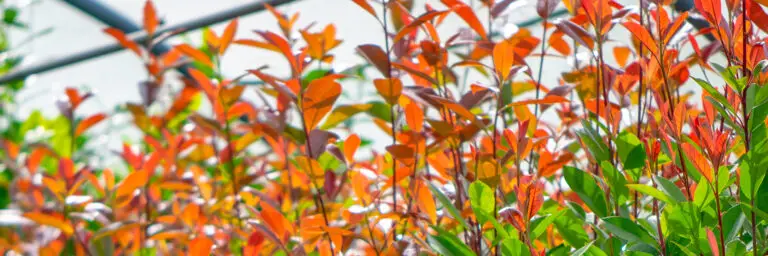
The red colour appears on new growth. A light spring or early-summer trim removes mature green tips and stimulates fresh red shoots. Strong light also intensifies colour. Repeated very late trimming may produce tender red growth that is quickly damaged by frost.
Renovating an overgrown hedge
Red Robin usually tolerates hard pruning in spring. Renovate a large hedge in stages where possible, cutting one face or section back first and assessing regrowth before reducing the remainder. Water during dry weather and do not combine severe pruning with drought, root disturbance or heavy late feeding.
Bird nesting checks
Inspect the hedge for active nests before every cut. Wild birds, their nests and eggs are legally protected. The commonly quoted March-to-August nesting season is a useful warning period, but an active nest is protected whenever it is in use. Delay work until the young have fledged.
Photinia Red Robin hedge growth rate and eventual size
Hedging Plants Direct lists Red Robin at approximately 20–40cm of growth each year, while RHS guidance notes that vigorous plants may make around 30cm annually. Growth is slower during establishment and faster in warm, fertile, well-watered soil. Full sun generally improves foliage colour but does not compensate for dry roots.
Practical size guidance for Red Robin hedging
Use
Typical managed height
Management note
Low garden division
About 1–1.2m
Requires regular tip pruning to keep foliage dense near the base
Standard privacy hedge
About 1.5–2.5m
A practical height for most gardens and routine maintenance
Tall screen
About 2.5–4m
Allow greater width and consider professional maintenance access
Unpruned shrub or small tree
Potentially 4–8m
Natural spread may reach 2.5–4m over 10–20 years
A plant label giving a maximum of 7.5m describes potential natural height, not the recommended hedge height. Most Red Robin hedges are maintained much lower. Allow enough width for a tall hedge because repeatedly clipping the sides too narrowly can expose bare internal branches.
Seasonal Photinia Red Robin hedge care calendar
Seasonal tasks for Photinia Red Robin hedging in the UK
Period
Main tasks
What to check
January–February
Plant in mild workable soil; check stakes, wind-rock and winter moisture
Frozen soil, waterlogging, wind scorch and dry plants beneath eaves
March–April
Plant new hedges; mulch; apply spring feed only where needed; remove dead frost-damaged tips after risk reduces
Late frost, leaf spot, root moisture and emerging vine-weevil damage
May–June
Lightly trim to shape and encourage red regrowth; water new plants during dry spells
Active bird nests, powdery mildew, leaf spots and dry root balls
July–mid-August
Continue establishment watering; make a final light trim if required
Heat stress, irrigation failure and excessive soft growth
Late August–September
Stop trimming; allow new shoots to harden; continue watering in drought
Leaf spot, wind damage and soft late growth
October–December
Plant in suitable weather; renew protection; mulch where needed
Root saturation, early frost and newly planted hedge movement
Photinia Red Robin hedge pests, diseases and common problems
Red Robin can develop environmental stress, leaf spot, fireblight, powdery mildew, vine-weevil damage, honey fungus and root decline. This guide gives a concise first check only. For full symptom photographs, detailed causes and treatment discussion, use our established guide to Photinia Red Robin problems, pests and diseases.
Common Red Robin symptoms and the first points to investigate
Symptom
Likely causes
How to check
First action
Yellow leaves
Waterlogging, drought, establishment stress, nutrient shortage or normal old-leaf shedding
Check moisture inside the original root ball and compare low and high parts of the hedge
Correct moisture before feeding
Brown or blackened shoot tips
Frost, cold wind, drought or possible fireblight
Consider weather timing and look for hooked scorched shoots or discoloured wood
Wait until frost risk reduces, then prune to healthy tissue; seek diagnosis if fireblight is suspected
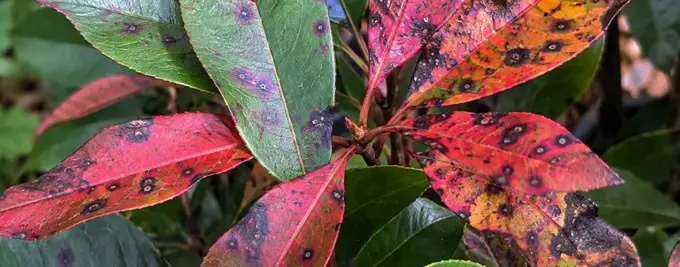
Red-purple or dark leaf spots
Photinia leaf spot
Inspect both leaf surfaces and look for repeated spotting after wet weather
Inspect drainage, stem bases, roots and nearby woody plants
Stop automatic watering until the cause is known and seek professional diagnosis where disease is suspected
Sparse or bare lower growth
Top-heavy pruning, shade, wide spacing or lack of formative trimming
Check the hedge profile and light reaching the base
Taper the sides and renovate in stages during spring
Why are Red Robin leaves turning yellow?
Yellowing is commonly caused by roots being too wet or too dry. Check several centimetres below the surface and inside the original pot compost. If drainage and moisture are correct, consider old-leaf shedding, root restriction, soil condition or nutrient shortage. Do not apply feed until water problems have been ruled out.
Why are the leaves turning brown?
Brown edges often follow drought, salt wind, frost or a hedge trimmer cutting through broad leaves. Brown patches after a cold spell may be frost scorch rather than disease. Wait for healthy spring growth before removing all damaged foliage.
Why is the hedge losing leaves?
Transplant shock, a dry root ball, waterlogging and severe leaf spot can all cause leaf drop. Some internal older leaves are naturally shed as the canopy thickens. Inspect whether the loss is concentrated at the base, on the exposed face or in a wet section before deciding on treatment.
Can a damaged Red Robin hedge recover?
Yes, Red Robin often recovers when the roots and lower framework remain alive. Scratch a small area of bark to check for green tissue, correct the underlying water or exposure problem and prune dead wood back to healthy growth in spring. A hedge with dead or diseased roots may need individual replacements.
Wildlife and environmental value
Red Robin provides evergreen shelter and nesting structure for birds, particularly where the hedge is allowed enough depth. Creamy-white flowers can provide pollen and nectar, and small red fruits may develop on untrimmed mature shoots. A hedge clipped repeatedly for red foliage may flower and fruit less than a looser shrub.
The hedge can also form a sheltered route through a garden for hedgehogs and other small animals. Leave a ground-level gap beneath fences where appropriate, avoid unnecessary pesticides and check for active bird nests before trimming.
The fruits are ornamental and should not be eaten. Wear gloves during prolonged pruning if your skin is sensitive, and seek appropriate medical or veterinary advice after suspected ingestion rather than relying on online plant-care information.
Photinia Red Robin care by root type
Pot-grown Red Robin
Pot-grown plants can be planted throughout the year. Water before planting, loosen circling roots and keep checking the original pot compost after planting. Small plants need closer spacing and more formative pruning, while large plants need a wider trench and may require temporary support.
Instant Red Robin hedging
Instant units provide immediate connected coverage but carry the greatest concentrated water demand. Prepare the trench before delivery, keep root masses intact, place units tightly together and irrigate the full length. Check each unit rather than assuming one wet point proves the entire hedge has been watered.
Bare-root and root-balled Red Robin
These formats are not currently listed on the Hedging Plants Direct Red Robin product page. If they are added later, the product-specific seasonal handling, spacing and planting instructions should be added to this guide. Do not copy another supplier’s density into Hedging Plants Direct advice.
Large specimens and pleached trees
Large plants and pleached Photinia Red Robin trees need secure handling, appropriate anchoring and a planting plan based on root-ball or container width. Frames should be linked and maintained according to the product instructions. Use visible plant protection where building work, vehicles or machinery could damage the stems or root zone.
Frequently asked questions about Photinia Red Robin hedging
Is Photinia Red Robin evergreen?
Yes. Photinia × fraseri ‘Red Robin’ is an evergreen shrub that retains glossy foliage through winter. Severe frost, drought, waterlogging or transplant shock can cause temporary leaf loss, but a healthy established plant normally keeps useful year-round cover.
How fast does Red Robin hedging grow?
Red Robin generally grows about 20–40cm a year once established. New plants may grow more slowly during the first season while roots spread. Warm soil, good light, moisture, weed control and light pruning encourage stronger growth, but the figure is an estimate rather than a guarantee.
How far apart should I plant Red Robin?
Use the density shown for the selected plant size. The current Hedging Plants Direct calculator lists 80–100cm plants at three per metre and 100–150cm plants at two per metre. Instant units cover one metre each. Smaller and sold-out sizes should be confirmed before publication or ordering.
When is the best time to plant Photinia?
Autumn to spring is usually easiest because soil moisture is more reliable and temperatures are moderate. Pot-grown Red Robin can be planted year-round if the ground is workable and watering is available. Avoid frozen ground, saturated clay and planting during extreme heat.
Can Red Robin grow in shade?
Red Robin grows in partial shade, but full sun or bright partial shade produces the strongest red foliage and denser growth. Deep shade can make the hedge looser, greener and slower to dry after rain, which may increase leaf-spot problems.
Can Photinia grow in clay soil?
Yes, if the clay is improved and drains adequately. Loosen a broad strip, mix organic matter with the existing soil and plant at the original root-ball level. Do not create a deep compost-filled sump in compacted clay, as trapped water can damage roots.
Is Red Robin suitable for coastal gardens?
It can be suitable near the coast where there is some shelter and good drainage. The RHS lists coastal use but also recommends a sheltered position. Direct salt-laden winds can scorch young foliage, so assess the exact exposure rather than treating every coastal garden as identical.
When should I prune Red Robin?
Lightly prune in spring or early summer after severe frost risk has reduced. One or two additional light trims can be made to shape the hedge and encourage red shoots, but stop by mid-August so regrowth can harden before autumn cold.
How do I make a Red Robin hedge thicker?
Tip-prune young upright and side shoots before the hedge reaches final height. Keep the base slightly wider than the top, maintain correct spacing, water during dry weather and control weeds. Allowing plants to grow tall without side pruning often produces a thin base.
Can Photinia Red Robin be cut back hard?
Yes, established healthy Red Robin normally tolerates hard spring pruning. Renovate a large hedge in stages where possible and water during dry weather. Avoid severe cutting during winter or combining it with drought, waterlogging or major root disturbance.
Why is my Red Robin losing leaves?
Common causes include a dry original root ball, waterlogging, frost, transplant shock and severe leaf spot. Check root-zone moisture and the pattern of damage before feeding or spraying. Internal older leaves may also fall naturally as dense growth shades them.
Why are the new leaves not red?
Only fresh growth is strongly red. Mature leaves turn green, and shaded or weak plants may produce less vivid colour. Improve light where possible and make a light spring or early-summer trim to stimulate new shoots. Do not feed heavily simply to force colour.
How often should I water a new Photinia hedge?
Water thoroughly at planting and whenever the root zone begins to dry during the first two growing seasons. Sandy soil, wind and hot weather increase frequency, while clay needs careful checks to prevent waterlogging. Always inspect the original root ball rather than watering to a fixed calendar.
Does Red Robin need feeding?
Usually only a balanced spring top dressing is needed where soil is poor or growth is weak. Mulch and correct watering are more important during establishment. Do not feed a yellowing plant until drought, waterlogging and root problems have been ruled out.
Does Red Robin flower?
Yes. Mature untrimmed shoots may produce clusters of creamy-white flowers in late spring or early summer. Regularly clipped hedges often flower less because pruning removes developing flower shoots. Small red fruits may follow where flowers are pollinated and allowed to remain.
Is Photinia Red Robin poisonous?
The fruits are ornamental and should not be eaten. Keep children and pets from consuming berries or foliage and wear gloves if prolonged handling irritates your skin. Seek medical or veterinary advice after suspected ingestion.
What height can a Red Robin hedge be kept at?
Most garden hedges are maintained between about 1 and 3m. Taller screens are possible but need more width and safe maintenance access. If left unpruned for many years, Red Robin can become a 4–8m shrub or small tree.
Related hedge advice
Useful planting, pruning and hedge-care advice from our nursery.
Compare the best hedge plants for privacy in UK gardens, including evergreen, fast-growing and seasonal options for different soils, sites and screening needs
Learn how you can easily plant a hedge with our comprehensive step-by-step guide. From picking the right species to planting techniques and after care.
Learn how to identify and treat common Photinia Red Robin problems, pests and diseases in the UK including leaf spot and mildew with our helpful guide.
Bare root, root ball, pot-grown and instant hedging suit different budgets, planting times and levels of initial coverage. Understanding how each is supplied makes it easier to choose the right format for your project.
Photinia Pink Marble and Red Robin are both evergreen Photinia cultivars, but they create very different hedges. Red Robin is the more conventional screening choice, while Pink Marble is grown for its striking variegated…
Photinia Carré Rouge and Red Robin both provide evergreen foliage and colourful red new growth, but they differ noticeably in eventual size and growth habit. The better choice depends mainly on how tall and…
There is conflicting gardening advice about Photinia Red Robin and pet safety. Veterinary toxicology sources support a cautious approach because Photinia foliage and fruit contain compounds that can release cyanide when chewed.
Photinia Red Robin can grow well in containers, but a pot makes the roots more dependent on careful watering, drainage and regular maintenance. Knowing which container-specific problems to check first can prevent a minor…
Missing pieces, holes or notches in Red Robin leaves can look alarming, but the pattern of damage usually gives a useful clue. Checking the leaf edges, rolled foliage and the plant after dark can…
Choosing and buying Photinia Red Robin hedge plants
Explore the Photinia Red Robin hedging range to compare pot-grown sizes, instant metre-long units and pleached screening trees. The Photinia Red Robin Hedge product page contains live prices, availability and the planting calculator for the selected variation.
Hedging Plants Direct is a family-run nursery business established in 1982 and supplies retail, trade and commercial customers across the UK. Pot-grown Red Robin is generally available throughout the year, while instant stock depends on production and availability. Check delivery access and the handling requirements for larger plants before ordering.