
Best Time to Plant Laurel Hedging in the UK (Autumn & Winter Guide)
Autumn is one of the most important seasons in the life of a Laurel hedge. As the temperature drops and rainfall increases, the soil stays warm enough for strong root development — making it the perfect time to plant new Laurel hedging or give established plants some seasonal attention.
Whether you’re planning to grow Cherry Laurel (Prunus laurocerasus ‘Rotundifolia’), Portuguese Laurel (Prunus lusitanica), or Bay Laurel (Laurus nobilis), autumn offers the best natural conditions for successful planting and establishment. It’s also the time when your existing Laurel hedge plants benefit most from feeding, mulching, and a little end-of-season care.
Guide contents
- 1. Why Autumn Is the Best Time to Plant Laurel Hedging
- 2. Choosing the Right Root Type for Autumn Planting
- 3. Choosing the Right Laurel Variety for Your Garden
- 4. How to Plant a Laurel Hedge in Autumn
- 5. Autumn & Winter Care for Established Laurel Hedges
- 6. Common Autumn Issues With Laurel
- 7. Final Thoughts
- 8. Frequently asked questions - Laurel Hedging
Why Autumn Is the Best Time to Plant Laurel Hedging
Ideal Conditions for Strong Root Growth
Autumn’s combination of warm soil and consistent moisture is exactly what Laurel plants need to develop deep, healthy roots. By planting now, roots will continue to grow through winter, giving your Laurel hedges a head start before spring.
Because the air is cooler, water loss through the leaves is reduced, meaning less stress for new Laurel plants and less watering required for you. The result? Faster establishment, better survival rates, and lusher growth next year.

Choosing the Right Root Type for Autumn Planting
Bare Root Laurel Hedging
For cost-effective, large-scale planting, bare root Laurel hedging is ideal between November and March when plants are dormant. Bare root Laurels are lightweight, easy to handle, and quick to establish once planted in moist, well-prepared soil.
Rootballed Laurel Hedging
If you want instant impact, rootballed Laurel hedging is the professional grower’s choice. Grown in open ground and lifted carefully with soil around their roots, these plants arrive ready to thrive when planted straight away in autumn.
Pot-Grown Laurel Plants
Pot-grown Laurels can be planted at any time of year, but autumn offers the least maintenance and the fastest root establishment. They’re ideal for smaller projects or for topping up existing hedges where gaps have appeared.

Choosing the Right Laurel Variety for Your Garden
Cherry Laurel (Prunus laurocerasus ‘Rotundifolia’)
A true classic for quick, dense screening, Cherry Laurel is one of the UK’s most popular laurel hedge plants. Its large, glossy green leaves form a thick evergreen barrier that’s ideal for privacy and for reducing noise and wind. It’s a hardy choice for medium to large gardens and establishes reliably in a wide range of conditions.
Portuguese Laurel (Prunus lusitanica)
If you want a slightly more refined, formal-looking laurel hedge, Portuguese Laurel is a brilliant option. It has glossy, dark green pointed foliage and distinctive red stems, with a naturally dense habit that clips beautifully. It’s an excellent evergreen for smart boundaries, privacy screens and sound buffering, and suits both modern and traditional gardens.
Sweet Bay Laurel (Laurus nobilis)
Sweet Bay Laurel is a compact, evergreen laurel with aromatic, dark green leaves that are perfect for cooking, plus pale yellow flowers in spring for seasonal interest. Because it grows neatly and responds well to shaping, it’s ideal for formal hedges, topiary, or as a handsome specimen plant in borders and pots.
Upright Laurel (Prunus laurocerasus ‘Caucasica’)
For a taller, more upright screen with a slightly narrower habit than some broader laurels, Upright Laurel ‘Caucasica’ is a strong choice. It’s fast growing (typically 30–60cm per year), evergreen, and very adaptable — performing well in sun, shade and even more exposed sites. It’s ideal where you want height and coverage without a hedge that sprawls too wide.

How to Plant a Laurel Hedge in Autumn
A successful hedge starts with good preparation. For detailed step-by-step instructions, see our full guide: How to Plant a Laurel Hedge.
Ground Preparation
Dig over the planting area to loosen compacted soil and remove any weeds. Laurels prefer fertile, free-draining ground, so mix in well-rotted compost or organic matter where needed.
Space Laurel hedge plants roughly 2 to 3 per metre depending on the variety and the density you’d like. Use a line or string guide to keep your hedge straight and evenly spaced.
Boost Establishment with RootGrow & Hedge Feed
Sprinkle RootGrow Mycorrhizal Fungi directly into each planting hole. These beneficial fungi attach to the roots, helping young Laurel plants absorb water and nutrients more efficiently. It’s a simple, one-time application that can make a big difference to early growth especially in the cooler months.
Watering and Mulching
After planting, water thoroughly and apply a 5–8 cm layer of bark mulch or compost around the base. This helps regulate soil temperature and moisture through the winter while discouraging weeds.
Spring Feeding
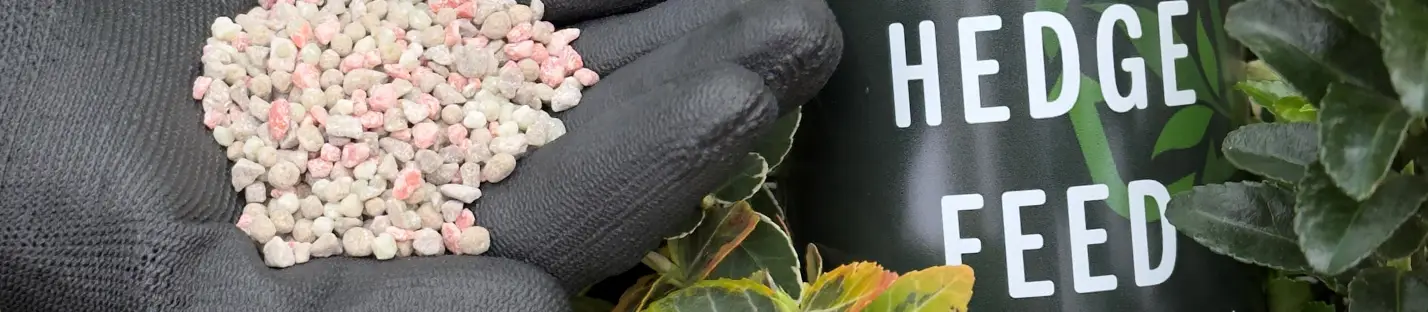
Once the weather starts to improve its time to start top dressing your Laurel Hedge. Our Hedge Feed is a balanced 7-7-7 granular feed which has all the main and trace elements that all types of Laurel require throughout the year. Its perfect for heathy and hedges that are in need of a boost.
Autumn & Winter Care for Established Laurel Hedges
Even mature Laurel hedges appreciate a little seasonal care to stay healthy and green through the colder months.
Feeding for Root Strength
In late autumn, apply Hedge Feed around the base of your Laurel hedge plants. This long-lasting granular fertiliser slowly releases essential nutrients that support root health over winter, without encouraging soft new growth that could be damaged by frost.
A balanced feed now will reward you with richer foliage and improved disease resistance next spring.
Irrigation and Moisture Management
Following the UK’s dry spring and summer, it’s worth checking soil moisture before winter sets in. Installing a simple Hedge Irrigation system ensures water is delivered directly to the roots — particularly important for recently planted Laurel hedging or south-facing gardens where the ground dries quickly.
Light Pruning and Tidying
Avoid heavy pruning in late autumn, but remove any damaged or wind-rocked branches. A light trim keeps the hedge tidy and helps prevent wind damage. Save shaping or reduction pruning for late spring once frost risk has passed.
See our guide: How to Prune a Laurel Hedge.
Common Autumn Issues With Laurel
Yellowing Leaves
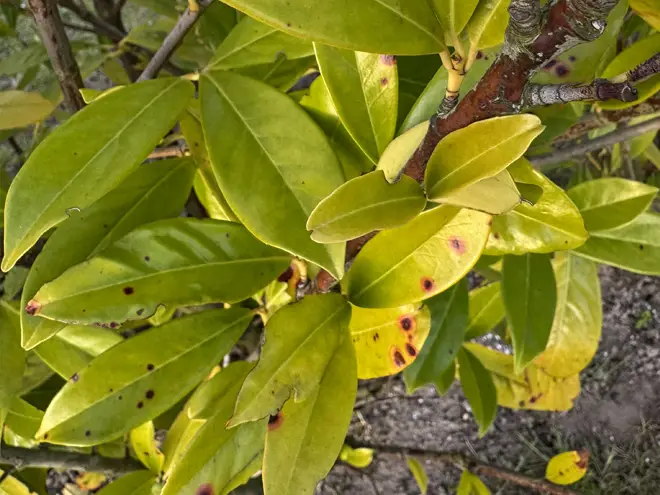
Occasional yellow leaves are perfectly normal as old growth sheds, but widespread yellowing can signal over-watering or poor drainage. Ensure the soil remains free-draining and feed with Hedge Feed in spring to encourage healthy green growth.
Wind Scorch and Frost Damage
Strong winter winds can cause Laurel leaves to brown or curl at the edges — particularly on newly planted hedges. Protect exposed areas with windbreak netting or hessian until plants are well established. Light frost may mark outer leaves but rarely causes lasting damage.
Pests and Diseases
Look out for shot-hole disease (small holes in leaves) or scale insects that leave sticky deposits. Both are manageable with light pruning and improved airflow. For detailed advice, visit Common Problems With Laurel Hedges.
Final Thoughts
Autumn and early winter are the most rewarding times to plant and nurture Laurel hedging in the UK. With warm soil, reliable moisture, and fewer temperature extremes, your Laurel hedge plants will settle in comfortably and be ready to flourish next year.
By planting with RootGrow, feeding with Hedge Feed, and maintaining consistent moisture through a Hedge Irrigation system, you’ll create a thriving evergreen screen that stays dense and healthy all year round.
Explore our full collection of Laurel hedging plants for sale — including bare root, rootballed, and pot-grown Laurels — all grown and supplied directly from our Plant Healthy certified nursery in Essex.
Frequently asked questions – Laurel Hedging
What is the best month to plant Laurels?
In the UK, the best month to plant Laurels is October. The soil is still warm, rainfall is more reliable, and the plants can establish strong roots before winter, leading to faster growth in spring.
That said, Laurels can be planted successfully from October to March (avoiding frozen or waterlogged ground), with bare root and rootballed plants typically best planted during this dormant season. Pot-grown Laurels can be planted year-round, but will need more watering if planted in late spring or summer.
How fast does a Laurel hedge grow?
A Laurel hedge typically grows 30–60cm (12–24 inches) per year in the UK, depending on the variety and growing conditions.
Cherry Laurel (Prunus laurocerasus ‘Rotundifolia’) is one of the fastest and often sits at the higher end of that range.
Upright Laurel ‘Caucasica’ is also a strong grower and ideal for taller screening.
Portuguese Laurel is usually a little slower but forms a denser, more formal hedge.
For the quickest results, plant in autumn, improve the soil with organic matter, use RootGrow at planting, keep the hedge well-watered in its first year, and feed in spring and late summer for strong, healthy growth.
Which Laurel is best for Hedging?
The best Laurel for hedging depends on what you want most — speed, a smarter formal look, or a narrower hedge — but for most UK gardens these are the top choices:
Best all-round (fast, dense privacy): Cherry Laurel ‘Rotundifolia’
A classic evergreen hedge that fills in quickly and forms a thick screen.Best for a more formal, refined hedge: Portuguese Laurel
Darker glossy leaves, red stems, and a naturally tidy shape that clips beautifully.Best for height in tighter spaces: Upright Laurel ‘Caucasica’
A more upright habit, great for tall screening without spreading as wide.Best compact / smaller hedge (and culinary use): Sweet Bay Laurel (Laurus nobilis)
Slower and neater, ideal for lower hedges, shaping, and scented leaves.
If you want the quickest, densest privacy hedge, Cherry Laurel ‘Rotundifolia’ is usually the best starting point for UK gardens.
How far to plant a Laurel hedge from a fence?
A practical distance to plant a Laurel hedge from a fence is 30–45cm (12–18 inches). This keeps the hedge close enough that you won’t be left with an awkward gap behind it, while still allowing room for the roots to establish and for you to trim the hedge cleanly.
Smaller plants (40–80cm): plant 25–35cm from the fence.
Medium plants (80–150cm): plant 30–45cm from the fence.
Large/instant plants (150–250cm): plant 45–60cm from the fence for stability and access when trimming.
To avoid problems when planting closer to a fence, it’s worth:
keeping the planting line straight (use a string line),
improving the soil with organic matter,
using RootGrow at planting, and
trimming lightly from the first year so growth stays dense on the fence side.
Is Laurel poisonous to dogs?
Yes — Cherry Laurel and Portuguese Laurel are classed as poisonous to dogs, but the good news is they’re not very palatable, so most dogs don’t eat enough to cause serious harm.
In the vast majority of cases, a dog would need to ingest a fairly large amount of chewed leaves (or seeds) for it to become dangerous.
Sweet Bay Laurel (Laurus nobilis) is quite different from Cherry Laurel and Portuguese Laurel, as it’s the classic culinary “bay leaf” plant used for flavouring soups and stews. It’s an evergreen shrub with aromatic, leathery leaves that can be grown as a neat hedge, screen or topiary, and it tends to be slower and more controlled in growth than other laurels—ideal if you want a tidier, more formal look.